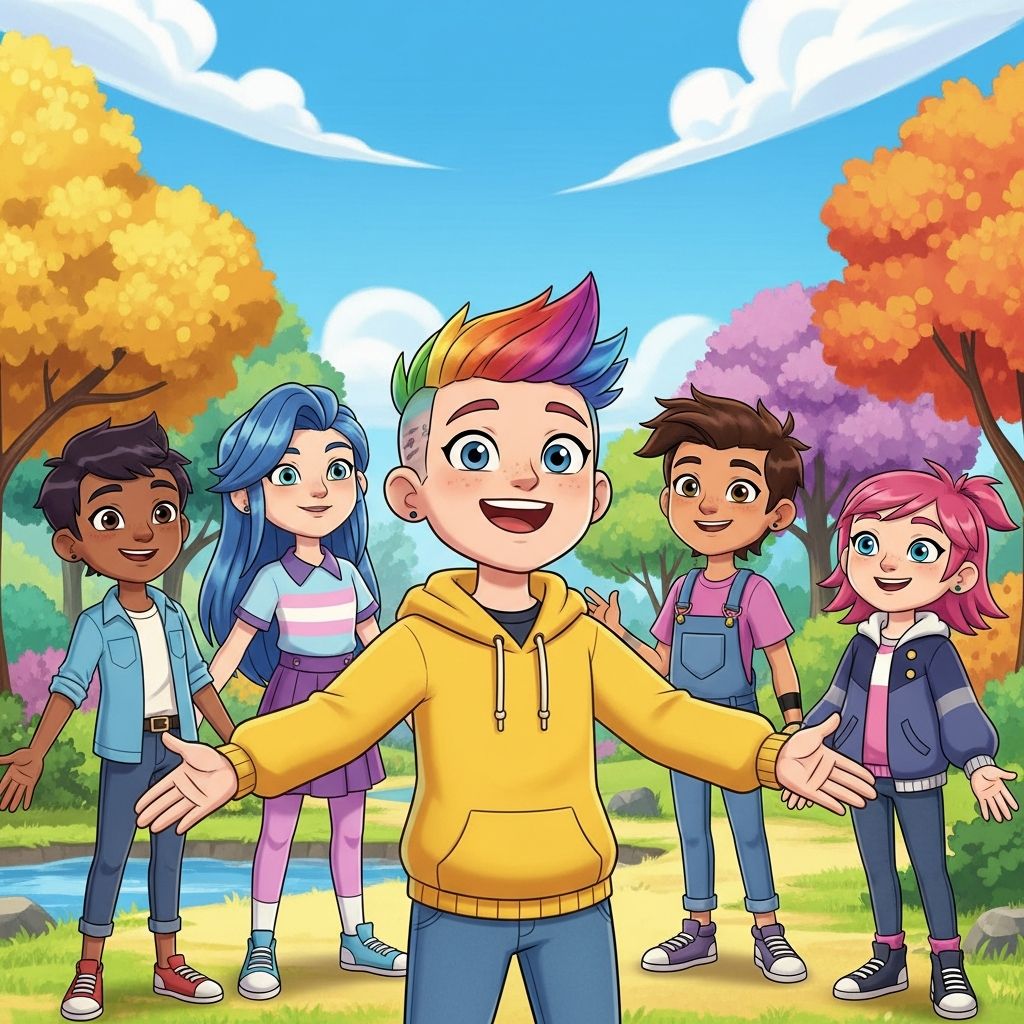
Children’s television is slowly becoming more inclusive, and that shift includes **transgender** and **non-binary** characters in shows aimed at kids and tweens. Representation is still rare, but a growing group of series now offers thoughtful stories that can help young viewers feel seen and help parents start age-appropriate conversations about gender.
Why Trans and Non-Binary Representation in Kids’ TV Matters
Research in child development consistently finds that media influences how children understand social norms, empathy, and identity. When kids see diverse families and identities on screen, it can:
- Normalize differences and reduce stigma.
- Support the self-esteem of trans, non-binary, and gender-questioning kids.
- Help cisgender children develop empathy and respect for peers whose experiences differ from their own.
- Give parents natural openings for conversations about gender, pronouns, and respect.
LGBTQ youth who feel affirmed at home and in their communities have lower rates of depression and suicidal thoughts than those who experience rejection. While TV alone cannot guarantee safety or acceptance, inclusive stories can be one helpful piece of a broader support system.
What Counts as Thoughtful Trans Representation?
Not all representation is equally helpful. Parents may want to look for shows where trans and non-binary characters are:
- Named and respected: The character’s pronouns and name are used consistently by peers and adults.
- More than just a lesson: They have interests, friendships, and storylines beyond their gender identity.
- Integrated, not tokenized: They recur across episodes or seasons, rather than appearing briefly and disappearing.
- Portrayed positively: They are not the punchline or a villain simply because of their identity.
- Age-appropriate: Themes of belonging, friendship, and self-discovery are presented in ways suited to the show’s target age group.
At a Glance: Shows Featuring Trans or Non-Binary Characters
| Show | Platform | Approx. Age Range | Type of Representation |
|---|---|---|---|
| Ridley Jones | Netflix | Preschool–early elementary | Main non-binary character in an adventure setting |
| The Owl House | Disney+ | Older elementary–middle school | Non-binary side character; queer lead romance |
| She-Ra and the Princesses of Power | Netflix | Older elementary–tween | Non-binary shapeshifter; trans side character |
| Kipo and the Age of Wonderbeasts | Netflix | Older elementary–tween | Non-binary recurring character in later episodes |
| Transformers: EarthSpark | Paramount+ | Elementary–tween | Main non-binary robot hero and a human using she/they pronouns |
| Dead End: Paranormal Park | Netflix | Older elementary–tween | Lead character who is gay and trans; multiple LGBTQ characters |
Key Shows and How They Handle Gender Diversity
1. Ridley Jones: A Preschool-Friendly Non-Binary Hero
Best for: families with young kids who love adventure and singing animals.
This animated series centers on a brave girl who lives in a museum where the exhibits come alive after closing time. One of her closest friends is a non-binary bison who uses they/them pronouns, and that character is treated as part of the core friend group rather than a one-episode guest.
Why it stands out:
- The show uses simple, clear language to model talking about pronouns.
- The non-binary character gets to be funny, scared, brave, and loyal—not defined only by gender.
- Episodes emphasize teamwork and problem-solving, making identity part of the world rather than the whole plot.
Conversation starter ideas:
- “Did you notice which pronouns Ridley used for their friend?”
- “Everyone in the group is a little different. How do they help each other?”
2. The Owl House: Magic School, Queer Romance, and a Non-Binary Bard
Best for: older kids who enjoy fantasy worlds and serialized storytelling.
This fantasy series follows a human girl who stumbles into a demon realm and studies magic there. As the show progresses, it includes a same-gender crush for the lead and introduces a non-binary adult character, a talented witch and musician, who uses they/them pronouns and has a meaningful connection to one of the main mentors.
Why it stands out:
- Romance between two girls is treated as ordinary, age-appropriate puppy love, not a spectacle.
- The non-binary character holds authority and respect within the magical community.
- The show explores themes of found family, neurodivergence, and feeling like an outsider, which can resonate with many kids.
Conversation starter ideas:
- “Who in the Boiling Isles feels different from everyone else? How do they find their people?”
- “What did you notice about how others speak about the non-binary character?”
3. She-Ra and the Princesses of Power: Rebellion, Friendship, and Fluidity
Best for: kids and tweens who like epic battles and emotional story arcs.
This reboot of an ’80s franchise follows a former soldier who discovers she can transform into a legendary warrior and joins a rebellion against the regime that raised her. Among her allies and rivals is a non-binary shapeshifter who uses they/them pronouns and shifts allegiance more than once. In a later season, a minor character is explicitly presented as a transgender man, expanding the galaxy’s diversity.
Why it stands out:
- The non-binary character openly states their pronouns and is immediately respected.
- Queer relationships among side characters, including central friendships that evolve into romance, are woven naturally into the narrative.
- The show underlines themes of consent, chosen family, and healing from manipulation—valuable topics for media-savvy tweens.
Conversation starter ideas:
- “How does the shapeshifter’s identity connect to their powers?”
- “What helps characters repair trust after they’ve been on opposite sides?”
4. Kipo and the Age of Wonderbeasts: Post-Apocalyptic Adventure with Quiet Inclusion
Best for: kids who like sci-fi, monsters, and found-family stories.
In this colorful post-apocalyptic world, a girl raised underground finds herself on the surface among mutant animals. The show is known for a boy character who casually comes out as gay in conversation, one of the few times a younger kids’ series uses the word “gay” directly. Later in the series, a non-binary human character, using they/them pronouns, joins the ensemble and eventually forms a romantic connection with the protagonist.
Why it stands out:
- Sexual orientation and gender identity are mentioned plainly but briefly, without becoming after-school special lectures.
- The non-binary character is portrayed as resourceful and courageous, contributing meaningfully to the group.
- The show explores themes of environmental harm, prejudice between species, and reconciliation—parallels that can help kids think about real-world bias.
Conversation starter ideas:
- “How do humans and mutants learn to trust each other?”
- “What does it mean for the group to respect everyone’s identity and background?”
5. Transformers: EarthSpark: Non-Binary Robots and Pronoun Talk On-Screen
Best for: families with kids who love robots, vehicles, and action.
Set in the long-running Transformers universe, this series introduces a new generation of Transformers who are born on Earth and adopted by a human family. One of these new robots openly identifies as non-binary and uses they/them pronouns. A human character in the show also uses she/they pronouns, and an episode includes an explicit discussion about pronouns and gender with a supportive adult.
Why it stands out:
- Shows that non-binary identities exist across cultures and even species in a sci-fi context.
- Includes a model conversation where a trusted grown-up validates a child’s feelings about identity.
- Blends action-packed plots with emotional beats about family, belonging, and self-acceptance.
Conversation starter ideas:
- “How did the adult respond when the character talked about pronouns?”
- “What does this family do to make everyone feel safe being themselves?”
6. Dead End: Paranormal Park: A Trans Lead at the Heart of the Story
Best for: older kids ready for some spooky fun and emotional depth.
This animated series is set in a haunted theme park where two teens and a talking dog take on ghosts, demons, and multiverse weirdness. One of the main characters is both gay and trans, and the show treats his identity as one facet of who he is—alongside being a devoted friend, a worker at the park, and a reluctant hero. Another central character is pansexual, making the series one of the more overtly queer kids’ shows currently available.
Why it stands out:
- The trans lead is allowed to be flawed and complex, not idealized or tragic.
- Storylines touch gently on family conflict and religious tension around identity, while still centering humor and horror-comedy.
- The series can help older kids see that trans characters belong in every genre, including spooky adventures.
Conversation starter ideas:
- “What makes the main character feel at home at the park, even when it’s scary?”
- “Which people in his life make him feel the safest being himself?”
How Parents Can Use These Shows Constructively
Watching inclusive shows together is often more powerful than having kids watch them alone. To make the most of these stories, parents can:
- Preview when needed: Watch an episode or two in advance, especially for younger or more sensitive kids, to gauge tone and intensity.
- Ask open questions: Instead of lecturing, ask what your child noticed or liked about a character.
- Highlight respect: Emphasize that using someone’s chosen name and pronouns is a basic form of kindness.
- Reassure curious kids: If a child asks if it’s “okay” to be trans or non-binary, offer a clear yes and, if appropriate, mention that medical and mental-health organizations support affirming care for trans youth.
- Connect to real life: If your child has trans or non-binary classmates or relatives, talk about how the stories relate to people they know.
Frequently Asked Questions (FAQs)
Q: What age is appropriate to introduce kids to trans and non-binary characters?
A: Children encounter ideas about gender from toddlerhood through clothing, toys, and social expectations. Preschoolers can understand simple concepts like “some people are boys, some are girls, and some are neither or both,” especially when presented through gentle stories and characters. Choose shows whose overall tone and plot complexity match your child’s age and temperament.
Q: Will seeing trans characters make my child question their own gender?
A: Evidence does not support the idea that media can “turn” a child transgender. Gender identity develops from a mix of biological, social, and psychological factors. What inclusive media can do is give kids language to describe what they already feel and help all children learn respect for others.
Q: How do I explain non-binary pronouns like they/them to a young child?
A: You can keep it simple: “Some people aren’t boys or girls. They use the word ‘they’ instead of ‘he’ or ‘she.’ Using the words someone asks us to use is a way to be kind.” Many kids already use “they” for a stranger (“Someone left their toy”) and quickly adapt when it’s explained this way.
Q: What if my family or community has mixed views on gender identity?
A: You remain your child’s primary guide. You can frame shows in a way that fits your values while still emphasizing that everyone deserves safety and dignity. If relatives disagree, you might say, “Different people believe different things about gender, but in our home we treat everyone with respect.” Professional bodies such as the American Academy of Pediatrics recommend supportive, affirming approaches for youth exploring gender.
Q: Are there signs my child might be identifying with these characters in a deeper way?
A: Some children simply enjoy the stories; others might use them as a safe bridge to talk about themselves. If your child frequently expresses discomfort with their assigned gender, prefers a different name or pronouns, or says they might be trans or non-binary, listening calmly and seeking support from gender-affirming professionals can be helpful.
References
- Ensuring Comprehensive Care and Support for Transgender and Gender-Diverse Children and Adolescents — Rafferty J; American Academy of Pediatrics. 2018-10-01. https://doi.org/10.1542/peds.2018-2162
- Gender Identity Development in Children — American Academy of Pediatrics / HealthyChildren.org. 2015-07-01. https://www.healthychildren.org/English/ages-stages/gradeschool/pages/gender-identity-and-gender-confusion-in-children.aspx
- What kids shows have LGBTQIA+ characters and storylines? — Care.com Editorial. 2023-06-01. https://www.care.com/c/kids-shows-with-lgbtq-characters-and-storylines/
- Research Review: Transgender and Gender Diverse Children — Olson KR. Annual Review of Developmental Psychology. 2023-12-01. https://doi.org/10.1146/annurev-devpsych-070223-030409
- LGBTQ Youth Mental Health: Protecting All of Our Kids — U.S. Centers for Disease Control and Prevention. 2023-06-27. https://www.cdc.gov/healthyyouth/disparities/lgbtq-youth.htm