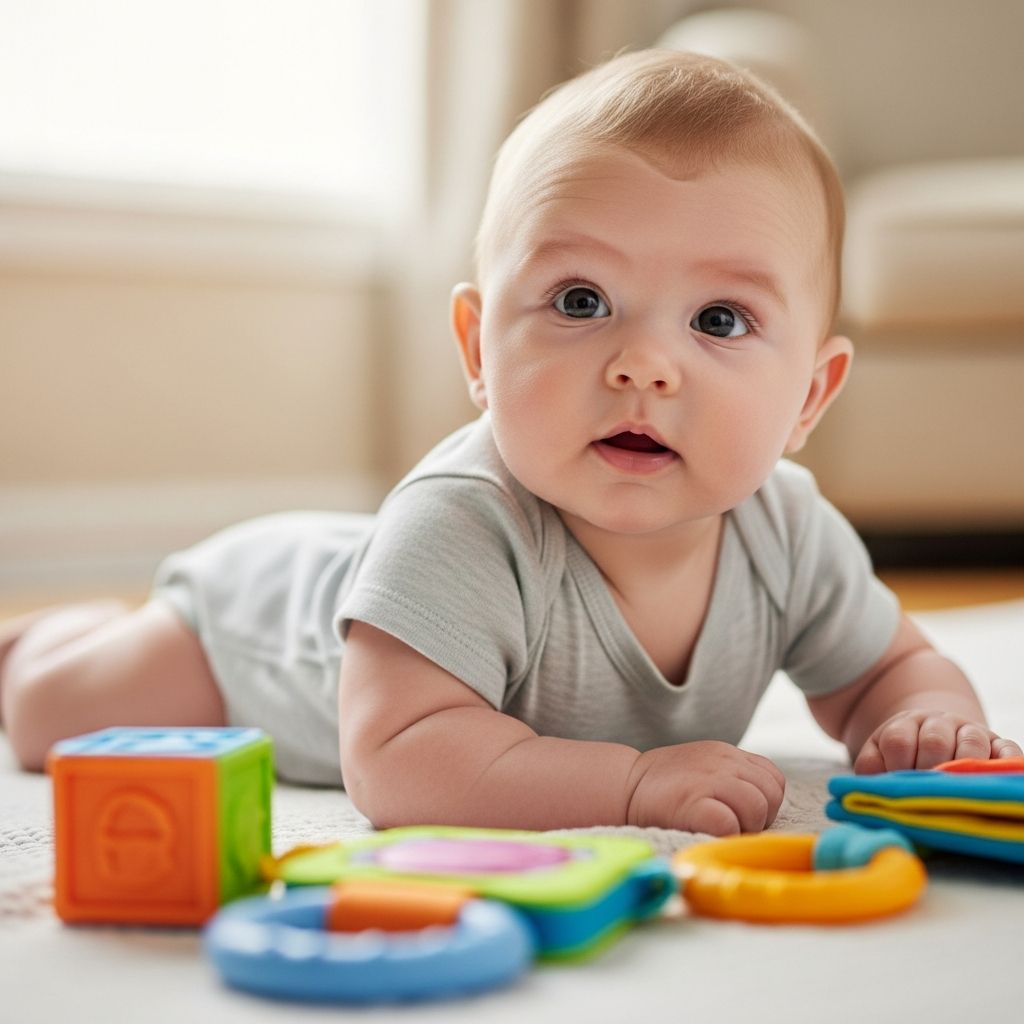
At four months, infants transition from newborn reflexes to more intentional movements and interactions, marking a vibrant phase of growth. This period brings enhanced head control, emerging sounds, and growing awareness of surroundings, as supported by pediatric guidelines.
Physical Growth and Motor Achievements
By four months, babies typically double their birth weight and gain around 20 grams daily, reaching about 1.3 pounds monthly. They exhibit strong head control, lifting their head 90 degrees during tummy time and minimizing droop when sitting propped up.
- Holds head steady without support when carried upright.
- Rolls from front to back, with some advancing to back-to-front by six months.
- Grasps rattles or toys placed in hand, shaking them actively, though they may not retrieve dropped items independently.
- Pushes up on arms during prone position and bears weight on legs when held standing.
Hand-eye coordination emerges, allowing babies to reach for objects and transfer them between hands. Reflexes like the grasp and Moro fade, signaling maturing nervous systems. Parents can promote these skills through supervised tummy time, which strengthens neck and core muscles essential for future sitting and crawling.
Sensory Development and Visual Progress
Four-month-olds develop full color vision and track objects at greater distances, increasing eye contact with caregivers. They follow moving toys or faces smoothly, showing beginning hand-eye coordination.
| Sensory Milestone | Description | Support Tips |
|---|---|---|
| Close Vision | Well-established focus on nearby objects and faces | Hang colorful mobiles above crib |
| Eye Tracking | Follows rolling balls or quick movements | Roll soft balls during playtime |
| Recognition | Identifies familiar voices, faces, and touches | Speak softly from different directions |
Babies anticipate feedings upon seeing a bottle and recognize parental voices, laying foundations for attachment. Exposure to varied textures and bright toys enhances sensory exploration, but avoid screens until age two.
Communication and Social Interactions
Vocalizations expand beyond cries to cooing, laughing aloud, squealing, and bubbling sounds like raspberries. Infants imitate parental sounds, turn toward voices, and respond to their names by four to five months.
- Produces vowel-like sounds (oooo, aahh) and single syllables (ba, ma, da) by six months.
- Shows emotions including joy, frustration, and anger through varied cries or grizzling.
- Demand attention by fussing and hold out arms to be picked up.
Socially, babies smile at mirrors, enjoy peek-a-boo for emerging object permanence, and display memory by reacting to hidden toys. Daily interactions like talking during feeds or diaper changes build language foundations.
Sleep Patterns and Daily Routines
Most four-month-olds sleep 14-16 hours daily, including 9-10 hours at night and two daytime naps. Night stretches lengthen to 6-8 hours, though drooling and self-soothing may signal teething prep.
Establish consistent bedtime routines: dim lights, gentle rocking, and white noise aid settling. Safe sleep means back-sleeping in a bare crib without loose bedding.
Feeding, Nutrition, and Oral Exploration
Exclusively breastfed or formula-fed until around six months, babies show readiness for solids by dribbling, fingering mouths, and eyeing family meals. They open mouths at food sights and coordinate sucking-swallowing better.
Monitor weight gain; consult pediatricians if growth lags. Introduce textures via safe mouthing of toys, preparing palates for purees.
Engaging Play Activities for Optimal Development
Play drives milestones. Floor time with safe toys encourages reaching and rolling. Dance holding baby, sing rhymes, and read picture books while pointing.
- Mirror play: Babies delight in self-recognition smiles.
- Tummy time: Builds strength; supervise closely.
- Rattle shaking: Enhances grasp and sound association.
- Outdoor strolls: Expose to new sights, sounds, people.
- Sensory bins: Soft fabrics, crinkly items (choking-free).
Limit confining seats; prioritize unrestricted movement. Supervise rollers to prevent mishaps.
Health Checks and Safety Essentials
Regular well-baby visits track growth via WHO curves. Vaccinations protect against diseases; discuss with providers.
Safety: Babyproof as mobility rises—secure furniture, gate stairs. Never leave unattended on elevated surfaces. Use rear-facing car seats.
Red Flags: When to Seek Professional Advice
Most babies hit milestones variably, but consult if:
- Poor head control or no reaching/rolling.
- No cooing, smiling, or voice response.
- Weight gain stalls or skills regress.
- Persistent fussiness or feeding issues.
Early intervention via programs like CDC’s Learn the Signs. Act Early improves outcomes. Postnatal parental mental health affects bonding; seek support if anxious.
Frequently Asked Questions (FAQs)
How much tummy time for a 4-month-old?
Aim for 15-30 minutes daily in short sessions, building tolerance gradually to strengthen muscles.
Is screen time okay at 4 months?
No; avoid until age 2 to prioritize real interactions for brain development.
When does rolling over start?
Many roll front-to-back by 4 months, back-to-front by 6.
What if my baby isn’t babbling yet?
Variation is normal; track at checkups. Stimulate with talking, singing.
How to encourage hand-eye coordination?
Offer dangling toys, mirrors; narrate actions during play.
References
- Developmental milestones record – 4 months — MedlinePlus. 2023. https://medlineplus.gov/ency/article/002007.htm
- Baby Development at 4-6 Months — CHOC Children’s. 2024. https://choc.org/ages-stages/4-to-6-months/
- 4-5 months: baby development — Raising Children Network. 2024. https://raisingchildren.net.au/babies/development/development-tracker-3-12-months/4-5-months
- Infant development: Milestones from 4 to 6 months — Mayo Clinic. 2023-10-10. https://www.mayoclinic.org/healthy-lifestyle/infant-and-toddler-health/in-depth/infant-development/art-20048178
- Milestones by 4 Months — CDC. 2025-04-08. https://www.cdc.gov/act-early/milestones/4-months.html
- Baby Developmental Milestones By Month — Cleveland Clinic. 2023. https://my.clevelandclinic.org/health/articles/22063-baby-development-milestones-safety
- CDC’s Developmental Milestones — CDC. 2025. https://www.cdc.gov/act-early/milestones/index.html