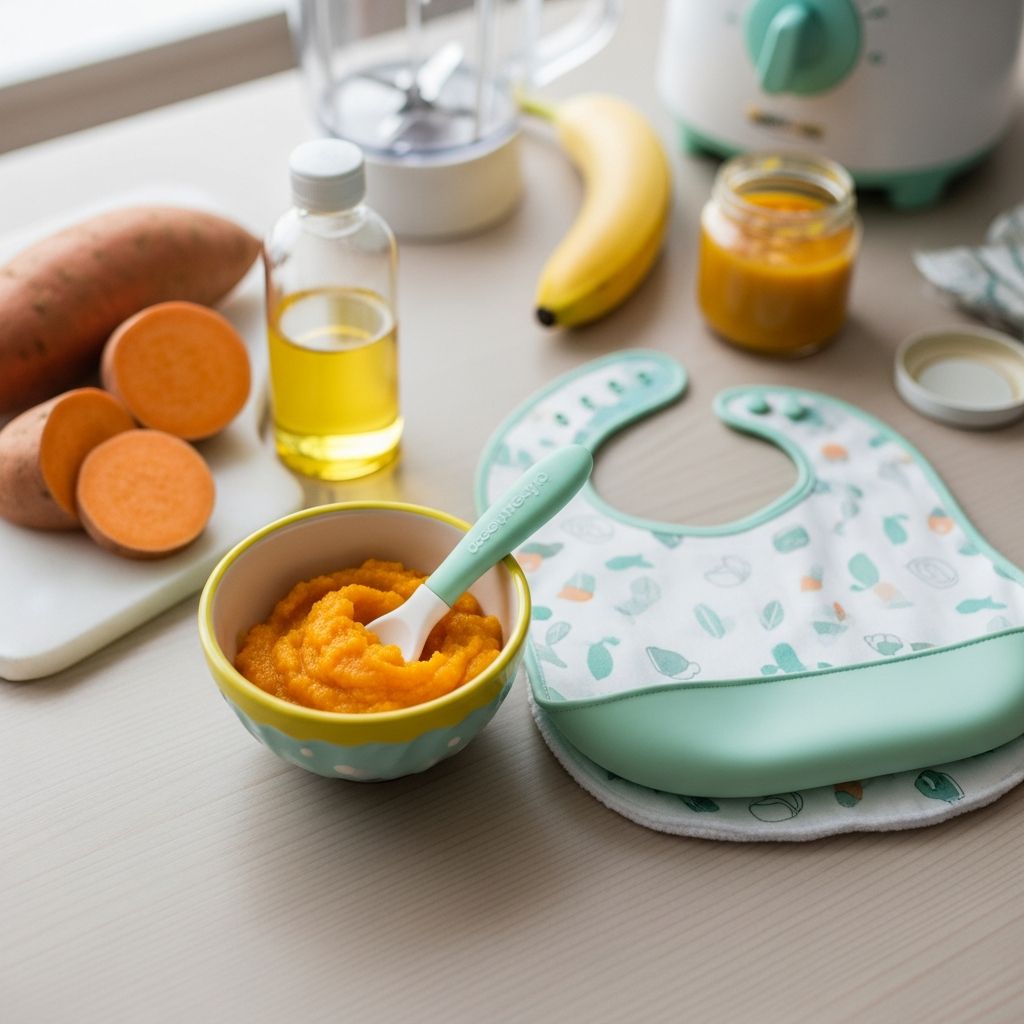
Transitioning your baby from exclusive milk feeds to solid foods marks a thrilling milestone in their growth. Around 6 months, most infants develop the skills needed to handle purees and soft textures, complementing breast milk or formula for optimal nutrition. This phase supports brain development, iron intake, and self-feeding exploration. Proper preparation ensures safety, enjoyment, and nutritional balance.
Recognizing Your Baby’s Readiness for Solids
Infants typically show clear developmental cues between 4-6 months indicating they are prepared for solids. Key signs include good head and neck control, the ability to sit with minimal support, interest in watching others eat, and loss of the tongue-thrust reflex that pushes food out of the mouth. Consult your pediatrician to confirm timing, as every baby progresses uniquely. The CDC advises starting around 6 months, avoiding earlier introductions to prevent digestive issues or allergies.
- Head control: Baby holds head steady without wobbling.
- Sitting ability: Can sit upright in a high chair with support.
- Curiosity: Reaches for food or utensils during family meals.
- Mouth coordination: Opens mouth when spoon approaches and swallows effectively.
These milestones align with rapid growth spurts, making nutrient-dense solids essential for iron and zinc, which milk alone may not fully provide after 6 months.
Essential Kitchen Gear for Smooth Solid Feedings
Stocking your kitchen with baby-friendly tools simplifies mealtimes and promotes hygiene. Opt for BPA-free plastics, silicone, and stainless steel to ensure durability and safety. A high chair with a five-point harness provides secure seating, while bibs with pockets catch spills effectively.
| Item | Purpose | Key Features |
|---|---|---|
| High Chair | Safe seating | Adjustable height, easy-clean tray, harness |
| Suction Bowls/Plates | Stable serving | Stick to trays, portioned sections |
| Silicone Bibs | Mess protection | Pocket catcher, waterproof, machine-washable |
| Baby Spoons | Gentle feeding | Soft silicone tips, long handles |
| Blender/Food Processor | Puree making | Multiple speeds, steam function optional |
| Storage Containers | Meal prep | Glass or silicone, freezer-safe, portioned |
| Steamer Basket | Nutrient retention | Fits standard pots, quick cooking |
These items facilitate mess-free sessions and encourage independence. For example, self-feeding spoons with thick grips allow babies to practice from 8 months.
Building a Nutritious First Foods Menu
Begin with iron-fortified single-grain cereals like oatmeal or barley mixed with breast milk or formula to familiar texture. The Mayo Clinic recommends starting simple, introducing one new food every 3-5 days to monitor for reactions such as rashes or upset stomach. Progress to pureed vegetables (carrots, sweet potatoes), fruits (apples, pears), and proteins (pureed lentils).
Sample Weekly Introduction Plan
- Days 1-3: Iron-fortified oatmeal (1-2 tsp).
- Days 4-6: Pureed sweet potato.
- Days 7-9: Mashed banana.
- Days 10-12: Pureed peas.
- Days 13+: Combine tolerated foods.
Aim for variety: 2-4 tablespoons per meal initially, increasing as appetite grows. By 8-10 months, offer finely chopped finger foods like soft-cooked pasta or ripe peach slices to develop chewing skills.
Allergy Prevention and Safe Introductions
Early exposure to common allergens reduces risk. From 6 months, introduce peanut products (thinned butter), eggs, fish, and wheat, watching closely. The HealthyChildren.org emphasizes variety including meats, eggs, and fish for comprehensive nutrition. Avoid honey, cow’s milk as a drink, and choking hazards like whole grapes or nuts.
- Puree allergens smoothly at first.
- Offer during daytime for observation.
- Consult doctor if family allergy history.
Mealtime Routines and Portion Guidance
Start with one feeding daily, ideally when baby is alert but not starving—perhaps mid-morning. Follow baby’s cues: leaning forward signals hunger; turning away means full. CHOC Health suggests small starts of 1-2 tablespoons, building to 1/4-1/2 cup over weeks.
By 9 months, three meals plus snacks complement 24-32 oz of milk daily. Use family mealtimes to model eating, fostering social bonds.
| Age | Solids per Day | Milk Amount |
|---|---|---|
| 6 months | 1 meal, 2-4 Tbsp | 24-32 oz |
| 7-8 months | 2 meals, 4-8 Tbsp | 24-32 oz |
| 9-12 months | 3 meals + snacks, 1/2-1 cup | 16-24 oz |
Portions vary; prioritize responsiveness over rigid amounts.
Safety Essentials: Hygiene, Choking Prevention, and Storage
Maintain strict hygiene: wash hands, utensils, and produce thoroughly. Spoon food into dishes rather than feeding directly from jars to avoid saliva contamination—refrigerate opened jars for 48 hours max. For choking prevention, cut foods into pinky-finger-sized pieces; avoid hard items like raw carrots.
- CPR training: Learn infant Heimlich via certified courses.
- Supervision: Always watch during meals.
- Texture progression: Smooth purees to mashes to fingers.
Quick and Nutritious Homemade Recipes
DIY purees preserve nutrients better than jars. Steam then blend:
- Apple-Spinach Puree: Steam apple chunks and spinach; blend with formula. Rich in vitamin C and iron.
- Chicken-Veggie Medley: Simmer chicken breast with zucchini and carrots; puree smooth.
- Quinoa Banana Mash: Cook quinoa, mash with ripe banana for protein boost.
Freeze in ice cube trays for 1-oz portions, thawing as needed. These cost-effective recipes align with Canada’s Food Guide recommendations for diverse veggies, grains, and proteins.
Overcoming Common Feeding Hurdles
Babies may refuse new tastes—persist gently without force-feeding. Gagging is normal as they learn; distinguish from choking (silent, distressed). If constipation arises from low-fiber starts, increase fruits and water sips from an open cup.
For picky phases, mix familiar with new flavors. Involve baby in prep by letting them touch ingredients.
Frequently Asked Questions (FAQs)
What if my baby rejects solids?
It’s common; offer small tastes repeatedly without pressure. Pair with milk for familiarity. Persistence pays off as taste buds develop.
How do I introduce allergens safely?
Start pureed around 6 months, one at a time, during the day. Examples: thinned peanut butter on toast fingers or scrambled egg yolk.
When should I stop purees?
Transition to finger foods by 8-10 months when baby pinches and chews reliably. Mix textures for skill-building.
Can I use cow’s milk before 12 months?
No, as a drink—limit to cooking or cereal softening. Stick to breast milk/formula for calcium needs.
How much water does my baby need?
Small sips from a cup with meals after 6 months; increase with solids intake.
References
- Solid foods: How to get your baby started — Mayo Clinic. 2023-10-15. https://www.mayoclinic.org/healthy-lifestyle/infant-and-toddler-health/in-depth/healthy-baby/art-20046200
- Starting solid foods with babies: An ultimate guide — CHOC Health. 2024-05-20. https://health.choc.org/starting-solid-foods-with-babies-an-ultimate-guide/
- Starting Solid Foods — HealthyChildren.org (American Academy of Pediatrics). 2024-02-01. https://www.healthychildren.org/English/ages-stages/baby/feeding-nutrition/Pages/Starting-Solid-Foods.aspx
- Starting Solid Foods: 6–12 Months — Healthy Parents Healthy Children (Government of Alberta). 2023-11-10. https://www.healthyparentshealthychildren.ca/im-a-parent/older-babies-6-12-months/feeding-starting-solid-foods/
- Introducing solids: why, when, what & how — Raising Children Network (Australian Government-funded). 2024-08-05. https://raisingchildren.net.au/babies/breastfeeding-bottle-feeding-solids/solids-drinks/introducing-solids
- When, What, and How to Introduce Solid Foods — Centers for Disease Control and Prevention (CDC). 2025-01-10. https://www.cdc.gov/infant-toddler-nutrition/foods-and-drinks/when-what-and-how-to-introduce-solid-foods.html