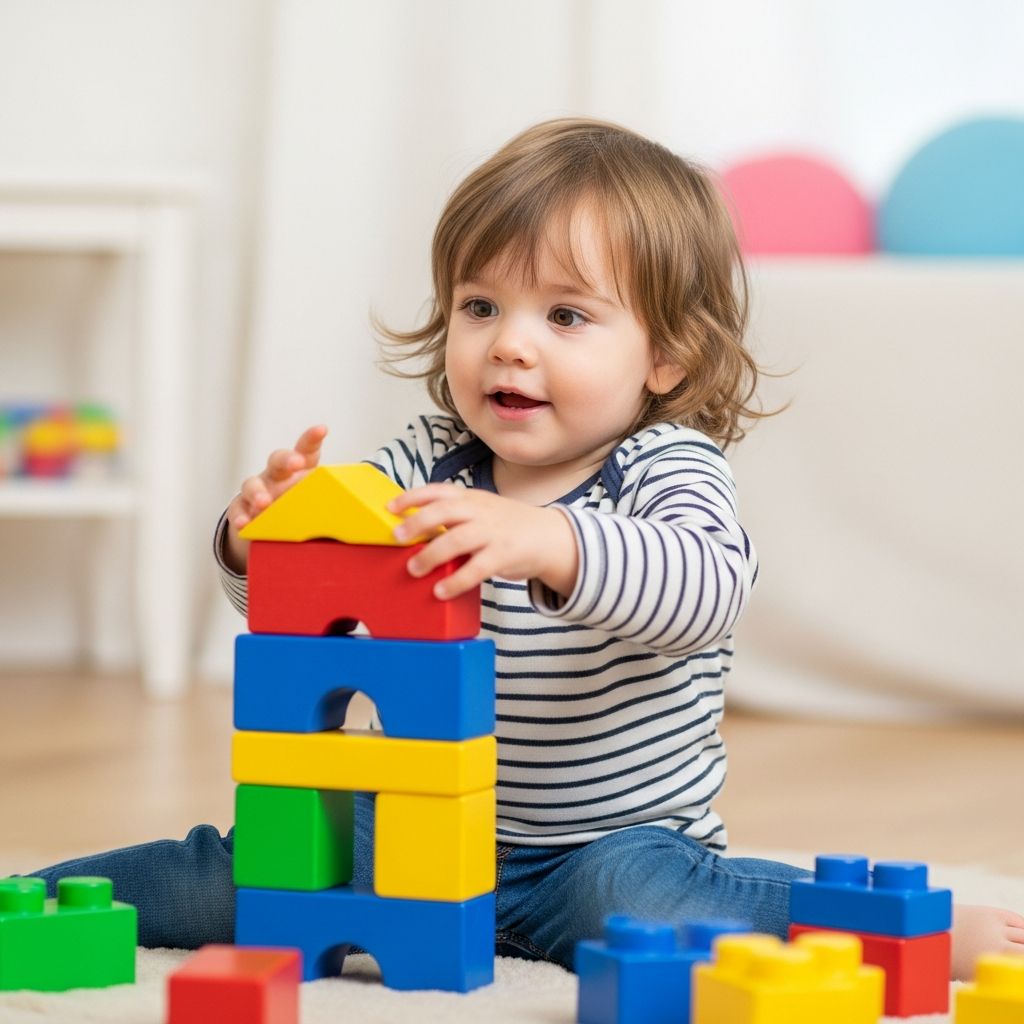
At around 30 months old, your child is moving from babyhood into early childhood, with big changes in language, emotions, and independence. This age can feel exciting, confusing, and occasionally exhausting, but understanding what is typical can make it much easier to support your toddler.
Big Picture: What’s Happening at 2½ Years
By about two and a half, many children are more active, more verbal, and more determined to do things “by myself.” They are also still learning how to manage strong feelings, share with others, and follow rules.
- Rapid brain growth supports new thinking skills, pretend play, problem-solving, and curiosity.
- Improved coordination allows for running, jumping, climbing, and more confident handling of small objects like crayons and spoons.
- Social and emotional development brings more complex feelings, stronger preferences, and sometimes more frequent power struggles.
Emotional and Social Growth
At this age, children are beginning to see themselves as separate people with their own ideas and desires, which greatly affects how they relate to others. You may see both affectionate moments and sudden outbursts within the same afternoon.
- Children often enjoy playing near other kids and may sometimes join in simple games or pretend scenarios.
- They look for adult approval, proudly saying or showing what they can do and watching for your reaction.
- Strong feelings about routines, toys, or people are common, and changes can trigger big emotional responses.
Young children at this age are still learning to manage frustration, so hitting, crying, or yelling may appear when they feel overwhelmed. Gentle guidance and predictable routines help them feel safe while learning better ways to cope.
Language and Communication Skills
Many 30-month-olds use short phrases and simple sentences to share thoughts, ask questions, and protest when they do not like something. Vocabulary tends to expand quickly, especially when adults talk, read, and sing with them regularly.
- Children often use two- or three-word phrases such as “more water” or “go outside now.”
- They may use words like “I,” “me,” or “mine,” reflecting a growing sense of self.
- When you point to familiar pictures in books, many children can name people, animals, or everyday objects.
- They usually follow simple directions, and some can manage two steps in a row when instructions are clear and brief.
Pronunciation does not have to be perfect yet. What matters most is that your child is trying to communicate and that people who spend time with them can understand at least some of what they say.
Movement and Physical Development
Physical skills take a big leap around this stage. Toddlers are more confident on their feet and often seem eager to test limits: climbing, jumping, and exploring higher or more challenging spaces.
- Many children can run, jump off low surfaces, and walk up or down steps while holding a hand or railing.
- They may begin to take off simple clothing items such as loose shirts, hats, or socks, showing early self-care skills.
- Fine motor control improves as children turn pages one by one, twist lids, and attempt to use utensils or crayons.
Because toddlers are more mobile yet still lack full awareness of danger, close supervision and a safe environment remain very important.
Thinking and Problem-Solving Skills
Around 30 months, children start to connect ideas in more complex ways. They move beyond simply exploring objects and begin to imagine what else those objects can represent or do.
- Pretend play becomes richer. A block can become a car, a spoon can feed a doll, and a box can turn into a house or boat.
- Children may solve simple problems, such as moving a stool to reach a toy or asking an adult for help with a stuck lid.
- They can usually follow short, two-step directions like “Pick up the ball and put it on the chair,” especially if the task is familiar.
- Some children start to recognize and name basic colors, shapes, or common categories like animals, foods, and vehicles.
These thinking skills grow best when children have time and space to explore, ask questions, and try things in their own way.
Sample 30-Month Milestones Table
The table below offers a general view of common skills for many 30-month-olds. Children develop at different rates, so consider ranges rather than strict deadlines.
| Area of Development | Examples of Common Skills |
|---|---|
| Social & Emotional | Plays near other children; sometimes joins in simple games; seeks praise; may resist sharing or taking turns. |
| Language & Communication | Uses short phrases or simple sentences; uses “I” or “me”; can name familiar objects or people in pictures; follows simple directions. |
| Physical & Motor | Walks and runs confidently; may jump with both feet; begins to remove some clothing; turns pages one at a time; uses hands to twist or turn objects. |
| Cognitive (Thinking) | Engages in pretend play; uses simple tools or strategies to solve everyday problems; may recognize a color or two and understands basic concepts like “in,” “on,” or “under.” |
Encouraging Healthy Development Every Day
You do not need special toys or complex activities to support your 30-month-old. Daily routines—meals, bath time, errands, and play—offer many opportunities for learning.
- Talk throughout the day: Describe what you and your child are doing, label feelings, and invite simple choices such as “Do you want the blue cup or the green cup?”
- Read and look at books together: Ask “What do you see?” and let your child turn pages or finish familiar phrases in favorite stories.
- Offer pretend props: Boxes, stuffed animals, toy dishes, or scarves can become part of pretend games that support imagination and language.
- Encourage active play: Safe spaces for running, climbing on low structures, dancing, and throwing soft balls build strength and coordination.
- Give simple responsibilities: Invite your child to put toys in a bin, place napkins on the table, or carry a small item to another room.
Managing Big Feelings and Challenging Behavior
Tantrums and testing limits are common at this age because children are driven to be independent but still do not have reliable self-control. This conflict can lead to tears, screaming, or resistance when they hear “no.”
- Stay calm and consistent. Keeping rules simple and predictable helps children learn what to expect.
- Offer limited choices, such as “Do you want to put on your shoes first or your coat?” so your child can feel some control.
- Use positive attention: notice and praise the behaviors you want to see more often, like sharing, waiting, or helping.
- Plan ahead for tricky moments—such as leaving the playground or going to the store—by giving warnings and explaining what will happen next.
When tantrums happen, ensure your child is safe, stay nearby, and speak in a calm, reassuring voice once they are ready to listen. Over time, this approach teaches that feelings are allowed, but certain behaviors are not.
Supporting Independence and Self-Help Skills
At around 2½, many children show pride in trying new tasks, even if they cannot yet do them perfectly. Encouraging this growing independence can boost confidence and cooperation.
- Allow extra time so your child can try to put on shoes, wash hands, or help with simple dressing tasks.
- Keep expectations realistic: you may need to finish zippers or buttons, but praise the effort along the way.
- Offer toddler-friendly tools such as small cups, child-sized utensils, and easy-to-remove clothing.
Letting your child do what they can for themselves, while stepping in when needed, shows that effort is valued and that you are a safe base when things feel too hard.
Toilet Learning Around 30 Months
Some children begin to show interest in using the toilet around this age, while others are not ready until later. Readiness varies widely, and there is no need to rush if your child shows little interest.
- Possible signs of readiness include staying dry for longer periods, noticing or telling you when diapers are wet or dirty, and curiosity about family bathroom routines.
- Offer a small potty or seat insert, let your child sit fully clothed at first if they prefer, and explain the steps in simple language.
- Avoid pressure, punishment, or shaming. Calm encouragement and praise for small successes work far better than criticism.
Accidents are normal even after a child seems trained. Staying patient and matter-of-fact helps keep toilet learning a positive experience.
Sleep and Daily Routines
Predictable daily routines provide structure that makes toddlers feel secure and reduces power struggles. Around 30 months, many children still nap once a day and need an early, consistent bedtime.
- Keep a regular schedule for waking, meals, naps, and bedtime whenever possible.
- Use a calming bedtime routine with the same few steps every night, such as bath, pajamas, story, and a brief cuddle.
- Limit stimulating activities and screens close to bedtime so your child can wind down.
Consistency does not mean rigidity. Occasional changes are fine, but a familiar rhythm helps toddlers manage transitions more smoothly.
Nutrition and Mealtime Skills
By 30 months, many children can sit at the table for short meals and snacks, though attention spans may limited. They are still learning to listen to hunger and fullness signals.
- Offer a variety of healthy foods in small portions and avoid pressure to “clean the plate.”
- Use child-sized cups and utensils and expect some spills as part of learning.
- Serve meals and snacks at regular times, with water available between them.
Eating together as a family when possible helps children learn table manners, routines, and language as they watch and listen to adults.
When to Talk to a Pediatrician
Every child develops at their own pace, but it is important to pay attention to patterns that might suggest extra support is needed. Trusting your instincts as a parent or caregiver is key.
- Consult your child’s health care provider if you rarely hear words or short phrases, or if your child has stopped using words they once had.
- Ask for guidance if your child seems uninterested in people, does not respond to their name, or rarely makes eye contact.
- Raise concerns if your child cannot walk steadily, rarely uses both hands, or seems very clumsy for their age.
- Discuss behavior that feels extreme or unmanageable, such as constant, intense tantrums that last very long or aggressive behavior that does not improve with gentle discipline.
Regular well-child visits are a good time to review milestones, ask questions, and learn about screenings that check for developmental delays or other concerns. Early support can make a real difference, so speaking up is always worthwhile.
Frequently Asked Questions About 30-Month-Olds
1. How many words should a 30-month-old say?
There is a wide range of normal, but many children at this age use a growing number of words and short phrases. The key questions are whether your child is adding new words over time and whether people who know them can understand at least some of what they say.
2. Is it normal for my 2½-year-old to have frequent tantrums?
Yes, tantrums are common in this stage of development because children feel strong emotions but lack reliable ways to manage them. Calm, consistent responses, combined with clear limits and choices, usually help tantrums decrease over time.
3. When should I start worrying about speech delays?
Consider contacting your child’s health care provider if your toddler rarely uses words, seems to have stopped gaining new words, or struggles to follow simple directions. It is always appropriate to ask about a hearing check or developmental screening if you have concerns.
4. What if my child is not interested in other kids yet?
Many 30-month-olds prefer playing near other children rather than directly with them, which is called parallel play. If your child never seems curious about people or consistently avoids interaction, talk with your pediatrician for personalized advice.
5. How can I help my 30-month-old learn without using screens?
Everyday life offers countless learning opportunities: reading books, singing, talking about what you see during walks, cooking together, and giving simple chores. Open-ended toys like blocks, dolls, cars, and art materials encourage creativity and problem-solving without the need for digital devices.
6. What should I do if my child seems behind other children?
Comparing children can be stressful because development is not a race, and each child has strengths and weaker areas. If you feel uneasy, make a list of specific concerns and bring them to your child’s next health visit; your provider can recommend evaluations or early intervention services if needed.
Key Takeaways for Parents
Around 30 months, children make important gains in language, movement, thinking, and independence while still needing strong emotional support and clear boundaries. You support healthy development each day by talking, reading, playing, and responding with patience and consistency.
Staying observant, celebrating progress, and reaching out to professionals when something does not feel right can help your child thrive during this busy, fascinating stage of growth.