What to Expect When Your Child Turns Three
The third year of life marks a significant transition from the toddler stage toward the preschool years. During this period, children undergo remarkable transformations across multiple developmental domains. Parents often find themselves amazed at how quickly their three-year-old can accomplish new tasks, ask increasingly complex questions, and demonstrate newfound independence. Understanding what constitutes typical development at this age helps parents provide appropriate support and recognize when their child may need additional resources.
Physical Growth and Body Changes
At three years old, children’s bodies continue their slower growth trajectory compared to infancy. Most three-year-olds have lost the characteristic rounded belly of toddlerhood and appear noticeably taller and leaner. During this year, children typically gain approximately 4 to 5 pounds and grow 2 to 3 inches, reaching roughly half of their eventual adult height. This steady but modest growth rate is completely normal and reflects the body’s developmental needs during the preschool years.
Motor Skills and Physical Capabilities
Three-year-olds demonstrate impressive advances in both gross and fine motor abilities. Children at this age can run and jump with ease, navigate stairs without requiring hand support, and pedal a tricycle with coordination. Many can stand on their tiptoes and balance briefly on one foot for several seconds. These gross motor achievements reflect developing strength, balance, and body awareness.
Fine motor development enables three-year-olds to accomplish increasingly precise tasks. Most children can stack ten or more blocks, draw straight lines, and copy circles when shown how. They can string together objects like large beads or pasta, demonstrating hand-eye coordination and patience. Self-care skills flourish during this period—three-year-olds can typically dress and undress themselves with minimal assistance, feed themselves using utensils with few spills, and wash their own hands.
Vision, Hearing, and Sensory Development
Visual acuity improves significantly by age three. Most three-year-olds achieve vision of approximately 20/30, with many approaching the standard 20/20 vision of school-aged children and adults. This improved vision enables them to notice fine details in their environment and engage more effectively with visual learning materials.
Sensory awareness expands in social contexts as well. Three-year-olds demonstrate growing ability to notice when others are experiencing emotions, often pausing their activities to observe someone who is crying or distressed. They begin to recognize and name colors, understand concepts like big and small, and sort objects by color and shape.
Language and Communication Development
The explosion of language during the third year is among the most noticeable changes parents observe. Three-year-olds typically possess a vocabulary of 500 to 900 words and can speak in sentences of three to five words, with many progressing toward longer utterances. Their speech becomes increasingly understandable to unfamiliar listeners, though some minor pronunciation variations remain typical.
Conversational skills develop during this year as well. Three-year-olds can engage in back-and-forth exchanges with adults and are notably curious, constantly asking “who,” “what,” “where,” and “why” questions. They begin using pronouns correctly, incorporating words like “I,” “you,” “he,” and “me” into their speech. Many children show interest in learning simple nursery rhymes, songs, and lyrics, often requesting repetition of their favorites.
Understanding language progresses alongside expressive abilities. Three-year-olds comprehend prepositions such as “on,” “under,” “in,” and “behind,” making them responsive to positional instructions. They understand concepts related to time, such as “yesterday,” and can follow three-part commands. Most importantly, they begin to use polite language, incorporating “please” and “thank you” into their interactions.
Cognitive Development and Learning
Intellectual development during the third year reflects growing abilities in memory, attention, and conceptual thinking. Three-year-olds can concentrate on tasks for eight to nine minutes, a significant increase from earlier toddler years. They can count up to three or four objects and understand the concept of numbers, though true mathematical understanding remains limited.
Symbolic thinking flourishes at this age. Three-year-olds engage in imaginative play, pretending to be parents, acting out familiar scenarios, and creating narratives with toys. They can remember and reference parts of stories, demonstrating growing narrative understanding. The ability to recognize letters and numbers emerges, and many children show interest in learning written symbols, though formal reading and writing typically develop later.
Problem-solving abilities expand, though children at this age still approach challenges primarily from single viewpoints rather than considering multiple perspectives. They begin developing a clearer sense of time and can anticipate what comes next in familiar routines.
Sleep and Rest Requirements
Three-year-olds require 11 to 13 hours of sleep daily, which may include an afternoon nap. Quality sleep supports growth, emotional regulation, and cognitive development. Most children at this age have achieved some degree of nighttime dryness, though nighttime accidents remain common and expected.
Toilet Training and Bodily Control
Many three-year-olds develop increasing control over bowel and bladder functions. Daytime dryness becomes typical for most children, with some achieving nighttime control as well. However, the timeline for toilet training varies widely among typically developing children, and parental approaches should remain patient and pressure-free. Most children become reliably trained between ages three and four, though individual variations are completely normal.
Behavioral and Emotional Development
Three-year-olds exhibit distinctive behavioral patterns that reflect their growing understanding of social rules and emotional concepts. Temper tantrums decrease in frequency compared to earlier toddler years, though frustration remains common when children face limitations or unmet desires. Importantly, three-year-olds begin expressing feelings in increasingly socially acceptable ways, developing early emotion regulation skills.
Fears emerge or intensify during this year, particularly regarding imaginary things such as monsters or shadows. These fears reflect growing imagination and are developmentally appropriate. Most three-year-olds benefit from reassurance and validation rather than dismissal of their concerns.
Self-awareness solidifies during this period. Three-year-olds know their own names, ages, and biological sex. They demonstrate increasing independence, insisting on doing things themselves and showing visible frustration when assistance is offered or imposed. This autonomy-seeking behavior, while sometimes challenging for parents, represents healthy development of self-identity.
Social Development and Peer Interactions
Social skills undergo substantial development during the third year. Three-year-olds show increasing interest in other children and begin playing alongside and with peers rather than exclusively in parallel play. They can take turns during games and activities, sharing toys with siblings and friends. The ability to share, however, remains emerging—children at this age understand the concept but may require frequent reminders and support from adults.
Cooperative play becomes possible, with three-year-olds engaging in imaginative group games and role-play scenarios. They notice and respond to other children, joining play activities when invited. Separation anxiety decreases noticeably, with most three-year-olds becoming less distressed when separated from primary caregivers for short periods.
What Supports Healthy Development
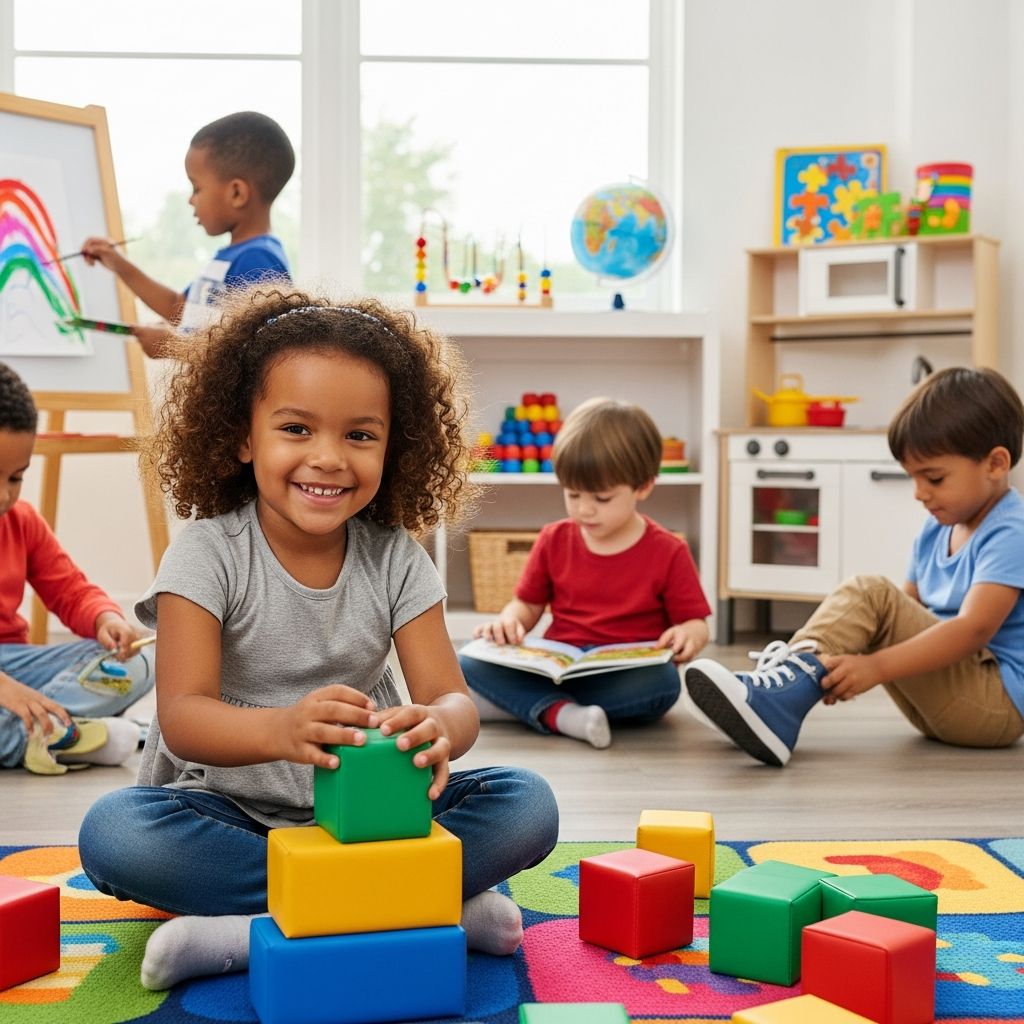
Parents and caregivers can support three-year-olds’ development through consistent routines, abundant opportunities for play, and responsive interaction. Reading together, engaging in pretend play, and providing open-ended materials like blocks and art supplies promote cognitive and social development. Physical activity, outdoor exploration, and gross motor play support both physical health and emotional well-being.
Responsive parenting—acknowledging feelings, setting clear boundaries, and modeling appropriate behavior—helps children develop emotional regulation and social competence. Consistent language exposure through conversation, singing, and storytelling supports language development. Most importantly, creating an environment where exploration is encouraged within safe limits allows three-year-olds to develop confidence and independence.
Frequently Asked Questions
Is my three-year-old’s speech delayed if they speak in only two-word sentences?
While most three-year-olds speak in three-to-five-word sentences, there is normal variation in language development. If your child understands language well, attempts to communicate, and is adding new words regularly, development is likely proceeding typically. However, if you have concerns about speech clarity, vocabulary growth, or comprehension, discussing observations with your pediatrician is appropriate.
When should my child be completely toilet trained?
Toilet training timelines vary significantly among children. Some three-year-olds achieve daytime dryness, while others may not be reliably trained until age four or beyond. Readiness signs include staying dry for longer periods, showing interest in the bathroom, and communicating bodily needs. Avoiding pressure and following the child’s developmental readiness leads to more successful outcomes.
Is it normal for my three-year-old to have fears of imaginary things?
Yes, imaginary fears are completely typical during the preschool years and reflect developing imagination. Providing reassurance, validating feelings, and maintaining consistent routines helps children manage these fears. Avoiding scary content and maintaining a sense of safety reduces unnecessary anxiety.
How much physical activity does my three-year-old need?
Three-year-olds benefit from active play throughout the day. Physical activity supports motor development, strengthens bones and muscles, promotes cardiovascular health, and contributes to emotional well-being. Providing varied opportunities for movement—running, jumping, climbing, dancing, and playing with balls—supports comprehensive physical development.
What should I do if my three-year-old refuses to share toys?
Sharing emerges gradually during the third year and is still developing at age three. Rather than forcing sharing, adults can model the behavior, create situations where children practice turn-taking in games, and provide sufficient toys to reduce conflict. Acknowledging the difficulty—”sharing is hard”—validates children’s feelings while gently encouraging the skill.
References
- Developmental Milestones Record – 3 Years — MedlinePlus. U.S. National Library of Medicine. https://medlineplus.gov/ency/article/002014.htm
- Development Milestones for Your 3-Year-Old Child — CHOC (Children’s Hospital of Orange County). https://choc.org/ages-stages/3-years/
- Developmental Milestones for Toddlers (2–3 Years) — Coral Care. https://www.joincoralcare.com/developmental-guides/milestones-2-3-years-toddlers
- Developmental Milestones: 3 to 4 Year Olds — HealthyChildren.org, American Academy of Pediatrics. https://www.healthychildren.org/English/ages-stages/preschool/Pages/Developmental-Milestones-3-to-4-Year-Olds.aspx
- 3-4 Years: Preschooler Development — Raising Children Network. https://raisingchildren.net.au/preschoolers/development/development-tracker/3-4-years
- Milestones by 3 Years — Centers for Disease Control and Prevention (CDC). https://www.cdc.gov/act-early/milestones/3-years.html