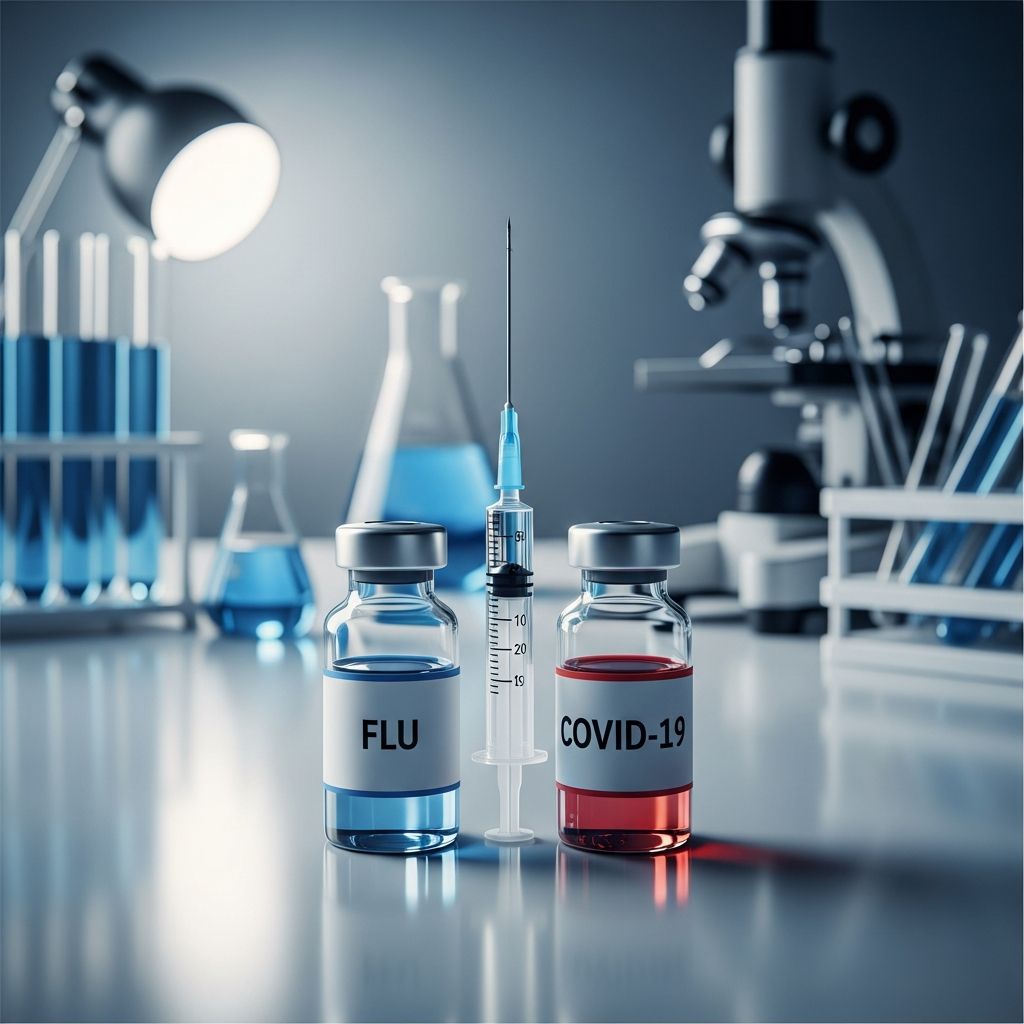
Respiratory illnesses like influenza and COVID-19 continue to pose significant threats each year, particularly during fall and winter months. For the 2025-2026 season, health authorities have released updated vaccine formulations and recommendations to better match circulating strains. These changes aim to enhance protection for vulnerable populations, including children, pregnant individuals, older adults, and those with underlying conditions. Understanding these updates empowers families to make informed health decisions.
New Developments in Influenza Vaccines
The Centers for Disease Control and Prevention (CDC) has outlined key advancements for the 2025-2026 flu season. All approved influenza vaccines this year are trivalent, targeting three primary virus strains: an A(H1N1)pdm09-like virus, an updated A(H3N2)-like virus, and a B/Victoria lineage virus. This shift from quadrivalent to trivalent formulations reflects surveillance data showing minimal circulation of the B/Yamagata lineage, allowing manufacturers to focus resources on the most prevalent threats.
Egg-based vaccines include strains such as A/Victoria/4897/2022 (H1N1)pdm09-like, A/Croatia/10136RV/2023 (H3N2)-like, and B/Austria/1359417/2021 (B/Victoria)-like viruses. Manufacturers project up to 154 million doses available in the U.S., with most being thimerosal-free, addressing common parental concerns about preservatives. Additionally, the FDA approved FluBlok, a recombinant vaccine, for individuals aged 9 and older—expanding access beyond its prior 18+ restriction—and FluMist for self-administration by caregivers.
COVID-19 Vaccine Formulations for the Upcoming Season
The FDA’s Vaccines and Related Biological Products Advisory Committee recommended monovalent JN.1-lineage vaccines for the 2025-2026 COVID-19 formula, preferentially using the LP.8.1 strain to align with dominant variants. This update ensures better neutralization of currently circulating SARS-CoV-2 subvariants. Approved options include Moderna’s Spikevax and mNexspike, and Pfizer-BioNTech’s Comirnaty, suitable for everyone aged 6 months and older.
These vaccines demonstrate robust effectiveness: against XBB.1.5, they reduce hospitalization risk by 46-50% in adults and 37% in immunocompromised individuals; for KP.2, effectiveness reaches 68%. Safety data confirms low rates of serious side effects, such as myocarditis at 1.3-3.1 per 100,000 doses in male adolescents.
Who Needs the Flu Vaccine This Season?
CDC core recommendations emphasize annual flu vaccination for most people aged 6 months and older. However, recent adjustments to the childhood schedule promote shared clinical decision-making for children, particularly after a January 2026 CDC update. Providers are encouraged to discuss benefits and risks with parents, balancing factors like local flu activity and child health status.
- Children 6 months to 8 years: May require two doses if first-time or prior single-dose recipients.
- Pregnant women: Single-dose thimerosal-free options recommended.
- Adults 65+: High-dose or adjuvanted vaccines for enhanced response.
- Healthcare workers and caregivers: Prioritized to protect communities.
Early data from England shows 70-75% effectiveness against hospitalization in children and 30-40% in adults, underscoring vaccination’s value.
Guidance for COVID-19 Vaccination
Unlike universal mandates, 2025-2026 COVID-19 vaccines follow an individualized approach. CDC advises based on personal risk, but groups like the American Academy of Pediatrics (AAP) strongly endorse shots for children 6-23 months and high-risk youth up to 18 years. Everyone 6 months+ can receive them, with special emphasis on older adults, pregnant people, and immunocompromised individuals.
| Group | Flu Recommendation | COVID-19 Recommendation |
|---|---|---|
| Infants 6-23 months | Annual, shared decision-making | Strongly recommended (AAP) |
| Children 2-17 years | Annual for all | High-risk priority |
| Pregnant individuals | Thimerosal-free single dose | Individualized, high priority |
| Adults 18-64 | Annual | Individual decision |
| 65+ | Enhanced formulations | Highly recommended |
This table summarizes tailored advice, helping families compare options.
Combining Flu and COVID-19 Shots
Co-administration remains safe and effective, simplifying visits. Studies confirm no interference in immune response, and it boosts compliance during peak season. Parents can schedule both during one appointment, ideally September through October for flu (anytime viable) and fall for COVID-19.
Safety Profiles and Addressing Concerns
Both vaccines have strong safety records. Flu vaccines show consistent profiles, with early 2025-2026 VE estimates aligning with historical norms. COVID-19 vaccines report rare adverse events; extended dosing intervals minimize myocarditis risk. FluMist’s self-administration approval eases access for busy families. Consult providers for allergies or histories like Guillain-Barré.
Timing Your Family’s Vaccinations
Optimal windows: Flu shots from late summer onward; COVID-19 in fall. Delays don’t negate benefits mid-season. Stockpiles ensure availability; pharmacies, clinics, and pediatricians offer walk-ins. Insurance covers AAP-scheduled vaccines fully.
- Track local outbreaks via CDC FluView.
- Prepare with health histories.
- Follow up on second doses for young children.
Protecting High-Risk Family Members
Infants under 6 months rely on herd immunity and maternal antibodies from vaccination during pregnancy. Older adults benefit from targeted flu formulas reducing hospitalization by up to 67% in kids and 48% in adults. Immunocompromised individuals see substantial gains from both vaccines.
Frequently Asked Questions
Can children get flu and COVID-19 vaccines together?
Yes, simultaneous administration is safe and recommended to streamline protection.
Are the new vaccines effective against current strains?
Yes, trivalent flu and JN.1-lineage COVID-19 formulas match surveillance data closely.
What if my child has never had a flu shot?
Two doses, 4 weeks apart, spaced over two seasons for full immunity.
Is thimerosal still in vaccines?
Most 2025-2026 flu doses are preservative-free; single-dose options for pregnant women.
Do I need both vaccines every year?
Annual flu yes; COVID-19 based on risk and prior dosing.
Steps to Stay Ahead of Respiratory Season
Beyond vaccination, layer defenses: hand hygiene, masks in crowds, staying home when sick. Monitor symptoms and test promptly. These vaccines, backed by rigorous trials, form the cornerstone of prevention. Families consulting pediatricians ensure personalized plans.
By prioritizing updates, parents safeguard health amid evolving viruses. Vaccination rates directly impact community resilience—act now for the season ahead.
References
- 2025–2026 Flu Season | Influenza (Flu) — CDC. 2025. https://www.cdc.gov/flu/season/2025-2026.html
- Updated Evidence for Covid-19, RSV, and Influenza Vaccines for 2025-2026 — Massachusetts Medical Society (PubMed). 2025. https://pubmed.ncbi.nlm.nih.gov/41160817/
- COVID-19 Vaccines (2025-2026 Formula) for Use in the United States — FDA. 2025. https://www.fda.gov/vaccines-blood-biologics/industry-biologics/covid-19-vaccines-2025-2026-formula-use-united-states-beginning-fall-2025
- Communicating About Flu and COVID-19 Vaccination in 2025-26 — Public Health Collaborative. 2025. https://publichealthcollaborative.org/communication-tools/communicating-about-flu-and-covid-19-vaccination-in-2025-26/
- Staying Up to Date with COVID-19 Vaccines — CDC. 2025. https://www.cdc.gov/covid/vaccines/stay-up-to-date.html