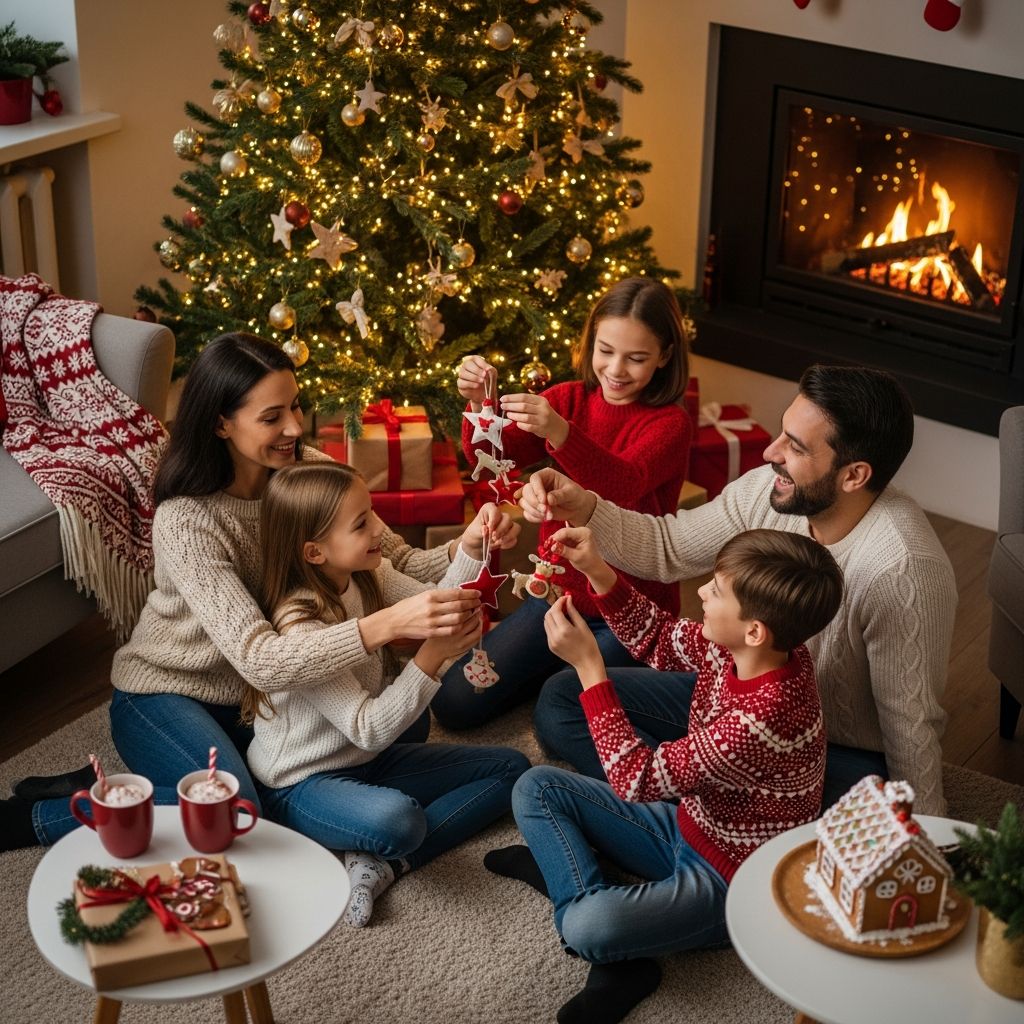
December can be a whirlwind of events, expectations, and to-do lists. Intentional traditions help families slow down, reconnect, and focus on what matters most: love, kindness, and shared joy. This guide offers fresh ideas for shaping a month that feels peaceful, meaningful, and memorable for everyone in your home.
Why December Traditions Matter for Families
Family rituals and traditions do more than fill time; they offer children a sense of belonging and predictability during a busy season. Research on family routines shows that shared rituals support emotional security, strengthen relationships, and contribute to children’s well-being and resilience.
December can be especially powerful because:
- Routines anchor kids when school schedules and social events are changing.
- Meaningful rituals help shift focus from consumerism to connection and values.
- Shared memories become part of your family story and identity.
There is no single “right” way to celebrate. The most meaningful traditions are the ones that reflect your family’s values, capacities, and unique culture.
Designing Traditions That Fit Your Family
Before you add anything new to December, take a moment to reflect. Your goal is not to create a picture-perfect holiday, but a sustainable and nourishing one. Consider these guiding questions:
- What feelings do we want to experience this month (calm, joy, reverence, playfulness)?
- Which values matter most to us (kindness, faith, generosity, creativity, rest)?
- How much time and energy do we realistically have?
- What did we love last year? What drained us?
Use your answers to choose a small handful of traditions to try. It is better to begin with two or three that you can truly enjoy than a long list that leaves everyone exhausted.
Connection-Centered Evening Rituals
Even on busy days, a simple evening ritual can reconnect the whole family. These practices don’t require elaborate planning; they ask mainly for presence and attention.
1. Three-Things Gratitude Circle
Gratitude practices are linked with improved mood and emotional well-being for both adults and children. A nightly “three-things” circle keeps the focus on what is working, even on stressful days.
- Invite each person to share three things they appreciated that day.
- Allow a mix of tiny (“my warm socks”) and big (“Grandma visiting”) moments.
- If a child struggles, offer prompts: “Did anyone help you today?” or “Was there a funny moment?”
Over time, this becomes a treasured tradition that teaches children to notice goodness in ordinary days.
2. Candlelight Story Time
Soft light naturally encourages calm and closeness. Turning off overhead lights and reading by candlelight or fairy lights can transform even a familiar story into something magical.
- Choose a short book, poem, or family story each evening.
- Invite kids to take turns choosing the reading or telling their own made-up stories.
- End with a quiet moment of silence or a simple wish for the coming day.
This ritual doubles as a gentle wind-down routine and can support healthy sleep by reducing bright-light exposure before bedtime.
3. Daily Appreciation Ritual
Families thrive when appreciation is expressed regularly, not only when giving gifts. A simple daily practice can strengthen bonds and help children internalize a sense of worth.
- Each person names one thing they appreciated about another family member that day.
- Model specifics: “I appreciated how you helped your brother find his mittens,” rather than generic praise.
- Encourage children to appreciate adults too, building mutual respect.
Kindness and Service Traditions
Many families want December to emphasize giving rather than getting. Service traditions provide children with hands-on ways to practice empathy and generosity, which are linked with improved social relationships and well-being.
4. Kindness Countdown Calendar
Instead of (or alongside) a treat calendar, create a kindness calendar for the days leading up to a significant holiday.
- Write simple acts of kindness on slips of paper: “draw a picture for a neighbor,” “put away someone else’s dishes,” “compliment a classmate.”
- Keep tasks age-appropriate and achievable in 5–15 minutes.
- Let kids help brainstorm ideas to build ownership.
This tradition gently shifts anticipation from “What will I get?” to “How can we care for others today?”
5. Family Giving Night
Choose one evening in December to focus on financial or material generosity.
- Decide together on a cause or organization that reflects your values (local food pantry, refugee support, environmental charity).
- Invite children to contribute a small portion of their own savings if appropriate.
- Research the organization together so kids understand whom they are helping.
For older children, you might compare two organizations and talk about impact, transparency, and mission. This helps them develop critical thinking about charity and social responsibility.
6. Neighbor Care Project
Acts of neighborliness build social connection and may increase feelings of safety and belonging in a community.
- Bake a simple treat or prepare a small note and deliver it to a few neighbors.
- Encourage your children to add drawings or write their own messages.
- If you have older or isolated neighbors, ask ahead if there is a practical way your family could help.
Nature, Light, and Seasonal Wonder
December offers powerful contrasts: dark and light, cold and warmth, stillness and celebration. Simple traditions that acknowledge these changes can deepen children’s connection with the natural world.
7. Winter Walk of Noticing
Bundle up and take a slow walk focused on noticing seasonal details.
- Ask, “What do you see, hear, and smell that tells you it is winter?”
- Look for birds, bare branches, evergreen plants, or winter decorations.
- Take photos or short notes to create a “December nature log.”
Activities that combine movement and time outdoors are associated with reduced stress and improved mood for both children and adults.
8. Light-in-the-Dark Evening
Choose one evening to intentionally honor light in the dark season, regardless of your spiritual background.
- Turn off most electric lights and rely on candles, lanterns, or string lights for an hour.
- Talk about what “light” symbolizes to your family: hope, love, wisdom, kindness.
- Invite each person to share one way they brought “light” to someone else this year.
9. Evergreen Gratitude Garland
Combine a nature element with a gratitude practice.
- Collect evergreen branches (or use paper cutouts if real greenery is not available).
- Cut small tags from paper and write one thing you appreciate on each.
- Tie tags onto the greenery and hang the garland where everyone can see it.
By the end of the month, you have a visual representation of the many good things in your family’s life.
Food, Warmth, and Cozy Rituals
Shared meals and warm treats are central to many cultural and religious celebrations in December. Food rituals help children feel rooted in family and cultural heritage.
| Tradition Idea | Time Investment | Best For |
|---|---|---|
| Weekly Soup & Story Night | Moderate | Families who want one slow evening ritual |
| Hot Cocoa Tasting | Low | Young kids and multi-age groups |
| Heritage Recipe Day | High | Sharing cultural or family history |
10. Weekly Soup & Story Night
Pick one night each week in December to simplify dinner and emphasize togetherness.
- Serve a simple meal such as soup, bread, and fruit.
- During or after dinner, read a longer story in installments or share family memories.
- Invite each family member to share one “high” and one “low” from their week.
11. Hot Cocoa Tasting Evening
This is an easy, low-prep tradition that feels festive without being overwhelming.
- Prepare two or three different versions of hot cocoa (dairy-free options, flavored versions, or different toppings).
- Let everyone rank their favorites or create silly “awards” (coziest, sweetest, most surprising).
- Pair with a relaxed activity: puzzles, music, or a family board game.
12. Heritage Recipe Day
Choose one day to cook or bake something linked with your cultural, regional, or family history.
- Tell the story of where the recipe came from and who used to make it.
- Allow children to participate at their level: stirring, measuring, decorating, or setting the table.
- If your history is complex or blended, celebrate that by cooking from multiple traditions.
Playful Rituals and Memory-Making
Not every meaningful tradition is solemn. Silly, playful rituals often become the ones children remember with the most fondness.
13. December Game Tournament
Turn ordinary game nights into a month-long tournament.
- Choose two or three favorite games that work for your children’s ages.
- Create a simple scorecard (stickers for participation, extra stars for good sportsmanship).
- End the month with a fun “awards” ceremony that emphasizes effort and kindness over winning.
14. Family Talent & Story Showcase
Instead of a performance focused on perfection, create a safe space for everyone to share something they enjoy.
- Invite songs, dances, jokes, poems, magic tricks, or personal stories.
- Allow children to collaborate or perform with adults.
- Record short clips (with consent) to create a private family video archive.
15. Photo-Reflection Night
This tradition helps children integrate the experiences of the past year.
- Look through photos or short videos from the year on a screen or in an album.
- Pause to talk about each event: What was your favorite part? What did you learn?
- Invite each person to choose one photo that represents something they are proud of.
Gentle Gift-Giving Traditions
Gift-giving can be joyful, but it can also become overwhelming—for both parents and children. Intentional structures help keep gifting aligned with your values.
16. Thoughtful Gift Guidelines
Instead of a large number of presents, consider setting simple guidelines that emphasize quality and meaning over quantity.
- Focus on categories such as “something to read,” “something to wear,” “something to use,” or “something to share.”
- Encourage homemade or experience-based gifts (a coupon for a special outing, a drawing, a story written for a sibling).
- Invite children to participate in planning, budgeting, and wrapping.
17. Appreciation Notes with Gifts
Pairing gifts with words of affirmation reinforces connection and helps children feel seen for who they are, not just what they receive.
- Write a short note to accompany each child’s main gift, naming qualities you admire and meaningful memories from the year.
- Encourage siblings to write (or dictate) small notes for each other.
- Keep the notes in a special box or binder so children can revisit them later.
Calm, Reflection, and Emotional Support
Despite the festivities, December can be emotionally complex. Children may feel overstimulated, disappointed, or anxious. Simple reflective traditions support emotional literacy and coping skills.
18. Weekly Feelings Check-In
Set aside a regular time—perhaps on a weekend afternoon—for a brief, gentle emotional check-in.
- Use prompts like, “This week I felt happiest when…” and “This week was hard when…”
- Normalize mixed feelings: children can feel excited and overwhelmed at the same time.
- Model vulnerability by sharing your own experiences at an age-appropriate level.
19. Quiet Corner Tradition
Create a designated “quiet corner” or “cozy nook” that family members can use when they need a break.
- Include soft lighting, pillows, a blanket, and a few calming items (books, coloring supplies, a soft toy).
- Frame it as a place for everyone, not a timeout or punishment space.
- During December, you might add seasonal touches such as a small plant or string lights.
20. Year-in-Review Conversation
Near the end of the month, hold a simple family conversation about the year.
- Ask: “What are you proud of from this year?” “What was something hard that you got through?”
- Talk about one thing each person would like to try or learn next year.
- Capture children’s words in a notebook to look back on in future years.
Frequently Asked Questions (FAQs)
Q: How many December traditions should our family try at once?
A: Start small—often one to three new traditions is plenty for a season. You can always add more in future years, but starting with a few allows you to notice what truly supports connection and what feels like pressure.
Q: What if my children resist a new tradition?
A: It is normal for kids to feel unsure about change. Introduce new ideas with curiosity instead of pressure, invite their input, and be willing to adapt. If something consistently causes conflict or stress, consider letting it go or revisiting it when your children are older.
Q: How do we honor different cultural or religious backgrounds in one household?
A: Talk openly about each person’s traditions and what they mean. You might choose a few rituals from each background, explain their history to your children, and celebrate the richness of having multiple sources of meaning in your family.
Q: What if our December is already very busy with school and community events?
A: Focus on micro-rituals that take five to ten minutes, such as a nightly gratitude circle or a weekly candlelit story. Traditions do not have to be elaborate to be powerful; consistency and emotional presence matter more than duration.
Q: How can I involve older children or teens who seem uninterested?
A: Invite teens to help design the traditions themselves—choosing playlists, planning a game night, or leading a service project. Respect their need for autonomy and schedule, and frame participation as an opportunity for meaningful influence rather than an obligation.
References
- Family Routines and Rituals — University of Illinois Extension. 2015-09-01. https://extension.illinois.edu/family-routines-and-rituals
- Gratitude and Well-Being: A Review and Theoretical Integration — Robert A. Emmons, Michael E. McCullough. 2004-02-01. https://doi.org/10.1037/0022-3514.84.2.377
- Evening Use of Light-Emitting E-Readers Negatively Affects Sleep — Chang et al., Proceedings of the National Academy of Sciences. 2015-01-27. https://www.pnas.org/doi/10.1073/pnas.1418490112
- The Development and Socialization of Prosocial Behavior — Nancy Eisenberg et al., in Handbook of Child Psychology and Developmental Science. 2015-03-31. https://doi.org/10.1002/9781118963418.childpsy315
- Social Relationships and Health: A Flashpoint for Health Policy — Debra Umberson, Jennifer Karas Montez, Journal of Health and Social Behavior. 2010-09-01. https://doi.org/10.1177/0022146510383501
- Green Space, Urbanity, and Health: How Strong is the Relation? — Maas et al., Journal of Epidemiology & Community Health. 2006-07-01. https://jech.bmj.com/content/60/7/587