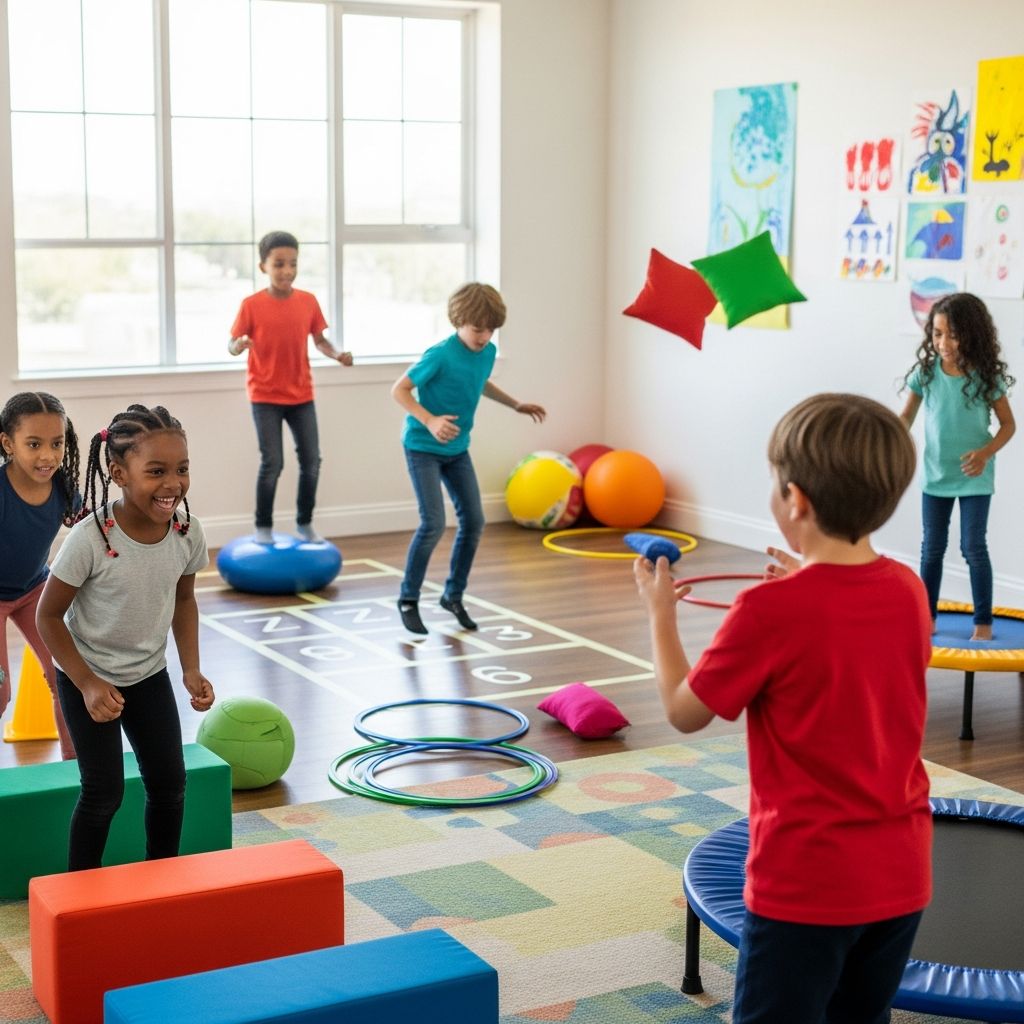
Keeping children physically engaged during indoor time is essential for their growth and well-being, especially when outdoor play isn’t possible. These games transform living rooms and hallways into dynamic play zones, promoting movement, laughter, and learning. Drawing from expert insights on child development, this guide offers fresh ideas to help parents encourage active play that builds strength, coordination, and confidence.
Why Active Indoor Play Matters for Growing Minds and Bodies
Physical activity indoors delivers profound benefits, supporting everything from heart health to cognitive growth. Regular movement helps children maintain healthy weights, strengthens muscles, and enhances coordination, reducing obesity risks that have risen significantly in recent decades. Beyond the physical, active play releases endorphins that elevate mood, alleviate stress, and sharpen focus, leading to better sleep and school performance.
Socially, these games teach teamwork, sharing, and communication in a safe space, fostering resilience and friendships. Cognitively, combining motion with imagination sparks problem-solving and creativity, as kids navigate challenges and invent scenarios. Health authorities emphasize that fit children often become fit adults, making early active habits foundational. Even short bursts of indoor activity reset energy levels, improving alertness and emotional regulation.
Getting Started: Space, Safety, and Simple Setup
Most games require minimal equipment—pillows, tape, or household items suffice. Clear furniture to create open areas, use soft surfaces for safety, and supervise closely, especially for younger kids. Adapt for ages: simplify for toddlers, add complexity for older children. Aim for 60 minutes of daily activity, mixing games to sustain interest.
High-Energy Movement Games
These activities get hearts pumping and bodies moving, mimicking outdoor adventures indoors.
- Balloon Volleyball Rally: Inflate balloons and divide space with a string line. Teams bat balloons over without letting them touch the ground. Builds agility, reflexes, and cooperation. Play in rounds of 5 minutes for sustained cardio.
- Freeze Dance Marathon: Play upbeat music; kids dance freely, freezing in silly poses when it stops. Enhances listening skills, balance, and creative expression. Vary tempos to challenge endurance.
- Pillow Jump Obstacle Course: Stack pillows as hurdles; kids leap frog-style across the room. Promotes lower-body strength and spatial awareness. Time trials add competition.
Skill-Building Balance and Coordination Challenges
Focus on precision movements to develop motor skills crucial for sports and daily tasks.
- Tape Line Tightrope Walk: Lay painter’s tape as a “beam”; kids balance while carrying beanbags. Progress to eyes closed or spinning first. Sharpens focus and core stability.
- Beanbag Toss Targets: Draw chalk circles on the floor; toss bags from varying distances. Improves hand-eye coordination and accuracy. Score points for precision.
- Simon Says Limbo: Leader calls actions (“Simon says touch toes”); add limbo under broomsticks. Teaches body control and quick thinking.
Imaginative Role-Play Adventures
Blend physicality with storytelling to ignite creativity and emotional growth.
- Superhero Obstacle Quest: Use chairs as “lasers,” crawl under tables as tunnels. Kids “save the city” while dodging. Boosts imagination and agility.
- Animal Mimic Relay: Teams mimic animals (hop like frogs, slither like snakes) across rooms. Encourages empathy, laughter, and varied movements.
- Treasure Hunt Circuit: Hide clues leading to physical tasks (10 jumps, 5 spins). Combines exploration with exercise for full engagement.
Teamwork and Family Bonding Games
Involve siblings or parents for social development and stronger relationships.
| Game Name | Players | Key Skills | Equipment |
|---|---|---|---|
| Human Knot Untangle | 4-8 kids | Communication, problem-solving | None |
| Parachute Pass-Along | 3+ with sheet | Team sync, listening | Sheet/blanket |
| Bucket Brigade Relay | Teams of 2-4 | Cooperation, speed | Buckets, soft balls |
Human Knot: Hold hands in a circle, tangle arms, untangle without letting go—perfect for negotiation. Parachute: Hold edges, lift/drop on command to keep a ball aloft. Bucket Brigade: Pass items without dropping, racing teams.
Quiet Active Games for Smaller Spaces
Ideal for apartments or wind-down periods, these maintain movement without noise.
- Yoga Pose Chain: One child strikes a pose; others mimic and add. Builds flexibility, memory, and calm energy.
- Shadow Tag: Tag each other’s shadows with flashlights in dim light. Enhances stealth and quick feet.
- Seated March Band: Sit and march arms/legs to music, adding claps. Great for leg strength without space.
Adapting Games for Different Ages
Tailor activities to developmental stages for maximum benefit.
- Toddlers (2-4): Simple crawls, ball rolls—focus on gross motor basics.
- Preschoolers (5-6): Add rules like colors/shapes in toss games for cognition.
- School-Age (7+): Competitions, timers, or multi-step courses for endurance.
Health and Development Boosts from Regular Play
Consistent indoor games yield measurable gains. They fortify cardiovascular systems, cutting heart disease risks, and aid weight management. Motor skills improve through targeted challenges, aiding academic tasks like writing. Mentally, play reduces anxiety via endorphin release and builds self-esteem through achievements. Socially, group games hone conflict resolution and empathy. Long-term, active kids adopt lifelong fitness habits.
Tips for Lasting Engagement and Safety
Rotate games weekly to prevent boredom. Track progress with charts for motivation. Hydrate often, take breaks, and watch for fatigue. Soft flooring and no sharp objects ensure safety. Involve kids in setup for ownership.
Frequently Asked Questions
How often should kids play these indoor games?
Daily for at least 60 minutes, per health guidelines, to reap full physical and mental benefits.
Can these games help reduce screen time?
Yes, they provide exciting alternatives that boost mood and energy, naturally curbing sedentary habits.
Are they suitable for rainy days or winter?
Perfectly—weatherproof fun that keeps kids active year-round without outdoor exposure.
What if my child has limited space?
Opt for seated or vertical games like yoga chains or wall pushes, maximizing small areas.
Do these improve school performance?
Absolutely; activity enhances focus, memory, and stress reduction for better learning.
References
- The Health Benefits of Active Play at Indoor Playgrounds — Play Park MTX. 2023-2024. https://playparkmtx.com/the-health-benefits-of-active-play-at-indoor-playgrounds/
- From Screen Time to Play Time: Get Kids Moving With an Indoor Playground — Jump Time Villarica. 2023-2024. https://www.jumptimevillarica.com/from-screen-time-to-play-time-get-kids-moving-with-an-indoor-playground
- 8 Benefits of Indoor Play for Kids’ Physical and Mental Growth — Off The Wall Kidz. 2023-2024. https://www.offthewallkidz.com/blog/key-benefits-of-indoor-play-for-kids
- 10 Benefits of Indoor Play for Child Development — Indoor Playground Port Orange. 2023-2024. https://indoorplaygroundportorange.com/10-benefits-of-indoor-play-for-child-development/
- Indoor Active Play for Heart Health — Seattle Children’s Hospital. 2024-05-15. https://www.seattlechildrens.org/healthy-tides/indoor-active-play-for-heart-health/
- 4 Health Effects Of Indoor Physical Education Games For Kids — EZ Play Toys. 2023-2024. https://ezplaytoys.com/blogs/blog/indoor-physical-education-games-for-kids
- Health Benefits of Physical Activity for Children — Centers for Disease Control and Prevention (CDC). 2024-10-01. https://www.cdc.gov/physical-activity-basics/health-benefits/children.html