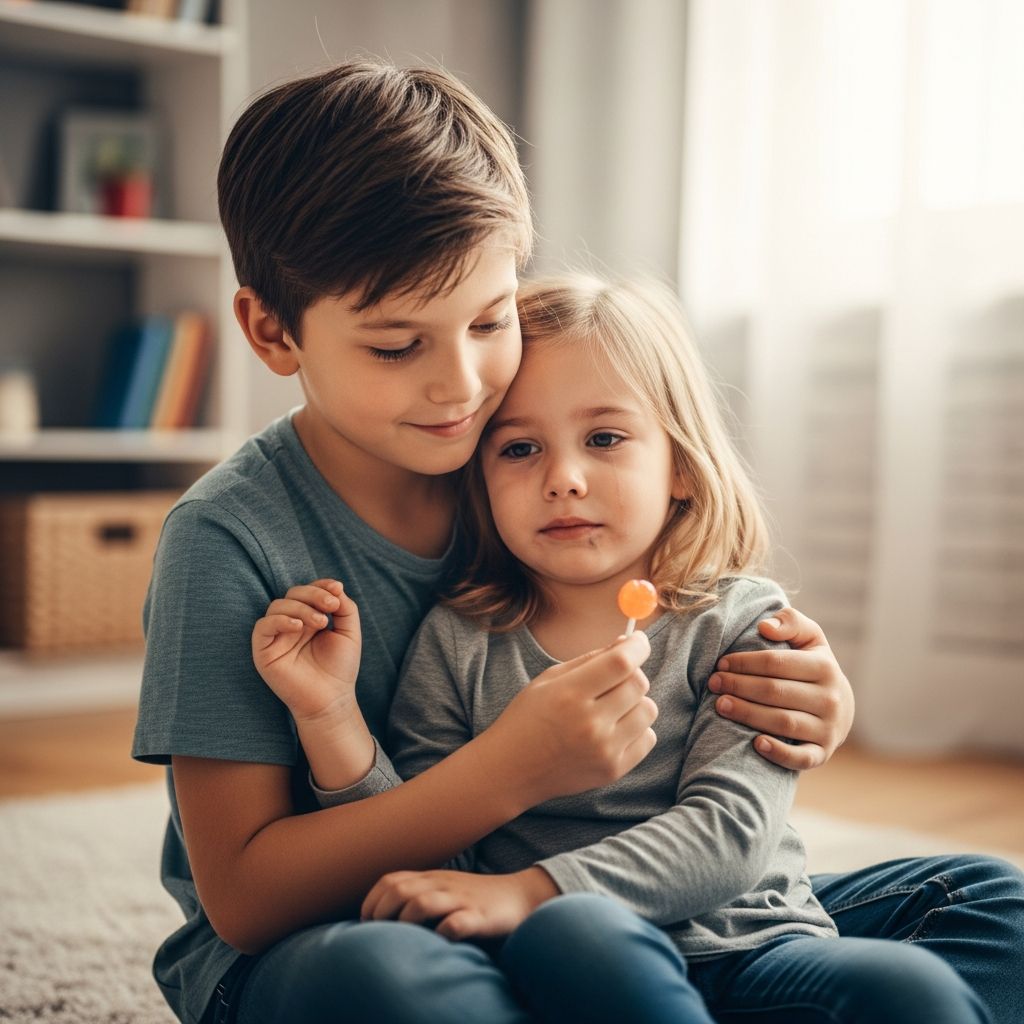
When a video of a big brother comforting his little sister after her first real heartbreak began circulating online, many parents felt both emotional and inspired.
It was not a grand gesture, but a simple, sincere moment that showed how deeply siblings can care for one another and how powerful that bond can be during life’s toughest firsts.
The Viral Moment: A Broken Heart and a Safe Shoulder
In the clip, a young girl is clearly heartbroken after a relationship disappointment, and instead of brushing it off or teasing her, her big brother steps in as a calm, compassionate presence.
He listens to her, validates her pain, and offers comforting words and physical reassurance, turning what could have been a lonely moment into one of deep emotional safety.
- He does not minimize her feelings or tell her to “get over it”.
- He stays beside her, lets her talk, and reassures her that she will be okay.
- He models empathy, respect, and emotional maturity beyond his years.
Many viewers reacted strongly because the scene challenged common stereotypes about siblings always fighting or teasing, instead showing a big brother acting like a gentle protector and emotional anchor.
Why This Big Brother’s Response Matters
The moment resonated widely because it captured how meaningful it is for children and teens to feel truly seen, especially by someone their own age.
Emotional validation from a sibling can be easier to receive than from a parent, because it feels less like advice from above and more like support from someone walking alongside them.
- Siblings often understand each other’s world, language, and daily life in a way adults do not.
- Support from a big brother or sister can normalize big feelings and reduce shame or embarrassment.
- Moments like this teach both children that emotions are safe to express and worthy of care.
Seeing a brother hold space for his sister’s sadness sends a powerful message to families that tenderness and strength can exist together, especially in boys who are often socialized to “toughen up” instead of tuning in.
Understanding a First Broken Heart
For adults, a tween or teen breakup might look trivial, but for a young person, a first broken heart can feel like the end of the world.
This is often the first time they experience romantic loss, rejection, or betrayal, and they may not yet have the emotional tools or perspective to know that the pain will eventually pass.
- Hormones, social pressure, and developing identity all intensify these early relationship experiences.
- Younger kids and teens may struggle to name their emotions or explain why they feel so overwhelmed.
- They often feel embarrassed talking to parents, making support from a trusted sibling especially impactful.
That is why the way a family responds to a first heartbreak can shape how a child views love, loss, and their own worth for years to come.
How Siblings Can Be Emotional First Responders
Siblings spend more time together than almost anyone else in childhood, which gives them a unique opportunity to act as emotional first responders when life hurts.
In the viral moment, the big brother intuitively offers three key forms of support that any sibling can learn to give.
- Presence: He sits with her and does not rush away, signaling that she is not alone.
- Validation: He acknowledges that her feelings are real and serious to her, rather than mocking them.
- Reassurance: He gently reminds her that she is loved and that things will get better with time.
These simple actions work together to calm the nervous system, reduce feelings of isolation, and help the heartbroken sibling begin to emotionally regulate again.
Lessons for Parents Watching This Clip
For many parents, the video serves as both a tearjerker and a gentle challenge: Are we creating a home where siblings feel safe to be this soft with each other?
While parents cannot force this kind of bond, they can intentionally build a family culture where empathy, respect, and emotional openness are the norm instead of the exception.
- Model how to respond calmly and kindly to difficult feelings in everyday life.
- Avoid encouraging teasing that targets vulnerabilities or emotions.
- Celebrate moments when siblings show care or kindness to one another.
What looks like a sweet one-off moment on video usually reflects many smaller, quieter choices parents have made about how feelings are handled and how siblings are encouraged to relate to each other over time.
Encouraging Sibling Empathy at Home
Empathy between siblings does not happen automatically, especially when kids often compete for attention, space, and resources in the household.
However, families can intentionally plant and water the seeds of empathy so that when heartbreaks and hard days come, siblings know how to show up for each other.
- Teach kids to name their own feelings: “I feel sad”, “I feel left out”, “I feel angry”.
- Invite siblings to practice perspective-taking: “How do you think your brother feels right now?”
- Encourage repair after conflict instead of letting resentment quietly build.
- Point out and praise specific caring behaviors you see.
Over time, these practices help siblings understand that family is a team, not a constant competition, making emotional support feel more natural and less forced.
Practical Ways Big Brothers and Sisters Can Help After a Breakup
Although the viral big brother acted from the heart in the moment, there are many simple, concrete ways older siblings can support a younger brother or sister through a breakup or emotional blow.
These actions do not have to be dramatic; they just need to be genuine and consistent.
Helpful Things a Sibling Can Say
- “I’m really sorry you’re hurting. I’m here with you.”
- “It makes sense that you’re sad. You cared a lot about them.”
- “You’re still amazing, even if they could not see it.”
- “This feels awful now, but it will not always feel this way.”
Helpful Things a Sibling Can Do
- Sit and listen without trying to fix everything right away.
- Offer a hug, a comfortable blanket, or a favorite snack or drink.
- Suggest a low-pressure distraction like a movie, video game, or walk.
- Remind them of other people who care about them and fun things to look forward to.
These gestures communicate, “You are not alone” and “Your feelings make sense,” which often matters more than any specific advice.
Healthy Boundaries: Supporting Without Fixing
While the big brother’s support is beautiful, it is also important to remember that siblings are still kids and should not carry the full weight of one another’s emotional healing.
Parents remain responsible for ensuring that a child’s heartbreak, anxiety, or depression is taken seriously and, when needed, addressed with adult support or professional help.
- Encourage siblings to be kind and present, but also to come to you if they feel overwhelmed.
- Let kids know it is okay to take breaks when they feel emotionally drained.
- Watch for signs that the heartbroken child is struggling more than a sibling alone can handle.
Healthy sibling support works best when it is a supplement to, not a replacement for, attentive parenting and, when appropriate, counseling or other resources.
How Moments Like This Shape Long-Term Sibling Bonds
A single tender interaction, like the one shown in the video, can become a core memory for both siblings and shape how they view each other for years.
Knowing that a brother or sister “had my back” during one of the most painful early experiences of life can build a deep, enduring sense of trust.
- The younger sibling learns: “I’m worthy of care”, “My feelings matter”, and “I’m not alone”.
- The older sibling learns: “I’m capable of helping”, “My kindness has impact”, and “Emotional courage is a kind of strength”.
- Their shared story becomes one of resilience and connection rather than isolation and shame.
Over time, these shared experiences form an emotional safety net that both siblings can fall back on as they navigate future challenges like friendships, school stress, and later relationships.
Big Brother, Little Sister: A Quick Look at Roles
Many families recognize an informal pattern where an older brother feels responsible for protecting a younger sister, and the viral video reflects this dynamic in a healthy way.
While it is important not to pressure older siblings into being substitute parents, there are positive ways this protective instinct can show up.
| Healthy Behaviors | Unhealthy Behaviors |
|---|---|
| Listening without judgment and offering comfort. | Controlling who the sister can talk to or be friends with. |
| Encouraging self-respect and self-worth. | Shaming or blaming her for dating or feelings. |
| Reminding her of her strengths and value. | Using fear or intimidation toward peers or partners. |
| Respecting her choices while offering perspective. | Trying to “fix” everything or make decisions for her. |
The big brother in the video stays on the healthy side of this dynamic by focusing on emotional support, not control, and by honoring his sister’s feelings rather than overriding them.
What Viewers Can Take Away
One reason the story captured so much attention is that it offers a hopeful counter-narrative to the idea that modern kids are cold, disconnected, or overly self-absorbed.
Instead, it shows that when children grow up in environments where empathy is modeled and encouraged, they are capable of extraordinary kindness toward one another.
- Parents can look for small ways each day to normalize feelings and compassion.
- Caregivers can talk openly with kids about breakups, disappointments, and mistakes in age-appropriate ways.
- Families can celebrate emotional courage, not just academic or athletic achievements.
These small shifts help raise kids who are not embarrassed by tenderness, but who see it as a powerful form of strength.
Frequently Asked Questions
How should I react if my child’s first heartbreak seems dramatic or over-the-top?
Even if the situation seems small from an adult perspective, it usually feels huge to your child, so start by taking their emotions seriously and offering comfort instead of criticism.
Later, when the intensity has eased, you can gently add perspective and help them reflect on what they learned without minimizing what they felt in the moment.
What if my kids usually fight and do not act as sweetly as the siblings in the video?
Frequent conflict does not mean your children cannot also learn to care for each other deeply; rivalry and affection often coexist in sibling relationships.
You can help by modeling respectful conflict resolution, praising even small moments of kindness, and giving them chances to team up rather than always compete.
How can I teach my son to support his sister without reinforcing stereotypes?
Encourage all your children, regardless of gender, to be emotionally aware, and frame support as a family value rather than a “big brother job”.
Invite brothers and sisters alike to look out for one another, express care, and respect each other’s boundaries, making empathy a shared responsibility.
Should I share videos of my children’s emotional moments online?
Before posting, consider your child’s privacy, future feelings, and whether they can give meaningful consent to having a vulnerable moment seen widely.
Some families decide that touching moments are best kept as cherished private memories, while others share selectively; the key is weighing your child’s dignity and long-term comfort first.
What if my child does not have siblings to lean on?
Children without siblings can still build strong support networks through cousins, close family friends, mentors, and peers who feel like chosen family.
Focus on helping your child identify safe, trustworthy people they can turn to when their heart is hurting, and keep your own relationship with them as a secure emotional base.
Creating a Home Where Hearts Can Heal
The story of the big brother and his heartbroken little sister is touching because it shows what is possible when love, empathy, and emotional safety are part of everyday family life.
Parents cannot prevent every heartbreak, but they can nurture sibling bonds, model compassion, and create a home where, when the world breaks a child’s heart, someone is already there with open arms and a listening ear.