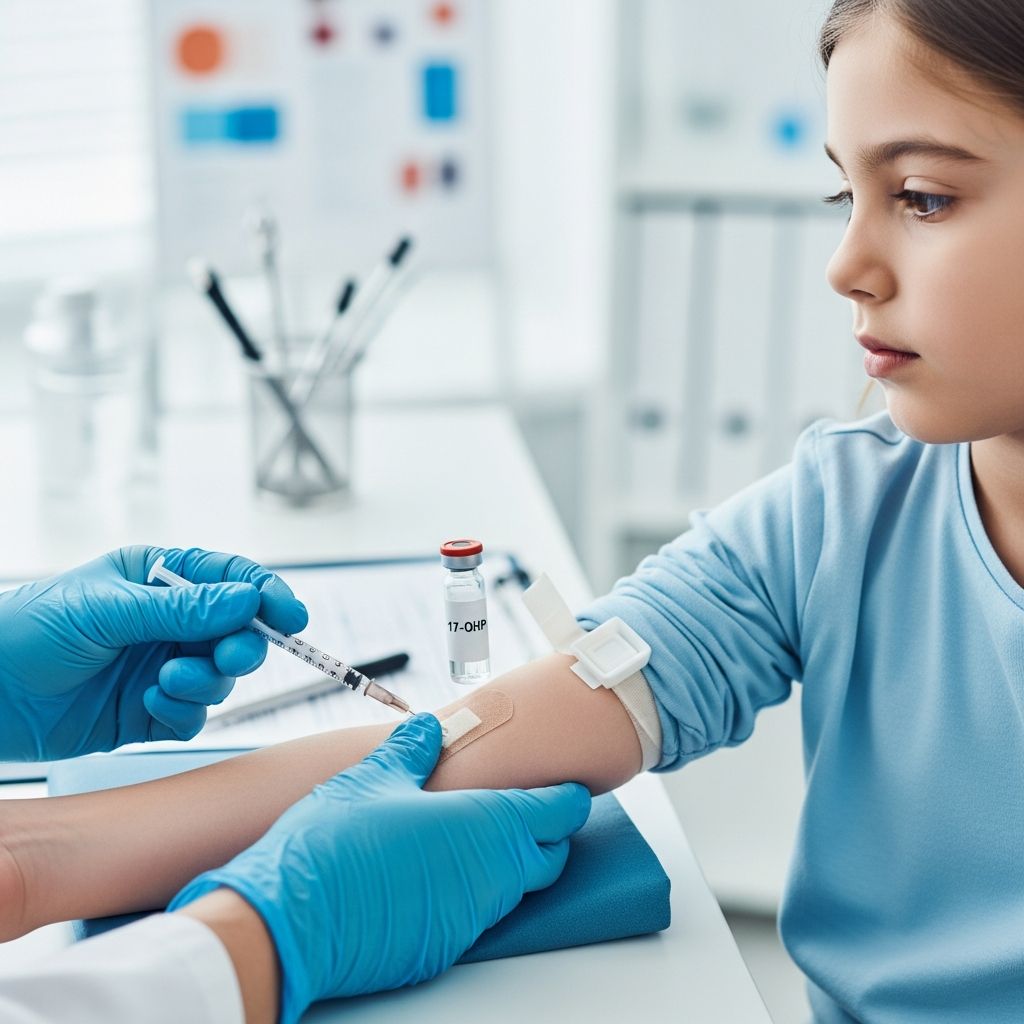
What You Should Know About 17-Hydroxyprogesterone Blood Testing
Blood testing forms a cornerstone of pediatric healthcare, allowing medical professionals to detect various diseases, monitor organ function, and evaluate the effectiveness of treatments. One particularly important screening test measures levels of 17-hydroxyprogesterone (17-OHP), a steroid hormone produced by the adrenal glands as part of the body’s natural cortisol production process. Understanding this test helps parents prepare their children appropriately and recognize its significance in early disease detection.
The Role of 17-Hydroxyprogesterone in the Body
The adrenal glands, small organs situated atop each kidney, produce numerous essential hormones that regulate critical bodily functions. Among these hormones, 17-hydroxyprogesterone serves as an important intermediate compound in the biochemical pathway that creates cortisol. Cortisol, commonly referred to as the stress hormone, plays a vital role in managing blood sugar regulation, controlling immune responses, and maintaining proper blood pressure. When the enzymatic processes that convert 17-OHP into cortisol function normally, the body maintains appropriate hormone balance and physiological stability.
However, genetic mutations can disrupt this delicate enzymatic process, leading to abnormal accumulations of 17-OHP and deficiencies in cortisol production. Identifying these imbalances through blood testing becomes crucial for preventing serious health complications and implementing timely intervention.
Congenital Adrenal Hyperplasia: The Primary Indication for Testing
Congenital adrenal hyperplasia (CAH) represents a group of inherited genetic disorders affecting the adrenal gland’s ability to produce appropriate hormone levels. The condition results from autosomal recessive inheritance patterns, meaning a child must inherit the mutation from both parents to develop the disorder. CAH encompasses multiple forms, with 21-hydroxylase deficiency representing the most prevalent type encountered in clinical practice.
In CAH, the enzymatic defect causes decreased production of cortisol and aldosterone while simultaneously causing excessive production of male sex hormones (androgens). This hormonal imbalance can lead to various clinical manifestations, including atypical development of external genitalia in affected infants, particularly females who may present with ambiguous genitalia at birth. Beyond the neonatal period, individuals with untreated CAH may experience hypertension, electrolyte abnormalities, and abnormal sexual development.
Why Newborn Screening Programs Include 17-OHP Testing
Many states across the United States have integrated 17-hydroxyprogesterone testing into routine newborn screening protocols. This public health approach reflects the recognized importance of early detection in preventing serious morbidity and mortality. Newborns with undiagnosed CAH face potential life-threatening complications including salt-wasting crises, where the body loses critical sodium and fluids, leading to cardiovascular instability and shock.
By identifying elevated 17-OHP levels within the first days of life, healthcare providers can implement immediate interventions including hormone replacement therapy and mineral supplementation. Early treatment prevents acute medical emergencies, allows appropriate medical and surgical management of genital development, and supports normal physical and psychological development throughout childhood and adolescence.
Beyond Newborn Screening: Diagnostic Applications
While routine newborn screening captures many CAH cases, the 17-OHP test serves additional clinical purposes beyond the immediate postnatal period. Older children and adolescents presenting with symptoms suggestive of adrenal dysfunction may undergo this testing to confirm or exclude CAH diagnosis. Additionally, the test aids in identifying nonclassical or late-onset forms of the disorder that may not manifest during infancy but emerge during later childhood, adolescence, or early adulthood.
Healthcare providers may also order 17-OHP testing when evaluating women or adolescent girls presenting with hyperandrogenic symptoms. These clinical presentations can include:
- Hirsutism (excess hair growth in male-pattern distribution)
- Voice deepening or changes in vocal quality
- Abnormal muscle mass development
- Disrupted menstrual cycles or absence of menses
- Unexplained infertility or reduced fertility
In these scenarios, measuring 17-OHP helps differentiate CAH from other conditions causing similar symptoms, guiding appropriate treatment decisions.
How the Blood Sample Is Collected
The procedure for obtaining a blood sample varies depending on the patient’s age. For adults and older children, phlebotomists typically draw blood from a vein in the arm’s inner surface, near the elbow, or occasionally from the back of the hand. A small needle punctures the skin, and the collected blood flows into a vial or test tube for laboratory analysis.
For newborns and very young children who may have fragile or difficult-to-access veins, a different approach proves more practical. A lancet, a specialized sharp instrument designed for this purpose, creates a small puncture on the infant’s heel or finger. Blood drops accumulate in a collection device, typically a specially prepared card or test strip designed for newborn screening. This heel-prick method, though uncomfortable for the infant, requires only minimal blood volume and poses minimal risk.
Preparation Guidelines for Testing
Parents benefit from understanding basic preparation requirements before their child’s scheduled blood test. In most instances, no special fasting is required for the 17-OHP test, allowing children to eat and drink normally before the procedure. However, parents should verify specific preparation instructions with their healthcare provider, as individual circumstances may warrant modifications.
Timing of the blood draw carries clinical significance, particularly for monitoring treatment effectiveness. Clinical practice guidelines recommend collecting samples during early morning hours, before the patient has taken hormone replacement medications, as this approach yields more reliable assessment of baseline hormone levels. Parents managing children already diagnosed with CAH should discuss optimal timing with their healthcare team.
Preparing children psychologically for blood testing reduces anxiety and improves cooperation during the procedure. Parents can explain the test in age-appropriate language, acknowledge that a brief sensation of discomfort will occur but resolve quickly, and develop calming strategies together such as deep breathing techniques or bringing a comfort object.
What Results Indicate and Interpretation
Laboratory analysis uses liquid chromatography tandem mass spectrometry (LC-MS/MS) methodology to measure precise 17-OHP concentrations in serum samples. This sophisticated analytical technique provides highly accurate quantification, essential for distinguishing normal from pathologically elevated values.
Markedly elevated 17-OHP levels strongly suggest congenital adrenal hyperplasia, particularly when found in combination with other abnormal hormone values including elevated androgens and depressed cortisol. However, interpretation must consider the patient’s age, clinical presentation, and other laboratory values. For newborns, screening cutoff values differ from those used in older children and adults, and borderline results may require repeat testing for confirmation.
Normal or near-normal results typically exclude active CAH, though rare late-onset forms may initially present with only mild elevations. Intermediate elevations may warrant additional testing or clinical observation depending on the clinical context.
Monitoring Treatment and Long-Term Management
For children already diagnosed with CAH, periodic 17-OHP testing forms part of ongoing treatment monitoring. Children receiving hormone replacement therapy require regular assessment to ensure that medication dosing adequately suppresses excessive hormone production while avoiding over-treatment that could cause other problems.
Combined testing panels measuring 17-OHP alongside plasma renin activity, androstenedione, and testosterone provide comprehensive evaluation of hormonal status and treatment effectiveness. These periodic measurements guide medication adjustments to maintain optimal hormone balance throughout childhood and into adulthood, supporting normal growth, development, and sexual maturation.
Safety Considerations and Potential Discomfort
The 17-hydroxyprogesterone blood test poses no significant health risks to children. The procedure involves only a small needle stick or heel prick, causing brief discomfort that resolves within minutes. Following the blood draw, parents may observe minor bruising at the puncture site, which typically resolves without intervention within several days.
Some children experience lightheadedness or fainting, particularly if anxious about needles. Encouraging the child to remain seated during and immediately after blood collection, maintaining calm demeanor, and allowing recovery time before standing helps prevent vasovagal responses. Most children tolerate the procedure well, particularly when parents provide reassurance and create a supportive environment.
Other Clinical Applications Beyond CAH
While congenital adrenal hyperplasia represents the primary indication for 17-OHP testing, the measurement serves additional clinical purposes. Healthcare providers may order this test when evaluating women with unexplained infertility, as certain forms of CAH can affect reproductive function. The test also assists in assessing adrenal and ovarian tumors with hormone-producing capability, and in evaluating conditions causing virilization or hirsutism where androgen-secreting disorders require evaluation.
Frequently Asked Questions
Q: At what age is the 17-hydroxyprogesterone test typically performed?
A: The test is routinely performed on all newborns as part of standard newborn screening in most U.S. states, typically within the first few days of life. Additional testing may be done at any age if clinical symptoms suggest CAH or related disorders.
Q: Does my child need to fast before the blood test?
A: Generally, no fasting is required for the 17-OHP test in most situations. However, you should confirm specific preparation instructions with your healthcare provider, as individual circumstances may vary.
Q: What does elevated 17-hydroxyprogesterone mean?
A: Markedly elevated levels suggest congenital adrenal hyperplasia or related adrenal dysfunction. However, results must be interpreted in context with age, clinical symptoms, and other laboratory values. Your healthcare provider will explain what your child’s specific results mean.
Q: How long does it take to receive test results?
A: Turnaround time typically ranges from 3 to 7 days, though newborn screening results are often available within 1 to 2 weeks. Your healthcare provider will inform you of expected timeframes for your specific test.
Q: Can I help my anxious child prepare for the blood test?
A: Yes. Explain the procedure in age-appropriate language, acknowledge the brief discomfort, teach calming techniques like deep breathing, and bring comfort items. Maintaining a calm, reassuring demeanor helps significantly.
Q: If my child’s newborn screening shows elevated 17-OHP, does that mean they definitely have CAH?
A: Not necessarily. Screening results require confirmation through additional testing and clinical evaluation. Your healthcare provider will perform follow-up tests and assessment to establish a definitive diagnosis.
Q: How often will my child need this test if diagnosed with CAH?
A: Children with confirmed CAH require periodic testing to monitor treatment effectiveness, typically at regular intervals established by their healthcare team. Frequency depends on individual circumstances and treatment stability.
References
- Blood Test: 17-Hydroxyprogesterone — Nemours KidsHealth. Accessed January 2026. https://kidshealth.org/en/parents/test-hydroxyprogesterone.html
- 17-Hydroxyprogesterone Test Overview — Testing.com. Accessed January 2026. https://www.testing.com/tests/17-hydroxyprogesterone/
- 17-OH Progesterone: Definition and Test Performance — UF Health. Accessed January 2026. https://ufhealth.org/conditions-and-treatments/17-oh-progesterone
- OHPG – Overview: 17-Hydroxyprogesterone, Serum — Mayo Clinic Laboratories. Accessed January 2026. https://www.mayocliniclabs.com/test-catalog/overview/9231
- 17-OH Progesterone, LC/MS Test Details — Labcorp. Accessed January 2026. https://www.labcorp.com/tests/070085/17-oh-progesterone-lc-ms
- 17-Hydroxyprogesterone Clinical Significance — Quest Diagnostics. Accessed January 2026. https://testdirectory.questdiagnostics.com/test/test-detail/17180/17-hydroxyprogesterone
- What to Know About the 17-Hydroxyprogesterone Test — WebMD. Accessed January 2026. https://www.webmd.com/a-to-z-guides/what-to-know-17-hydroxyprogesterone-test