Between 16 and 18 months, toddlers transition from babbling to meaningful words, marking a pivotal phase in communication development. This period sees rapid growth in vocabulary and understanding, laying the foundation for complex speech.
Core Language Achievements at 16-18 Months
During this stage, children typically produce their first clear words beyond ‘mama’ and ‘dada,’ often naming familiar objects or people. They begin following basic instructions without visual cues, such as ‘give me the ball,’ demonstrating receptive language progress. Expect around 3-15 words by 18 months, with comprehension far outpacing expression—toddlers may grasp hundreds of words while speaking few.
- Says **3 or more words** like ‘dog,’ ‘ball,’ or ‘milk’
- Points to objects while naming them or responding to names
- Follows **simple one-step directions** without gestures, e.g., ‘close the door’
- Recognizes and points to **body parts** like eyes or nose when asked
These milestones reflect not just vocal output but cognitive links between sounds, meanings, and actions, as per CDC guidelines.
How Comprehension Outpaces Expression
Toddlers understand up to five times more words than they utter, processing routines like ‘time for bath’ or object labels during play. They anticipate daily events from verbal cues, fetching items like a shoe when requested, showing emerging memory and association skills. Gestures complement speech, with pointing or head-shaking conveying needs before words fully form.
| Milestone Type | Examples at 16 Months | Examples at 18 Months |
|---|---|---|
| Receptive (Understanding) | Recognizes own name; follows ‘where’s teddy?’ with gesture | Follows ‘pick up the toy’; points to 2-3 body parts |
| Expressive (Speaking) | 1-3 clear words like ‘no,’ ‘up’; babbles with intonation | 10-15 words; simple combos like ‘more milk’ |
| Social Communication | Waves bye-bye; uses voice for attention | Points to share interest; imitates animal sounds |
This table summarizes progression, drawn from Mayo Clinic and Great Ormond Street Hospital data.
Interplay with Physical and Cognitive Growth
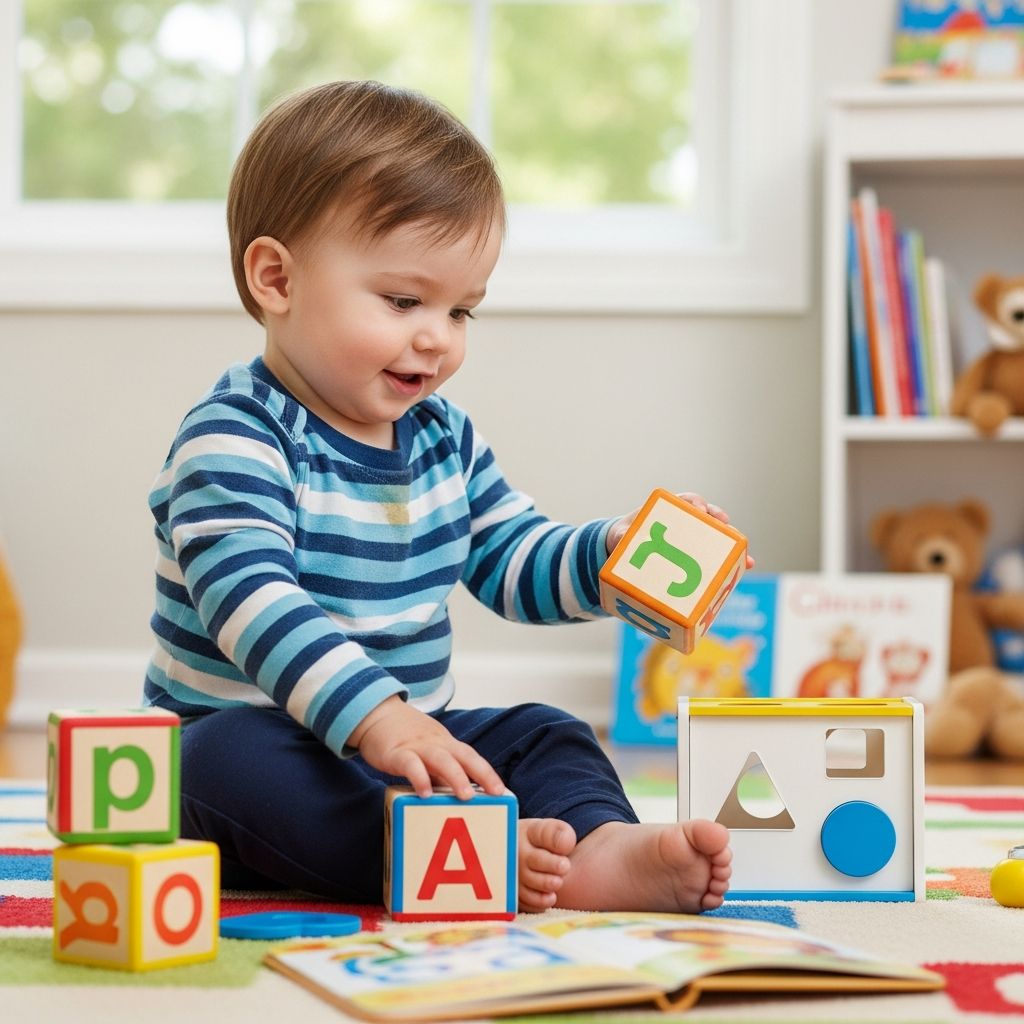
Language blooms alongside motor skills: stable walking frees hands for gesturing, while scribbling or stacking blocks enhances problem-solving tied to naming. Cognitively, toddlers mimic chores like ‘stirring’ or pretend-feeding dolls, verbalizing actions like ‘eat’ to reinforce learning. Socially, they check for parental proximity during exploration, using points or words to engage.
Practical Strategies to Boost Speech
Daily interactions turbocharge development. Narrate routines: ‘We’re putting on shoes’ models sentence structure. Read interactive books, naming pictures and asking ‘Where’s the dog?’ to build vocabulary—toddlers sustain attention for 2+ minutes with guidance.
- Respond and Expand: If they say ‘ball,’ reply ‘Yes, red ball! Throw the ball?’
- Sing and Rhyme: Action songs like ‘Wheels on the Bus’ teach rhythm and words
- Limit Screens: Prioritize face-to-face talk over devices for better imitation
- Play Turn-Taking: Roll a ball while labeling turns to foster conversation basics
Consistent repetition clarifies models; echo their attempts like ‘car’ as ‘vroom car’ to refine pronunciation.
Spotting and Addressing Delays Early
Variation is normal, but consult professionals if by 18 months: no 3+ words besides mama/dada, no pointing to share interest, or ignoring simple directions. The CDC urges acting early for interventions like speech therapy, which yield best outcomes before 24 months. Track via apps or checklists; premature worries often resolve, but persistent gaps warrant evaluation.
Red Flags at 18 Months
- No words beyond babble
- Doesn’t follow one-step directions
- No gestures like pointing or waving
- Limited eye contact or response to name
Nutrition and Environment’s Role in Talking
Adequate iron and protein support brain growth for language; omega-3s from fish aid neural connections. Quiet, responsive homes outperform noisy ones—ensure ample one-on-one time amid toddler independence. Sleep (11-14 hours daily) consolidates learning, replaying daytime words.
Long-Term Outlook Beyond 18 Months
By 24 months, expect 50+ words, two-word phrases, and half-intelligible speech. This foundation predicts school readiness; early enrichers like books correlate with larger vocabularies. Patience prevails—girls may lead boys slightly, but individual paces vary.
Frequently Asked Questions
Should I worry if my 16-month-old says no words?
Not immediately; some start at 18 months. Monitor for gestures and understanding; consult pediatrician if stagnant by 18 months.
How can I teach body part names?
Point and name during play/baths: ‘Touch your nose!’ Use songs; repetition builds recall within weeks.
Is babbling with gestures enough?
Yes, as precursors to words. Encourage by imitating back to bridge to speech.
What if my toddler understands but won’t speak?
Common—receptive leads. Model phrases without pressure; play boosts confidence.
Do bilingual homes delay speech?
No, with equal exposure; kids mix initially but sort languages by 24 months.
Daily Routine Integration Tips
Weave language into meals (name foods), walks (describe sights), and bedtime (storytime). Consistency across caregivers amplifies gains.
This guide empowers parents to nurture vital skills, ensuring toddlers thrive communicatively. Celebrate every ‘mama’ or point—each step builds futures.
References
- Child Development: Milestones For 16-18 Months — Healthy Young Minds. 2023. https://www.healthyyoungminds.com/child-development/milestones-16-18-months/
- Language development: Speech milestones for babies — Mayo Clinic. 2024-01-15. https://www.mayoclinic.org/healthy-lifestyle/infant-and-toddler-health/in-depth/language-development/art-20045163
- Speech and language development (from 12 to 24 months) — Great Ormond Street Hospital. 2023. https://www.gosh.nhs.uk/conditions-and-treatments/procedures-and-treatments/speech-and-language-development-12-24-months/
- Milestones by 18 Months | Learn the Signs. Act Early. — Centers for Disease Control and Prevention (CDC). 2025-09-17. https://www.cdc.gov/act-early/milestones/18-months.html
- Developmental Milestones: 18 to 24 Months — Nationwide Children’s Hospital. 2024. https://www.nationwidechildrens.org/family-resources-education/health-wellness-and-safety-resources/helping-hands/developmental-milestones-18-to-24-months
- Communication Milestones: 19 to 24 Months — American Speech-Language-Hearing Association (ASHA). 2023. https://www.asha.org/public/developmental-milestones/communication-milestones-19-to-24-months/