Life with a 15-month-old can feel like living with a tiny explorer who never runs out of questions or energy. Around this age, many toddlers are taking independent steps, trying out new words, and discovering that they can say “no” in more ways than one. This guide explains the major developmental areas at 15 months, what’s typical, when to check in with your pediatrician, and how to support your child’s growth using evidence-based ideas.
Big Picture: How 15-Month-Olds Typically Grow
Every child develops at their own pace, but pediatric organizations highlight a cluster of skills that many children show by about 15 months. According to the U.S. Centers for Disease Control and Prevention (CDC) and other pediatric sources, many 15-month-olds begin to:
- Walk on their own or take several steps without help.
- Use their fingers to feed themselves small pieces of food.
- Try to say one or two words beyond “mama” and “dada”.
- Follow simple directions that pair words and gestures, such as “Give me the ball” with a hand out.
- Point to ask for something or to get help.
- Show affection with cuddles, hugs, or kisses.
- Copy what other children do, especially in play.
Some toddlers will reach these abilities a bit earlier or later. What matters most is overall progress over time and whether new skills are appearing, not hitting each skill on one exact date.
Movement and Coordination: Little Bodies in Motion
By 15 months, many toddlers are learning how their bodies move through space. These new abilities can be exciting and exhausting for caregivers.
Typical Gross Motor Skills
- Standing alone: Many toddlers can stand without support and lower themselves to sitting without falling.
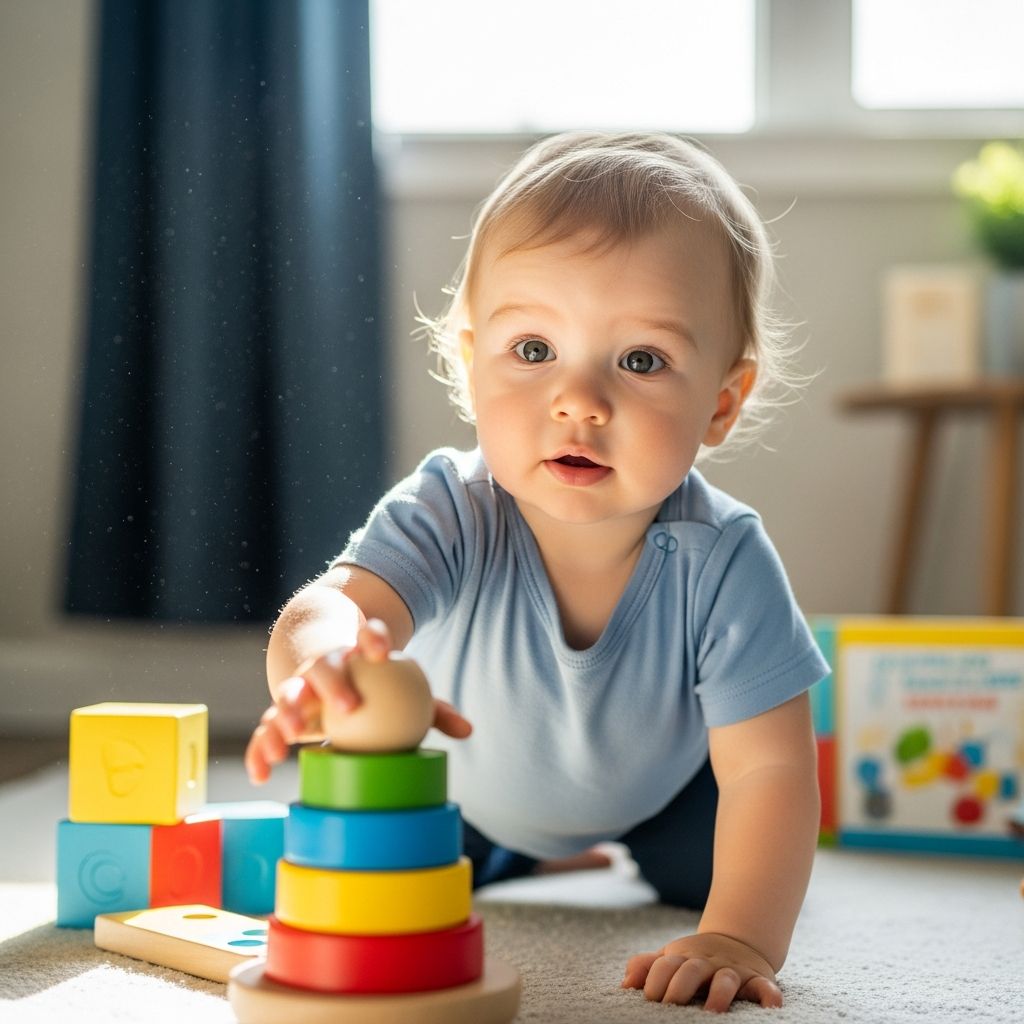
- Taking steps: Most are taking a few independent steps; some are already confident walkers.
- Changing positions: Squatting to pick up a toy and standing up again is becoming easier.
- Climbing: Some children try to climb onto furniture or small steps while holding on.
Fine Motor Skills
- Finger feeding: Picking up small bites of food with thumb and index finger (pincer grasp) and bringing them to the mouth.
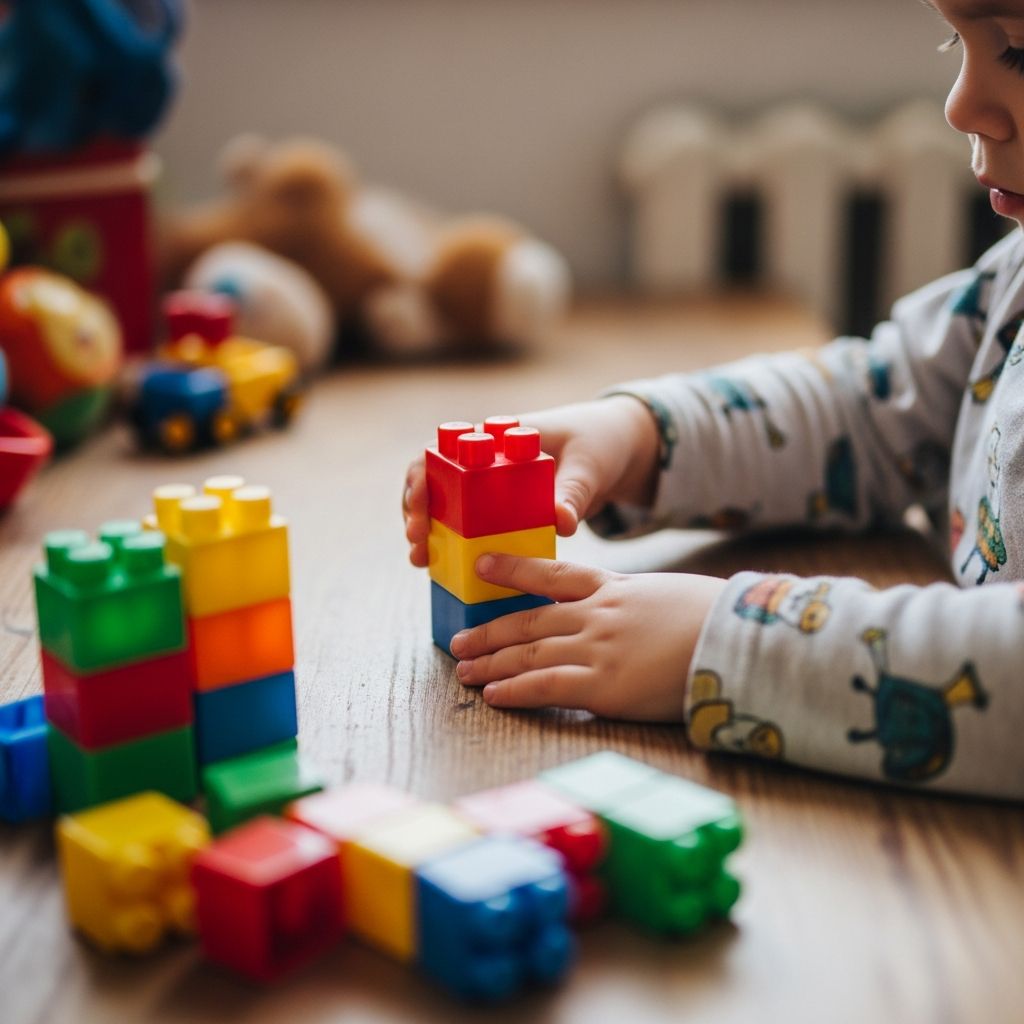
- Using objects with purpose: Trying to hold a spoon, turn pages in a board book, or stack a couple of blocks.
- Pointing and clapping: Pointing at things of interest and clapping hands when excited.
| Motor Area | Common 15-Month Abilities | How You Can Help |
|---|---|---|
| Gross Motor | Standing, taking a few steps alone, squatting to pick up toys, beginning to climb. | Offer push toys, clear floor space, and safe surfaces for cruising instead of seats that restrict movement. |
| Fine Motor | Finger feeding, turning pages, stacking 2 blocks, pointing, clapping. | Provide chunky crayons, soft blocks, and simple stacking toys; let your child practice feeding. |
Language and Understanding: From Gestures to First Words
Language development at 15 months includes both what children understand (receptive language) and what they can say or sign (expressive language). Often, understanding grows faster than spoken words.
What Many 15-Month-Olds Understand
- Their own name and simple daily phrases like “Come here” or “All done”.
- Names of a few familiar people, pets, or objects, such as “ball” or “cup”.
- Simple instructions that combine words and gestures, like “Give me the toy” while you hold out your hand.
What Many 15-Month-Olds Try to Say
- One or two meaningful words besides “mama” and “dada” (or approximations like “ba” for ball).
- Frequent babbling with changes in tone, sounding more like conversation.
- Sounds or signs used consistently for favorite people, foods, or activities.
Supporting Language at This Age
- Talk during routines: Describe what you’re doing during meals, diaper changes, and bath time. This builds vocabulary in context.
- Label feelings and actions: Say “You are excited!” or “You’re washing your hands” to connect words with experiences.
- Read daily: Short picture books, nursery rhymes, and simple stories support language and early literacy.
- Pause for a response: After asking a question, pause to let your child look, point, or babble in response.
Thinking and Problem-Solving: Tiny Scientists at Work
At 15 months, many toddlers behave like little scientists, testing out what happens when they drop, bang, shake, or hide objects. These experiments build early thinking and problem-solving skills.
Early Cognitive Skills
- Object permanence: Understanding that people and things still exist even when out of sight (for example, looking for a toy you just hid).
- Cause and effect: Repeating actions that create interesting results, like pushing a button that plays music.
- Simple problem solving: Figuring out how to reach a toy on a low table or open a box.
- Imitation in play: Pretending to talk on a toy phone or feeding a stuffed animal.
Play Ideas to Build Thinking Skills
- Hide-and-find games with toys under cups or cloths.
- Stacking blocks and knocking them down.
- Simple shape sorters or large-ring stackers (with close supervision).
- Everyday pretend play like stirring in a pot or sweeping with a child-sized broom.
Social and Emotional Growth: Closeness, Curiosity, and Big Feelings
Social-emotional development at 15 months centers on strong attachment to caregivers, curiosity about others, and the first signs of independent will.
Typical Social and Emotional Behaviors
- Showing affection: Hugging, cuddling, and leaning in for comfort.
- Watching or copying other children: Imitating how another child uses toys or moves around.
- Seeking comfort: Returning to a caregiver for reassurance during new or stressful situations.
- Separation difficulty: Crying or clinging when a parent leaves is still common at this age.
- Early tantrums: Meltdowns when frustrated, tired, or unable to communicate what they want.
Helping Your Toddler with Big Emotions
- Stay calm and close: Remaining nearby and calm during a tantrum teaches safety and emotional regulation.
- Name feelings: Saying “You’re angry because you wanted the toy” eventually helps children link words to feelings.
- Offer simple choices: “Red cup or blue cup?” can reduce power struggles while building decision-making.
- Predictable routines: Regular mealtimes, naps, and bedtime help reduce emotional overload.
Feeding, Sleep, and Daily Routines
Daily habits also show development. How your toddler eats, sleeps, and handles transitions often reflects new skills in movement, thinking, and self-control.
Feeding Skills at 15 Months
- Using fingers to feed themselves many foods, especially soft pieces.
- Drinking from a cup with help, and in some cases starting to use a spoon, even if messily.
- Showing strong food preferences and occasional picky phases as independence grows.
Pediatric guidelines generally suggest moving toward more self-feeding by this age while supervising closely to prevent choking. Whole fruits and vegetables, iron-rich foods, and varied textures help build healthy habits early.
Typical Sleep Patterns
- Often one afternoon nap, though some toddlers still take two shorter naps.
- About 10–12 hours of night sleep for many children, sometimes with brief night wakings.
- Comfort objects (a blanket or stuffed toy) may become more important for settling.
Consistent bedtime routines—such as a bath, pajamas, books, and a brief cuddle in the same order every night—support healthy sleep patterns and provide emotional security.
Safety and Environment: Creating a Space for Safe Exploration
Because many 15-month-olds are on the move and love exploring, a safe environment is essential. Injury prevention at this age focuses on falls, poisoning, burns, and drowning risks.
Key Safety Tips for 15-Month-Olds
- Supervise near water: Toddlers can drown in very small amounts of water; constant adult supervision is essential.
- Secure furniture and TVs: Anchor bookcases and televisions to prevent tipping when toddlers climb.
- Lock away hazardous substances: Medications, cleaners, and small objects should be stored out of reach and sight.
- Use gates and window guards: Especially near stairs and upper-floor windows.
- Check for choking hazards: Avoid small hard foods and objects that can fit entirely into a toddler’s mouth.
When to Talk With Your Pediatrician
Developmental timelines are broad, but certain signs deserve a closer look. The CDC and other child health organizations highlight several reasons to seek professional advice at or around 15 months.
Possible Red Flags at 15 Months
- Not saying any single words at all (including approximations like “ba” for ball).
- Not pointing, waving, or using other gestures to express wants or interest.
- Not following simple instructions such as “Give me the ball,” even when paired with a gesture.
- Not showing affection or interest in close caregivers or avoiding eye contact consistently.
- Not standing with support or showing effort to take steps by this age, or not walking independently by 18 months.
- Loss of skills your child previously had, such as no longer using words, gestures, or social smiles.
If any of these concerns apply, or if you simply feel something is not right, reach out to your pediatrician. Early evaluation can identify hearing issues, developmental delays, or other conditions, and early support is linked with better long-term outcomes.
How Parents Can Support Healthy Development
There is no single perfect activity or toy that guarantees development. Instead, research emphasizes warm relationships, responsive caregiving, and opportunities to explore as the core ingredients of healthy early development.
Everyday Ways to Nurture Your 15-Month-Old
- Follow their lead: Notice what captures your child’s interest and join in—comment, copy their actions, and expand on their ideas.
- Stay responsive: Responding to cries, gestures, and early words builds trust and encourages communication.
- Limit passive screen time: Health organizations generally recommend very limited or no unsupervised screen use at this age, focusing instead on live, back-and-forth interactions.
- Play on the floor together: Floor play supports gross motor skills, connection, and learning more effectively than many structured activities.
Frequently Asked Questions About 15-Month Milestones
Q: My 15-month-old is not walking yet. Should I be worried?
Many children walk sometime between 9 and 18 months. If your child is pulling to stand, cruising along furniture, or bearing weight on their legs, they may simply be on the later side of typical. However, if your child is not standing with support or seems very floppy or stiff, or if they are not walking independently by 18 months, talk with your pediatrician for further evaluation.
Q: How many words should my 15-month-old say?
Guidelines suggest that many toddlers try to say at least one or two words beyond “mama” and “dada” by 15 months. Some may have more, and some may focus on gestures instead. What matters is that your child is communicating—pointing, babbling, making eye contact, and gaining new skills over time. If they are not using any words and are not gesturing to communicate, ask your pediatrician about a speech and language evaluation.
Q: My child has sudden tantrums. Is this normal at 15 months?
Yes. Tantrums often start in the second year of life, when toddlers have big feelings and limited ways to express them. Predictable routines, offering simple choices, staying calm, and naming feelings can help. If tantrums are extremely frequent, last very long, or involve self-injury, consult your child’s health professional.
Q: How can I tell if my toddler needs an early intervention evaluation?
You can request an evaluation if you notice red flags such as lack of words or gestures, absence of social engagement, no response to name, or no efforts to stand or walk by 15–18 months. You do not need to wait until a pediatrician raises concerns. In many regions, public early intervention programs provide free or low-cost assessments for children under three years old.
Q: Is it okay if my toddler still uses a bottle?
Most pediatric guidelines recommend transitioning away from bottles toward cups during the second year of life to support oral development and reduce the risk of tooth decay and excessive milk intake. If your child still uses a bottle, consider gradually offering more drinks in an open or straw cup, especially at meals, and talk with your pediatrician or dentist for personalized advice.
References
- 15-Month-Old Well-Child Checkup — Nemours KidsHealth. 2022-06-01. https://kidshealth.org/en/parents/checkup-15mos.html
- Toddler Milestones: Your Baby’s Development at 1 Year — CHOC (Children’s Hospital of Orange County). 2023-01-10. https://choc.org/ages-stages/1-year/
- Toddler development at 15-18 months — Raising Children Network (Australian Government–funded). 2023-03-15. https://raisingchildren.net.au/toddlers/development/development-tracker-1-3-years/15-18-months
- Developmental Milestones for Pre-Toddlers (12–24 Months) — Coral Care. 2022-09-21. https://www.joincoralcare.com/developmental-guides/milestones-12-24-months-pre-toddlers
- Milestones by 15 Months — Learn the Signs. Act Early. — Centers for Disease Control and Prevention (CDC). 2025-04-28. https://www.cdc.gov/act-early/milestones/15-months.html
- Toddler Developmental Milestones & Safety — Cleveland Clinic. 2022-08-01. https://my.clevelandclinic.org/health/articles/22625-toddler-developmental-milestones–safety
- Milestones Your Child at 15 Months — First 5 Nevada. 2021-11-12. https://www.first5nevada.org/milestones/15-months/
- CDC’s Developmental Milestones — Centers for Disease Control and Prevention (CDC). 2025-04-28. https://www.cdc.gov/act-early/milestones/index.html