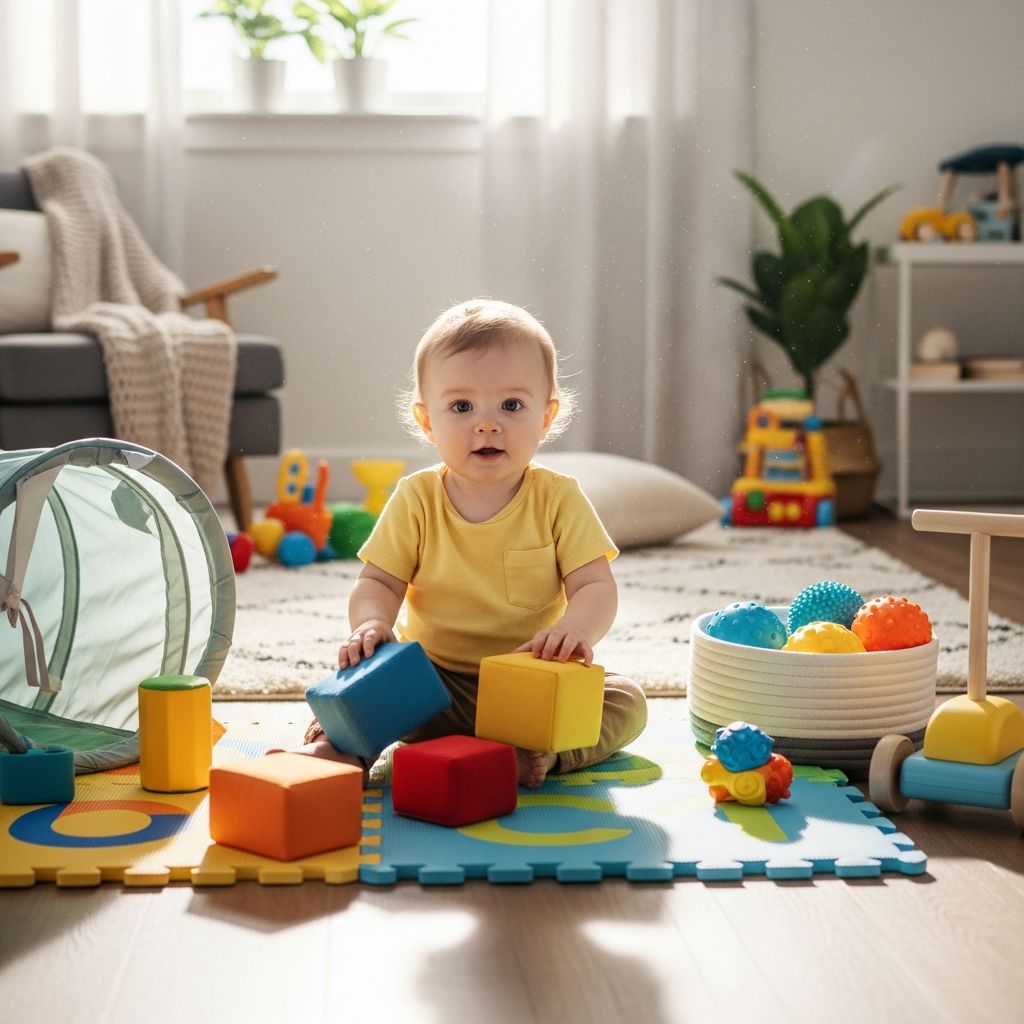
At one year old, children are bursting with curiosity, rapidly developing motor skills, and eager to explore their world. Indoor activities provide safe, stimulating opportunities to foster growth when outdoor play isn’t possible. This guide offers 12 original, easy-to-set-up ideas using household items, promoting physical, sensory, and cognitive development while creating joyful bonding moments.
Why Indoor Play Matters for One-Year-Olds
One-year-olds are mastering crawling, standing, and first steps, alongside language bursts and object recognition. Play at this stage builds **fine motor skills** like pinching and grasping, **gross motor skills** through movement, and **sensory awareness** via textures and sounds. According to the Centers for Disease Control and Prevention (CDC), interactive play supports milestones like stacking blocks and following simple instructions. These activities keep energy high, reduce fussiness, and strengthen parent-child connections without screens.
Building and Stacking Adventures
Stacking teaches cause-and-effect, balance, and hand-eye coordination. Start with soft, oversized items to minimize frustration.
- Cushion Towers: Pile pillows, blankets, and laundry baskets into wobbly towers. Encourage knocking them down for triumphant giggles. Vary heights to challenge emerging walkers.
- Container Castles: Use empty yogurt cups, cereal boxes, or plastic bowls. Show stacking techniques, then let them experiment. Add colorful tape for visual appeal.
These builds expand as skills grow—introduce wooden blocks later for durability.
Sensory Exploration Stations
Sensory play captivates 1-year-olds’ senses, aiding brain development. The American Academy of Pediatrics notes tactile experiences enhance neural connections.
- Texture Treasure Hunt: Fill a shallow bin with soft fabrics, crinkly paper, and smooth spoons. Guide little hands to feel contrasts, naming sensations aloud.
- Rice River: Spread uncooked rice in a tray; hide spoons or balls. Supervise closely to prevent ingestion, using it for scooping practice.
| Activity | Sensory Focus | Skill Boost |
|---|---|---|
| Texture Hunt | Touch, sight | Grasping, vocabulary |
| Rice River | Touch, sound | Scooping, pouring |
Movement and Obstacle Challenges
Active play burns energy indoors. Create safe paths mimicking playgrounds.
- Pillow Path: Arrange cushions in a zigzag trail. Crawl or toddle across, adding tunnels from chairs draped with sheets.
- Laundry Line Crawl: String a low rope (yarn works); place toys along it for reaching and pulling.
These encourage problem-solving as toddlers navigate around obstacles.
Creative Arts and Mess-Free Making
Art stimulates creativity without chaos.
- Bag Painting: Squirt washable paint into gallon zip bags, seal, and tape to a table. Smear colors to mix—mess-free mastery.
- Finger Food Art: Use yogurt or pudding on edible paper (rice cakes). Draw shapes with safe spreads.
Discuss colors emerging: “Yellow plus blue makes green!”
Music and Rhythm Sessions
Sound play boosts auditory skills and joy.
- Household Band: Bang pots with wooden spoons, shake rice-filled bottles. March to beats for rhythm fun.
- Freeze Dance: Play music; pause randomly. Toddlers freeze adorably, practicing listening.
Incorporate songs like “If You’re Happy and You Know It” for language reinforcement.
Hiding and Seeking Games
Peekaboo evolves into hunts, teaching object permanence.
- Toy Hideaway: Conceal favorites under cups or blankets. Lift to reveal with cheers.
- Shadow Chase: Use a flashlight in dim rooms; point beams at toys, naming them.
These build anticipation and memory.
Fine Motor Threading and Dropping
Precision tasks refine pincer grips.
- Pasta Lace-Up: Offer large noodles and pipe cleaners poked into dough. Thread for fine control.
- Tube Drop: Tape toilet rolls vertically; drop balls through chutes.
Watch delight as items tumble out.
Daily Routine Twists
Turn chores into play.
- Magnet Matching: Fridge magnets in pairs—match shapes/colors while standing.
- Basket Ball: Toss socks into laundry baskets from varying distances.
These integrate learning seamlessly.
Adapting Activities for Skill Levels
| Beginner (12 mos) | Intermediate (15 mos) | Advanced (18-24 mos) |
|---|---|---|
| Crawl through tunnels | Stack 3-4 items | Thread shapes |
| Sensory touch | Drop balls | Simple puzzles |
Tailor to your child’s pace for success.
Safety Essentials for Playtime
Supervise always; choose non-toxic, large items to avoid choking (per CDC guidelines). Clean sensory materials post-play. Limit sessions to 15-20 minutes to match attention spans.
Frequently Asked Questions
How often should I do structured play with my 1-year-old?
Three to five short sessions daily suffice, blending with free play for balanced development.
Are these activities suitable for non-walkers?
Yes—focus on sitting/crawling versions like sensory bins and stacking.
What if my child gets frustrated?
Demonstrate slowly, praise efforts, and switch activities. Persistence builds resilience.
Can I reuse materials?
Absolutely—most are household staples, promoting sustainability.
How do these aid milestones?
They target CDC markers: motor skills, following directions, and social interaction.
References
- Developmental Milestones for 1-Year-Olds — Centers for Disease Control and Prevention. 2024-07-01. https://www.cdc.gov/ncbddd/actearly/milestones/milestones-1yr.html
- Play Ideas for Babies and Toddlers — Zero to Three. 2023-05-15. https://www.zerotothree.org/resource/play-ideas-for-babies-and-toddlers/
- The Power of Play: Sensorimotor Development — American Academy of Pediatrics. 2024-02-20. https://publications.aap.org/pediatrics/article/142/3/e20182058/38561/The-Power-of-Play-A-Pediatric-Role-in-Enhancing