As your baby nears their first birthday, they transform from a dependent infant into an active explorer. At 11 months, children typically master a range of physical, cognitive, and communication skills that set the stage for toddlerhood. These achievements vary by individual, but understanding common patterns helps parents foster growth effectively.
Mastering Movement: Physical Milestones
Eleven-month-olds exhibit remarkable progress in gross motor abilities, building strength for independent walking. Most babies at this stage pull themselves up to a standing position using furniture or supportive objects, demonstrating improved balance and leg power.
Cruising—side-stepping while holding onto surfaces—becomes a highlight, as little ones navigate rooms with newfound confidence. Some may even take tentative independent steps, though full walking often emerges between 10 and 18 months. Variations like belly crawling, scooting, or classic hands-and-knees movement persist, allowing exploration of their environment.
- Pulls to stand independently from a seated position
- Cruises along furniture edges
- Sits down from standing without assistance
- Transitions smoothly from sitting to crawling
- May attempt first unassisted steps
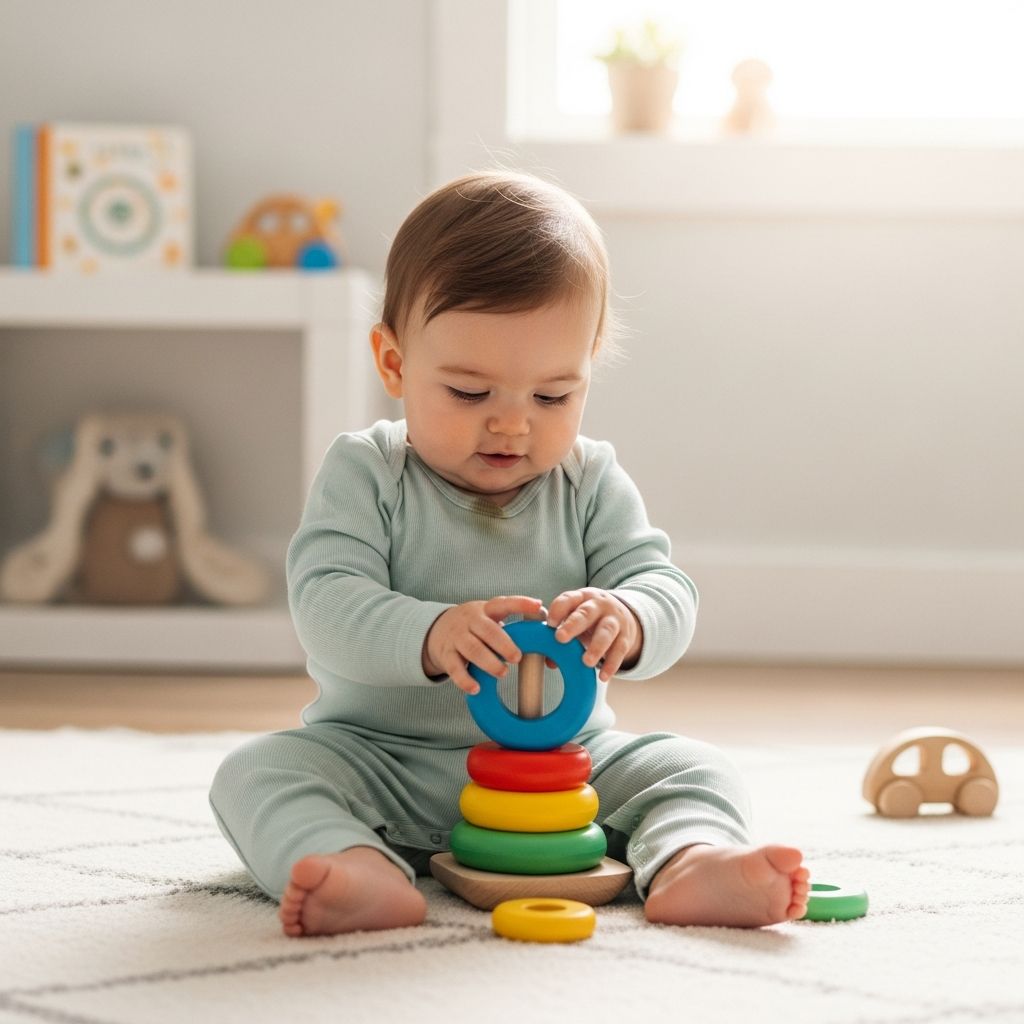
Fine motor skills sharpen dramatically, enabling precise hand-eye coordination. The pincer grasp—using thumb and forefinger—allows picking up tiny items like cereal or toys, a crucial step for self-feeding. Babies bang objects together, stack blocks simply, or drop items repeatedly to test gravity and cause-effect.
Teething continues, with many sporting four to six teeth, facilitating easier chewing of finger foods. Sleep patterns stabilize, often including 12 hours at night and two naps, though night wakings for comfort may occur.
Brainpower Boost: Cognitive and Problem-Solving Advances
Cognitive development surges as 11-month-olds experiment relentlessly. They shake, throw, and poke objects to understand properties, fostering early scientific thinking. Using items functionally—like pretending to talk on a toy phone or stirring with a spoon—signals emerging comprehension of object purpose.
Memory improves; babies recognize familiar routines and people from afar. Simple problem-solving appears, such as searching for hidden toys or imitating parental actions like clapping. Scribbling with chunky crayons marks the dawn of creative expression.
| Milestone | Description | Why It Matters |
|---|---|---|
| Object Permanence | Knows hidden items still exist | Builds trust and exploration confidence |
| Cause and Effect | Bangs toys to make noise | Teaches predictability in world |
| Imitation | Copies gestures or scribbles | Enhances learning through observation |
| Container Play | Puts in/takes out objects | Develops persistence and spatial awareness |
Chatter Begins: Language and Communication Growth
Language milestones at 11 months blend babbling with meaningful gestures. Babies wave bye-bye, point to desired objects, nod, or shake their head to communicate needs. Vocalizations mimic conversations, with 1-2 clear words like ‘mama’ or ‘dada’ emerging, though ranges vary widely.
Comprehension outpaces production; little ones follow simple directives like ‘clap hands’ or ‘give me the ball,’ especially with visual cues. Joint attention strengthens—they look where you point and share focus on interesting sights. Reading daily, singing, and narrating actions accelerate this.
Social Butterflies: Emotional and Social Bonds
Socially, 11-month-olds display complex emotions: joy in peek-a-boo, caution with strangers, and attachment to caregivers. They seek parental approval, copying behaviors to engage, and show preferences in playmates. Separation anxiety peaks but eases with consistent routines.
Empathy buds as babies comfort crying peers or mimic parental distress. Play evolves to parallel activities, laying groundwork for friendships.
Nutrition and Daily Routines: Fueling the Progress
Self-feeding dominates meals, with finger foods like soft fruits, veggies, and cheeses preferred. Many sip from open cups with help, practicing utensils amid delightful messes. Offer family foods, ensuring supervised seating to prevent choking.
Daily schedules balance activity and rest: active play mornings, naps mid-day, and wind-down evenings. Outdoor time builds vitamin D and motor skills.
Fun Activities to Spark Development
Engage your 11-month-old with targeted play to reinforce milestones.
- Motor Boost: Scatter toys to encourage crawling; use low couches for pulling up practice.
- Language Fun: Back-and-forth babble sessions; label objects during play.
- Cognitive Games: Hide toys under blankets; provide nesting cups for in/out play.
- Sensory Exploration: Texture bins with safe items like scarves or rice.
- Social Play: Mirror games or gentle peer interactions.
Always prioritize safety: baby-proof homes, supervise water play, and use positive reinforcement over ‘no’ shouts.
Red Flags: When to Seek Professional Input
While variations are normal, consult a pediatrician if your baby shows no interest in movement, lacks gestures by 12 months, or doesn’t respond to their name. Delays in babbling, no pointing, or poor eye contact warrant early intervention for optimal outcomes. Track progress with tools like CDC checklists.
Frequently Asked Questions
Is it normal if my 11-month-old isn’t walking yet?
Yes, walking typically occurs between 10-18 months. Focus on encouraging cruising and standing.
How many words should an 11-month-old say?
1-2 meaningful words are common, but babbling and gestures are key indicators. Wide normal range exists.
What finger foods are safe at this age?
Soft options like banana slices, avocado, or cheese puffs. Avoid hard, round items to prevent choking.
How much sleep does an 11-month-old need?
About 12-14 hours total, including two naps and longer night sleep.
Should I worry about bowed legs?
Often normal until 18 months due to positioning; monitor and discuss at checkups.
This comprehensive guide empowers parents to celebrate and support their 11-month-old’s journey. Consistent interaction and responsive care yield the best results.
References
- 11 month old baby milestones: Development, growth, speech — Huckleberry Care. 2023. https://huckleberrycare.com/blog/11-month-old-baby-milestones-development-growth-speech-language-and-more
- Developmental Milestones: 10-12 Month Baby — CHOC Children’s. 2024. https://choc.org/ages-stages/10-to-12-months/
- Baby development at 11-12 months — Raising Children Network (Australian Government-funded). 2024-01-16. https://raisingchildren.net.au/babies/development/development-tracker-3-12-months/11-12-months
- Infant development: Milestones from 10 to 12 months — Mayo Clinic. 2024. https://www.mayoclinic.org/healthy-lifestyle/infant-and-toddler-health/in-depth/infant-development/art-20047380
- Growth & Development: 9-11 Months — Riley Children’s Health. 2023. https://www.rileychildrens.org/health-info/growth-development-9-11-months
- CDC’s Developmental Milestones — Centers for Disease Control and Prevention (CDC). 2024-07-17. https://www.cdc.gov/act-early/milestones/index.html
- Milestones by 1 Year — Centers for Disease Control and Prevention (CDC). 2024-07-17. https://www.cdc.gov/act-early/milestones/1-year.html