Understanding genetics helps parents grasp how traits and health conditions pass through families, enabling informed decisions about their children’s care. This article breaks down core concepts like DNA structure, inheritance rules, and when to seek expert advice from healthcare professionals.
Building Blocks of Life: DNA and Chromosomes
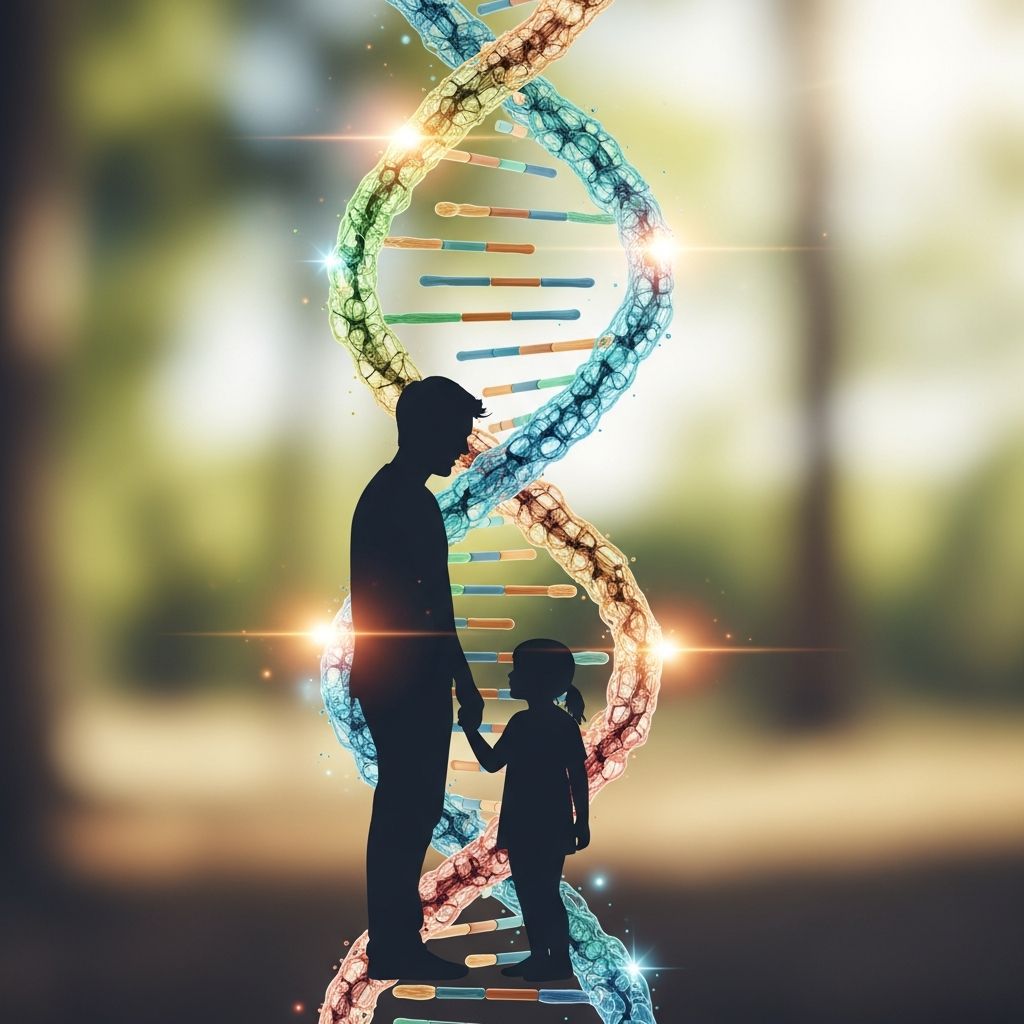
At the heart of genetics lies **DNA** (deoxyribonucleic acid), a molecule that stores genetic instructions for building and maintaining the body. DNA forms a double helix structure with four nucleotide bases: adenine (A), thymine (T), guanine (G), and cytosine (C), pairing as A-T and G-C. These bases sequence into genes, the functional units directing protein production essential for body functions.
Genes group into **chromosomes**, thread-like structures in cell nuclei. Humans have 23 chromosome pairs: 22 autosomes (non-sex) and one sex pair (XX for females, XY for males). Each pair includes one chromosome from each parent, with genes existing as alleles—variants of the same gene.
During cell division, chromosomes duplicate; in reproduction, meiosis halves them for gametes (sperm/eggs), ensuring offspring receive one allele per gene from each parent. This setup maintains genetic stability while allowing variation.
How Traits Pass Down: Mendel’s Legacy
Gregor Mendel’s experiments revealed key inheritance principles still foundational today. The **law of segregation** states that allele pairs separate during gamete formation, so each gamete carries one allele, and offspring inherit one from each parent.
The **law of dominance** explains that one allele (dominant) often masks the other (recessive) in heterozygotes (one of each allele). For instance, Huntington disease appears with one dominant altered allele, while cystic fibrosis needs two recessive ones.
The **law of independent assortment** notes that alleles for different genes sort independently into gametes if on separate chromosomes, fostering genetic diversity. Exceptions occur with linked genes on the same chromosome.
| Inheritance Pattern | Description | Example |
|---|---|---|
| Autosomal Dominant | One altered allele causes condition | Huntington disease |
| Autosomal Recessive | Two altered alleles needed | Cystic fibrosis |
| X-linked Recessive | Affects males more; on X chromosome | Hemophilia |
| Co-dominant | Both alleles expressed | ABO blood types |
Beyond Simple Inheritance: Complex Patterns
Not all traits follow Mendelian rules. **X-linked** inheritance involves sex chromosomes; recessive X-linked conditions like fragile X syndrome predominantly affect males due to their single X. Females may carry but rarely show symptoms due to X-inactivation (lyonization), where one X shuts down randomly early in development.
**Mitochondrial inheritance** traces from mothers via egg mitochondria, affecting energy production and linked to disorders like Leber’s hereditary optic neuropathy. **Y-linked** traits pass father-to-son via the Y chromosome.
**Polygenic traits** (e.g., height, skin color) result from multiple genes interacting with environment, defying simple predictions. Trinucleotide repeats cause anticipation in disorders like Huntington’s, where repeats expand across generations, worsening symptoms.
Epigenetics: Genes’ Silent Regulators
**Epigenetics** modifies gene expression without altering DNA sequence, via DNA methylation or histone changes. Methylation silences genes by adding methyl groups to DNA, heritable through cell divisions but reversible.
Histone modifications (acetylation, methylation) alter chromatin packaging, affecting accessibility. Dysregulation links to cancer, e.g., HDACs suppressing tumor inhibitors. **Genomic imprinting** parentally silences one allele via methylation, critical for development; disruptions cause Prader-Willi or Angelman syndromes.
These mechanisms explain environment’s role in gene activity, influencing health without changing inherited code.
Genetic Variations and Health Impacts
Mutations—DNA changes—range from harmless (polymorphisms) to harmful (pathogenic). Single nucleotide variants, insertions/deletions, or repeats disrupt proteins, causing disorders. Tumor suppressors like TP53 follow the two-hit hypothesis: both alleles must inactivate for cancer.
Knowing genetic risks aids prevention; e.g., BRCA1/2 carriers monitor for breast cancer. Genes influence disease susceptibility, treatment response, and traits like eye color.
- Point mutations: Single base swaps, e.g., sickle cell anemia.
- Expansions: Repeats growing, e.g., myotonic dystrophy.
- Deletions: Lost segments causing syndromes.
Genetic Testing: Tools for Families
**Genetic testing** analyzes DNA for variants predicting disease risk, carrier status, or confirming diagnoses. Types include karyotyping (chromosome visuals), sequencing (gene reading), and arrays (variant scanning).
Parents might test for carrier status before pregnancy (e.g., Tay-Sachs) or newborn screening for treatable conditions like PKU. Prenatal tests (amniocentesis, CVS) detect fetal anomalies; non-invasive prenatal testing (NIPT) screens cell-free fetal DNA in maternal blood.
Results guide management: positive findings prompt surveillance; negatives reassure but don’t eliminate multifactorial risks. Counseling ensures informed choices.
When to Consult Specialists
Pediatricians handle routine care but refer to **geneticists** or **genetic counselors** for complexities like family history of disorders, birth defects, developmental delays, or unusual features.
Geneticists interpret tests, diagnose, and plan; counselors explain risks, options emotionally. Multidisciplinary teams include metabolic experts for enzyme disorders.
Signs warranting referral:
- Multiple miscarriages or infant deaths in family.
- Child with unexplained growth issues, seizures, or dysmorphic features.
- Consanguinity with genetic concerns.
- Positive carrier screening.
Family Planning with Genetic Insights
Genetic knowledge informs reproduction: carrier screening identifies risks; preimplantation genetic diagnosis (PGD) selects embryos free of mutations in IVF. Adoption or donor gametes suit high-risk couples.
Understanding probabilities empowers: a carrier couple has 25% recessive disorder risk per child. Lifestyle mitigates epigenetic/environmental factors.
Frequently Asked Questions
What is a gene?
A gene is a DNA segment coding for proteins or RNA, determining traits and functions. Humans have ~20,000 genes.
How do I know if my child needs genetic testing?
Consult a doctor if there’s family history, symptoms, or screening flags issues. It’s not routine for all.
Can genetics predict my child’s future health?
Partially; genes indicate risks, but environment and lifestyle play key roles.
What if a test shows a genetic change?
Genetic counseling clarifies implications, management, and next steps.
Are all genetic conditions treatable?
No, but many have management strategies; gene therapies emerge for some.
Empowering Your Family’s Genetic Journey
Genetics shapes health profoundly; parents armed with knowledge partner effectively with providers. Stay informed via reputable sources, discuss family histories openly, and embrace testing when beneficial. Advances like CRISPR promise future cures, but today’s understanding optimizes outcomes.
References
- Basics of human genetics — AMBOSS. 2023. https://www.amboss.com/us/knowledge/basics-of-human-genetics/
- Genes and genetics explained — Better Health Channel, Victoria Government. 2023. https://www.betterhealth.vic.gov.au/health/conditionsandtreatments/genes-and-genetics
- Overview of Genetics — Merck Manuals Professional Edition. 2025-01-01. https://www.merckmanuals.com/professional/special-subjects/general-principles-of-medical-genetics/overview-of-genetics
- Genetics Basics — Centers for Disease Control and Prevention (CDC). 2024. https://www.cdc.gov/genomics-and-health/about/index.html
- Understanding the Basics of Genetics — The Gene Home. 2023. https://www.thegenehome.com/basics-of-genetics