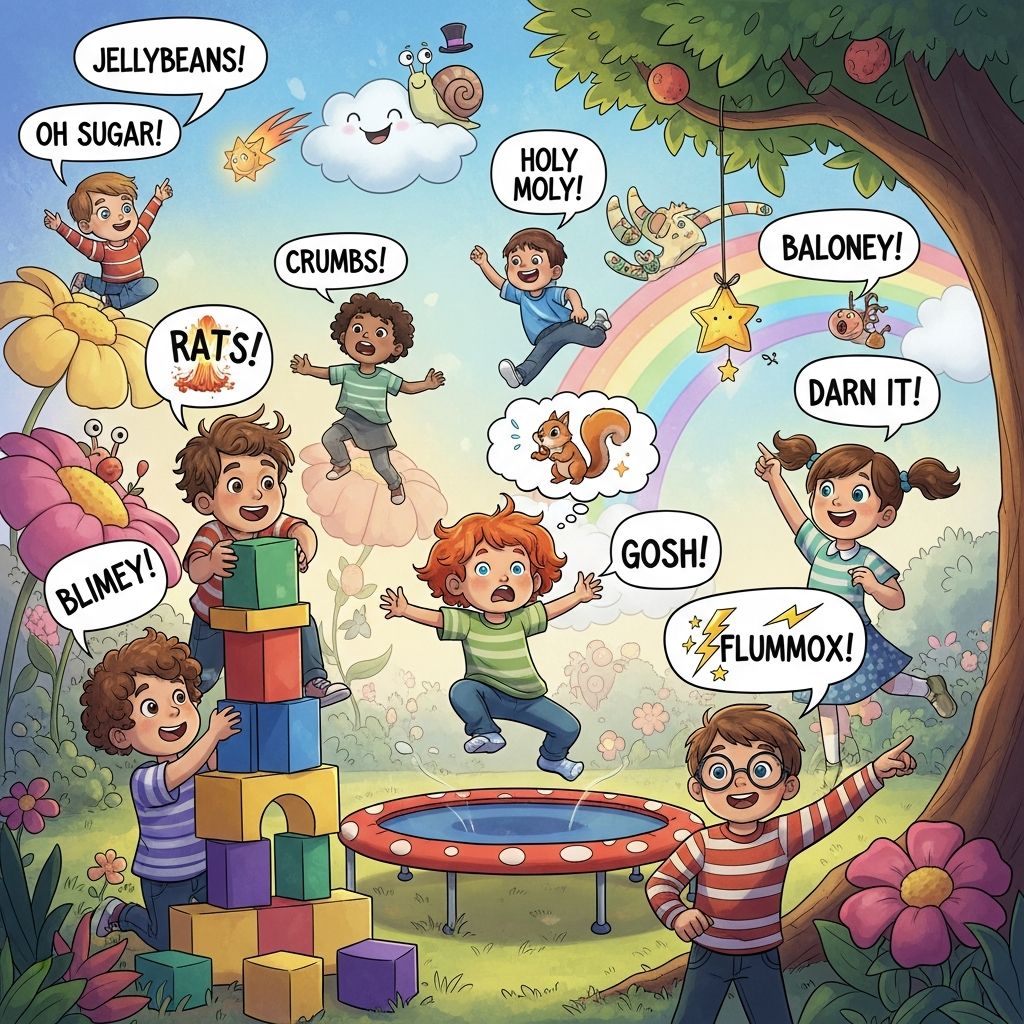
101 Great Cuss Word Alternatives: Teaching Kids Clean Language
One of the most challenging aspects of parenting is managing language—both the language our children hear and the words they eventually speak. Whether your child has picked up a colorful expression at school, uttered their first inappropriate word in frustration, or you simply want to establish a household culture of clean communication, having alternatives to cuss words readily available can make all the difference. This comprehensive guide presents 101 family-friendly alternatives that allow you to express frustration, surprise, and emotion without resorting to profanity.
Why Teaching Alternatives Matters
Children learn language by imitation and absorption from their environment. When they hear adults using certain words, they naturally incorporate them into their own vocabulary, sometimes at the most embarrassing moments. By providing them with acceptable alternatives, you’re not just censoring language—you’re actively teaching them a more respectful way to communicate while still allowing them to express genuine emotion. This approach respects their feelings and frustrations while maintaining family values around appropriate speech.
Classic Replacements for Common Cuss Words
The foundation of clean language alternatives begins with understanding what we’re replacing. Most households can benefit from having go-to substitutes for the most commonly used profanities. These classic replacements have stood the test of time and are universally recognized as acceptable across different settings, from home to school to the workplace.
For Frustration and Anger
- Darn, dang, doggone, or dag nabbit
- Fudge, frick, freaking, or fricking
- Shoot, shiznit, or sugar
- Heck or what the heck
- Crud, crumb, or crap (if acceptable in your household)
- Cheese and jam
- Beans on toast
- Biscuits
- Mother of pearl
- Son of a gun
For Surprise or Amazement
- Holy cow, holy smokes, or holy moly
- Geez or gee whiz
- Good grief
- Golly or gosh
- Great Scott or great Caesars ghost
- Great googley moogley
- My goodness or my gosh
- Jumping Jehoshaphat
- Jumping catfish
- Cripes
Silly and Playful Alternatives
One of the most effective ways to introduce alternative language into your family’s vocabulary is through humor. When children laugh while learning these substitute words, they’re more likely to remember and use them. Silly alternatives also serve the important psychological function of diffusing tension—when something frustrating happens and you laugh instead of getting angry, it changes the entire dynamic of the situation.
Consider creating your own family-specific alternatives. Make up nonsense words that only your family uses. This can be incredibly empowering for children, as it gives them ownership of the language and creates a unique family identity. Some families use animal exclamations, food references, or silly sound combinations. The key is consistency and ensuring everyone in the household knows which words are approved and acceptable.
Comprehensive List of 101 Alternatives
General Exclamations (1-20)
Absolutely not, balderdash, barnacles, blimey, blooming heck, blunder bus, boondocks, botheration, bumbershoot, bumfuzzle, buttercups, carping critters, catastrophe, codswallop, confound it, consarn it, crackers, crickety, crikey, crumbs.
Mild Alternatives (21-40)
Dadgummit, dagnabbit, daggone it, dagnabit, dag nabbit, dagnasty, dash it, daisy chains, diddly squat, double dagnasty, doozie, double darn, double doggone, double fudge, double jiminy, double rats, double shoot, double sugar, double tarnation, double thunder.
Moderate Alternatives (41-60)
Effing, egads, eleven, for Pete’s sake, for crying out loud, for the love of Pete, for the love of Mike, freaking, freakin’ A, frick frack, frick on a stick, frig, galumph, giddyup, gosh darn it, gosh diddly darn it, great galloping goose, great googly moogly, great jumping Jehoshaphat, grinch, grindstone.
Creative Alternatives (61-80)
Hellfire and damnation (modified), jiminy cricket, jiminy jam, jingles, jive turkey, jumpin’ Jehoshaphat, jumpin’ Jupiter, jumpin’ Judas Priest, kerfluffle, kick the bucket, kickball, kinks, knots, leaping lizards, lollygag, loose cannon, macaroni, macadamia, maggoty, maharishi.
Additional Options (81-101)
Muumuu, muffin, muttonhead, my stars, my stars and garters, no way José, noodle salad, oh barnacles, oh bushwa, oh fiddlesticks, oh for Pete’s sake, oh piddle, oh shucks, oh tartar sauce, oh the dickens, phooey, pickled peppers, piffle, pigeonholed, pitter-patter, pixelated, pizzazz, polliwog, pomegranate, poppycock, pottage.
Creating Your Family’s Language Policy
While this list offers numerous options, not every alternative will work for every family. Different families have different comfort levels with various words. What might be perfectly acceptable in one household could be considered inappropriate in another. The process of selecting alternatives should be a family decision, ideally with input from both parents and children who are old enough to participate.
Consider making a family chart with your chosen alternatives posted in a visible location. This helps everyone remember the approved words and reinforces the expectation around household language standards. When children understand the reasoning behind these choices—that they’re about respect and positive communication rather than arbitrary restriction—they’re more likely to embrace them.
Leading by Example
The most powerful tool parents have when teaching appropriate language is modeling. If you expect your children to use alternatives to swear words, you must be equally committed to using them yourself. This isn’t always easy, especially in moments of genuine frustration—stepping on a Lego brick hurts, and sometimes your first instinct is to use language you’re trying to eliminate from your household.
However, these moments of slipping up can actually be valuable teaching opportunities. When you catch yourself about to use a swear word, pause and consciously choose an alternative instead. Doing this aloud, where your children can see the process, teaches them that it’s a choice we actively make. Apologizing when you do slip up and using an alternative shows your children that everyone makes mistakes, and what matters is the effort to do better.
Age-Appropriate Implementation
Younger children, typically ages 3-6, are just beginning to understand language nuances and may not fully grasp why certain words are inappropriate. For this age group, simply having alternatives available and using them consistently is usually sufficient. As children enter elementary school (ages 6-10), they become more aware of social norms and can understand explanations about why certain words aren’t used in specific settings.
Older children and teenagers (ages 10+) can engage in more sophisticated conversations about language, respect, and communication. They may ask why certain words are considered offensive or challenge the rules. These conversations are normal and healthy, and they provide opportunities to discuss media influences, peer pressure, and personal values around communication.
Addressing Slip-ups and Mistakes
Despite everyone’s best efforts, children will occasionally use inappropriate language. How you respond to these moments matters significantly. Rather than overreacting or using punishment as the primary response, consider these approaches:
- Remain calm and address the behavior without shaming the child
- Remind them of the family’s language expectations and preferred alternatives
- Explain briefly why the word isn’t acceptable in your household
- Offer the alternative phrasing and ask them to repeat it
- Praise them when they successfully use alternatives in the future
The Role of Humor and Creativity
One of the most underutilized strategies for establishing a culture of clean language is embracing humor and creativity. When a child feels they’ve been given permission to be silly and creative with language, they’re often more willing to abandon actual curse words in favor of entertaining alternatives.
Some families use rhyming patterns, others incorporate food names, and still others create combinations of real words that sound funny when put together. The Australian children’s show Bluey has popularized phrases like “cheese and jam” and “biscuits” as humorous alternatives that actually make children smile when they use them. This demonstrates that alternatives don’t have to be boring—they can be fun, entertaining, and even become part of your family’s unique culture and identity.
Consistency Across Settings
One challenge parents face is ensuring consistency across different environments. What’s acceptable at home might be different from what’s expected at school, church, or a friend’s house. Teaching children to understand context and audience is an important part of communication development. You can explain that different settings have different expectations, and part of being respectful involves adjusting your language accordingly.
Communicating with other caregivers—grandparents, teachers, babysitters, coaches—about your family’s language standards helps ensure consistency. When everyone working with your child reinforces the same expectations, children learn more effectively and feel supported in their effort to communicate respectfully.
Building Emotional Intelligence
Teaching children alternatives to swear words also provides an opportunity to build emotional intelligence and healthy expression. Rather than simply replacing one word with another, consider teaching children to identify their emotions and express them directly. Instead of saying a swear word in frustration, they might say, “I’m really angry right now because I lost my game,” or “I’m frustrated that this is difficult.”
This approach helps children develop better emotional regulation skills and teaches them that it’s okay to have strong emotions—they just need to express them in respectful ways. It also opens conversations about problem-solving and coping strategies for handling difficult feelings.
Frequently Asked Questions
Q: At what age should I start teaching alternatives to swear words?
A: You can begin introducing alternatives as soon as children start developing language skills, around ages 2-3. For very young children, simple words and consistent modeling are most effective. As they grow older, you can have more detailed conversations about why certain words aren’t used.
Q: What should I do if my child uses a swear word at school?
A: Stay calm and contact the school if needed. At home, reinforce your family’s language expectations without shame or harsh punishment. Ask where they heard the word and use it as a teaching opportunity. Ensure they know the appropriate alternative and why the original word isn’t acceptable.
Q: Are there cultural or regional differences in acceptable alternatives?
A: Yes, absolutely. What’s considered appropriate varies significantly based on cultural background, geographic location, and religious beliefs. Choose alternatives that align with your family’s values and cultural identity.
Q: How can I get my whole family on board with using alternatives?
A: Involve everyone in selecting the alternatives your family will use. Create a visual reminder posted in common areas. Model the behavior consistently yourself, and praise family members when they use alternatives successfully.
Q: What if my child mocks the alternatives and refuses to use them?
A: This is common, especially with teenagers. Discuss why they’re resistant and try to involve them in creating alternatives they find acceptable. Sometimes allowing them to help create silly or unique alternatives increases buy-in.
Q: Are there alternatives that work across all age groups?
A: Yes, classics like “darn,” “heck,” “shoot,” and exclamations like “holy cow” or “good grief” tend to work well across ages. Sillier options like “cheese and jam” appeal more to younger children and families who enjoy humor.
References
- Alternative Cuss Words: Using Clean Language with Kids — Nostalgic Italian Blog. 2021-10-02. https://nostalgicitalian.com/2021/10/02/alternative-cuss-words/
- Managing Swear Words: Acceptable Alternatives for Children — Grandma Magazine. 2012-09-01. https://www.grandmagazine.com/2012/09/the-issue-to-say-or-not-to-say/
- Inoffensive Alternatives to Common Swear Words — Real Life English. https://reallifebh.com/