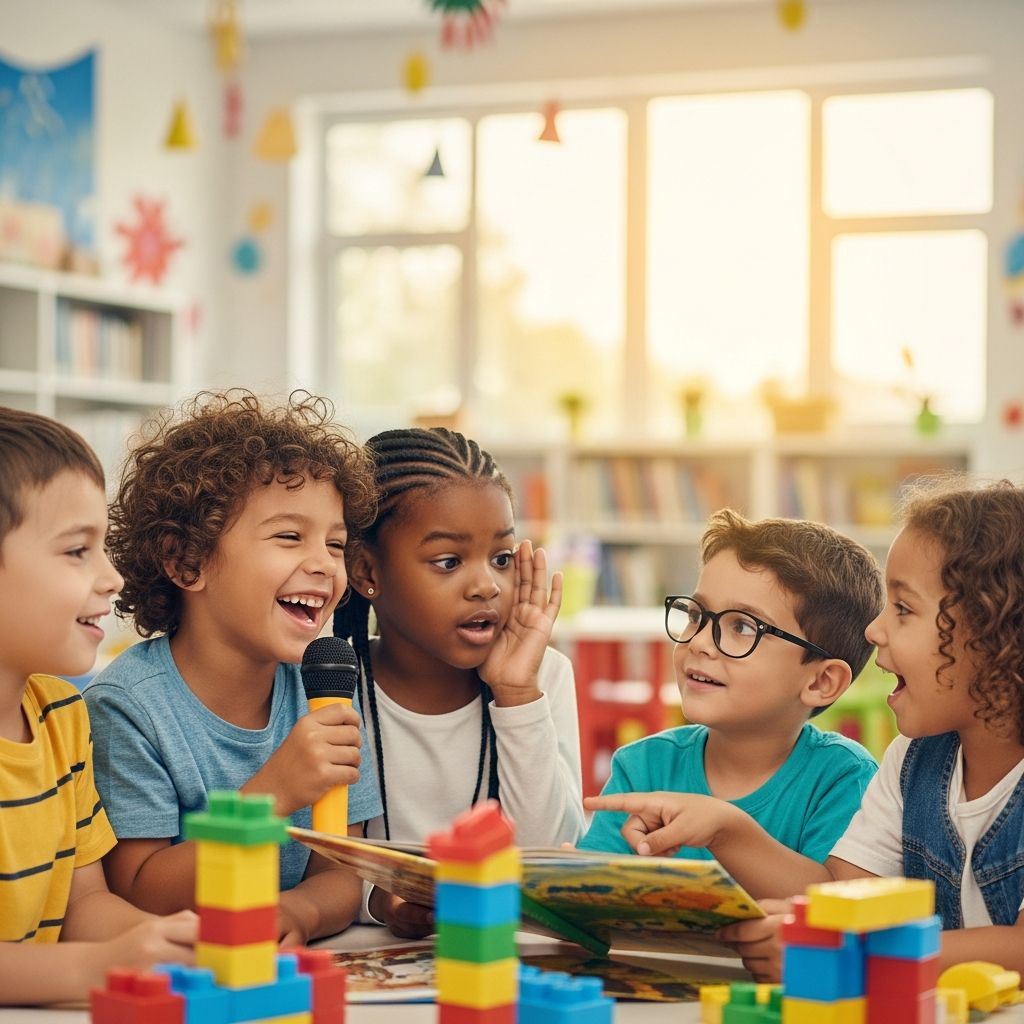
Effective communication forms the cornerstone of healthy child development, enabling kids to express emotions, share experiences, and build lasting relationships. Parents play a pivotal role in nurturing these skills from an early age, creating environments where children feel safe and valued in their words. By integrating simple, everyday practices, families can transform fleeting chats into meaningful dialogues that strengthen bonds and support emotional growth.
Building a Foundation of Trust Through Active Listening
Active listening goes beyond hearing words; it involves full engagement, showing children their thoughts matter. Make eye contact, nod, and lean in during conversations to signal attentiveness. Paraphrase what your child says, such as ‘It sounds like you felt excited about that game,’ to confirm understanding and encourage further sharing.
Dedicate distraction-free time daily, perhaps during dinner or bedtime, to focus solely on your child. This undivided attention builds trust, making them more likely to open up about school challenges or joys. Research highlights that consistent active listening enhances a child’s sense of security, prompting richer narratives over time.
- Eliminate phones and TVs to prioritize the moment.
- Use body language like smiling or mirroring posture to convey empathy.
- Resist interrupting; let them finish thoughts completely.
Harnessing Play and Creativity for Natural Expression
Play serves as a powerful gateway for communication, allowing children to explore ideas without pressure. Engage in pretend scenarios where kids role-play characters from books or daily life, prompting them to voice perspectives like a hungry monster or adventurous explorer. This fosters vocabulary expansion and emotional articulation.
Create storytelling sessions by jotting down their improvised tales or acting them out with puppets. Ask guiding questions like ‘What happens next?’ to extend narratives. Sensory activities, such as mixing playdough while describing textures, pair fun with descriptive language practice.
| Play Type | Communication Benefit | Example Activity |
|---|---|---|
| Puppet Shows | Encourages dialogue and sequencing | Adapt fairy tales collaboratively |
| Sensory Bins | Builds descriptive words | Explore rice or water with verbal narration |
| Role-Play | Teaches empathy and turns | Pretend shopping or doctor visits |
Crafting Questions That Spark Deeper Insights
Open-ended questions invite elaboration, shifting from yes/no responses to detailed stories. Instead of ‘Did you have fun at school?’, try ‘What made you laugh today?’ or ‘How did that puzzle challenge feel?’ These prompts reveal inner worlds and teach reflection.
Aim for ‘strive for five’ exchanges: extend talks through follow-ups like ‘Why do you think that happened?’ This back-and-forth mirrors real conversations, boosting confidence. During car rides or walks, pose fun queries like ‘If you could invent a holiday, what would it be?’ to keep engagement light-hearted.
Integrating Everyday Routines into Dialogue Opportunities
Transform mundane tasks into communication goldmines. While cooking, discuss ingredients’ origins or invent recipes together, naming actions like ‘chopping’ or ‘stirring’. During clean-up, use ‘noticing’ statements: ‘I see you organized the blocks by color—how did that idea come to you?’ This validates efforts and invites explanation.
Outdoor games like catch teach conversational rhythm: toss a ball with a question, requiring an answer and counter-question. This playful structure hones turn-taking and attentiveness. Bedtime recaps, where kids detail their day vividly, reinforce narrative skills.
Fostering Empathy and Respectful Language
Teach empathy by modeling it—acknowledge feelings with phrases like ‘You seem frustrated; want to talk about it?’ Role-play tough scenarios, switching roles to understand viewpoints, building compassionate communicators. Introduce respectful vocabulary early: prefer ‘I disagree because…’ over harsh words, framing ‘cool’ responses as ideal.
Validate emotions without judgment, using reflective listening: if they say ‘School was awful,’ respond ‘Your tummy hurt from nerves earlier?’ This mirrors feelings, encouraging openness. Reading aloud, pausing for predictions or character analyses, weaves empathy into literacy.
Encouraging Independence in Expression
Place desired items in sight but out of reach to prompt requests, naming objects to expand vocabulary. For school-agers, organize public speaking like family talent shows or project shares to build poise. Photo albums spark personal stories: ‘Tell me about this trip—who was there?’
List-making games, like naming foods in a storybook, sharpen recall and language. Daily journals where kids dictate or draw entries provide outlets for private thoughts, shared optionally.
Overcoming Common Barriers to Openness
Children may clam up due to fatigue or fear of criticism. Respect silences, avoiding lectures; instead, share your vulnerabilities: ‘I felt nervous too once.’ Consistency matters—regular rituals signal reliability. For diverse needs, visual aids or simpler prompts adapt strategies effectively.
Monitor tone: soft, enthusiastic voices invite sharing. If tensions rise, pause and reconnect later, modeling emotional regulation.
Key Communication Milestones by Age
| Age Group | Expected Skills | Parent Strategies |
|---|---|---|
| Preschool (3-5) | Simple stories, basic emotions | Storytelling, sensory play |
| Early School (6-8) | Detailed recounts, questions | Open questions, role-play |
| Tweens (9-12) | Abstract ideas, debates | Opinions, public speaking |
Frequently Asked Questions
What if my child gives one-word answers?
Shift to open-ended prompts and model detailed responses yourself. Patience builds the habit—try ‘Tell me more about that.’
How much daily talk time is ideal?
Aim for 15-30 minutes of focused interaction, plus woven-in moments during routines for natural flow.
Does screen time hurt communication?
Excess screens reduce face-to-face practice; balance with device-free zones for vital exchanges.
Can these tips help shy kids?
Yes—low-pressure play and listening create safety, gradually drawing them out.
What role does reading play?
Joint reading expands vocab and sparks discussions; alternate pages or predict plots together.
References
- 10 Easy Ways to Support a Young Child’s Communication Skills — Brookes Publishing Blog. 2023-05-15. https://blog.brookespublishing.com/10-easy-ways-to-support-a-young-childs-communication-skills/
- 12 Ways To Teach Kids Effective Communication Skills — LVDS. 2022-11-10. https://lvds.com/12-ways-to-teach-kids-effective-communication-skills/
- 10 Tips for Healthy Parent-Child Communication — Rooted Rhythm. 2024-02-20. https://www.rootedrhythm.com/blog/parents-children-communication
- Communication: School-Age Children — Virtual Lab School (.edu equivalent training). 2023-08-01. https://www.virtuallabschool.org/school-age/communication-and-language-development/lesson-2
- Young children and communication — Better Health Channel (vic.gov.au). 2025-01-10. https://www.betterhealth.vic.gov.au/health/healthyliving/young-children-and-communication