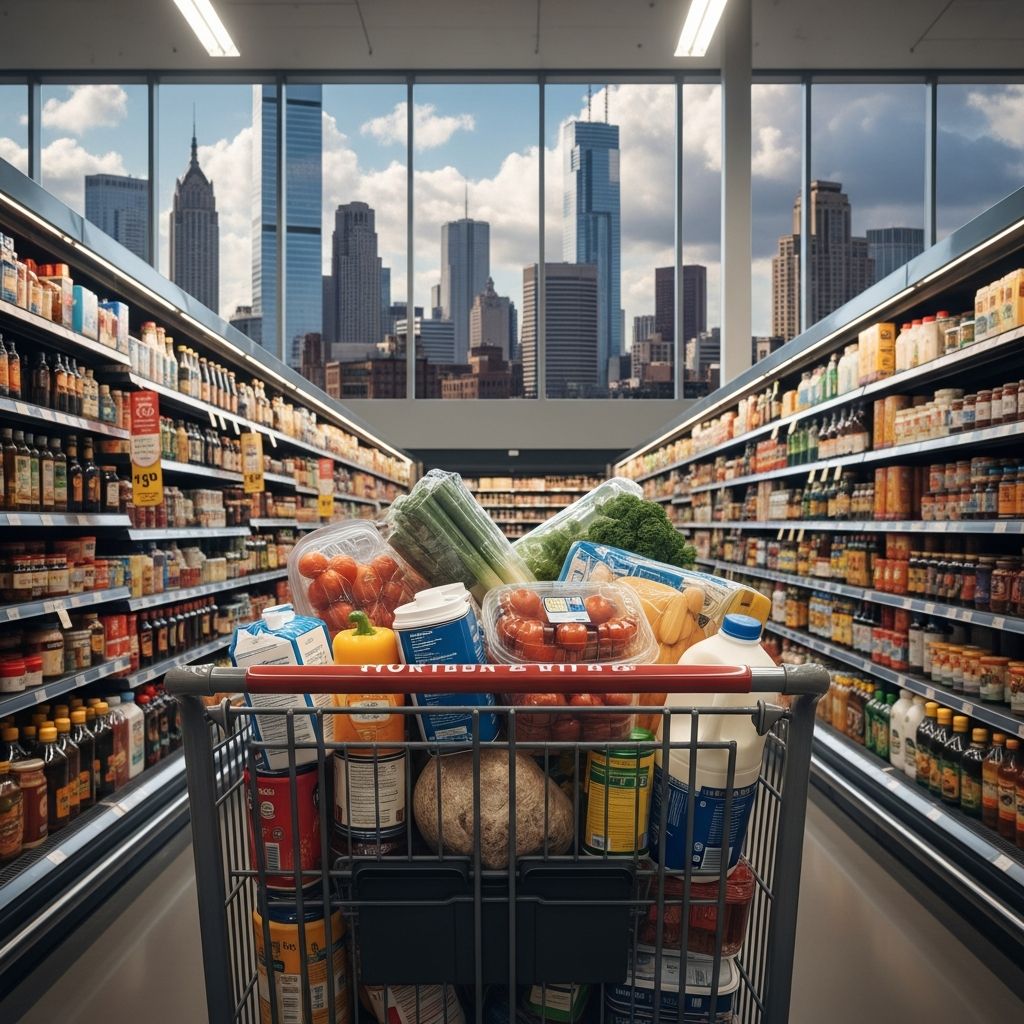
In 2026, families across America are grappling with elevated grocery prices, particularly in certain urban centers where costs exceed national averages by double digits. Data shows households in places like Honolulu and Alaskan cities shell out up to 31% more for food staples, pushing monthly bills toward $1,600 or higher. This trend strains budgets, with groceries consuming 19-23% of median incomes in top costly areas, far above the recommended 15% threshold.
Why Grocery Prices Vary So Dramatically Across Cities
Geographic isolation, supply chain hurdles, and local economic factors drive these disparities. Remote locations like Hawaii and Alaska rely on imported goods, inflating prices due to shipping expenses. Urban density in coastal metros adds premiums from high real estate and operational costs for stores. Nationally, the average four-person household budgets $992-$1,628 monthly per USDA guidelines, but in high-cost cities, spending aligns with the most liberal estimates.
Inflation plays a role too; the U.S. Bureau of Labor Statistics notes food-at-home prices rose 1.7% year-over-year recently, compounding city-specific pressures. States like California top weekly spends at $297.72 per household, while families with children average $331.94 weekly—41% more than childless homes.
Ranking the 10 Most Expensive Cities for Family Groceries
Based on 2026 analyses, here’s the lineup of cities where families pay the steepest grocery premiums. Percentages reflect deviation from national averages, with monthly spends and income ratios provided.
| Rank | City | % Above National Avg | Avg Monthly Spend | Median Income | Grocery % of Income |
|---|---|---|---|---|---|
| 1 | Honolulu, HI | 31.4% | $1,630 | $102,382 | 19.1% |
| 2 | Juneau, AK | 28.4% | $1,597 | $99,748 | 19.2% |
| 3 | Anchorage, AK | 23.7% | $1,537 | $93,881 | 19.6% |
| 4 | Fairbanks, AK | 23.0% | $1,529 | $86,780 | 21.1% |
| 5 | Manhattan, NY | 16.0% | $1,439 | $101,078 | 17.0% |
| 6 | San Francisco, CA | 15.4% | $1,432 | $125,456 | 13.7% |
| 7 | Brooklyn, NY | 15.1% | $1,424 | $76,912 | 22.2% |
| 8 | Queens, NY | 13.7% | $1,408 | $81,399 | 20.7% |
| 9 | San Diego, CA | 12.3% | $1,395 | $103,476 | 16.2% |
| 10 | Oakland, CA | 11.9% | $1,388 | $73,200 | 22.8% |
Honolulu leads with paradise-priced provisions, where families allocate nearly one-fifth of earnings to food. Alaska dominates positions 2-4 due to logistics challenges, with Fairbanks hit hardest proportionally at 21.1% of income. New York boroughs and California cities round out the list, highlighting coastal vulnerabilities.
Spotlight on Alaska: A Triple Threat for Food Budgets
Three Alaskan cities crack the top 10, underscoring the state’s unique burdens. Juneau’s $1,597 monthly outlay stems from its capital isolation, mirroring Anchorage’s $18,444 annual spend. Fairbanks residents, despite lower absolute costs, feel the squeeze most acutely as groceries claim over 21% of incomes. Harsh climates and vast distances mean perishables travel far, often by air or barge, jacking up tags on milk, produce, and meats.
- Supply Chain Realities: Limited local farming means 90%+ of food is imported, per state economic reports.
- Income Dynamics: Medians hover $86k-$99k, but high living costs elsewhere leave less buffer.
- Family Impact: Four-person homes exceed USDA liberal plans, risking nutritional trade-offs.
Coastal California and New York: Density Drives Up Prices
California claims four spots, with San Francisco bucking the affordability trend at 13.7% of high incomes ($125k median). Oakland and San Diego contrast with tighter budgets, where spends hit 16-23% of earnings. New York’s Manhattan, Brooklyn, and Queens reflect urban premiums: Manhattan’s 17% ratio is milder thanks to lofty incomes, but Brooklyn’s 22.2% burdens lower earners ($76k median).
These areas see elevated costs for organics, imports, and convenience items favored by diverse populations. Statewide, California households average $297 weekly, aligning with metro highs.
National Benchmarks: How Families Stack Up
Average U.S. households drop $270 weekly ($1,080 monthly) on groceries, per Census data, with four-person families at $315 weekly ($1,260 monthly). Households with kids surge to $331.94 weekly—41% above average—amplifying city pressures. Top states like California ($297.72), Nevada ($294.76), and Mississippi ($290.64) exceed norms, while Midwest spots like Wisconsin ($221) offer relief.
| Category | Avg Weekly Spend | Monthly Equivalent |
|---|---|---|
| All Households | $270.21 | $1,080 |
| With Children | $331.94 | $1,328 |
| 4-Person Family | $315.22 | $1,261 |
| Top State (CA) | $297.72 | $1,191 |
Demographic Divides in Grocery Spending Patterns
Spending correlates with family size, ethnicity, and education. Hispanic/Latino households lead at $325.67 weekly, possibly from larger families or cultural preferences. Lower education levels tie to higher spends: under high school at $320 weekly, versus $268 for some college. Urban families in pricey cities amplify these trends, often prioritizing convenience over bulk savings.
Practical Strategies to Tame High Grocery Bills
Families in costly cities can fight back with smart tactics:
- Meal Planning: Map weekly menus around sales flyers to cut impulse buys by 20-30%.
- Bulk Buying: Warehouse clubs like Costco offer 15-25% savings on staples, ideal for families.
- Local Sourcing: Farmers’ markets or CSAs reduce transport markups, even in Alaska.
- Tech Tools: Apps track prices, coupons; loyalty programs yield 5-10% rebates.
- Thrifty USDA Plans: Aim for $992 monthly baselines via affordable proteins, seasonal produce.
Switching to store brands shaves 20-40% off branded items. Growing herbs or easy veggies cuts specialty costs.
Future Outlook: Will Prices Ease in 2026?
With ongoing supply issues and climate impacts, relief seems limited. However, expanded local agriculture and tech like drone deliveries could help remote areas. Families should monitor BLS indices and adjust budgets proactively, targeting under 15% income allocation.
Frequently Asked Questions (FAQs)
Which U.S. city has the highest grocery costs for families?
Honolulu, HI tops the list at 31.4% above national average, with $1,630 monthly spends.
Why are groceries so expensive in Alaska?
Import reliance due to geography drives 23-28% premiums in Juneau, Anchorage, and Fairbanks.
How much should a four-person family budget monthly?
USDA suggests $992-$1,628; high-cost cities push toward the upper end.
Do families with kids spend more on groceries?
Yes, 41% more weekly at $331.94 versus childless homes.
What states have the priciest groceries?
California ($297.72 weekly), Nevada, Mississippi, Washington, Florida lead.
References
- 10 Cities Where Grocery Prices Are Highest in 2026 — Kiplinger. 2026. https://www.kiplinger.com/personal-finance/groceries/cities-where-grocery-prices-are-highest
- Cost of Groceries Report: Most Expensive States and Cities — HelpAdvisor.com (U.S. Census Household Pulse Survey analysis). 2023-11. https://www.helpadvisor.com/community-health/cost-of-groceries-report