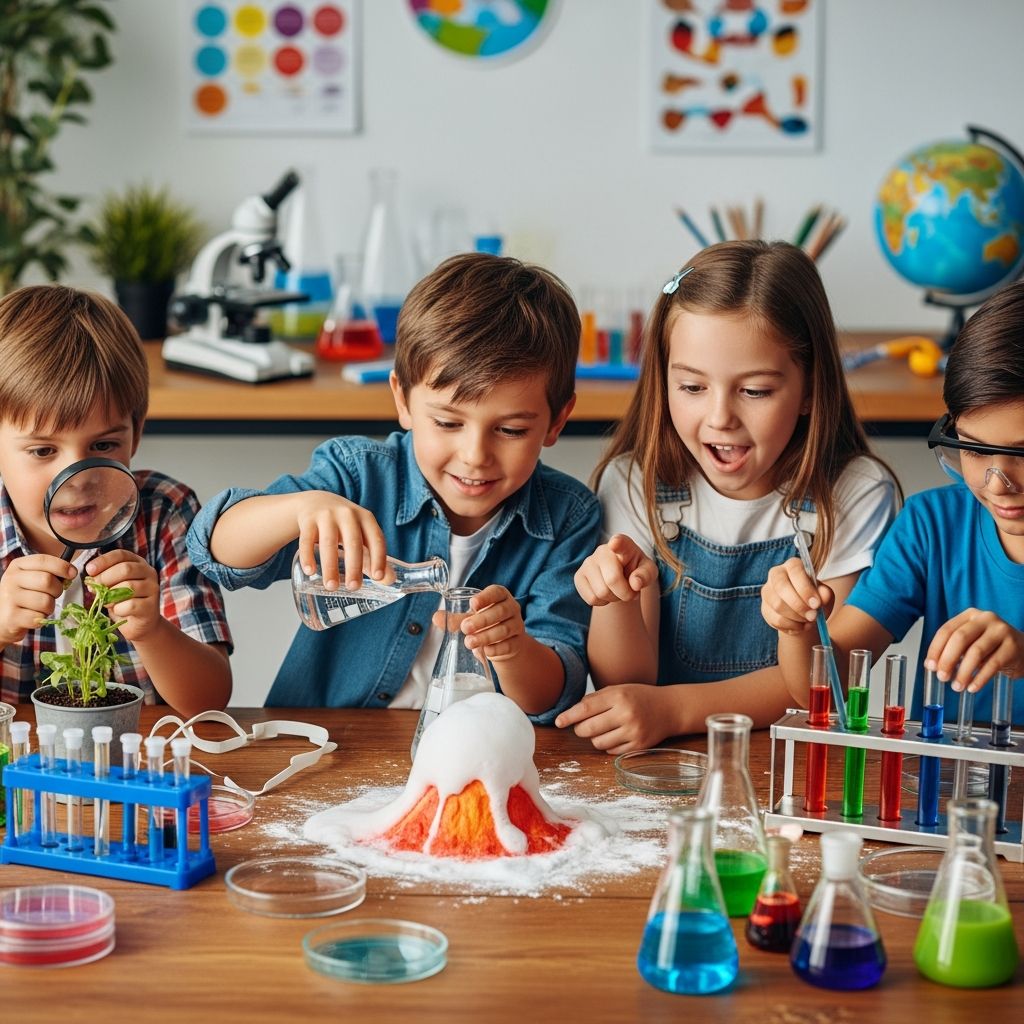
Preschoolers possess an innate curiosity about the world around them, making it the perfect time to introduce basic scientific principles through playful exploration. These 10 original experiments use common household materials to teach concepts like density, chemical reactions, and light properties, encouraging prediction, observation, and discussion skills essential for early STEM development.
Why Science Matters in Early Childhood
Early exposure to science builds critical thinking and problem-solving abilities. According to the National Science Teaching Association, hands-on activities help young children make connections between observations and explanations, laying a foundation for lifelong learning. These experiments are safe, quick, and adaptable for home or classroom settings, requiring minimal supervision.
Experiment 1: Buoyancy Challenge – Will It Sink or Float?
This timeless activity introduces buoyancy, the force that determines if objects float or sink based on density. Fill a large basin with water and gather items like toys, fruits, coins, and sponges. Have children predict outcomes before testing, then discuss why heavier, denser items sink while lighter ones float. Extend learning by creating a simple chart to track results.
- Materials: Basin of water, assorted small objects (e.g., apple, pencil, rubber duck, rock).
- Steps: Predict, test, observe, and record.
- Learning Outcome: Understanding density and prediction skills.
Variations include saltwater vs. freshwater to show how salinity affects buoyancy.
Experiment 2: Vibrant Color Swirls in Milk
Explore surface tension with this mesmerizing display. Pour whole milk into a shallow dish, add drops of food coloring in different spots, then touch the center with a soap-dipped cotton swab. Watch colors explode outward as soap reduces surface tension, pulling pigments apart. Ask kids: “What made the colors move?”
- Materials: Whole milk, food coloring, dish soap, cotton swabs, shallow dish.
- Steps: 1. Add milk. 2. Drop colors. 3. Dip swab in soap and touch. 4. Observe swirls.
- Key Concept: Soap molecules disrupt water’s surface film.
This activity sharpens observation and introduces basic chemistry.
Experiment 3: Dancing Raisins in Fizzy Water
Demonstrate gas properties with raisins that “dance” in carbonated water. Fill a clear glass with seltzer, drop in raisins, and observe them sink then rise repeatedly as carbon dioxide bubbles attach and lift them. Discuss: bubbles form on rough surfaces, making raisins buoyant until they pop.
| Step | Action | Observation |
|---|---|---|
| 1 | Pour seltzer | Bubbles form rapidly |
| 2 | Add raisins | Sink, then bubble up |
| 3 | Wait and watch | Repeat dance cycle |
Enhances understanding of gases and buoyancy.
Experiment 4: Mini Cloud Formation
Create a cloud in a jar to teach weather basics. Fill a jar halfway with hot water, place a lid with ice cubes on top, and watch condensation form a cloud as warm air rises and cools. This mimics atmospheric processes.
- Materials: Glass jar, hot water, lid, ice cubes.
- Safety Tip: Adult handles hot water.
- Extension: Shake in aerosol spray for “rain.”
Introduces meteorology concepts.
Experiment 5: Saltwater Egg Float
Illustrate density differences: Place one egg in freshwater (sinks) and another in saltwater (floats). Kids stir salt into one glass and compare. This shows how salt increases water density.
Perfect for discussing ocean life and why some animals float easily.
Experiment 6: Towering Bubbles
Build bubble skyscrapers to explore air expansion. Mix water and dish soap in a cup, insert straws, and blow gently to create rising bubble towers that overflow. Compete for the tallest!
- Materials: Plastic cups, dish soap, water, straws.
- Concept: Air pressure and bubble formation.
Fosters teamwork and air pressure awareness.
Experiment 7: Invisible Air Push
Prove air has power: Sponge a plastic bag with a straw inside, seal it, blow to inflate, then squeeze to blow a pom-pom across a table. Visualizes air pressure.
Materials are basic, setup quick.
Experiment 8: Fizzy Rice Reaction
Chemical magic: Mix water and baking soda in a container, add rice (sinks), then vinegar. Bubbles make rice “dance” via carbon dioxide gas from acid-base reaction.
- Materials: Baking soda, vinegar, rice, water, clear container.
Teaches reactions safely.
Experiment 9: Glowing Liquids Under Black Light
Explore fluorescence: Compare tap water, tonic water, highlighter ink water, and fluorescent paint under black light in a dark room. Tonic and inks glow due to quinine and phosphors.
Introduces light waves excitingly.
Experiment 10: Rainbow Paper Walk
Demonstrate capillary action: Line up colored water glasses with paper towels draped between. Water climbs towels, mixing into a rainbow. Teaches plant water transport analogy.
Beautiful, low-mess color lesson.
Tips for Successful Science Play
Always prioritize safety: Supervise closely, use non-toxic materials. Encourage questions, avoid dictating answers. Clean-up is part of learning! Rotate activities weekly for sustained engagement.
Frequently Asked Questions (FAQs)
What age group are these experiments for?
Ideal for 3-5-year-olds, with adult guidance. Simplify for younger toddlers.
Do I need special equipment?
No, all use household items like dish soap, food coloring, and baking soda.
How do I encourage learning?
Prompt predictions, observations, and “why” discussions. Journal findings with drawings.
Are these mess-free?
Most are contained; use trays. Embrace mess as exploration!
Can I adapt for groups?
Yes, scale materials and rotate stations for classrooms.
References
- 21 Easy Science Activities for Preschoolers — Brightwheel. 2023-05-15. https://mybrightwheel.com/blog/science-activities-for-preschoolers
- 20 Science Activities for Preschoolers — Bright Horizons. 2024-02-10. https://www.brighthorizons.com/article/education/science-for-preschoolers
- 9 Preschool Science Activities and Experiments — Famly. 2023-08-22. https://www.famly.co/us/blog/preschool-science-activities-and-experiments
- 58 Easy and Fun Science Activities for Preschool — We Are Teachers. 2024-11-05. https://www.weareteachers.com/preschool-science/