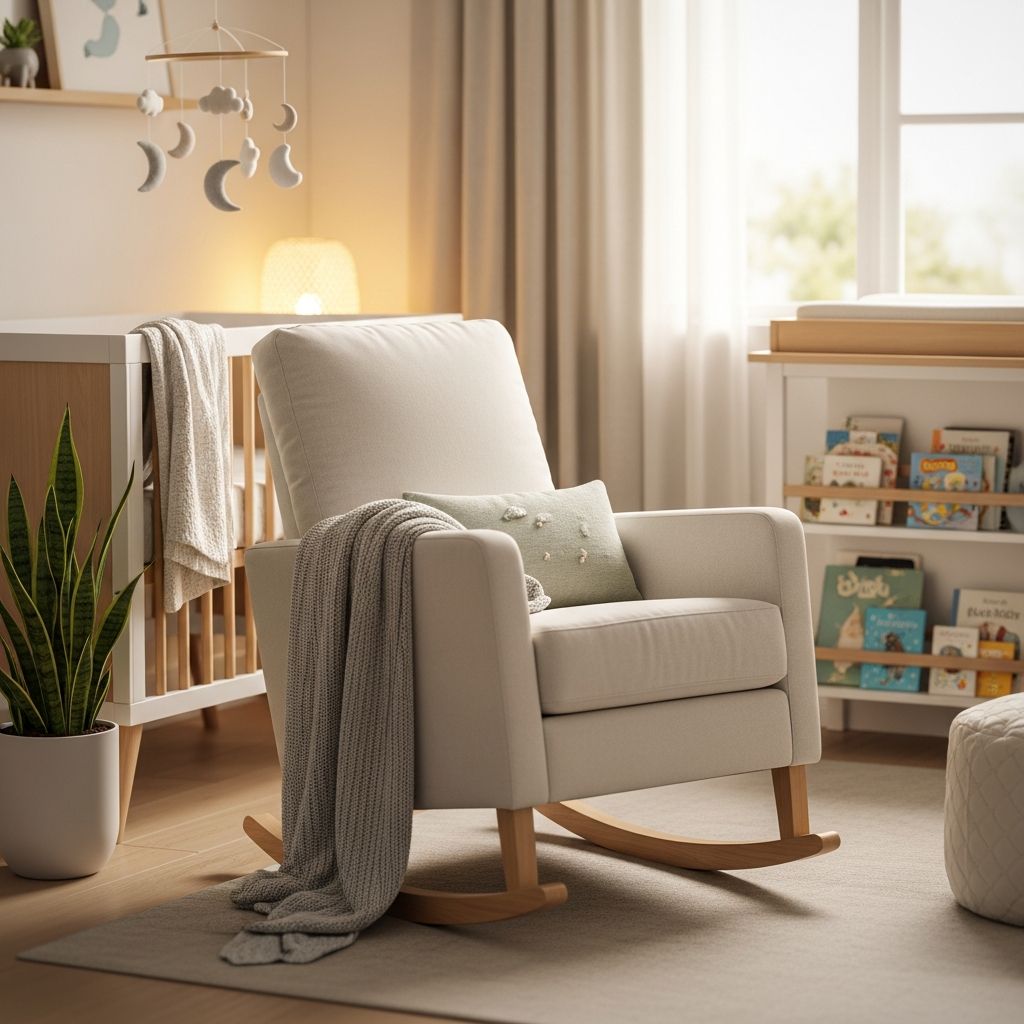
Creating a cozy spot to rock, feed, and soothe a baby is one of the most underrated but important choices new parents make for the nursery. The right rocking chair is more than a pretty piece of furniture; it becomes a daily companion during late-night feeds, growth spurts, sleep regressions, and quiet story times.
Why a Nursery Rocker Matters More Than You Think
Parents often focus on the crib, stroller, and car seat, but the nursery chair is where you will spend countless hours holding, feeding, and comforting your baby. Choosing wisely now can make those long stretches far more comfortable and emotionally calm.
A supportive rocking chair or glider can reduce strain on your back, hips, and shoulders while providing a consistent, soothing motion that helps many babies settle more easily. It is an investment in your physical comfort and your bonding time with your child.
- It becomes a home base for feeding, pumping, and cuddling.
- It can support postpartum recovery by reducing awkward, painful positions.
- It often stays useful for years as a reading chair in a kid’s room or another space in the home.
Key Types of Chairs for the Nursery
Nursery seating falls into a few main categories. Understanding the differences will help you match the chair to your space, body, and lifestyle instead of choosing only by appearance.
Traditional Rocking Chairs
Classic rockers move in an arc, with curved legs that create a back-and-forth motion. They are iconic and can be beautiful heirloom pieces, but they tend to move more dramatically than other options and sometimes feel less stable on hard floors.
- Pros: Timeless look, simple mechanisms, can be used beyond the nursery.
- Cons: Can tip more easily if a toddler climbs on them, may slide on smooth floors, and often have narrower seats.
Gliders
Gliders move in a smooth horizontal glide rather than an arc, often feeling more controlled and gentle. Many parents prefer this motion for feeding and settling because it is less likely to jostle a sleepy baby.
- Pros: Smooth, controlled movement, usually very comfortable, often come with padded cushions and armrests.
- Cons: Mechanisms can squeak over time, and some models are heavier and harder to move.
Swivel Rockers and Reclining Chairs
Some modern nursery chairs both rock or glide and swivel, allowing you to turn toward a crib, changing table, or partner without getting up. Reclining versions offer an extra level of comfort for long nights, especially if you fall asleep with your baby on your chest (which is common, though not recommended as a safe long-term sleep practice).
- Pros: High comfort, flexible positioning, can serve as a long-term family room chair.
- Cons: More moving parts, often a higher price point, and some recliners take up additional floor space when fully extended.
| Chair Type | Motion Style | Typical Comfort Level | Space Needs | Best For |
|---|---|---|---|---|
| Traditional rocker | Arc rocking | Moderate; varies by design | Low to moderate | Parents who love a classic look and simple function |
| Glider | Horizontal glide | High; usually well-padded | Moderate | Frequent feeding sessions and soothing routines |
| Swivel rocker | Swivel plus rock or glide | High | Moderate | Parents who want easy repositioning within the room |
| Reclining nursery chair | Recline plus glide/rock | Very high | High (needs room to recline) | Night feeds, rest during cluster feeding, long-term use |
Comfort Features That Actually Make a Difference
Comfort is not just about soft cushions. A beautiful chair that leaves your legs dangling or your neck unsupported can turn long nights into a physical struggle. When trying out or evaluating a rocker, pay attention to how your body feels in a relaxed, feeding-like position.
- Seat height: Your feet should touch the floor flat, with knees at roughly a right angle. If you are on the shorter side, look for chairs with lower seat heights or consider a small ottoman.
- Seat depth and width: You should be able to sit back fully against the backrest without feeling like you are perching on the edge or sinking into a deep crevice.
- Back support: A high back that supports your shoulders and head is a huge relief during late-night feeds and when you are drowsy.
- Armrests: Cushioned armrests at a comfortable height make it easier to hold a baby for long stretches and can reduce wrist and shoulder pain.
- Cushion firmness: Look for a balance: soft enough to feel cozy, but firm enough that you can stand up easily while holding a sleeping baby.
Imagine yourself sitting in the chair at 3 a.m. with a baby in your arms, half-awake and moving carefully. A good nursery chair helps you feel grounded, balanced, and supported in that moment, instead of tense or off-kilter.
Safety and Stability Considerations
Nursery furniture should feel reassuring, not nerve-wracking. A chair that rocks too dramatically or tips easily can be unsettling with a baby in your arms or with toddlers running around later on.
- Look for a wide, stable base or frame that does not wobble when you lean to one side.
- Check that the motion is smooth instead of jerky, with no sudden stops or pops.
- If the chair has mechanisms (like a recline lever), make sure they are not easily accessible to young children.
- Consider using a rug pad or non-slip pads under the chair if your nursery has hardwood or tile floors.
Even after the newborn stage, a stable chair is useful for reading time with an active toddler who might climb on and off the chair independently.
Choosing Fabrics and Finishes for Real Life
Babies are charming, but they are not tidy. Spit-up, spilled milk, leaky diapers, and sticky hands will eventually reach your nursery chair, so planning ahead for easy cleaning can save you frustration down the road.
- Easy-clean fabrics: Look for performance fabrics that resist stains and wipe down easily, or consider removable, washable cushion covers.
- Color choices: Mid-tone colors often hide stains better than very light or very dark shades.
- Pet considerations: If you have pets, choose tightly woven fabrics that are less likely to trap fur or snag from claws.
- Finish safety: For wooden frames, verify that paints and finishes are low-VOC and safe for indoor use.
A nursery chair does not need to be fragile to look stylish. Choosing practical materials from the start lets you relax when real life unfolds, instead of hovering with cleaning spray every time you sit down.
Designing a “Feeding Zone” Around Your Chair
The best nursery seating setup is not just a single chair in an empty corner. Think of it as a small, functional station for feeding, soothing, and nighttime care. A few thoughtful additions can make a big difference in daily comfort.
- Side table or shelf: A stable surface for water, burp cloths, nursing pads, bottles, a phone, and a small snack.
- Lighting: A soft, dimmable light source like a small lamp or wall sconce that lets you see what you are doing without fully waking the baby.
- Footrest or ottoman: Helps relieve lower back strain and can give shorter parents a more secure, grounded position.
- Textiles: A cozy throw blanket for you and an easily washed small blanket or burp cloth over the chair arm to catch spills.
When these elements work together, they create a calm corner where everything you need is within reach, reducing interruptions during precious sleep-windows.
Space-Saving Tips for Small Nurseries
Not every home has a large, dedicated nursery, but you can still enjoy a comfortable seating area even in tight quarters. A little planning helps you fit a rocker without overwhelming the room.
- Choose a chair with a slimmer silhouette rather than an oversized recliner.
- Look for gliders with a compact footprint that do not require much clearance behind them.
- Use wall-mounted shelves instead of a large side table to hold essentials.
- Place the chair diagonally in a corner to maximize both floor space and cozy vibes.
In shared spaces, like a master bedroom corner acting as a mini-nursery, a neutral, streamlined chair can blend into existing decor and continue to work as an accent chair after the baby stage.
Budgeting and Deciding Where to Splurge
Nursery items can add up quickly, so it helps to be intentional about where you invest more and where you can save. A nursery chair is a high-use item, which often makes it worth putting a larger portion of the budget toward comfort and durability.
- Consider long-term use: Will this chair move to a living room or older child’s room later?
- Compare warranties and customer reviews to gauge durability and service.
- Save on accessories by repurposing items you own, like an existing side table or lamp.
- Look for sales or gently used high-quality chairs, but always inspect for stability and cleanliness.
Think of cost in terms of hours used rather than just the sticker price. A slightly more expensive chair that you use daily for years may be a better value than a cheaper option that quickly becomes uncomfortable.
Checklist: What to Test Before You Buy
If you can sit in the chair before purchasing, treat it like a dress rehearsal for real life with a baby. Even if you are shopping online, this checklist can guide what to look for in reviews and product descriptions.
- Sit down and stand up while imagining holding a baby to test how easy it feels.
- Check whether your feet rest flat on the floor without straining.
- Lean back and notice if your head and upper back feel supported.
- Rest your arms as if cradling a baby and see if the armrests are at a comfortable height.
- Test the full range of motion: rock, glide, swivel, or recline as applicable.
- Listen for squeaks or grinding noises that could become annoying in a quiet room.
Taking a few extra minutes to experiment with natural positions usually gives a clearer picture than simply sitting upright for a few seconds in a showroom pose.
Frequently Asked Questions About Nursery Rockers
Do I really need a special chair for the nursery?
You do not strictly need a dedicated nursery rocker, but many parents find that having a comfortable, supportive place to sit with the baby makes daily routines easier. A well-chosen chair can reduce physical strain and provide a consistent, familiar environment that cues your baby for sleep and calm.
Is a rocker or glider better for newborns?
Both can work well. Some parents prefer the gentle, linear motion of a glider because it feels smoother and easier to control, especially when they are very tired. Others enjoy the classic sway of a traditional rocker. The best choice is the one that feels safest, most stable, and most comfortable for your body and your baby.
What if I am shorter or taller than average?
Parents at either height extreme often benefit from paying extra attention to seat height and depth. Shorter parents may want lower seats or a footrest so their feet are firmly planted, while taller parents may appreciate deeper seats and higher backs that support their frame without forcing a slouched posture.
Will I still use the chair after the baby stage?
Many families continue using the nursery chair for years, transitioning it to a reading corner, older child’s room, or shared living space. If you choose a style and color that you like beyond the baby years, the chair can become a long-term part of your home instead of a single-stage purchase.
Is it safe to fall asleep in the chair with my baby?
It is very common to nod off during night feeds, but it is generally safer to place your baby in a crib or bassinet as soon as you feel drowsy. If you do doze off, try to transfer your baby to a safe sleep surface as soon as you wake up, and discuss safe sleep practices with your pediatrician for guidance that fits your family’s needs.
Making the Chair Your Own
A nursery rocker or glider becomes a little island of calm in a season that can feel chaotic and uncertain. Adding your own touches turns it into a space that supports not just your baby, but you as a parent.
- Place a favorite photo or piece of art nearby to look at during long feeds.
- Keep a few comforting items close: lip balm, a water bottle, or a small journal.
- Use a pillow or lumbar cushion if needed, but avoid overloading the chair so it remains easy to use one-handed.
Ultimately, the best nursery chair is the one that fits your home, supports your body, and helps you feel grounded as you care for your baby. With thoughtful choices, your rocker can become a quiet witness to some of the sweetest moments of early parenthood.