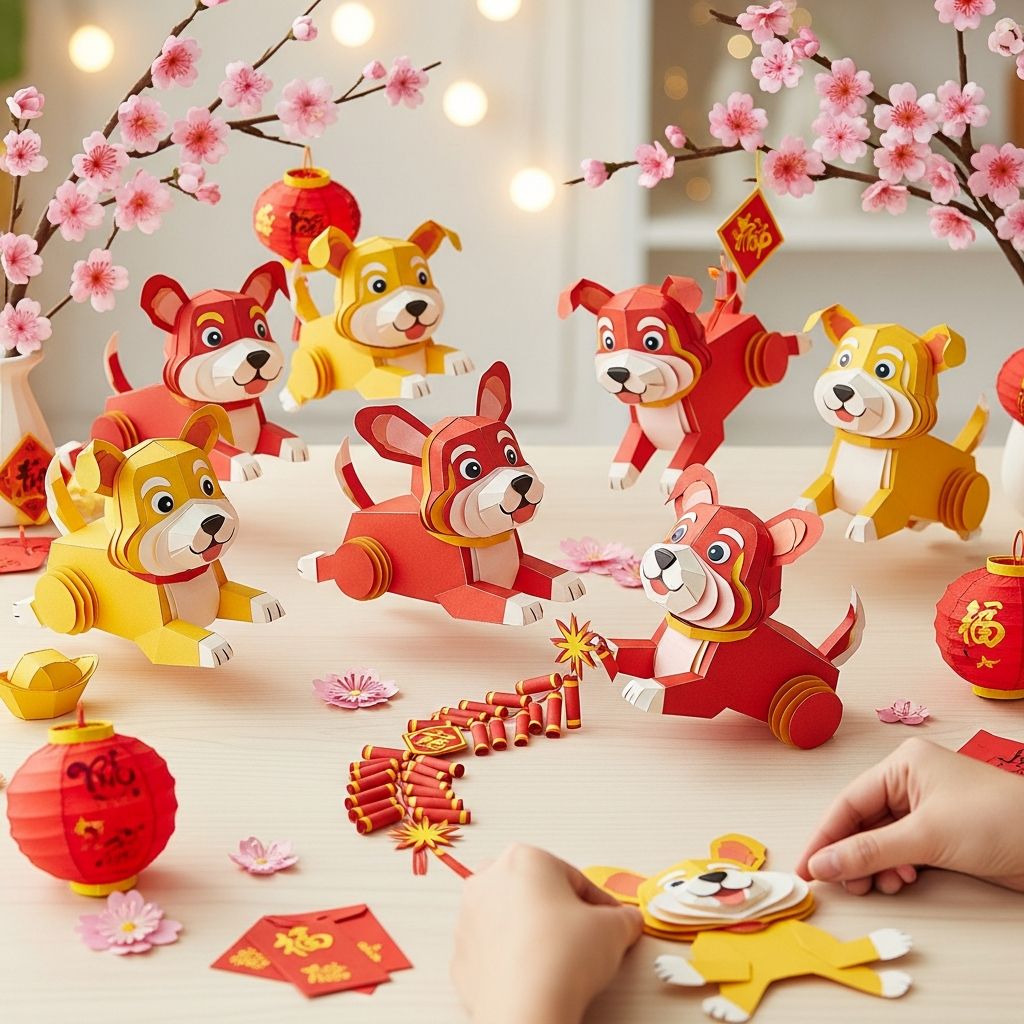
The Year of the Dog is a playful opportunity to invite kids into the magic of the Lunar New Year with friendly paper puppies, bright colors, and simple storytelling. Rather than focusing on complex techniques, this guide uses easy, cut-and-fold projects that any family or classroom can enjoy together.
This article offers an original set of ideas inspired by printable-style crafts while presenting new designs, instructions, and activities in a completely fresh way. You will find explanations of the zodiac dog, step-by-step paper projects, suggestions for display and play, and a short FAQ to support parents and educators.
Why the Zodiac Dog Matters to Kids
The dog in the Chinese zodiac is often associated with loyalty, honesty, and a sense of protection, qualities that children can relate to through stories and simple activities. When kids make a puppy craft for the New Year, they are not only being creative but also connecting with cultural ideas about friendship and responsibility.
Using the dog as a symbol helps introduce young learners to the wider tradition of twelve zodiac animals, each linked to different years in a repeating cycle. You can use this moment to talk about which animal represents each childs birth year, turning a simple art project into a conversation about identity and heritage.
Gathering Simple Craft Materials
Before starting any puppy project, assemble a small, predictable set of materials so children can focus on creativity instead of searching for supplies. Everyday items from home or school are more than enough to create expressive, sturdy paper dogs.
- Colored cardstock or construction paper in red, gold, brown, black, and white
- Childrens scissors with rounded tips
- Non-toxic glue sticks or double-sided tape
- Washable markers, crayons, or colored pencils
- Optional: brads (paper fasteners), craft sticks, string, and stickers
Project 1: Standing Lucky Puppy Decoration
This first project creates a simple standing puppy that can sit on a shelf, classroom display, or festive table. The design uses one main body shape and two side panels that fold out to form a stable base, allowing even young crafters to achieve success.
Steps for the Standing Puppy
- Draw or lightly sketch a rounded puppy body on cardstock, including the head and torso as one continuous shape.
- Cut out the main shape, then trace and replicate it twice to create two matching side pieces.
- On the two side pieces, draw and cut a straight line along the bottom to form a flat “foot” so the puppy can stand.
- Fold a narrow tab along the inner edge of each side piece; these tabs will attach to the main body.
- Glue the folded tabs to the back of the central puppy shape, one on each side, so that the side pieces flare out and create a triangle-like base.
- Invite children to decorate the face with big eyes, a nose, and a friendly smile, then add patches, spots, or a collar in festive colors.
When complete, the standing puppy can hold tiny paper “red envelopes”, a miniature banner, or a sign wishing guests good luck. Encourage kids to name their puppies and talk about what makes a loyal friend in their own lives.
Project 2: Talking Puppy Mask for Story Play
Transform the zodiac dog into a wearable mask to support dramatic play, classroom skits, or family storytelling. This design uses a simple hinge at the jaw so the puppy appears to talk when the child moves their hand.
How to Make a Moving-Jaw Mask
- Cut a large oval or rounded shape from sturdy paper to fit the upper half of the childs face.
- Sketch and cut out a matching lower jaw piece shaped like a crescent or curved rectangle.
- Punch small holes at the corners where the cheeks meet the jaw on both pieces.
- Join the pieces with brads or short loops of string, forming a hinge that lets the jaw swing open and closed.
- Cut two rounded eye openings and reinforce the area around them with extra paper or tape if needed.
- Add ears at the top of the mask, coloring them to match a chosen dog breed or an imaginary puppy.
Children can move the lower jaw with one hand while speaking lines from a story about the New Year, good luck, or helpful dogs. This kind of roleplay supports language development and boosts confidence while keeping the craft playful and light-hearted.
Project 3: Folded Puppy Puppet for Small Hands
Another fun activity is a small folded puppet that perches on a childs fingers. This kind of project mimics the feeling of a printable toy but keeps the design and instructions original and flexible for different ages.
Creating a Finger-Perch Puppy
- Cut a long strip of paper wide enough to wrap gently around two or three fingers.
- Wrap the strip around a childs fingers to measure, then glue or tape the ends into a ring that fits comfortably.
- On a separate piece of paper, draw and cut out a puppy head and front paws.
- Attach the head and paws to the front of the ring so the puppy appears to lean over a balcony or ledge.
- Encourage kids to color the puppy, add a tiny paper scarf, or draw small lanterns beside it for a festive background.
With several rings on different fingers, children can create a tiny parade of dogs marching to welcome the New Year. The puppet can also be used as a reading buddy: kids hold the puppy while practicing new words or counting tasks.
Project 4: Puppy Parade Garland for Decorating
Once kids are comfortable making simple dog shapes, they can work together on a hanging paper garland to decorate a doorway or bulletin board. Each child designs one unique puppy, and when they are strung together, the result becomes a colorful celebration of diversity and teamwork.
Steps for a Puppy Garland
- Trace a basic puppy outline on thick paper and cut multiple copies for the whole group.
- Distribute one or more blank puppies to each child and invite them to decorate using markers, crayons, and stickers.
- Punch two small holes at the top of each puppy’s ears or head.
- Thread yarn or ribbon through the holes, spacing the puppies evenly along the string.
- Secure the garland across a window, fireplace, or classroom wall.
As you hang the garland, talk about the idea of community and how each unique puppy contributes to the overall celebration. This conversation can gently introduce ideas about inclusion, kindness, and shared responsibility.
Ideas for Color Symbolism and Details
While any colors can work for a playful puppy, using traditional Lunar New Year colors adds meaning to the crafts. Red is often associated with good fortune and happiness, while gold and yellow tones can suggest prosperity and success.
Encourage children to layer these symbolic colors into collars, background shapes, or small accessories on each puppy. Simple details like a red tag on a collar or a golden paper bone can spark conversation about hopes and wishes for the coming year.
Sample Puppy Craft Variations
Once families or teachers are comfortable with the basic standing puppy and puppet designs, it is easy to adapt them for different ages or classroom goals. The table below offers ideas for modifying the projects with minimal extra preparation.
| Variation | What Changes | Best For |
|---|---|---|
| Sticker-face puppy | Use premade stickers for eyes and nose instead of drawing detailed features. | Very young children or quick party activities. |
| Patterned paper puppy | Cut the body from gift wrap or origami paper to add built-in designs. | Older kids who enjoy mixing textures and patterns. |
| Storytelling puppy | Glue a craft stick to the back so the puppy becomes a handheld character. | Language arts centers, puppet shows, or bedtime stories. |
| Wish-tag puppy | Attach a tiny paper tag to the collar where children can write a hopeful word or goal. | New Year reflection activities at home or school. |
| Math-count puppy set | Create multiple numbered puppies to use in counting, addition, or sorting games. | Early math practice in playful learning spaces. |
Connecting Crafts to Storytelling and Learning
Puppy crafts become even more meaningful when paired with short stories or classroom discussions about courage, fairness, and friendship. You might read a children’s book that features dogs as helpers, then invite kids to retell the story using their standing puppies or masks.
Teachers can also weave in simple lessons about the lunar calendar, cultural diversity, and geography, using a world map to show where Lunar New Year is widely celebrated. These activities help children see that art is not separate from learning but a doorway into understanding other people and traditions.
Display Ideas for Home and Classroom
The way crafts are displayed can reinforce the sense of celebration and pride. At home, place standing puppies on a mantle or dining table, surround them with paper lanterns, and add handwritten wish cards for each family member.
In classrooms, create a dedicated “Zodiac Dog Corner” where garlands, puppets, and masks are grouped together with short captions written by the children. Adding labels that mention feelings or values, such as “loyal” or “brave,” helps kids link the symbol of the dog to positive character traits they can practice each day.
FAQ: Puppy Crafts for the Year of the Dog
Do I need advanced drawing skills to design the puppies?
No, the projects in this guide are designed around basic shapes such as circles, ovals, and rectangles that children can draw or trace. The charm of these crafts comes from each child’s unique style, not from highly detailed or realistic artwork.
How can I adapt these crafts for different age groups?
For very young children, simplify the steps by pre-cutting basic shapes and allowing them to handle only the coloring and gluing. Older kids can take on more complex tasks like measuring folds, planning patterns, and inventing stories to perform with their masks or puppets.
Can these projects be used outside of the actual Year of the Dog?
Yes, puppy crafts work well whenever you are teaching about the zodiac cycle, celebrating pets, or introducing cultural holidays in a general way. They can also become part of birthday parties, animal-themed units, or reading programs that highlight animal characters.
What if I do not have access to a printer?
All of the activities described here are hand-drawn and rely on tracing, cutting, and folding rather than printed patterns. This makes them flexible for any setting, from homes with limited supplies to community centers where sharing simple tools is essential.
How can I keep the focus on culture rather than just cute animals?
Pair every craft with a short explanation about why the dog is meaningful in the zodiac and how the Lunar New Year is celebrated in different places. Ask children reflective questions about loyalty, community, and generosity, so the puppies become symbols of values rather than decorations alone.