What Is XYY Syndrome?
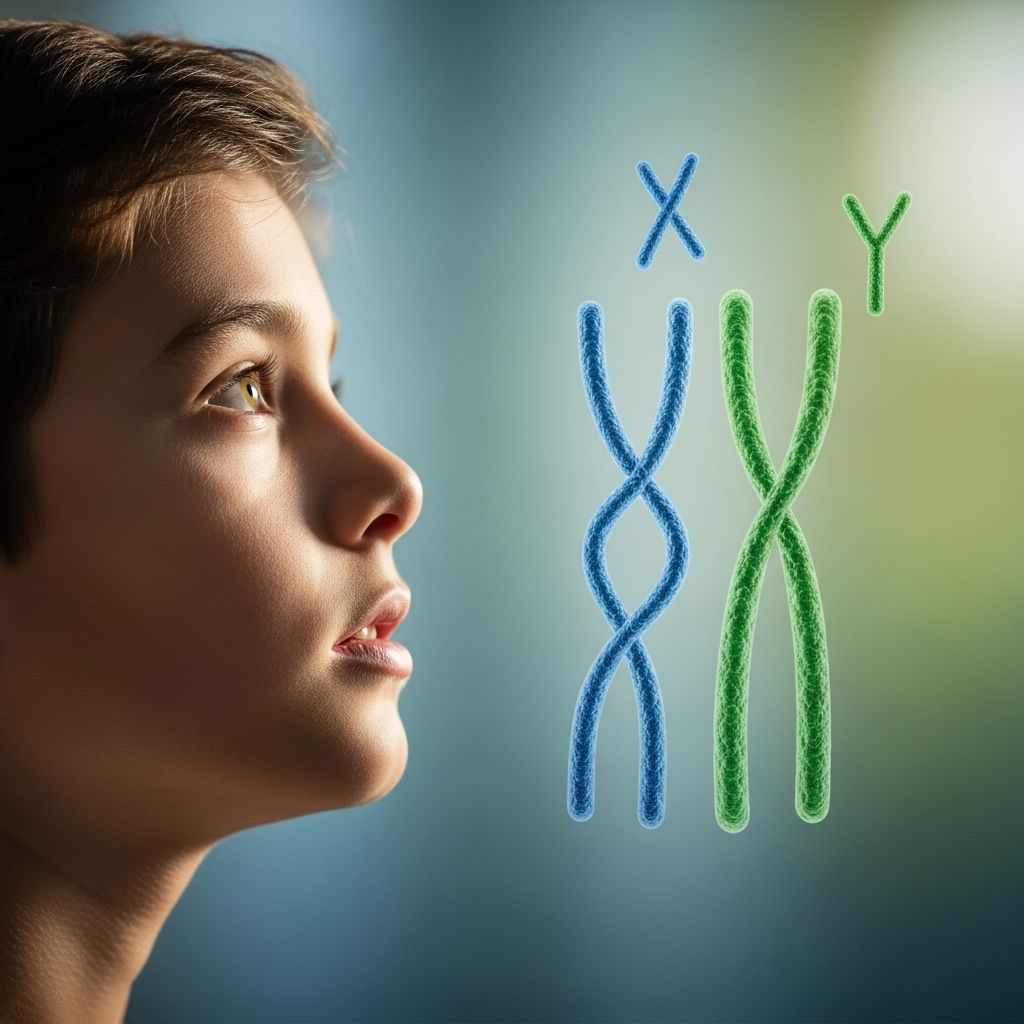
XYY syndrome, sometimes called Jacobs syndrome, is a genetic variation that affects males. It occurs when a boy is born with one X and two Y chromosomes instead of the usual one X and one Y. This means his cells have 47 chromosomes instead of the typical 46, written as 47,XYY. It is not inherited from parents but happens by chance, usually during the formation of the father’s sperm.
Because the extra Y chromosome does not usually cause major physical differences, many boys with XYY syndrome are never diagnosed. In fact, most live full, healthy lives without ever knowing they have this chromosomal pattern. When signs do appear, they are often subtle and can include slightly delayed development, learning challenges, or behavioral traits that may overlap with other common childhood conditions.
How Common Is XYY Syndrome?
XYY syndrome is not rare, but it is often overlooked. Studies estimate that about 1 in every 1,000 male births involves an extra Y chromosome. Despite this relatively common occurrence, only a small fraction of affected individuals receive a formal diagnosis, often because the condition does not cause obvious health problems.
Diagnosis usually happens in one of three ways:
- During prenatal testing (such as amniocentesis or chorionic villus sampling) when chromosomes are analyzed.
- When a child is evaluated for developmental delays, speech issues, or learning difficulties.
- Incidentally, during genetic testing for another reason.
Because many boys with XYY syndrome look and develop like their peers, the condition can go unnoticed for years, sometimes into adulthood.
Physical Traits and Growth Patterns
One of the most consistent features of XYY syndrome is increased height. Boys with XYY tend to be taller than average, and this difference often becomes noticeable around age 5 or 6. By adulthood, many are above the 90th percentile for height, with some reaching 6 feet or more.
Beyond height, physical differences are usually mild or absent. Most boys with XYY have:
- Normal facial features
- Typical body proportions
- Normal sexual development at puberty
- Normal testosterone levels and fertility in the majority of cases
Some individuals may have minor physical traits, such as:
- Slightly weaker muscle tone (hypotonia) in infancy
- Flat feet (pes planus)
- Curved fifth fingers (clinodactyly)
- Widely spaced eyes (hypertelorism)
- Larger than average teeth (macrodontia)
- Increased belly fat or a larger head size (macrocephaly)
These traits vary widely and are not present in every child. Importantly, XYY syndrome does not cause major birth defects or serious physical illness in most cases.
Development and Motor Skills
In early childhood, some boys with XYY syndrome may show mild delays in reaching motor milestones. This can include:
- Sitting up later than average
- Walking a bit later
- Difficulty with fine motor skills like holding a pencil or using scissors
- Clumsiness or coordination challenges
These delays are often subtle and may not be immediately linked to a chromosomal condition. Many children catch up with time and support. Physical therapy or occupational therapy can be helpful if motor skills are significantly behind peers.
Speech and Language Development
Speech and language development is one area where differences are more commonly seen. Boys with XYY syndrome may experience:
- Delayed speech onset (starting to talk later than peers)
- Difficulty with expressive language (putting thoughts into words)
- Challenges with grammar, sentence structure, or vocabulary
- Reading and spelling difficulties, sometimes related to dyslexia
These issues are not universal, but they occur more frequently than in the general population. Early speech therapy and language support can make a big difference in communication skills and confidence.
Learning and Cognitive Profile
Most boys with XYY syndrome have normal intelligence and are able to learn and succeed in school. However, on average, IQ scores tend to be about 10–15 points lower than those of their siblings or peers without the condition. This does not mean a child cannot do well academically; it simply means they may need extra time, different teaching methods, or additional support.
Common learning patterns include:
- Stronger performance in nonverbal or visual tasks
- Greater difficulty with verbal reasoning, reading comprehension, and written expression
- Slower processing speed, which can affect how quickly information is understood and used
- Memory challenges, especially with verbal information
Learning disabilities, particularly in reading and language, are more common in XYY syndrome. With appropriate educational strategies, many boys thrive in mainstream classrooms and go on to higher education or skilled careers.
Behavior and Emotional Well-Being
Behavioral and emotional traits can vary widely among boys with XYY syndrome. Some may be very easygoing, while others may struggle with:
- Impulsivity (acting without thinking)
- Difficulty paying attention or staying focused
- Hyperactivity or restlessness
- Emotional regulation challenges (big reactions to small frustrations)
- Defiant or oppositional behavior, especially in stressful situations
These traits often overlap with conditions like ADHD (attention-deficit/hyperactivity disorder) and, in some cases, autism spectrum disorder. It is important to note that:
- Boys with XYY are not inherently aggressive or dangerous.
- They are not at increased risk for serious mental illness.
- Most lead law-abiding, socially appropriate lives.
Emotional support, clear routines, and behavioral strategies can help children manage strong emotions and build self-control. Counseling or behavioral therapy may be beneficial when challenges are significant.
Health and Medical Considerations
Most boys with XYY syndrome are in good general health. However, some may have a slightly higher chance of certain conditions, including:
- Asthma
- Seizures or epilepsy
- Tremors or involuntary movements (tics)
- Genitourinary differences, such as undescended testes (cryptorchidism) or hypospadias, though these are not common
Regular pediatric care is usually sufficient. If specific concerns arise, specialists such as neurologists, endocrinologists, or urologists can provide targeted evaluation and treatment.
Diagnosis and Genetic Testing
XYY syndrome is diagnosed through a karyotype test, which analyzes the chromosomes in a blood sample. The result will show 47 chromosomes with an X and two Y chromosomes (47,XYY).
Some individuals have mosaicism, meaning the extra Y chromosome is present in only some of their cells (46,XY/47,XYY). In these cases, symptoms may be milder or even absent.
Because the condition is often not suspected based on appearance alone, many diagnoses occur later in childhood or adolescence, sometimes during evaluations for:
- Learning or reading difficulties
- Speech and language delays
- Behavioral or attention problems
- Developmental concerns
Support and Intervention Strategies
There is no cure for XYY syndrome, but many supportive strategies can help children reach their full potential. The key is early identification and tailored support.
Helpful interventions may include:
- Speech and language therapy: To improve communication skills and reduce frustration.
- Occupational therapy: To support fine motor skills, handwriting, and daily living tasks.
- Physical therapy: If motor delays or low muscle tone are present.
- Educational support: Individualized education plans (IEPs) or 504 plans to address learning needs in school.
- Behavioral and mental health services: Counseling, social skills training, or ADHD treatment when needed.
- Parent training and support: Learning strategies to manage behavior, support learning, and advocate for the child.
Consistency, structure, and positive reinforcement are powerful tools for helping children with XYY syndrome succeed at home and in school.
What Parents Can Do
Parents play a crucial role in supporting a child with XYY syndrome. Practical steps include:
- Working closely with pediatricians, therapists, and school staff.
- Monitoring development and seeking evaluations if delays or concerns arise.
- Creating predictable routines and clear expectations at home.
- Encouraging strengths and interests to build confidence.
- Teaching emotional regulation skills, such as identifying feelings and using calming strategies.
- Connecting with support groups or organizations for families of children with chromosomal differences.
Most importantly, parents should remember that XYY syndrome is just one part of who their child is. With understanding and support, boys with XYY can grow into capable, happy adults.
Long-Term Outlook
The long-term outlook for boys with XYY syndrome is generally positive. Most:
- Complete school and pursue further education or training.
- Develop healthy relationships and social connections.
- Enter the workforce and live independently as adults.
- Have normal sexual development and fertility.
Life expectancy is not reduced by XYY syndrome. With appropriate support, individuals can manage any learning, behavioral, or health challenges effectively.
Addressing Misconceptions
XYY syndrome has been misunderstood in the past. It was once incorrectly labeled as the “super-male” syndrome, with unfounded claims that affected men were more aggressive or antisocial. Modern research has clearly shown that this is not true.
Important facts to remember:
- XYY syndrome does not cause violent or criminal behavior.
- Boys with XYY are not more likely to have serious mental illness.
- They are not inherently different in personality or moral character from other boys.
- Most live ordinary, productive lives.
Accurate information helps families, educators, and healthcare providers support boys with XYY in a fair and compassionate way.
Frequently Asked Questions
Is XYY syndrome inherited?
No, XYY syndrome is not inherited. It occurs randomly, usually when an error happens during the formation of the father’s sperm. It is not caused by anything the parents did or did not do.
Do boys with XYY syndrome have normal puberty and fertility?
Most do. Testosterone levels and sexual development are typically normal, and many men with XYY syndrome are able to father children. In a small number of cases, fertility may be affected, but this is not the norm.
Can XYY syndrome be cured?
There is no cure because it is a chromosomal variation, not a disease. However, many of the associated challenges—such as speech delays, learning difficulties, and behavioral issues—can be effectively managed with therapy, education, and support.
Should I tell my child about their XYY diagnosis?
Many experts recommend sharing the diagnosis in an age-appropriate way. This can help the child understand their strengths and challenges, reduce confusion, and feel supported. The timing and details should be guided by the child’s maturity and the family’s comfort level.
What should I do if I suspect my child has XYY syndrome?
If you have concerns about development, learning, or behavior, talk to your pediatrician. They can refer you to a geneticist or developmental specialist for evaluation. Early support can make a meaningful difference in your child’s progress.
References
- 47,XYY syndrome — MedlinePlus, U.S. National Library of Medicine. Updated 2023. https://medlineplus.gov/genetics/condition/47xyy-syndrome/
- XYY Syndrome — National Organization for Rare Disorders (NORD). https://rarediseases.org/rare-diseases/xyy-syndrome/
- XYY Syndrome — Merck Manual Consumer Version. https://www.merckmanuals.com/en-ca/home/children-s-health-issues/chromosome-and-gene-abnormalities/xyy-syndrome
- Jacobs Syndrome — StatPearls, National Center for Biotechnology Information (NCBI). Updated 2023. https://www.ncbi.nlm.nih.gov/books/NBK557699/
- XYY Syndrome: Causes, Symptoms, and More — Healthline. https://www.healthline.com/health/xyy-syndrome