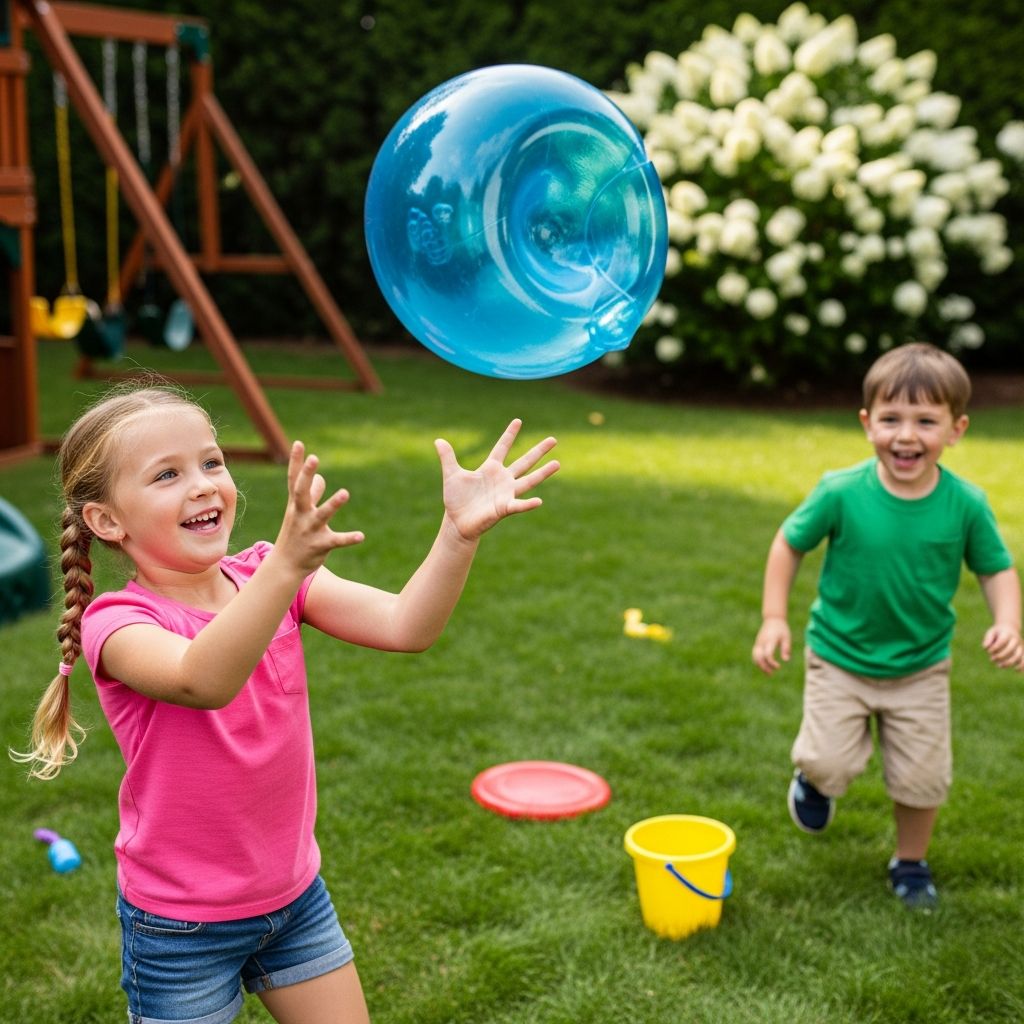
The Wubble Bubble Ball is one of those toys kids spot once and instantly decide they absolutely must have. It looks like a shimmering soap bubble, but behaves more like a giant, squishy ball you can kick, throw, and hug. This guide walks you through what it really is, what it does well, and how to decide if it fits your family’s play style and space.
What Exactly Is the Wubble Bubble Ball?
At its core, the Wubble Bubble Ball is an oversized, inflatable ball made from a stretchy, rubber-like material. It’s designed to inflate to around three feet across, creating a toy that looks fragile like a bubble but is meant to be handled like a ball.
Manufacturers highlight a proprietary material (often branded differently across versions) that is:
- Extremely stretchy – so it can expand to several times its flat size.
- Soft and lightweight – so kids can fall on it, hug it, and toss it without hard impacts.
- More durable than a typical balloon – but still not immune to punctures or rough surfaces.
Many retail kits include an air pump and accessories to help you inflate and deflate the ball for repeated use.
Why Kids Are So Drawn to It
The Wubble Bubble Ball taps into a few things that reliably fascinate kids:
- Visual novelty: It really does resemble a floating bubble, especially in bright light.
- Unexpected feel: It squishes, stretches, and jiggles in ways most balls do not.
- Large scale: When inflated to near its maximum size, it can feel bigger than younger children.
- Open-ended play: It works for games of catch, kicking, rolling, solo bouncing, and group silliness.
For parents, the main question is not “Will my child be interested?” but rather “How long will the interest last, and what do I need to know to keep this toy safe and functional?”
Setup and Inflation: What to Expect
Most Wubble-style balls arrive as a flat, floppy disk of material. To get from package to play, you’ll go through three basic steps: checking the space, inflating, and testing.
1. Preparing Your Space
Before you even touch the pump, it helps to set up your environment:
- Clear a soft area (grass or smooth indoor flooring) for initial play.
- Check for obvious hazards like rose bushes, metal yard decor, gravel, or exposed nails on fences.
- Decide whether pets will be inside or outside during play; claws and teeth can damage the ball quickly.
2. Inflating the Ball
While specific instructions vary by version, parents commonly report that:
- The nozzle must be inserted deeper into the inflation valve than initially feels intuitive.
- First-time inflation can be the most awkward; later inflations often go faster once you understand the valve.
- Using the included pump usually takes a few minutes to reach near-full size.
To reduce frustration, consider:
- Watching any included or online demonstration video once before trying it yourself.
- Inflating it without your child watching the very first time, so you can troubleshoot without pressure.
- Stopping a bit before the maximum suggested size if you’re nervous about over-stretching.
3. Deflation and Storage
One advantage of this toy is its ability to flatten down for storage. Many kits include a deflation tool that helps open the valve so air escapes quickly.
For longer life:
- Store the deflated ball in a box, drawer, or bin where it won’t be poked or creased by sharp items.
- Keep it away from extreme heat (for example, a hot car dashboard), which can weaken flexible plastics and elastomers over time.
Where the Wubble Shines: Play Strengths
When used as intended, the Wubble Bubble Ball can offer more than simple entertainment. It supports movement and coordination in ways that align with what pediatric experts recommend for young children.
| Area | How the Wubble Bubble Ball Helps |
|---|---|
| Physical activity | Encourages running, jumping, kicking, and throwing, helping kids reach daily movement recommendations. |
| Motor skills | Catching and controlling a large, wobbly object challenges coordination and balance. |
| Social skills | Group games with siblings or friends promote turn-taking and cooperative play. |
| Sensory play | The unusual texture and deformation can appeal to kids who enjoy tactile experiences. |
The American Academy of Pediatrics notes that unstructured, active play is important for children’s physical health, emotional regulation, and social development. A toy that naturally pulls kids off screens and into the backyard can support these goals—when used safely.
Durability and Realistic Expectations
Marketing language can make the Wubble Bubble Ball sound nearly indestructible, but real-world experiences are more nuanced. Parent reviews often mention two truths that can exist at the same time:
- The material is surprisingly tough when used on grass or smooth indoor floors and kept away from sharp objects.
- The ball can and does pop when dragged on rough pavement, scraped over fences, or punctured by sharp debris or pet claws.
Some versions of the product include repair patches or a replacement policy for damaged balls, though there may be fees or shipping costs involved. It is wise to read the fine print before purchase so expectations match the warranty.
How to Extend the Life of the Ball
- Prioritize grass, indoor carpet, or gym mats for most play sessions.
- Avoid repeated impacts on asphalt, concrete, and gravel, which can wear or puncture the material.
- Keep the ball away from tree branches, fences, and yard tools that may be hiding sharp edges.
- Decide if pets can be trusted to stay calm around the ball; if not, separate their play areas.
- Do not exceed the recommended inflation size, especially on the first use.
No flexible inflatable toy is truly permanent, but with cautious use, many families report multiple seasons of use before needing a replacement.
Safety Considerations for Parents
When thinking about toy safety, you can break the Wubble experience into a few categories: age suitability, choking or entanglement risk, and general play safety.
Age and Supervision
Most large, inflatable ball toys are intended for school-age children, though some versions market to younger kids when used with close adult supervision. The American Academy of Pediatrics advises that younger children should be supervised with any toys that may present choking hazards if torn into smaller pieces.
In practical terms:
- Supervise toddlers closely, especially if the ball is old or has thin areas that could tear.
- Discard severely damaged balls promptly so small fragments do not become a hazard.
- Teach older kids to alert an adult if they see rips or leaks starting.
Play Environment Safety
Because the ball is large and highly bouncy, kids can get very excited. To keep that energy safe:
- Set ground rules: no throwing at faces, no tackling around the ball, and no roughhousing on hard surfaces.
- Choose open spaces free of traffic, pools, or sharp landscaping features.
- Avoid playing near roads or driveways where a rolling ball might lead children into unsafe areas.
General child safety organizations emphasize that supervision and clear rules are key elements for preventing injuries during active play, particularly in driveways and near vehicles.
Who Will Enjoy the Wubble Bubble Ball Most?
The Wubble Bubble Ball tends to appeal most strongly to:
- Kids who love physical play: children who enjoy running, jumping, and sports may immediately incorporate the ball into their usual games.
- Families with outdoor space: a yard, park, or shared grassy area offers the best experience.
- Kids who like sensory experiences: the squishy, stretchy feel can be intriguing to children who enjoy fidget toys and textures.
On the other hand, it may be less ideal if:
- You have very limited indoor space and no easy access to yards or parks.
- Your children tend to drag toys over rough concrete or throw them into trees “just to see what happens.”
- You prefer toys that stay set up all the time; this ball is meant to be inflated and deflated repeatedly.
Ideas for Games and Activities
Beyond simple catch, you can use the Wubble Bubble Ball for a variety of low-prep, high-energy games.
- Slow-Motion Volleyball: Use the ball with a makeshift “net” (a rope or chalk line) and challenge players to keep it aloft in exaggerated slow motion.
- Giant Bubble Tag: One player is “it” and must tag others only by tapping them with the ball.
- Balance Relay: Kids try to balance the ball on their hands, heads, or shoulders while walking a short course.
- Team Push: Two teams face off, each trying to push the ball past the other’s line using only their hands.
Each of these activities promotes movement, coordination, and laughter without requiring extra equipment.
Buying Tips and Things to Check
If you decide the Wubble Bubble Ball fits your family, a few quick checks can make shopping smoother:
- Version and size: There are multiple variants (standard, “super,” water-filled, glow-in-the-dark). Choose one appropriate for your space and kids’ ages.
- Included accessories: Check whether a pump and deflation tool are included or sold separately.
- Warranty details: Some versions offer replacement options for damaged balls, sometimes with a small service fee.
- Power needs: If the pump uses batteries, note the type and have them ready on the first day.
Frequently Asked Questions (FAQs)
Is the Wubble Bubble Ball safe for toddlers?
The ball itself is soft, but because it is large and can burst if damaged, close adult supervision is essential with toddlers. Follow age recommendations on the packaging and discard punctured balls so small pieces do not become a choking risk, in line with general toy safety guidance from pediatric organizations.
Can you use the Wubble Bubble Ball on a driveway or sidewalk?
While kids may beg to roll it on concrete, rough surfaces significantly increase the odds of puncture. For longer life, it is better suited to grass, indoor floors, or smooth gym-style surfaces.
Does the ball stay inflated between play sessions?
The design assumes you will inflate and deflate it regularly. Some parents prefer this, since a deflated ball stores easily, while others find repeated inflation a minor inconvenience.
What happens if it pops?
A popped ball typically splits with a sudden release of air rather than shattering. Remove damaged pieces promptly and check product documentation for any replacement options or repair patches that may be offered.
Is the Wubble Bubble Ball good for indoor play?
It can be, provided you have enough open space and fragile items are out of the way. The ball is light and less likely to damage furniture compared with harder balls, but lamps, picture frames, and collectibles still deserve a safe distance.
References
- NSI International Amazing Super Wubble Ball Assorted Colors — H-E-B Product Description. 2024-03-01. https://www.heb.com/product-detail/nsi-international-amazing-super-wubble-ball-assorted-colors/2024327
- Wubble Ball: The Ball That Broke The Internet — NSI International / Wubble. 2023-11-15. https://wubbleball.com
- Wubble Bubble Ball: A New Way for Kids to Play — Pieces of a Mom. 2014-11-10. https://www.piecesofamom.com/2014/11/wubble-bubble-ball-new-way-for-kids-to.html
- Wubble Bubble Ball – A Review — Thriving Parents. 2014-10-20. https://www.thrivingparents.net/wubble-bubble-ball-review/
- Power of Play: A Pediatric Role in Enhancing Development in Young Children — Michael Yogman et al., American Academy of Pediatrics. 2018-09-01. https://publications.aap.org/pediatrics/article/142/3/e20182058/38630/
- How to Choose Safe Toys — HealthyChildren.org (American Academy of Pediatrics). 2022-11-21. https://www.healthychildren.org/English/safety-prevention/at-play/Pages/How-to-Choose-Safe-Toys.aspx
- Keeping Children Safe Around Cars — Safe Kids Worldwide. 2021-05-10. https://www.safekids.org/guide/driveway-safety-tips-parents-and-caregivers