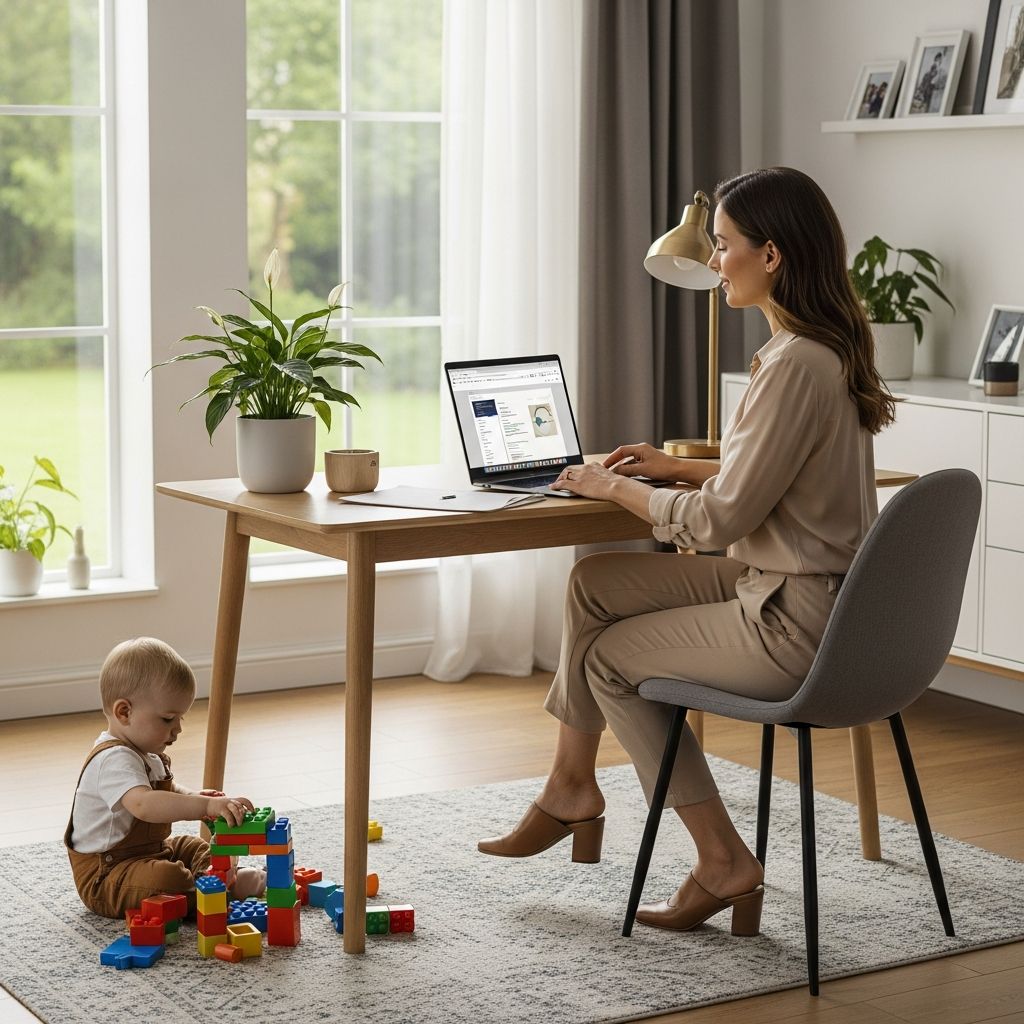
In recent years, a transformative shift has occurred in how mothers navigate professional lives alongside family responsibilities. Remote work arrangements, initially accelerated by the pandemic, have enabled many women to maintain careers from home while prioritizing childcare. However, as companies enforce stricter return-to-office (RTO) policies, a growing number of mothers are opting out of traditional employment, reshaping workforce dynamics and family structures.
Understanding the Surge in Home-Centered Careers
The phenomenon of home-based working mothers represents a hybrid model where professional output occurs within the domestic sphere. Federal labor statistics indicate a sharp decline in labor force participation among women aged 25-44 with children under 5, dropping nearly three percentage points from January to June 2025—the lowest in over three years. This reversal follows a period of historic highs in maternal employment, fueled by telework flexibility.
Key drivers include escalating childcare costs and the closure of care centers after federal aid lapsed. Mothers with young children cite childcare barriers as the primary reason for exiting full-time roles or reducing hours, far more than fathers in similar situations. Meanwhile, the share of stay-at-home mothers has climbed to about 25% in 2025, up from 15% in 2022, signaling a return to home-focused priorities.
Remote Work: A Game-Changer for Maternal Involvement
Telecommuting has disproportionately benefited mothers, allowing higher labor participation without sacrificing family time. In September 2024, 27% of working mothers teleworked compared to 20% of men without children, with women’s remote usage growing faster than men’s. This flexibility addresses the unequal burden of domestic and caregiving tasks, which time-use data shows has intensified over the past decade as parental work hours rise.
Research reveals that remote-working mothers with young children spend significantly more daily hours with their kids—over six hours on average—versus under four hours for in-office full-time moms. This shift, affecting nearly one million mothers moving from in-person to home-based work between 2019 and 2023, underscores remote setups’ role in fostering stronger family bonds.
- Increased child interaction: Home-based moms average 6+ hours daily with children, boosting developmental engagement.
- Sustained employment: Full-time remote work rose among mothers, maintaining 50% participation rates by 2024.
- Part-time stability: About 15% of mothers with young kids hold part-time roles, steady since 1980.
The Impact of Return-to-Office Mandates
RTO policies have triggered an exodus, particularly among mothers. From January to June 2025, 212,000 women aged 20+ left the workforce, compared to just 44,000 men entering it. Fortune 500 firms with full-time office mandates doubled to 24% in Q2 2025, from 13% late 2024, prompting quits at companies like JPMorgan Chase and Amazon.
Remote mothers often encounter the “motherhood penalty”—reduced pay, fewer promotions, and limited mentorship—exacerbating barriers when forced onsite. Employers struggle to replace this talent, leading to productivity dips and highlighting flexibility’s value for retaining female professionals.
| Metric | Pre-2025 | 2025 (Mid-Year) | Change |
|---|---|---|---|
| Labor Participation (Moms 25-44, Kids <5) | 69.7% | 66.9% | -2.8 pts |
| Women Leaving Workforce (20+) | N/A | 212,000 | vs. +44,000 men |
| Fortune 500 Full RTO Mandates | 13% | 24% | Doubled |
Childcare Crisis: The Hidden Barrier
Access to affordable childcare remains a pivotal challenge. Post-pandemic federal investments aided provider reopenings, supporting maternal re-entry. Yet, with aid waning, costs have soared, and centers have shuttered, leaving mothers—especially those with kids under 5—disproportionately affected. This group reports childcare issues as the top factor for not working full-time or missing shifts.
Cultural undercurrents amplify this, with social media trends promoting home-centric roles and political rhetoric encouraging parental homemaking. These elements compound logistical hurdles, pushing more women toward home-based solutions.
Benefits and Drawbacks of the Home-Work Hybrid
Advantages for Families and Careers
Home-based work offers profound upsides. Mothers report sustainable rhythms blending job demands with home life, a top goal for one-third in recent surveys. Enhanced child time fosters emotional security and cognitive growth, while career continuity preserves earnings and skills.
Long-term, this model bolsters financial independence, countering penalties faced in rigid offices. Productivity gains from focused home environments also benefit employers indirectly through lower turnover.
Challenges and Trade-Offs
Isolation, blurred boundaries, and stalled advancement pose risks. Remote workers receive less feedback, hindering promotions. Wage gaps persist, with full-time working mothers earning 31% less than male counterparts with children under 18. Balancing acts can heighten stress amid growing caregiving loads.
- Professional isolation: Reduced networking and mentorship opportunities.
- Boundary issues: Work encroaching on family time without clear separations.
- Economic pressures: Potential retirement shortfalls from reduced hours or exits.
Future Outlook: Predictions for 2026 and Beyond
Looking ahead, the “Great Mom Exodus” may intensify, with senior women abandoning corporate paths for flexible alternatives. By 2026, rigid RTO cultures could accelerate this, as mothers seek gigs, entrepreneurship, or scaled-back roles aligning with family needs.
Policy shifts, like expanded childcare subsidies or telework incentives, could reverse trends. Employers adapting with hybrid models may retain talent, while cultural reevaluations of gender roles evolve. Ultimately, home-based working mothers exemplify resilience, redefining success on their terms.
Frequently Asked Questions
Why are more mothers leaving the workforce in 2025?
Return-to-office mandates, rising childcare costs, and care center closures are primary factors, disproportionately impacting mothers of young children.
Does remote work help mothers spend more time with kids?
Yes, remote mothers average over six hours daily with children, compared to under four for in-office peers.
What is the motherhood penalty?
It refers to lower pay, fewer raises, and promotion barriers faced by remote or caregiving mothers.
How has stay-at-home motherhood changed recently?
The share rose to 25% in 2025 from 15% in 2022, amid flexibility losses.
What does the future hold for working mothers?
Expect more exits from traditional roles, with growth in hybrid and entrepreneurial paths.
References
- The new American workplace crisis: Return-to-office mandates lead… — Fortune. 2025-08-11. https://fortune.com/2025/08/11/working-moms-leave-american-workforce-return-to-office/
- Are You Mom Enough to Stay Home? — The Care Board, University of Kansas. 2025-08. https://thecareboard.ku.edu/news/article/are-you-mom-enough-to-stay-home
- Telework Has Helped Moms Stay in the Labor Force — The Century Foundation. 2024. https://tcf.org/content/commentary/telework-has-helped-moms-stay-in-the-labor-force/
- More Time With Mom: How Remote Work Shapes Mothers’ Time — Institute for Family Studies. 2024. https://ifstudies.org/blog/more-time-with-mom-how-remote-work-shapes-mothers-time-
- Back to Work, by Kelsey Sobel — Red Hook Star-Revue. 2025. https://www.star-revue.com/back-to-work-by-kelsey-sobel/
- 6 predictions for working mothers in 2026 — Half Moon Hustle. 2026. https://halfmoonhustle.substack.com/p/6-predictions-for-working-mothers
- Leaving the workforce to stay home with children — BBH Capital Partners Insights. N/A. https://www.bbh.com/us/en/insights/capital-partners-insights/leaving-the-workforce-to-stay-home-with-children.html