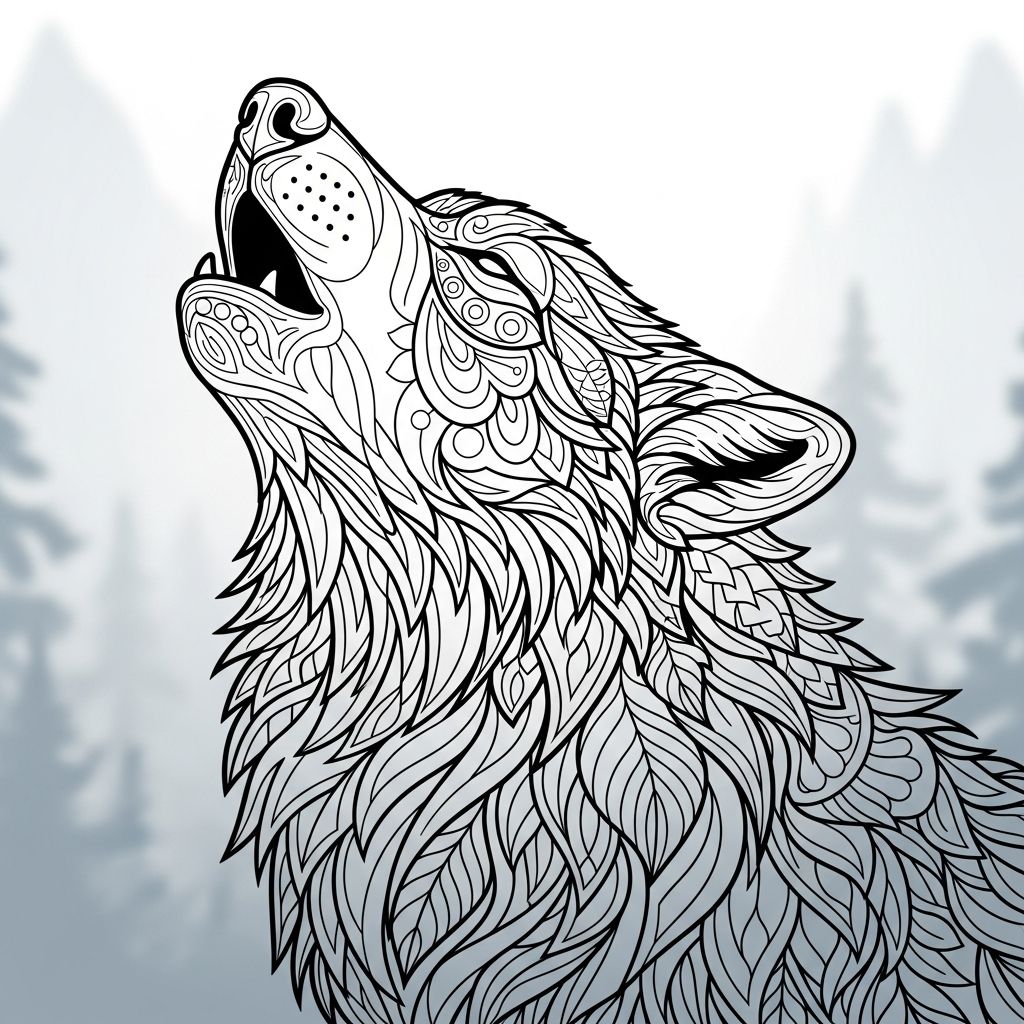
Wolf coloring pages are more than just cute pictures to fill with crayons. They can become gateways to storytelling, science, fine-motor practice, and calm, screen-free play for kids of all ages.
Why Wolves Capture Kids’ Imaginations
Wolves sit at the crossroads of mystery and familiarity. They look like dogs, yet they live in forests and mountains, hunt in packs, and howl at the night sky. This mix of wildness and relatability makes them perfect subjects for children’s art.
- Wolves often appear in myths, legends, and bedtime stories, so kids already feel connected to them.
- Their expressive faces, bushy tails, and dramatic poses invite kids to experiment with shading, texture, and color.
- Different wolf species and coat colors offer endless variations for imaginative play.
Benefits of Wolf Coloring Pages for Children
Coloring wolf pages might look like simple fun, but it supports a wide range of developmental skills. Whether your child is just learning to hold a crayon or confidently shading detailed scenes, these pages can grow with them.
- Fine-motor skills: Staying within the lines, tracing edges, and filling fur patterns strengthens small hand muscles.
- Hand–eye coordination: Moving from eye to paper carefully helps kids prepare for writing and drawing.
- Patience and focus: Completing a complex wolf scene encourages persistence and attention to detail.
- Emotional expression: Children can use color to express moods—soft blues for a calm night wolf, fiery reds and oranges for a dramatic sunset scene.
Types of Wolf Coloring Pages
Not all wolf designs are the same. Choosing the right level of complexity and style can make the activity more enjoyable and better aligned with your child’s interests and age.
| Type of Wolf Page | Best For | Features |
|---|---|---|
| Simple cartoon wolves | Preschoolers and early elementary kids | Bold outlines, large shapes, friendly expressions |
| Realistic wolves | Older children and teens | Detailed fur, shading opportunities, natural habitats |
| Wolf pack scenes | Group projects and storytelling | Multiple wolves, background landscapes, sky elements |
| Fantasy or tribal-inspired wolves | Creative kids who love patterns | Decorative lines, symbolic shapes, bold contrast |
| Baby wolf pups | Young kids and cute-themed projects | Round shapes, gentle poses, playful expressions |
Age-Appropriate Ideas for Wolf Coloring
Any child can enjoy coloring wolves, but tailoring the activity to each age range makes it more meaningful. Use the ideas below as a flexible guide, not rigid rules.
Toddlers and Preschoolers
At this stage, the goal is exploration—of color, motion, and simple shapes. Choose very basic wolf outlines with thick lines and large sections.
- Offer jumbo crayons or washable markers that are easy for small hands to grip.
- Encourage color naming: “You gave the wolf a blue tail—what else could be blue?”
- Focus on effort and fun rather than staying inside the lines.
Early Elementary Kids
Children in this age group are ready to add a bit more detail and story. They can handle slightly more intricate wolves and basic backgrounds like trees or mountains.
- Introduce simple shading—pressing lightly for light gray fur and harder for darker areas.
- Ask kids to invent a name and personality for their wolf and dictate or write a few sentences about it.
- Combine coloring with early science facts, such as where wolves live or what they eat.
Older Kids and Tweens
Older children may enjoy realistic or stylized wolf pages with layered textures and complex landscapes. They might also be ready for mixed-media projects.
- Offer colored pencils, fine-tipped markers, and gel pens for detailed work.
- Introduce concepts like light source and shadow—where would the moonlight hit the wolf’s fur?
- Encourage children to design their own wolf patterns: spirals, geometric shapes, or symbolic markings.
Creative Ways to Use Wolf Coloring Pages
Finished pages do not have to disappear into a drawer. Wolves lend themselves to all kinds of creative reuses that keep the artwork alive and visible.
- Wall gallery: Frame or tape a row of wolves along a hallway or bedroom wall to create a “pack” of art.
- DIY coloring book: Hole-punch several pages, tie them with ribbon, and turn them into a personalized wolf coloring book.
- Bookmarks: Cut a colored wolf into a long rectangle, laminate it, and punch a hole for a tassel.
- Greeting cards: Fold cardstock and glue a cut-out wolf on the front for birthdays, holidays, or “just because” notes.
Hands-On Crafts Inspired by Wolf Pages
Coloring can be just the beginning. With a bit of cutting, gluing, and imagination, a flat wolf drawing becomes a playful prop or decorative piece.
Wolf Puppet Show
Turn a simple wolf page into a puppet for storytelling or pretend play. This project works well for siblings or classrooms because each child can create a different wolf character.
- Have your child color a wolf face or full-body wolf.
- Cut out the colored wolf and glue it to a craft stick or folded cardboard strip.
- Add extras like movable ears made from paper triangles or a yarn mane for extra texture.
- Set up a “forest” stage with a blanket over a table and let the wolf characters act out stories.
Night Sky Wolf Collage
This activity blends coloring with collage, making a striking display piece that celebrates the classic howling wolf silhouette.
- Color a wolf howling pose in dark grays or blacks.
- Cut out the wolf and glue it onto dark blue or black construction paper.
- Use white paint, chalk, or stickers to create stars and a glowing moon in the sky.
- Sprinkle a small amount of glitter for a “starlight” effect if desired.
Learning About Wolves Through Art
Wolf coloring pages can gently introduce children to real-world facts about wildlife and ecosystems. Art often makes information feel friendly and memorable.
- Talk about where wolves live—forests, tundra, mountains—and include some of those habitats in background scenes.
- Discuss what a wolf pack is and how wolves cooperate to find food and protect each other.
- Explain that wolves are shy around humans and play an important role in keeping ecosystems balanced.
Tips for Stress-Free Coloring Sessions
Coloring time should feel calming rather than pressured. A few simple habits can help you create a relaxed atmosphere that kids look forward to.
- Set up a dedicated art space with crayons, pencils, markers, and a stack of wolf pages ready to go.
- Play soft background music or nature sounds to create a peaceful mood.
- Avoid correcting your child’s color choices; purple wolves and rainbow forests are part of the fun.
Printable vs. Digital Wolf Coloring
Today’s kids can enjoy wolf coloring both on paper and on screens. Each format offers unique advantages, and families often find value in using both.
| Format | Pros | Considerations |
|---|---|---|
| Printable pages | Supports fine-motor skills, easy to display or gift, no batteries or devices required | Requires printer and paper, can create clutter if not organized |
| Digital coloring | Mess-free, easily undone mistakes, portable on tablets | Screen-time limits, may not give the same tactile experience as crayons |
Organizing and Storing Wolf Artwork
When children fall in love with wolves, pages can pile up quickly. A simple system makes it easy to celebrate their efforts without feeling buried in paper.
- Use a three-ring binder with plastic sleeves to store favorite wolf pages in an easy “art portfolio.”
- Rotate artwork on a bulletin board or fridge so new wolves regularly get their moment in the spotlight.
- Take photos of finished pages before recycling extras to create a digital gallery you can revisit anytime.
FAQ: Wolf Coloring Pages
Are wolf coloring pages too scary for young kids?
Not necessarily. Choosing friendly, cartoon-style wolves with soft expressions can make the subject approachable rather than frightening. You can also pair coloring with gentle stories about brave, kind, or curious wolves instead of focusing on fear-based tales.
What materials work best for detailed wolf designs?
Colored pencils are excellent for shading fur and creating subtle color changes, while fine-tipped markers help outline eyes, noses, and whiskers. For older kids, combining both tools gives them the freedom to experiment with textures and depth.
How can I connect wolf coloring to school subjects?
Use the pages as a jumping-off point. After coloring, children can write a short paragraph about their wolf’s habitat, create a simple map showing where wolves live, or compare wolves to domestic dogs in a mini science project.
Can wolf coloring pages help calm anxious children?
Many kids find the repetitive motion of coloring soothing, especially when paired with a quiet environment and predictable routine. Focusing on the lines, fur patterns, and gradual progress of a single wolf can help them unwind after a busy or stressful day.
What if my child only wants to color wolves?
That is perfectly fine. Lean into the interest by offering a variety of wolf styles and gradually introducing related animals such as foxes, coyotes, or dogs. Over time, their love for wolves may naturally expand into broader curiosity about wildlife and nature.
Helping Your Child Build a Wolf Art Habit
When wolf coloring becomes a regular part of your child’s week, it can turn into a comforting ritual. Consider setting aside a specific “wolf art afternoon” or using a wolf page as a gentle transition activity between schoolwork and free play.
- Let your child choose a favorite style—cute pup, howling adult, or patterned fantasy wolf—to give them ownership.
- Join in with your own page so coloring feels like shared time, not an assignment.
- Celebrate small improvements, such as trying a new color blend or adding a self-drawn background to a printed wolf outline.
With a stack of wolf coloring pages and a little imagination, your home can become a den of creativity, calm, and learning—one howl at a time.