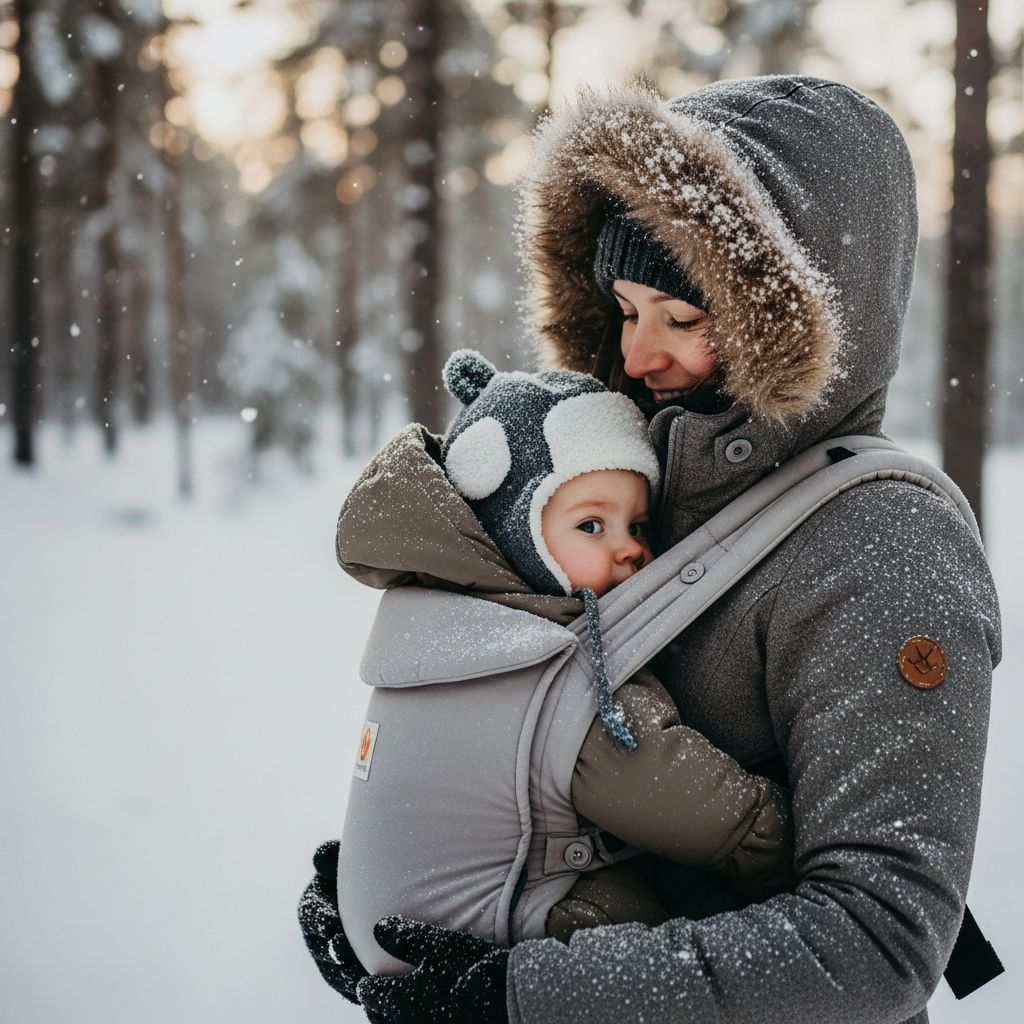
Babywearing offers unparalleled convenience during winter months, allowing parents to keep newborns and infants close while navigating snowy streets or brisk park walks. Shared body heat from carrier use creates a natural warmth, but cold weather demands specific adjustments to layering, carrier selection, and monitoring to prevent discomfort or risks like overheating or airway obstruction.
Understanding the Basics of Thermal Regulation in Carriers
Infants lose heat rapidly due to their small size and high surface-area-to-volume ratio, making proper dressing crucial. When babywearing, the carrier acts as an additional insulating layer, trapping heat between parent and child. Research from pediatric guidelines emphasizes dressing babies in one more layer than the adult, accounting for this shared warmth.
Key principle: Prioritize breathable, moisture-wicking fabrics like merino wool or cotton to manage sweat buildup, which can lead to chilling if not addressed. Avoid cotton-only outer layers in wet conditions, as they retain moisture.
Mastering Layering Techniques for Optimal Warmth
Layering is the cornerstone of cold-weather babywearing. Begin with a base layer directly on skin, such as a lightweight onesie made from breathable material. Add mid-layers like fleece or wool sweaters for insulation, and finish with a wind-resistant shell if venturing into gusty conditions.
- Base layer: Thin, fitted cotton or merino onesie and leggings to wick moisture.
- Mid-layer: Fleece pullover or cardigan for trapped air warmth.
- Outer layer: Waterproof jacket or poncho, ensuring it doesn’t compress the carrier.
- Accessories: Hats covering ears, mittens with secure closures, and thick socks or booties.
Adjust based on activity: For short errands, fewer layers suffice; for hikes, add leg warmers to cover exposed skin where pants ride up. The carrier itself counts as a layer, so err on the lighter side initially.
Selecting the Right Baby Carrier for Chilly Conditions
Not all carriers perform equally in winter. Stretchy wraps excel for newborns due to snug fit but may need pre-tying in wind. Structured buckle carriers offer quick adjustments, ideal for fluctuating indoor-outdoor transitions.
| Carrier Type | Winter Pros | Winter Cons | Best For |
|---|---|---|---|
| Stretchy Wrap | Custom fit, excellent heat retention | Ties can slip on slippery coats | Newborns, short outings |
| Buckle Carrier | Easy on/off, adjustable straps | Less moldable for tiny babies | Toddlers, active parents |
| Soft-Structured | Versatile positions, panel covers | Bulkier with heavy layers | All ages, back carries |
| Ring Sling | Quick pop in/out | Less coverage for legs | Quick trips |
Choose carriers with padded shoulders for comfort under coats and wide waistbands to distribute weight evenly on uneven, icy terrain.
Outerwear Innovations: Coats, Hoodies, and Covers
Specialized babywearing coats feature expandable panels or zip-out inserts, creating a shared warmth pocket without restricting movement. Lacking one? Use an oversized coat: Wear the carrier first, then zip the coat around both, tucking fabric securely but leaving baby’s face exposed.
Alternatives include universal carrier covers or fleece hoodies with kangaroo pockets. For back carries, opt for coats with open-back designs or thread straps through armholes of a vest for added insulation. In rain or snow, waterproof ponchos drape over carriers without obstructing airways.
Safety Protocols: Airway, Positioning, and Monitoring
Safety trumps warmth. Always maintain the T.I.C.K.S. rule: Tight, In view at all times, Close enough to kiss, Keep chin off chest, Supported back. In cold weather, extra vigilance prevents hoods or scarves from covering the face.
Position baby high and upright, facing inward to share heat. Avoid bulky snowsuits, as they create dangerous gaps in carriers and compress the chest, risking positional asphyxia. For car seats, remove outer layers before buckling.
Recognizing and Responding to Temperature Extremes
Babies can’t regulate temperature verbally, so learn cues. Signs of overheating: Sweaty neck, flushed cheeks, fussiness, or rapid breathing—unwrap and remove a layer immediately. Signs of chilling: Cool extremities, lethargy, or shivering—add layers or seek shelter.
Perform regular checks: Feel the back of baby’s neck; it should feel warm and dry. Limit outings below freezing, factoring wind chill, and hydrate even in cold as carriers can cause perspiration.
Practical Strategies for Wet and Windy Weather
Snow and rain complicate babywearing. Pre-tie wraps indoors or in your vehicle to avoid fumbling in elements. Protect ties from puddles with waterproof bags. For slushy conditions, use carriers with quick-release buckles.
Dress in quick-dry synthetics for yourself, and cover carrier with a breathable rain cover. After outings, air-dry carriers promptly to prevent mold.
Age-Specific Adjustments for Winter Babywearing
Newborns (0-3 Months)
Frog-leg position in wraps maximizes hip health and warmth. Focus on head support with thin beanies; avoid dangling scarves.
Infants (3-12 Months)
Transition to forward-facing once seated independently, but inward for cold protection. Add footmuffs for dangling legs.
Toddlers (1+ Years)
Back carries reduce bulk; use toddler-sized coats over straps. Encourage self-dressing in layers for independence.
Common Challenges and Pro Solutions
Bulky clothing slippage: Secure with snaps or tuck into carrier fabric.
Wind exposure: Necktubes or buffs around parent’s neck double as baby shields.
Overdressing mishaps: Dress indoors, babywear outside, and adjust based on first 10 minutes’ feedback.
Frequently Asked Questions
Can I use a snowsuit with a baby carrier?
No, thick snowsuits create unsafe gaps and restrict breathing. Layer thinly instead.
How do I know if my baby is too hot?
Check for damp hair, red cheeks, or irritability; peel back layers promptly.
What’s the best carrier for snowy walks?
Buckle carriers for adjustability and waterproof covers for precipitation.
Are babywearing coats worth it?
They simplify layering but oversized regular coats work well as budget alternatives.
How long is safe outdoors in sub-zero temps?
Limit to 15-20 minutes; prioritize wind chill over air temperature.
Embracing Winter Adventures with Confidence
With thoughtful preparation, babywearing transforms winter into a season of joyful exploration. Experiment with setups on mild days to build familiarity, consult local babywearing groups for gear swaps, and always prioritize baby’s cues over schedules. Safe, warm outings foster bonding amidst the season’s magic.
References
- Tips For Babywearing in Cold Weather — Solly Baby. 2023-10-15. https://sollybaby.com/blogs/news/ask-morgan-tips-for-cold-weather-babywearing
- Winter Wear for Newborns & Babywearing Tips — Tushbaby. 2024-11-20. https://tushbaby.com/blogs/tushbaby/babywearing-in-cold-weather
- More of hope&plum’s Cold Weather Babywearing Tips — Hope and Plum. 2023-12-05. https://www.hopeandplum.co/blogs/hope-and-plum-baby-carriers-blog/more-cold-weather-babywearing
- Babywearing for Winter Weather Adventures — LÍLLÉbaby. 2024-01-10. https://www.lillebaby.com/blogs/news/babywearing-for-winter-weather-adventures
- Cold Weather Wearing — Babywearing Twin Cities. 2023-02-28. https://babywearingtwincities.org/blog/cold-weather-wearing/
- Snowsuits, Scarves, Slings and Safety — Carrying Matters. 2022-11-12. https://www.carryingmatters.co.uk/snowsuits-scarves-slings-and-safety/