Introduction
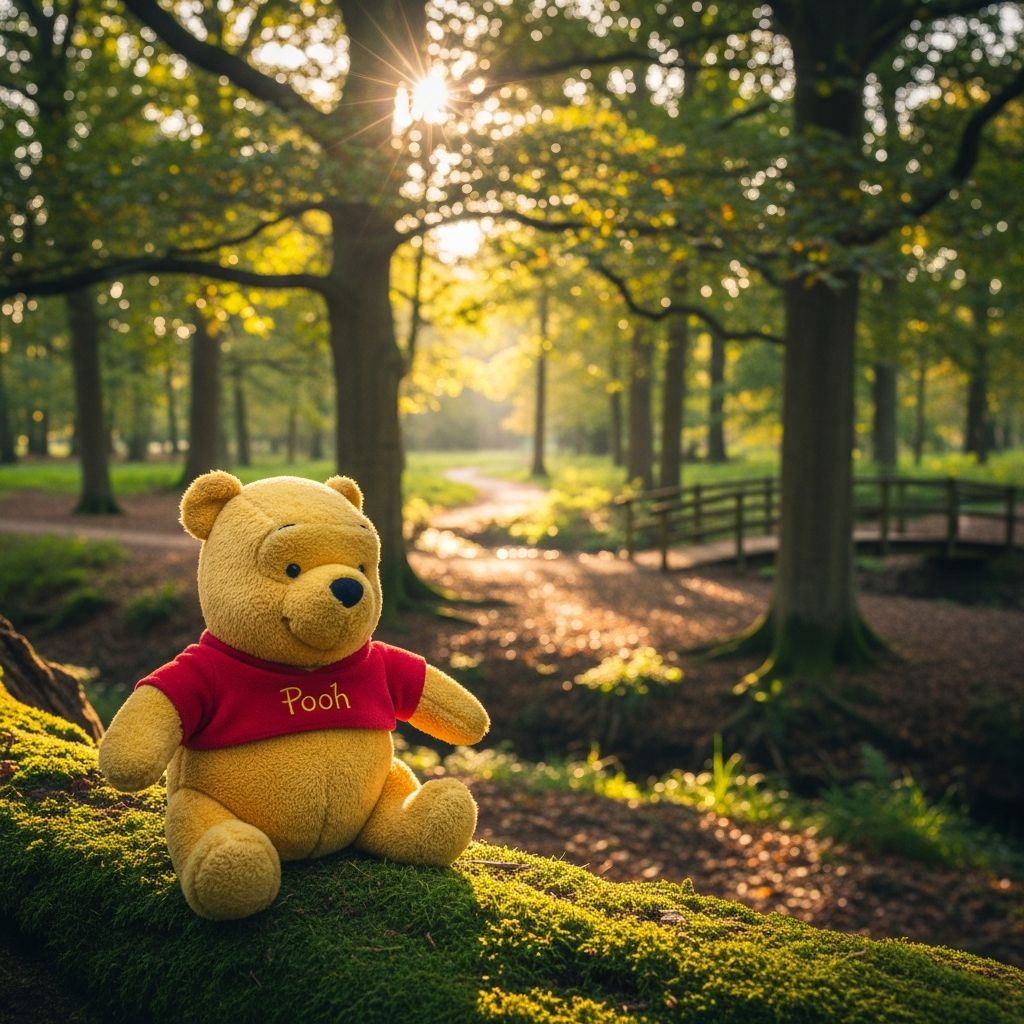
Winnie the Pooh, crafted by A. A. Milne and brought to life by E. H. Shepard, has enchanted readers for nearly a century. This beloved bear first wandered into our hearts thanks to tales spun around the landscapes of Ashdown Forest, and his gentle wisdom continues to resonate today.
Origins in Ashdown Forest
In the early 1920s, Christopher Robin Milne’s adventures among the heather and pines of Ashdown Forest inspired his father’s storytelling. The real-life bear named Winnie and the childhood innocence of Christopher Robin merged to form a timeless character whose simple quests for honey and friendship mirror universal human experiences.
- Setting: The Hundred Acre Wood, a fictional mirror of Ashdown Forest.
- Creation: A. A. Milne’s poems and stories first published in 1924 and 1926.
- Illustrations: E. H. Shepard’s ink drawings that defined Pooh’s iconic look.
Cultural Impact and Adaptations
Winnie the Pooh’s appeal crossed the Atlantic in 1930 and spawned plays, films, television series, and theme park attractions. His gentle humor and lyrical dialogue led to adaptations by Disney in the 1960s, cementing Pooh’s place in global pop culture.
From Disney’s animated shorts to Broadway musicals, Pooh’s adventures have been retold for new audiences while preserving the charm of Milne’s original vision.
Enduring Legacy and Lessons
Beyond entertainment, Winnie the Pooh offers timeless lessons on friendship, curiosity, and self-acceptance. His gentle optimism encourages readers of all ages to find joy in simple moments and to cherish the bonds that enrich our lives.
Today, the spirit of Pooh lives on in books, films, merchandise, and charitable foundations dedicated to children’s literacy and well-being, ensuring that this honey-loving bear will continue guiding hearts for generations to come.
© 2024 All rights reserved.