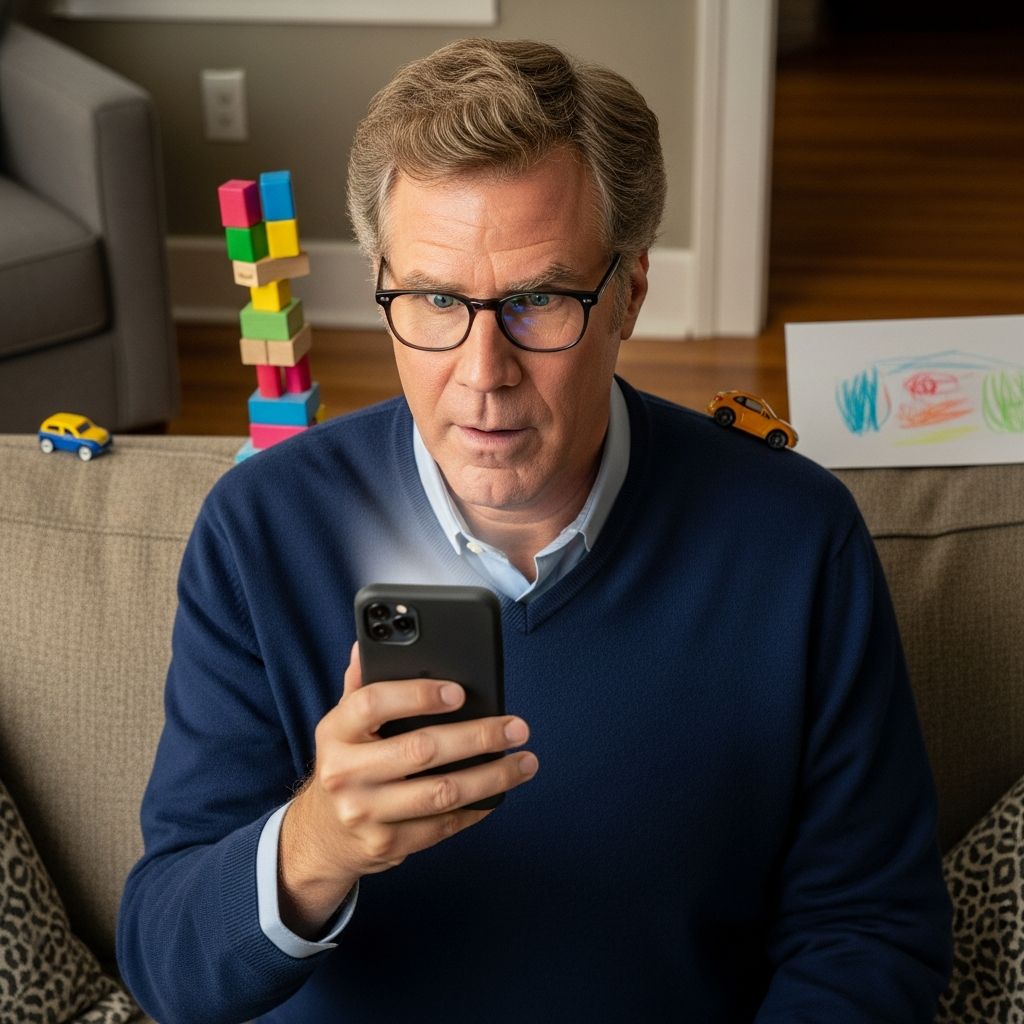
Comedian Will Ferrell takes center stage in a series of short public service announcements that comically yet poignantly illustrate the dangers of parental phone obsession during family meals. Produced by nonprofit Common Sense Media, these vignettes push the boundaries of distracted behavior to absurd levels, making viewers laugh while confronting uncomfortable truths about modern family dynamics.
The Rise of Screen Time in Family Life
Smartphones have infiltrated every corner of daily routines, including sacred family time like dinner. Parents, once the enforcers of ‘no screens at the table’ rules, now often lead by example in digital distraction. Statistics reveal that adults check their phones over 150 times daily, with many admitting to scrolling during meals meant for connection. This trend sets a powerful precedent for children, who mirror these habits and spend excessive hours on devices themselves.
The campaign cleverly flips the script by featuring Ferrell not as the wise parent, but as the ultimate villain of mealtime: a dad utterly lost in his screen. Through exaggeration, it underscores a growing issue where virtual interactions eclipse real ones, eroding opportunities for meaningful conversations and emotional bonds.
Breaking Down the Comedic Skits
Each ad in the #DeviceFreeDinner series runs about 30 seconds, packing punchy humor with sharp social commentary. In one memorable clip, Ferrell’s character sits at the dinner table, oblivious as his family expresses longing for his presence—only to reveal he’s right there, mesmerized by a cat filter that has him in tears of laughter. The family’s mock arguments over who misses him most amplify the irony, driving home how screens create invisible barriers even in shared spaces.
- Cat Filter Chaos: Family mourns absent dad; he’s physically present but emotionally checked out, giggling at augmented reality antics.
- Like Frenzy: Dad boasts about social media approvals while ignoring his kids’ attempts to share their day.
- Selfie Obsession: Ferrell records himself eating, prioritizing online followers over table talk.
- Device Withdrawal: Panic ensues when the phone ‘dies,’ highlighting dependency on tech for basic engagement.
These scenarios, crafted by agency Goodby Silverstein & Partners, use Ferrell’s over-the-top style to make the ‘what not to do’ message unforgettable. Rather than scolding, the humor invites self-reflection, encouraging families to recognize their own habits.
Why Parents Are the Key to Change
Children look to parents as role models, and when adults prioritize phones, kids follow suit. Research from the American Academy of Pediatrics emphasizes that parental screen use during interactions predicts similar behaviors in children, leading to reduced vocabulary development and empathy skills.[web:1] Ferrell’s portrayal shifts focus from teen addiction narratives to adult accountability, a fresh angle that resonates deeply.
Common Sense Media, dedicated to healthy media habits, launched this campaign to combat the ‘screen creep’ into family rituals. Ferrell, a father of five, donated his time, aligning with his personal commitment to device-free quality moments with his own family.
| Common Distractions | Impact on Family | Device-Free Alternative |
|---|---|---|
| Social media scrolling | Missed stories from kids | Ask open-ended questions |
| Filters and selfies | Superficial engagement | Share genuine laughs |
| Email checks | Interrupted conversations | Active listening |
| Video recording meals | Performs for audience | Savor food together |
Psychological Toll of Constant Connectivity
Beyond humor, the ads tap into real psychological effects. Constant phone use fragments attention, reducing the quality of parent-child interactions. Studies show that even brief parental smartphone interruptions—known as ‘technoference’—increase child behavioral issues and lower relationship satisfaction.[web:2] At dinner, these micro-distractions compound, turning potential bonding time into parallel play with screens.
Families report feeling lonelier despite being together, a phenomenon dubbed ‘alone together.’ The campaign’s dark comedy mirrors this: Ferrell’s dad is surrounded by loved ones yet profoundly isolated, crying over pixels while real emotions go unaddressed.
Practical Strategies for Device-Free Dinners
Implementing #DeviceFreeDinner starts with commitment. Begin by designating a ‘phone parking spot’ away from the table. Use visual cues like a basket to signal tech timeout. Gradually build the habit with short, 15-minute screen-free meals, rewarding success with family games or shared desserts.
- Lead by example: Parents put phones away first.
- Set expectations: Discuss benefits beforehand with kids.
- Make it fun: Introduce conversation starters or themes.
- Track progress: Use a family chart for device-free successes.
- Extend beyond dinner: Apply to other routines like bedtime stories.
Many families report immediate improvements: deeper talks, better sleep, and stronger emotional ties. Tools from Common Sense Media, including printable pledges, support the shift.
Broader Implications for Child Development
Regular device-free time fosters essential skills. Face-to-face dialogue builds language, emotional intelligence, and conflict resolution. Without screens competing for attention, children feel valued, boosting self-esteem. Conversely, habitual distraction signals to kids that they rank below notifications, potentially fostering insecurity.[web:3]
The campaign aligns with expert guidelines recommending media limits: no screens for kids under 18 months, supervised use up to two hours daily for older children. Parents modeling balance is crucial for long-term healthy habits.[web:1]
Public Reception and Cultural Impact
Since launch, the ads have garnered millions of views, sparking viral discussions on social media—ironically often from phones. Parents share relatable confessions, from ‘This is totally me!’ to pledges for change. Media outlets praise the clever role reversal, noting its effectiveness in targeting adults over kids.
Ferrell’s involvement adds star power and authenticity, given his family-man image. The series has inspired similar initiatives, amplifying calls for mindful tech use worldwide.
Frequently Asked Questions
What is #DeviceFreeDinner?
A Common Sense Media initiative encouraging families to ban devices during meals for undivided attention and connection.
Why focus on parents in the ads?
Parents set the tone; their habits heavily influence children’s screen use and family interactions.
How do I start device-free dinners?
Charge phones in another room, use conversation prompts, and celebrate small wins together.
Are there benefits backed by research?
Yes, reduced technoference improves child behavior and parent-child bonds.[web:2]
Can this work for busy families?
Absolutely—even 10-15 minutes nightly makes a difference; scale up as habits form.
Call to Action: Reclaim Your Table
Will Ferrell’s antics serve as a wake-up call: don’t let screens steal your family’s story. Tonight, try #DeviceFreeDinner. Watch the laughs return, the talks deepen, and the bonds strengthen. Your kids—and your future self—will thank you.
References
- Screen Time and Children — American Academy of Pediatrics. 2023-10-01. https://www.aap.org/en/patient-care/media-and-children/
- Parental Technoference and Child Behavior — Journal of Pediatrics (PubMed). 2022-05-15. https://pubmed.ncbi.nlm.nih.gov/35436592/
- Family Media Plan — Common Sense Media. 2024-01-20. https://www.commonsensemedia.org/family-media-plan
- McDaniel BT, Radesky JS. Technoference — Journal of Marriage and Family. 2021-08-10. https://doi.org/10.1111/jomf.12757