Many parents expect potty training to be messy, but few plan for the problem of a child who will sit on the toilet and then simply refuse to get off. When this happens day after day, everyone ends up frustrated, confused, and worried that something is “wrong.” This guide walks you through why this happens and what you can do—step by small step—to help your daughter feel safe, confident, and ready to leave the bathroom.
Understanding What’s Really Going On
When a little girl won’t get off the toilet, the struggle is usually about emotion, not defiance. The potty is a new and vulnerable place for a child: she is exposed, her body is doing something she cannot see, and she knows adults care a lot about this topic. If she feels any pressure, confusion, or fear, she may “freeze” on the seat and cling to it as the safest option.
Under the surface, she might be feeling one or more of these: fear of having an accident, fear of the flush noise, embarrassment about what her body is doing, or worry about disappointing you. Treating the behavior as a communication of those feelings—not as misbehavior—changes how you respond.
Common Reasons Toddlers Won’t Get Off the Toilet
Every child is different, but certain patterns show up again and again. Identifying the main one for your daughter will help you choose the right response. You may see more than one reason at once.
- Fear of accidents: She may believe that if she stays on the potty long enough, she can guarantee nothing comes out afterward into her clothes.
- Sensitivity to sensations: The feeling of urine or stool leaving the body can be intense or even scary for sensitive kids.
- Control and power struggles: If she feels pushed to sit or pushed to get off, staying on becomes her only way to feel in control.
- Enjoying attention: Sitting on the toilet may be the time she has your undivided focus, songs, stories, and praise.
- Anxiety and perfectionism: Some children want to “do it right” every single time and will sit until they are absolutely sure they’re done.
- Physical discomfort: Occasional constipation or pain can make her scared that getting off means the uncomfortable feeling will return later.
Check Basics First: Comfort and Health
Before focusing on behavior, make sure the setup is physically comfortable and that there are no medical concerns. A wobbly seat, dangling feet, or hard-to-clean messes can make the toilet feel threatening.
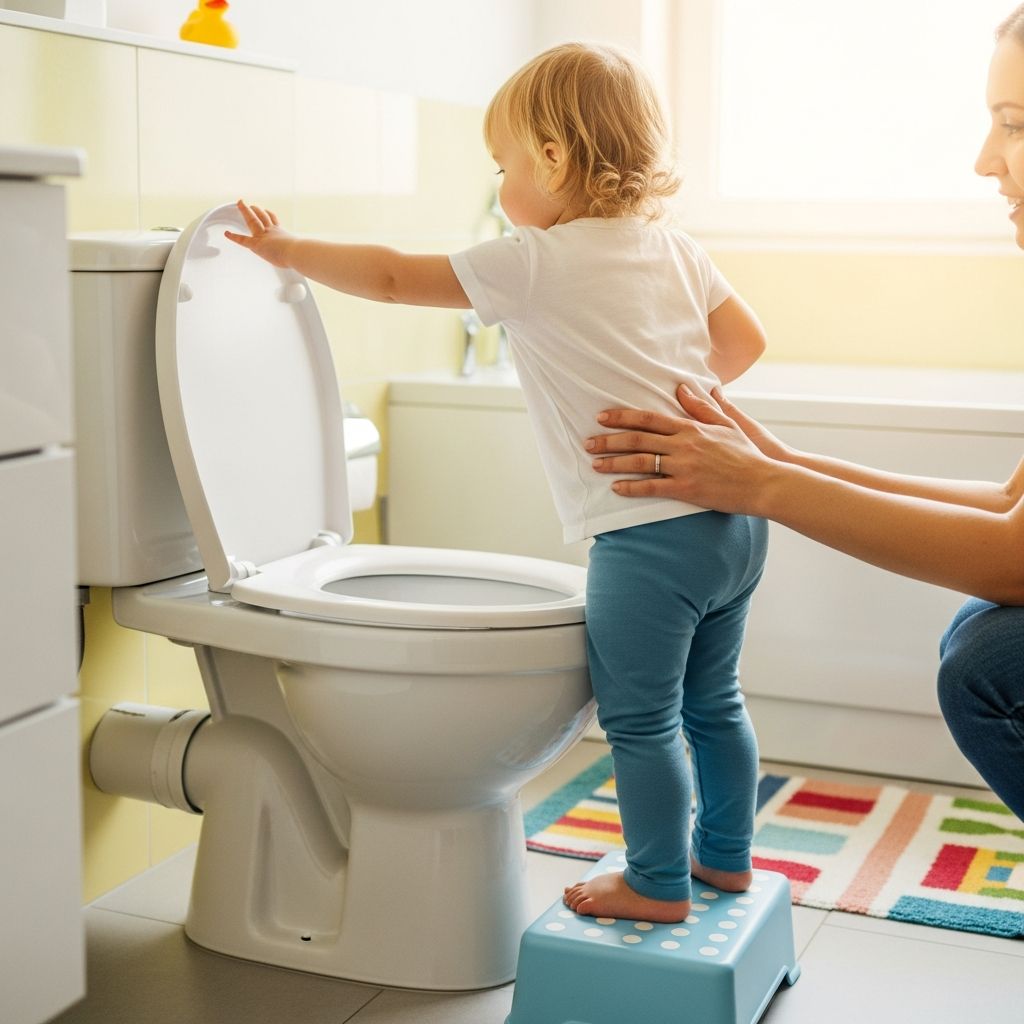
- Provide a sturdy step stool so her feet are firmly supported and her legs are not hanging.
- Use a child-sized seat insert if the opening of the toilet looks or feels too big to her.
- Talk to a pediatrician if you notice hard stools, blood, frequent constipation, or your child showing signs of pain when going.
Shift the Goal: From “Obey Me” to “Feel Safe”
When you focus only on getting her off the toilet, both of you become locked in a win–lose battle. A better goal is helping her feel safe enough that she can choose to leave willingly. Safety—emotional and physical—is what lets children cooperate without force.
This means your job is less about “making” her stand up and more about creating routines and language that lower her anxiety. Once she feels calm and respected, leaving the toilet becomes just another part of the routine.
A Calm Toilet-Time Routine
Consistent routines give toddlers a sense of predictability. Use the same steps, in the same order, every time she uses the toilet. These steps are suggestions; adapt them to your family.
- Announce toilet time early: “In a few minutes, it will be time to sit on the potty.” Avoid abrupt commands.
- Guide her to the bathroom: Offer a hand or a playful walk (“Let’s hop like a bunny to the potty”).
- Help her sit comfortably: Feet on stool, favorite small book or toy nearby.
- Give her privacy with presence: Stay close, but don’t stare or over-talk about her body.
- Use a simple time boundary: For example, one song or a short timer so she knows sitting won’t last forever.
- Gently check-in: “Do you feel done or do you need one more minute?”
- Transition cue: “Now it’s time to stand up and wipe. I’ll help you.”
- Celebrate effort, not outcome: “You listened to your body and tried the potty. That’s you taking care of yourself.”
Using Time Limits Without Power Struggles
A timer can be helpful when a child stays on the toilet for very long stretches, but it should feel like a neutral tool, not a threat. Think of it as a predictable signal that supports both of you.
Here is a calm way to introduce it:
- Show her the timer first when you are not in the bathroom. Let her turn it on and off.
- Explain, “When the timer beeps, it means potty time is finished and we stand up together.”
- Use a short period (2–3 minutes), so success happens quickly and often.
- If she protests when it rings, acknowledge feelings and stay kind but firm about the limit.
Sample Phrases That Reduce Resistance
Words shape how safe or threatened a child feels. Soft, clear language can dissolve some of the tension around getting off the toilet. Here are phrases you can adapt to your own voice:
- “Your body is learning. It’s okay not to be sure if you’re done.”
- “You can sit for a little while. When the song is over, we stand up together.”
- “You really want to stay. You’re worried you might need to go again. I hear you.”
- “It’s my job to help you. It’s the toilet’s job to catch the pee and poop. Your job is just to try.”
- “You did your best. If you need to go again later, we will come back.”
When Fear of Accidents Drives the Behavior
If your daughter has had embarrassing accidents or has a cautious personality, she may cling to the toilet as the only place she feels safe from mess and blame. The key is to remove shame from accidents and show her that your love is not tied to perfect potty performance.
Try this approach:
- Normalize accidents: “All kids learning something new have accidents. That’s how bodies learn.”
- Use easy-to-clean clothes and keep extra outfits nearby so you are not tense about mess.
- Help her clean up calmly when accidents happen, without scolding or comments about age or “being a big girl.”
- Remind her before standing up: “If your body needs to go again later, we’ll just come right back.”
Reducing Power Struggles
Struggles over the toilet are often struggles over who is in charge of a child’s body. If she senses that her cooperation is being used to measure her value or your competence as a parent, she may dig in and refuse just to prove that her body is her own.
To lower the pressure, try:
- Avoiding bribes like, “If you get off now, you get a treat,” which make cooperation feel like a transaction.
- Dropping comparisons with siblings or friends (“Your cousin doesn’t do that”).
- Using collaborative language: “Let’s work together to get you cleaned up and back to playing.”
- Staying neutral when she resists: steady tone, relaxed posture, no long lectures.
Turning Toilet Time Into Connection, Not a Show
Many toddlers stay on the toilet because it is the one place they have a parent’s full attention. If most of your positive interactions gather around the bathroom, your child may unconsciously prolong the experience to keep you close.
You can fix this without cutting off warmth or fun:
- Offer focused connection at other times of day—short play sessions, cuddle breaks, reading together.
- Keep toilet time simple and low-key rather than turning it into an extended performance with screens or long games.
- After she gets off successfully, move quickly back into enjoyable everyday activities so she sees there is life beyond the bathroom.
Supporting a Sensitive or Anxious Child
Highly sensitive children often notice every small sensation of potty training: the feeling of the seat, the temperature of the bathroom, the echo of sounds. They might need more gradual exposure and more emotional support than other kids.
- Let her practice sitting on the toilet fully clothed first, then with just underwear, then bare bottom.
- Keep lights gentle and room temperature comfortable; add a soft rug or familiar item if it helps.
- Use predictable rituals like the same short song or rhyme each time she gets off the toilet.
- Reassure her often that her body is safe and that you will not rush or force her.
Practical Strategies at a Glance
The table below summarizes different patterns you might see and practical responses that respect your child while guiding her forward.
| What You Notice | What It Might Mean | Helpful Responses |
|---|---|---|
| She sits for long periods and refuses to stand up. | Fear of accidents or uncertainty about being “finished.” | Introduce a short timer, reassure that accidents are okay, and promise she can come back if needed. |
| She insists on your constant attention while on the toilet. | Using potty time to fill a need for connection. | Increase one-on-one time outside the bathroom and keep toilet interactions brief and warm, not elaborate. |
| She becomes rigid or tearful when asked to get off. | High anxiety or feeling pressured. | Slow the process, validate feelings, and use gentle, predictable routines without sudden commands. |
| She laughs, jokes, or “plays around” instead of getting off. | Seeking a sense of power or turning discomfort into silliness. | Stay light but clear: “Potty time is short. Then we wash hands and choose our next game.” |
| She only resists with one caregiver. | Testing limits or reacting to that adult’s stress. | Have caregivers share a common script and routine; the more predictable, the better. |
When to Pause or Step Back From Potty Training
Sometimes the most helpful move is to pause the process. If every trip to the bathroom ends in tears or battles, your daughter may not be emotionally ready, or the association with stress is too strong. A break of a few weeks can reset the tone for everyone.
Signs a pause might help include:
- Daily power struggles and frequent meltdowns around the toilet.
- Nighttime sleep disturbances that began after training started.
- New fears or regressions in other areas (clinging, sudden aggression, or potty-themed nightmares).
If you choose to pause, explain simply that grown-ups will handle diapers for a while, and she can try the toilet again when her body feels more ready. This protects her sense of success while giving her nervous system time to settle.
Supporting Siblings and Household Harmony
When one child’s bathroom routine takes a long time, siblings may feel neglected and parents can feel stretched thin. A smoother plan helps everyone in the family. Manage the practical aspects alongside your emotional support for your daughter.
- Keep a small basket of quiet toys or books near the bathroom door for siblings who must wait.
- Rotate which adult handles toilet time when possible, so one caregiver does not carry all the stress.
- Plan transitions so potty visits happen before leaving the house, starting meals, or beginning bedtime routines.
Frequently Asked Questions
How long is “too long” for a toddler to sit on the toilet?
Brief sits of 2–5 minutes are usually enough for a young child to try using the toilet. If your daughter regularly sits much longer, especially if she becomes anxious about leaving, it helps to introduce gentle time limits and clear routines so sitting does not turn into a stressful marathon.
Should I carry her off the toilet if she refuses to get up?
Physically lifting a resisting child off the toilet can escalate fear and turn the bathroom into a battleground. It is generally better to stay nearby, keep a calm limit (“Potty time is finished now”), and use tools like a timer, simple choices (“Would you like to step down yourself or hold my hand?”), and empathy to guide her off without force whenever possible.
Are rewards a good idea for getting off the potty?
Small incentives can sometimes jump-start cooperation, but they work best when used sparingly and alongside genuine encouragement. If your daughter becomes focused only on earning a prize, she may feel extra pressure, which can backfire. Emphasize pride in listening to her body and working together rather than earning treats.
What if she regresses after we make progress?
Regression is common during changes such as a new sibling, starting daycare, or family stress. If your daughter suddenly clings to the toilet again, treat it as a signal that she needs more reassurance and stability. Revisit your calm routine, slow things down, and remember that skills often move forward in a “two steps ahead, one step back” pattern.
When should I seek professional help?
Consult a pediatrician or child development professional if your daughter shows signs of pain, chronic constipation, extreme fear that does not improve with gentle approaches, or if potty battles are severely affecting sleep, eating, or family life. Getting guidance early can prevent patterns from becoming deeply entrenched and can reassure you that you are not alone.
Key Takeaways for Tired Parents
Helping a little girl who refuses to get off the toilet is less about perfect techniques and more about steady, calm presence. When you trade power struggles for cooperation, fear for safety, and shame for understanding, you transform the bathroom from a battleground into a place where your child can practice listening to her body and trusting you.
Progress may be slow or uneven, but each small moment of connection—a reassuring word, a gentle hand, a successful “all done” and step down from the potty—is part of building your daughter’s lifelong sense that her body is hers, that she is capable, and that you are on her side.