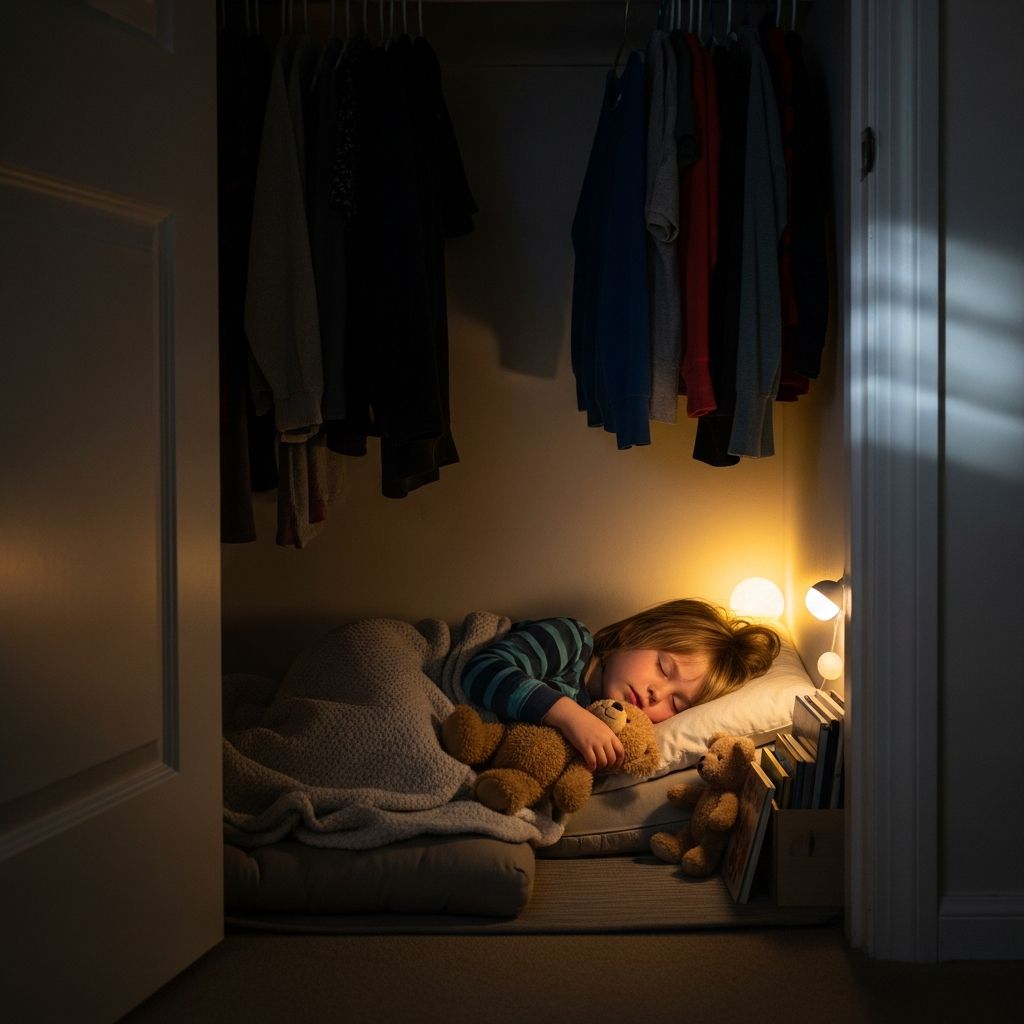
When a young child suddenly decides that the closet is the best place to sleep, many parents feel alarmed, confused, or even a little hurt. Instead of seeing this as a crisis, it helps to treat it as a quirky phase that can be understood, made safe, and gently guided over time.
This article explores common reasons kids gravitate to closets, what is and isn’t a safety concern, and how to respond without turning sleep into a nightly battle. It is designed as a practical, reassuring resource you can return to as your child’s habits shift.
Understanding Why Closets Feel Cozy to Kids
To an adult, a closet can seem cramped and uncomfortable. To a small child, it can feel like a secret, cozy hideaway that offers just the kind of snug environment their body and brain find settling. The same instinct that draws them under tables, into cardboard boxes, or into blanket forts can easily extend to a closet.
Many kids are transitioning from a crib or smaller bed to a larger, more open sleeping arrangement. That bigger space can feel oddly exposed, while a closet can recreate the contained feeling of a crib without actually being one. This shift in perception often explains why a child who used to sleep happily in bed suddenly prefers a little nest on the floor.
Normal Sleep Quirks vs. Red Flags
It helps to separate harmless sleep preferences from signs that something deeper may be going on. Not every odd sleep choice is a symptom of anxiety or trauma. Children experiment with routines, positions, and spots as their sense of autonomy and imagination grows.
- Harmless quirks: unusual sleep positions, insisting on a particular blanket or stuffed animal, wanting the mattress on the floor, or choosing a special corner of the room.
- Possible red flags: persistent fear-based statements (“monsters will get me if I sleep in my bed”), extreme distress at the idea of the bedroom, regression in other areas (toileting, speech) combined with new fears, or sudden intense clinginess combined with daytime changes in mood or behavior.
If your child sleeps soundly in the closet, wakes rested, and otherwise seems content and secure during the day, the behavior is likely a phase rather than a crisis. If you notice multiple red flags, it may be worth talking with your pediatrician or a child mental health professional.
Common Reasons Your Child Chooses the Closet
Children very rarely give a detailed, adult-style explanation for their preferences, but there are several typical patterns that often lie beneath the surface.
- Craving a small, enclosed space. After leaving the snug walls of a crib, a large bed can feel too open. A closet simulates the feeling of being wrapped or contained.
- Seeking darkness and quiet. Closets often block streetlights, hallway lights, and household noise more effectively than a regular bed.
- Using imagination and play. For some kids, the closet becomes a “cave,” “spaceship,” or “nest.” The sleeping spot is part of a story rather than a rejection of the bed.
- Exploring independence. Choosing where to sleep is one of the few areas where toddlers can exercise real control. Saying “I sleep here” can be an early expression of autonomy.
- Following a sensory preference. Children who like heavy blankets, tight hugs, or being under furniture often seek environments that offer extra pressure, darkness, or stillness. A closet can serve that function.
Safety First: A Closet-Sleep Checklist
Before deciding whether to allow closet sleeping, it is essential to evaluate basic safety. Some closets can be made reasonably safe for temporary sleep; others are simply not suitable.
| Safety Area | Questions to Ask | Possible Actions |
|---|---|---|
| Ventilation & temperature | Does air flow freely? Does it get hot, stuffy, or very cold when the door is closed? | Keep the door partly open, use a baby gate instead of fully closed doors, adjust heating/cooling, or relocate if air feels stagnant. |
| Fire and emergency access | Could you easily reach your child in an emergency? Would emergency responders know where to find them? | Remove locks, avoid closets far from exits, and let all caregivers know the child’s sleep location. |
| Physical hazards | Are there cords, plastic bags, shelves that could tip, or heavy items that could fall? | Clear the floor, secure shelves, remove bags, boxes, and long cords, and cover outlets. |
| Space and positioning | Can the child stretch out comfortably without being trapped under or between objects? | Provide a thin mattress or pad and ensure wide, unobstructed space. |
| Supervision and monitoring | Can you hear your child if they call out or need help in the night? | Use a baby monitor, keep doors ajar, and check in before your own bedtime. |
If you cannot make the closet meet basic safety needs, the answer is simple: sleeping in there is not an option. In that case, the challenge becomes finding ways to bring the feelings your child likes—coziness, darkness, secrecy—into a safer sleep spot.
Setting Boundaries Without a Power Struggle
Young children gauge boundaries by watching how adults respond. Strong emotion from parents often turns an odd preference into a high-stakes game. The goal is to be calm, consistent, and predictable in your responses.
- Decide your non-negotiables in advance. For example, you might decide that door must stay partly open, or that your child can fall asleep in the closet but you move them to bed later.
- Use matter-of-fact language. Simple statements such as “Bodies sleep where it is safe” or “We keep the door open so you can breathe easily” help you avoid long debates.
- Avoid shaming or teasing. Laughing at or mocking the behavior can trigger embarrassment and resistance. Treat it as a neutral quirk, not something to be proud or ashamed of.
- Stay consistent. If you allow closet sleeping some nights and forbid it angrily on others, it becomes more interesting and confusing. Predictability helps the phase pass more quickly.
Making the Bed Feel More Appealing
Instead of focusing only on getting your child out of the closet, it is more effective to make the bed feel like a competing “cozy spot.” Small changes can transform the bed into a place your child chooses rather than resists.
- Create a tented or enclosed feel. A canopy, bed tent, or even a light blanket draped over the side (safely and securely) can recreate the snug feeling your child loves in the closet.
- Adjust light and noise. Blackout curtains, a night light with a warm tone, or a white noise machine can help the room feel calmer and less stimulating.
- Let them help decorate. Offer a few carefully chosen items—stickers on the bed frame, a favorite pillowcase, or a string of soft LED lights out of reach—to give a sense of ownership.
- Use playtime, not bedtime, to explore the bed. Build forts, read stories, and cuddle there during the day so it becomes part of fun, not just bedtime battles.
Bringing “Closet Comfort” Into a Safer Space
If you decide the closet is not a safe place to sleep, aim to understand which elements your child loves and recreate them near the bed. This bridges the gap between their preference and your safety concerns.
Think about your child’s closet setup: Is it very dark? Filled with pillows? Tucked under a shelf? Each detail offers clues. You can translate those details into bed-friendly alternatives so your child’s needs still feel seen and respected.
- For kids who love darkness: Use blackout curtains and a dim, warm night light away from the bed so the sleeping area stays very dark.
- For kids who love tight spaces: Slide the bed against a wall, use a body pillow, or add a safe “bumper” so they feel surrounded.
- For imaginative kids: Turn the bed into the “cave” or “rocket” with a simple story or small, themed decorations rather than shifting entire sleep to the closet.
- For sound-sensitive kids: White noise, soft music, or a small fan can block unpredictable noises that might bother them in the larger room.
Step-by-Step Plan to Transition Back to Bed
For many families, allowing closet sleep temporarily while working toward a more conventional setup feels like the most balanced approach. A gradual transition typically works better than an abrupt demand that the child must sleep in the bed immediately.
- Week 1: Accept the spot, focus on safety. Clear the closet, provide a thin mattress or pad, and keep the door ajar. Avoid making it a topic of constant discussion.
- Week 2: Introduce bed-cozy upgrades. Add a canopy, special bedding, or a new stuffed animal. Spend time reading and snuggling in the bed before offering the closet at sleep time.
- Week 3: Shift part of the sleep to bed. Encourage starting the night in bed with a reward chart or extra story, and if needed, move them to the closet after they are fully asleep.
- Week 4: Celebrate bed nights. Gradually reduce closet time by praising and noticing any night they stay in bed longer. Avoid punishments; instead use calm reminders about where their body sleeps.
These time frames are flexible; some kids adapt quickly, while others need more time at each stage. The key is consistency and a gentle but clear message that the bed is the long-term sleeping place.
When to Be Concerned or Seek Help
Although most “closet sleepers” are simply quirky kids who like dark, contained spaces, there are times when professional guidance can be helpful. Trust your instincts if the behavior seems linked with broader distress.
- Talk with your pediatrician if your child shows intense fear about their room, has frequent nightmares or night terrors, or starts avoiding other rooms in the house.
- Consider a child therapist if closet sleeping appears alongside sudden aggression, withdrawal, or distress related to particular people or situations.
- Seek immediate help if your child shares information that suggests possible abuse, unsafe situations, or serious self-harm themes, even in play or drawings.
Most families will never need this level of intervention, but knowing the signs can help you feel more confident that you are not missing something important.
Supporting Emotional Security at Bedtime
Regardless of where your child sleeps, emotional security is the foundation of good rest. When a child feels calm, understood, and safe in their relationship with you, their environment matters less.
- Use predictable routines. A simple sequence—bath, pajamas, story, song, bed—signals the brain that sleep is coming and reduces bedtime struggles.
- Offer choices where you can. Let your child pick pajamas, a book, or which stuffed animal comes to bed. When they feel some control, they fight fewer battles.
- Validate feelings without giving fear all the power. Phrases like “You wish you could sleep in the closet every night” and “You feel safer when it’s extra dark” show you understand, even as you hold boundaries.
- Avoid long negotiations. Calm repetition of your boundary (“Beds are for sleeping; closets are for clothes and toys”) sends a clearer message than lengthy explanations or debates.
Practical FAQs About Kids Sleeping in Closets
Is it harmful to let my child sleep in the closet?
In many cases, it is not inherently harmful, provided the space is safe, well-ventilated, and free of hazards. The cultural expectation that children must sleep in beds is strong, but around the world kids sleep in many different arrangements without problems. The focus should be on safety and emotional well-being rather than the specific piece of furniture.
Will my child always want to sleep this way?
Most children eventually move on from unusual sleep spots as they grow, especially when their bed is made more comfortable and they feel in control of the transition. Treating the behavior as a phase rather than a permanent identity helps everyone stay relaxed. Over time, peer norms, changing interests, and a maturing sense of comfort usually shift their preferences toward more typical sleep arrangements.
Should I buy a smaller bed if my child keeps leaving the big one?
A smaller bed can help some kids who feel overwhelmed by a large mattress, but it is not always necessary. Often, you can mimic the “small, snug” feeling by using bed rails, placing the bed against a wall, or creating a tent-like setup. Consider whether the change is for your child’s benefit or primarily to ease your own discomfort with the current arrangement.
What if my child refuses to sleep anywhere else?
If you decide the closet is unsafe, be clear, calm, and firm that it is not an option, while offering alternatives that still respect your child’s desire for coziness. This may include a mattress on the floor next to your bed temporarily, a “nest” of pillows by the bed, or a special sleeping bag they can use only in their room. Consistent follow-through and empathy will help them adjust.
How can I talk about this with other caregivers?
Grandparents, babysitters, or co-parents may have strong opinions. Share your safety plan and boundaries clearly—such as keeping the door open, checking temperature, and supervising closely. Emphasize that the goal is not to indulge every whim, but to balance safety, security, and respect for your child’s unique way of feeling comfortable at night.
Key Takeaways for Tired Parents
- A desire to sleep in the closet is usually a sign of a child seeking coziness, control, or darkness, not a sign of something “wrong” with them.
- Safety must come first: check ventilation, hazards, accessibility, and monitoring before allowing any sleep in enclosed spaces.
- Making the bed more appealing—rather than simply banning the closet—creates less resistance and more cooperation.
- Most children outgrow unusual sleep habits when parents respond calmly, maintain predictable routines, and avoid turning the behavior into a power struggle.
Parenting is full of surprises, and a child who chooses the closet as a bedroom is one of the more memorable ones. By focusing on safety, empathy, and gentle structure, you can navigate this phase without losing sleep—or your sense of humor.