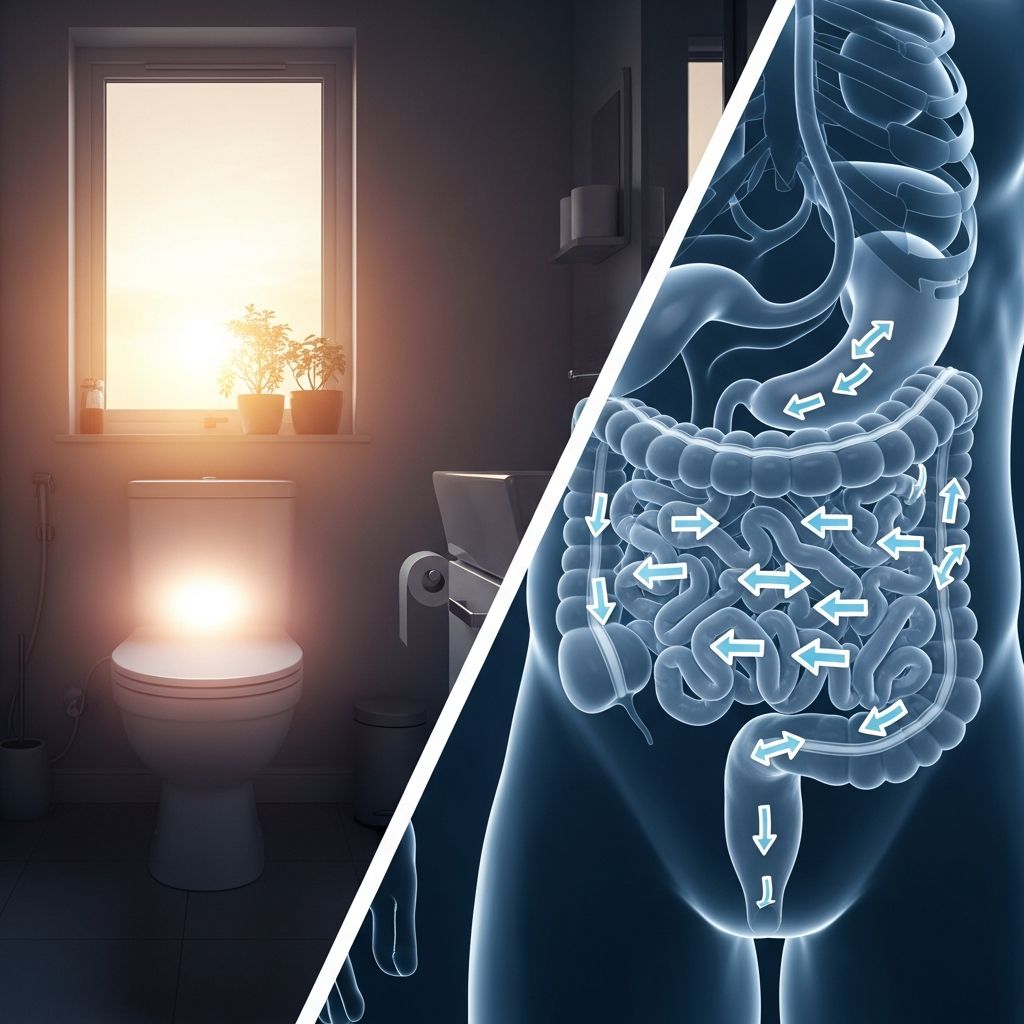
The human body is a symphony of rhythms, and one of the most noticeable is the tendency for many people to experience a bowel movement shortly after waking. This phenomenon, often called the “morning poop,” is not mere coincidence but a reflection of intricate biological timing mechanisms that synchronize digestion with our daily cycles. Colonic motility, or the movement of the large intestine, peaks in the early hours after awakening, facilitating the expulsion of waste accumulated overnight.
Understanding Circadian Rhythms in the Gut
Circadian rhythms are 24-hour internal clocks that regulate sleep, hormone release, metabolism, and digestion. In the gastrointestinal tract, these rhythms ensure that processes like motility, absorption, and secretion occur at optimal times. The colon, in particular, exhibits heightened activity during the active phase of the day for humans, which begins upon waking.
Research demonstrates that colonic motor activity is minimal during sleep and surges significantly upon awakening. For instance, studies on healthy volunteers show a threefold increase in colonic pressure activity right after waking, independent of meals in some cases. This rhythmicity is governed by clock genes such as Per1, Per2, Bmal1, and others expressed in the colon’s epithelial cells and myenteric plexus—the neural network controlling gut muscle contractions.
- Clock Genes in Action: These genes create oscillatory patterns in gene expression, peaking motility in the morning.
- Central vs. Peripheral Clocks: The brain’s suprachiasmatic nucleus (SCN) sets the master clock, while gut-specific peripheral clocks respond to local cues like food intake.
- Species Consistency: Similar patterns occur in mammals, with defecation peaking during active periods—day for diurnal humans, night for nocturnal animals.
The Gastrocolic Reflex and Morning Urge
Upon waking, the body activates the gastrocolic reflex, a neural response triggered by stomach distension from eating or even the anticipation of breakfast. This reflex prompts powerful contractions in the colon, known as high-amplitude propagating contractions (HAPCs), which propel stool toward the rectum. HAPCs increase just before or upon waking, often within 30 minutes, making morning the prime time for defecation.
During sleep, the digestive system processes nutrients and accumulates waste in the large intestine without disturbance. Waking signals restart motility, with the colon contracting up to three times more forcefully in the first hour. Regular breakfast routines amplify this, reinforcing the reflex through consistent meal timing.
| Factor | Morning Impact | Mechanism |
|---|---|---|
| Waking | Initiates motility surge | Circadian clock activation |
| Breakfast | Triggers HAPCs | Gastrocolic reflex |
| Hydration | Softens stool | Enhances transit |
What Evening Bowel Movements Indicate
While morning poops align with natural rhythms, regular evening defecations may signal a shifted internal clock. The colon typically slows at night, with motility dropping to prepare for rest. Evening peaks suggest desynchronization, often from late-night eating, shift work, or irregular sleep, disrupting peripheral gut clocks.
Studies in animals show that altering feeding times reverses clock gene rhythms like Bmal1 and Per1/2 in the colon. In humans, this misalignment can affect not just timing but broader metabolism, including glucose and lipid processing. Evening poops aren’t inherently bad but may warrant lifestyle tweaks for rhythm realignment.
Irregular Timing: Stress, Diet, and Disruptors
Unpredictable bowel timing often stems from external disruptors overriding circadian signals. Chronic stress elevates cortisol, which alters gut sensitivity and motility—speeding or slowing it based on individual response. Inconsistent meals confuse the gut’s clock, as food is a potent zeitgeber (time cue) for peripheral oscillators.
The gut microbiome also oscillates daily, producing metabolites like short-chain fatty acids that feedback to host clocks. Circadian disruption from erratic schedules dysregulates these microbes, impairing digestion and metabolism. Long gaps between meals weaken the gastrocolic reflex, common in functional constipation.
- Stress Effects: Heightens visceral sensitivity via circadian-patterned pathways.
- Meal Irregularity: Desynchronizes clock-gene expression in gut tissues.
- Microbiome Role: Rhythmic bacteria support motility; disruption leads to inconsistency.
Optimizing Gut Health Through Daily Routines
To harness natural rhythms, establish consistent wake times, meals, and hydration. High-fiber diets bulk stool, pairing with water to align movements with morning peaks. Fiber ferments into microbiome-supporting metabolites, sustaining rhythmic health.
Regular exercise mimics ambulation’s motility boost, while avoiding late eating preserves nocturnal slowdown. For shift workers, timed light exposure and meals can partially reset peripheral clocks, though full alignment is challenging.
Health Signals from Bowel Timing Changes
Consistent morning poops indicate synchronized metabolism and gut function—a positive health marker. Evening or erratic patterns might hint at circadian misalignment, linked to IBS, constipation, or metabolic issues. Sudden shifts, especially with symptoms like pain, blood, bloating, or weight loss, require medical evaluation, as they could signal underlying conditions beyond rhythm disruptions.
Frequently Asked Questions
Why do I always poop right after waking up?
This is due to circadian-driven colonic motility peaking upon awakening, combined with the gastrocolic reflex from morning hunger or eating.
Is pooping in the evening unhealthy?
Not necessarily, but it may indicate shifted rhythms from late eating or sleep issues. Aim for consistency to support metabolic health.
How can I train my body for morning bowel movements?
Maintain regular sleep/wake cycles, eat fiber-rich breakfasts, stay hydrated, and exercise daily to strengthen reflexes and clocks.
What if my poop timing is irregular?
Check for stress, meal inconsistencies, or dehydration. Persistent issues with symptoms warrant a doctor’s visit for IBS or other checks.
Does the microbiome affect poop timing?
Yes, gut bacteria follow circadian rhythms; their disruption from poor habits leads to irregular motility and metabolism.
Practical Tips for Rhythm-Aligned Digestion
- Wake at the same time daily to cue the master clock.
- Eat breakfast within 1-2 hours of waking to trigger HAPCs.
- Incorporate 25-30g fiber from fruits, veggies, and whole grains.
- Hydrate with 2-3 liters water, more if active.
- Limit caffeine/alcohol post-noon to avoid sleep disruption.
- Exercise 30 minutes daily, ideally morning, for motility boost.
By aligning habits with biology, you enhance not just bowel regularity but overall vitality. Morning movements are a window into gut-clock harmony—listen to them.
References
- Morning poop vs evening poop: What the timing reveals about metabolism — Times of India. 2025-08-15. https://timesofindia.indiatimes.com/life-style/health-fitness/health-news/morning-poop-vs-evening-poop-what-the-timing-reveals-about-metabolism/articleshow/125362225.cms
- Role of clock genes in gastrointestinal motility — PubMed Central (PMC). 2010-09-15. https://pmc.ncbi.nlm.nih.gov/articles/PMC2950682/
- Circadian rhythms in colonic function — Frontiers in Physiology. 2023-10-01. https://www.frontiersin.org/journals/physiology/articles/10.3389/fphys.2023.1239278/full
- What is the best time of day for a bowel movement? — Vinmec. 2023-01-01. https://www.vinmec.com/eng/blog/when-is-the-best-time-to-go-to-the-bathroom-during-the-day-en
- Chronic Constipation: Why Daily Routines Matter in Management — Canadian Digestive Health Foundation (CDHF). 2023-01-01. https://cdhf.ca/en/chronic-constipation-why-daily-routines-matter-in-management/