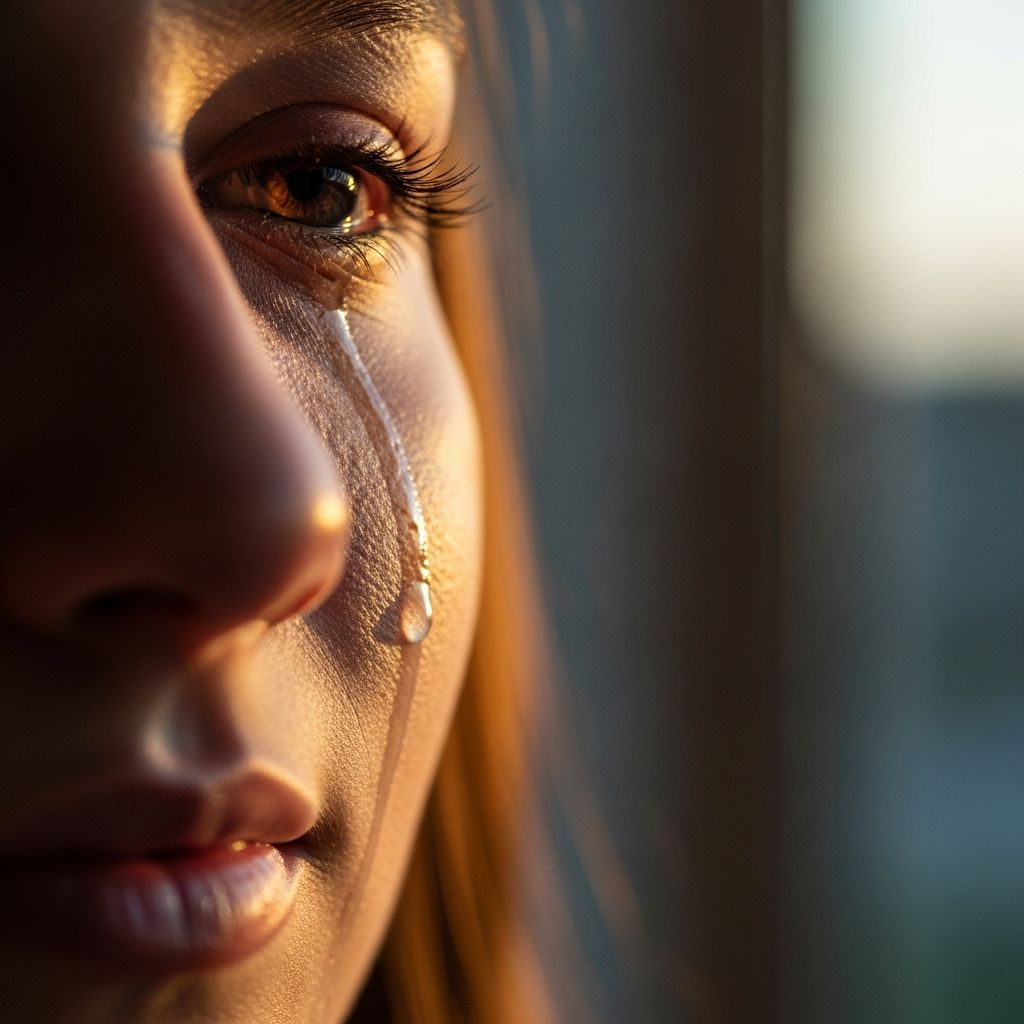
Laughing through tears at a wedding, choking up when your child reaches a milestone, or tearing up during a triumphant movie scene all have something in common: they are moments when overwhelming positive emotion spills over into crying. Far from being irrational, happy crying is a deeply human way that the brain, body and social world stay in balance.
Three Kinds of Tears — And Where Happy Crying Fits In
Not every tear is emotional. Understanding the types of tears helps explain why joyful moments can trigger weeping.
- Basal tears: Constant, low-level tears that keep the eye lubricated and protect the cornea.
- Reflex tears: Produced in response to irritants such as smoke, wind, or chopping onions.
- Emotional tears: Linked to feelings such as sadness, awe, relief, or intense joy, and driven by brain–emotion circuits rather than eye irritation.
Happy crying belongs to the category of emotional tears. These tears have a different chemical composition than basal or reflex tears and are tightly tied to what we care about most.
What Happens in the Brain When Joy Makes Us Cry
Emotional crying begins in the brain, not in the eyes. When you experience strong joy, several systems fire together:
- Limbic system activation: Brain regions like the amygdala and hippocampus process emotional significance and memory, registering an event as intensely meaningful.
- Autonomic nervous system arousal: High emotional arousal activates the sympathetic nervous system (the body’s “fight–flight–freeze” system).
- Connection to tear glands: Neural pathways link these emotional centers to the lacrimal glands, which produce tears.
When joy is strong enough, the emotional and physiological arousal cross a personal threshold. At that point, the brain sends signals to the tear glands and crying begins — even when the trigger is positive, like pride, love, or relief.
Why Overwhelming Positives Can Feel “Too Much”
Happy crying often happens when a good experience feels intense or too big for words. Psychologists describe this as a form of emotional overload.
One clinical perspective describes crying as emerging when your:
- Sensitivity (how strongly you feel things)
- Meaning (how important an event is to you)
- Exceeds your emotional threshold (how much stimulation you can comfortably hold)
When psychological demands cross that threshold, tears can act like a safety valve, discharging pressure and helping restore emotional balance. That is why people may cry after receiving long-awaited good news or finally reaching a goal: joy, relief, and years of effort converge at once.
Body Chemistry: How Happy Tears Can Soothe Stress
Although the science is still developing, emotional tears appear to be linked to changes in stress and bonding chemicals:
- Stress-related substances: Emotional tears contain higher levels of certain hormones and elements, including adrenocorticotropic hormone (ACTH), prolactin, and manganese, compared with reflex tears.
- Possible stress relief: Some researchers have proposed that crying may help reduce stress by altering levels of stress-related hormones or associated compounds, contributing to a sense of relief after crying.
- Endorphins and oxytocin: Emotional crying is associated with the release of endorphins and oxytocin, which can promote calm, connection, and pain relief, helping the body move back toward equilibrium.
Not everyone feels better immediately after crying, and context matters. But many people remember crying — especially with social support — as emotionally helpful, which fits with research showing mixed but generally beneficial after-effects in natural settings.
Happy Tears as Emotional “Brake System”
Joy and excitement rev up the body much like stress does. Heart rate increases, breathing changes, and attention narrows. Crying can act as an emotional counterweight that keeps positive arousal from spinning out of control.
From this perspective, crying when happy can:
- Prevent emotional overload by providing a release.
- Signal to yourself that something important has happened and deserves processing.
- Mark a transition — for example, the end of one life chapter and the beginning of another.
In daily life, that is why you might suddenly cry at a graduation, the birth of a child, or during a song that reflects your life story. The tears help you slow down and absorb what the moment means.
Why Emotional Tears Look Different
Researchers have found that emotional tears are chemically distinct from other tears. This difference may also affect how visible and long-lasting they are on the face.
| Type of tear | Main purpose | Distinctive features |
|---|---|---|
| Basal | Eye lubrication and protection | Continuously produced in small amounts |
| Reflex | Defense against irritants | Triggered by physical stimuli (e.g., onion, smoke); more watery |
| Emotional | Linked to strong feelings | Contain different levels of hormones and other substances; more associated with visible crying episodes |
Some hypotheses suggest that these compositional differences may support stress regulation or signaling, though the exact biochemical functions remain under active study.
Tears as Signals: How Happy Crying Builds Connection
Crying is not just an internal event. It is also a social signal that invites others into your emotional world.
- Visibility: Tears streaming down the face are easy for others to notice, making emotional states more observable than internal feelings alone.
- Vulnerability: Showing tears communicates openness and need, which can evoke empathy and compassionate responses in others.
- Social bonding: Studies in social neuroscience suggest that seeing another person cry activates brain areas involved in empathy and shared emotion, promoting bonding and cooperation.
When you cry from happiness, you are broadcasting that something matters to you deeply: your child’s safety, your relationship, your sense of meaning or achievement. That transparent vulnerability often pulls loved ones closer, strengthening connections.
Cultural Scripts and Gender Myths About Tears
Biologically, humans of all genders possess the same basic crying machinery: lacrimal glands, facial muscles, and brain circuits for emotion and social communication. However, cultural expectations shape who “is allowed” to cry and when.
- Many societies encourage women to express sadness but discourage tears in men, especially in public or professional contexts.
- These norms influence how comfortable people feel crying at happy events, such as weddings or ceremonies.
- Despite stereotypes, the underlying capacity to cry from joy is universal and not determined by biological sex alone.
Psychologists emphasize that differences in crying frequency across gender often reflect learned rules, not emotional weakness or strength. Biopsychosocial factors — including personality, upbringing, culture, and personal experience — all contribute to individual crying patterns.
Why Some People Cry Easily and Others Rarely Do
Two people can watch the same joyful scene and respond very differently. Variations in crying proneness come from several interacting factors:
- Temperament and sensitivity: More emotionally sensitive individuals may reach their threshold for tears more quickly.
- Personal history: Experiences of loss, trauma, or hardship can intensify emotional reactions to positive turning points (for example, crying harder at good news because of what it took to get there).
- Values and meaning: You are more likely to cry over events deeply tied to your core values — family, identity, faith, or long-term goals.
- Regulation strategies: Some people have been taught to suppress tears, while others have learned to see crying as acceptable or even healthy.
None of these patterns are right or wrong. Crying seldom, crying often, or not crying at all in certain joyful moments each reflect a unique blend of biology, learning, and circumstance.
When Happy Crying Signals Emotional Integration
Happy tears rarely represent a single pure emotion. They typically mix:
- Joy at what is happening now
- Relief that feared outcomes did not occur
- Grief for what was lost along the way
- Awe at how life can change over time
This complex blend is a sign that your brain is integrating multiple emotional layers into a coherent story. Crying can help you move from raw feeling into meaning — for example, understanding how far you have come, how much others have mattered, or how a moment fits into your life narrative.
Is Crying When Happy Good for You?
Research on crying shows nuanced results, but several benefits appear more likely when crying happens in supportive, safe contexts:
- Emotional relief: Many people report feeling calmer after crying, especially if comforted by others.
- Closer relationships: Sharing tears with trusted people can deepen intimacy and mutual understanding.
- Self-knowledge: Noticing what moves you to tears highlights what you value and need most.
- Stress regulation: By helping the body shift from high arousal toward a calmer state, crying can be part of your natural stress-response cycle.
However, crying is not a cure-all. If crying feels uncontrollable, excessively frequent, or disconnected from what is happening around you, it may be worth discussing with a mental health professional.
Supporting Yourself or Others During Happy Tears
Because happy crying is often misunderstood, people sometimes feel embarrassed by it. Simple, compassionate responses help normalize the experience.
Ways to support yourself
- Remind yourself that crying when happy is a normal physiological response, not a flaw.
- Take slow breaths and allow the wave of emotion to pass without judgment.
- Notice what the tears are telling you about your values, hopes, or relief.
Ways to support others
- Offer a tissue or gentle touch if appropriate and welcomed.
- Say something validating, such as “This means a lot to you, doesn’t it?”
- Avoid teasing or shaming, which can turn a meaningful moment into a source of self-consciousness.
Frequently Asked Questions About Happy Crying
Is it normal to cry when I get good news?
Yes. Receiving good news can trigger intense joy, relief, or gratitude, which activates the same emotional and physiological systems involved in other forms of crying. When this emotional load exceeds your personal threshold, tears are a common, healthy response.
Do happy tears have different chemicals than sad tears?
Both happy and sad tears are forms of emotional tears. Compared with non-emotional tears, they contain different levels of certain hormones and other substances, such as prolactin and adrenocorticotropic hormone, but current research does not fully separate happy versus sad tears chemically. The main difference is the emotional context and how your body and brain interpret the event.
Why do some people cry at every touching commercial or song?
People vary in how sensitive they are to emotional cues. Those who score high on empathy or emotional sensitivity may reach their crying threshold more quickly, especially when a scene taps into personal memories or values. Cultural and family norms also shape whether people feel safe expressing those tears openly.
Can crying when I am happy be a sign of a problem?
On its own, happy crying is not a sign of mental illness. However, if you notice frequent crying spells that feel uncontrollable, occur without clear emotional triggers, or significantly interfere with daily life, it may indicate underlying depression, anxiety, or neurological issues. In such cases, an evaluation by a qualified health professional is recommended.
How can I feel less embarrassed about crying in joyful moments?
Remind yourself that crying is part of being human. Understanding the science — that tears are tied to stress relief, bonding, and deep meaning — can make you more accepting of your reactions. Surrounding yourself with people who respond with kindness rather than criticism also reduces shame.
References
- Why Do We Cry? The Science of Crying — Mandy Oaklander, Time Magazine. 2016-03-14. https://time.com/4254089/science-crying/
- Why do we cry? UAB psychologist explores the science and psychology behind crying — Christina Pierpaoli Parker, University of Alabama at Birmingham. 2023-12-18. https://www.uab.edu/news/news-you-can-use/why-do-we-cry-uab-psychologist-explores-the-science-and-psychology-behind-crying
- Crying — Wikipedia (summary of multiple primary studies; used for background, not as a primary citation).
- What are emotional tears? The surprising science of crying — Calm. 2023-05-10. https://www.calm.com/blog/emotional-tears
- Crying: Why We Cry & How It Works — Cleveland Clinic. 2022-10-14. https://my.clevelandclinic.org/health/articles/crying
- How Crying Works — Cristen Conger, HowStuffWorks. 2008-07-28. https://science.howstuffworks.com/life/inside-the-mind/emotions/crying.htm