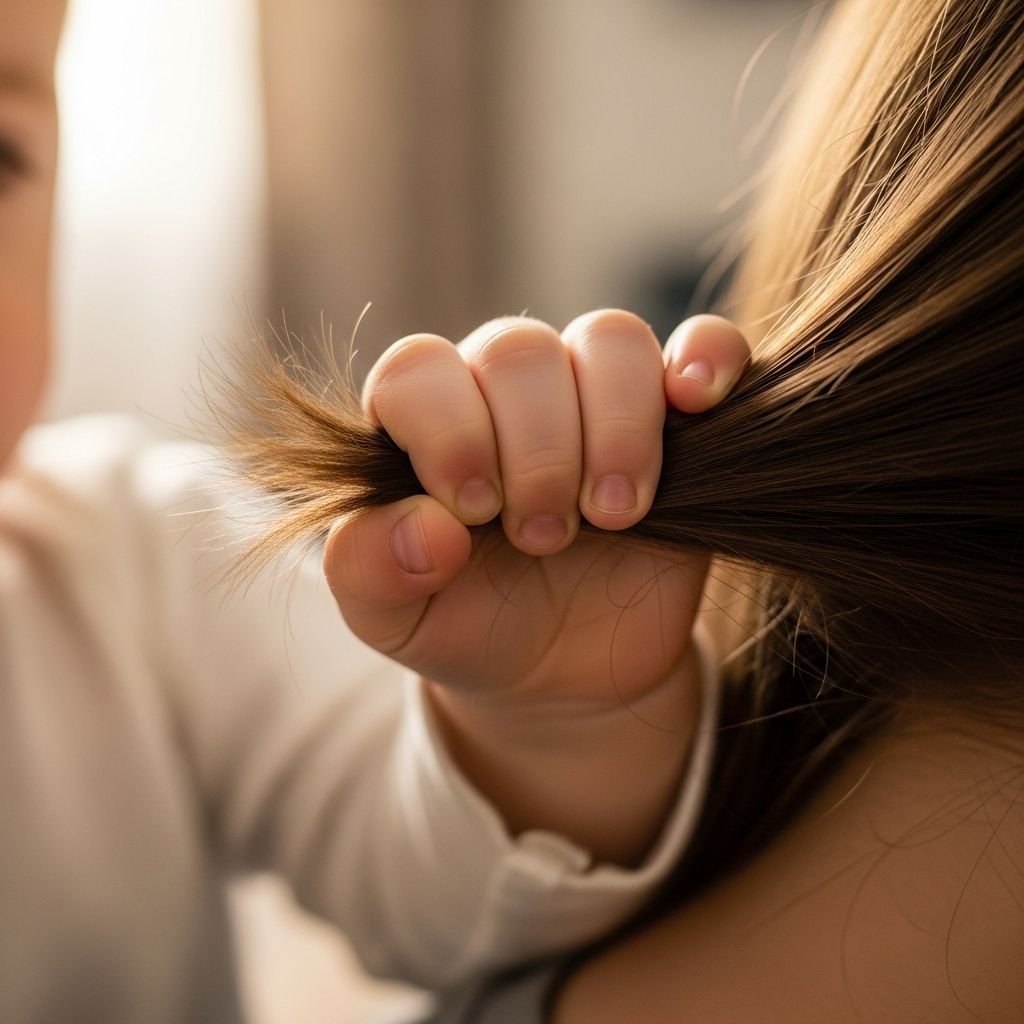
Hair pulling can be one of the most confusing and distressing toddler behaviors for parents. Your peaceful cuddle time can suddenly turn into a painful surprise as your child grabs a fistful of hair and hangs on tight. This behavior can feel personal, aggressive, or even alarming, yet for many toddlers it is a normal, temporary phase—and one that can be handled with patient, consistent responses.
This article explores why toddlers pull hair, how to respond in the moment, and what to do if the behavior persists or seems more serious. It offers practical techniques grounded in child development, while keeping your relationship with your child at the center of every strategy.
Why Toddlers Pull Hair: Looking Beneath the Behavior
Toddlers rarely wake up and decide to pull hair as a calculated act of cruelty. Instead, hair pulling is usually a communication attempt, a sensory habit, or a reaction to big feelings. When adults look beneath the surface of the behavior, it becomes easier to respond helpfully instead of simply reacting.
- Sensory exploration: Toddlers are wired to explore the world with their hands, mouths, and bodies. Hair feels interesting—soft, stretchy, textured—and pulling it gives strong sensory feedback.
- Cause and effect: Around this age, children experiment: “What happens if I do this?” Hair pulling often gets a big reaction, which can unintentionally reinforce the behavior.
- Communication shortcut: Before language is fluent, a toddler may pull hair to say “Move,” “Pay attention to me,” or “I’m frustrated,” especially when the right words are not yet available.
- Self-soothing: Some children twist or tug their own hair when bored, tired, or trying to fall asleep. Over time this can grow into a habit they use to calm themselves.
Understanding these motivations does not mean accepting all behavior without boundaries. It simply reminds parents that toddlers are learning and experimenting, not plotting or manipulating in an adult sense.
Common Hair Pulling Situations
Hair pulling tends to show up in predictable moments of a toddler’s day. Noticing when it happens most often helps you plan a calmer, more effective response.
- During play with other children: A toddler might yank a playmate’s hair during a toy dispute, when overexcited, or when they do not know another way to say “Stop” or “That’s mine.”
- On a caregiver’s lap: Some children pull a parent’s hair while snuggling, nursing, or being carried. The closeness, warmth, and easy access to hair creates a perfect opportunity for this habit.
- When overstimulated: Loud, busy environments can overload a toddler. Pulling hair—either their own or someone else’s—can be a physical release of tension.
- Falling asleep: A child who strokes or twists hair as a comfort behavior may gradually start tugging harder, especially as they grow and their grip strengthens.
Keeping track of these patterns, even in a simple notebook or note app, can reveal triggers you might otherwise overlook, such as specific time of day, particular people, or certain activities.
Is It Aggression, Habit, or Something Else?
Not all hair pulling is the same, and how you respond may depend on what is driving the behavior. Ask yourself a few key questions in the moment and over time.
| Type of hair pulling | Typical signs | What it may indicate |
|---|---|---|
| Exploratory | Brief grabs, curious expression, often during new interactions | Learning about cause and effect, testing boundaries, sensory curiosity |
| Tantrum-related | Occurs with screaming, hitting, kicking, or throwing | Intense frustration, anger, or overwhelm with limited coping skills |
| Self-soothing habit | Happens when tired, bored, or falling asleep, often repetitive | Comfort-seeking behavior, developed into a routine or habit |
| Persistent or secretive pulling (self-directed) | Visible thinning patches, child hides hands or avoids questions | Possible anxiety, emerging compulsive pattern; worth discussing with a professional |
Most toddlers fall into the first three categories at some point, and with calm, consistent guidance, the behavior gradually fades. Persistent, secretive, or distressing hair pulling may require additional evaluation and support.
How to Respond in the Moment Without Losing Your Cool
When tiny fingers latch onto your hair—or another child’s—it is natural to feel sudden pain and anger. The goal is not perfection but to have a clear response plan you can return to, even when you are tired or triggered.
Step 1: Safely Remove the Hand
- Stay as calm as possible. Take a slow breath before speaking, if you can.
- Gently but firmly open your child’s fingers one at a time rather than yanking your head away, which can increase the pain and the drama.
- Move the child slightly away from the hair source—your head, a sibling, another toddler—while keeping your voice steady.
Step 2: Give a Clear, Simple Boundary
Toddlers respond best to short, concrete statements. Think of these as scripts you can lean on when your patience is low.
- “Hair hurts. Hands off hair.”
- “Gentle hands. Show me gentle.”
- “No pulling. Hair stays on heads.”
Use the same short phrase each time. Consistency helps your child connect the behavior with the boundary.
Step 3: Redirect the Hands
A toddler who pulls hair often needs something else to do with their hands, especially if the behavior is tied to sensory seeking or boredom.
- Offer a small fidget or toy: a soft cloth, chew-safe teether, textured ball, or stuffed animal.
- Show an alternative: “Hands can clap,” “Hands can pat your own head gently,” or “Hands can squeeze this pillow.”
- Engage in a quick physical game: high fives, pat-a-cake, or drumming on knees to redirect energy.
Over time, your child learns that hair pulling does not get much attention, but gentle hands and safe choices do.
Preventing Hair Pulling Before It Starts
Prevention does not mean your child will never pull hair again, but it can significantly reduce how often and how intensely the behavior shows up. Think of prevention as setting up the environment so the “wrong” choice is harder and the “right” choice is easier.
- Create calm routines: Predictable meals, play, and sleep routines help lower overall stress, making explosive reactions like hair pulling less likely.
- Watch for early warning signs: If you see your child getting restless, grabbing at clothes, or whining, step in early with a snack, break, or quiet time.
- Adjust physical space: During playdates, place toddlers side by side instead of face to face to reduce the chance of grabbing at each other’s hair.
- Offer appropriate sensory input: Provide textures to touch, chew-safe items, and movement breaks throughout the day for children who crave physical sensations.
Supporting Toddlers Who Pull Their Own Hair
Self-directed hair pulling can be especially concerning, because it can lead to thinning spots or bald patches if it becomes a strong habit. Many children who pull their own hair do so without even realizing it, especially while they are zoning out or trying to fall asleep.
- Identify “high-risk” times: Notice when your child most often tugs their own hair—during bedtime stories, in the car seat, while watching shows, or when overtired.
- Change the setup: You might gently tuck hair into a soft cap at night, put your child in a sleep sack that limits arm movement, or offer a special bedtime comfort toy with interesting textures.
- Teach replacement habits: Show your child how to rub a blanket edge, stroke a stuffed animal, or squeeze a pillow instead of pulling their hair.
- Keep hair lower-maintenance if needed: For some families, shorter or more secure hairstyles make hair less tempting to grab.
Helping Siblings and Other Children Feel Safe
When a toddler pulls another child’s hair, there are two needs to consider: protecting the child who was hurt and guiding the child who did the pulling. Both deserve support, and both can learn from the moment.
- First, attend to the injured child: Comfort them, check for injury, and move them to a safe spot. A simple “I see you’re hurt; I’m here” can go a long way.
- Then address the behavior: Turn to the toddler who pulled the hair and say your chosen boundary phrase calmly: “We don’t pull hair. It hurts.” Then help them repair, perhaps by offering a toy, a wave, or simply sitting nearby safely.
- Coach simple social skills: Teach brief phrases like “Stop,” “My turn,” or “Move please” that your toddler can use instead of grabbing.
Siblings often copy each other’s behavior. Staying consistent across all children in your response helps everyone learn the same expectations.
When Hair Pulling Is Part of a Bigger Emotional Storm
Sometimes hair pulling shows up alongside other intense behaviors such as biting, hitting, or throwing. In those moments, trying to reason with a toddler rarely works. The priority becomes safety, calm, and containment.
- Stay nearby but grounded: Keep your voice low and your movements slow. Rapid reactions can escalate your child further.
- Use minimal words: Short phrases like “You’re safe. I won’t let you pull my hair” are easier for an overwhelmed child to process.
- Reduce stimulation: Dim lights, turn off screens, or move to a quieter room while you ride out the emotional wave together.
- Revisit the incident later: After your child is calm, you can talk simply about gentle hands, practice alternatives, and reconnect through play.
Positive Reinforcement: Catching Gentle Hands in Action
While it is important to consistently block and correct hair pulling, progress often comes faster when adults spend just as much energy noticing and encouraging positive behavior.
- Notice specific kindness: Instead of generic praise, point out what you see: “You touched her hair so gently,” or “You used your words to ask for space.”
- Use simple reward systems: For older toddlers, small sticker charts or tokens for “gentle hands” can help them see their own improvements over time.
- Model the behavior you want: Narrate as you gently touch your child’s hair: “See, gentle hands feel nice,” giving them a clear example to copy.
When to Seek Professional Help
Although hair pulling is often a passing phase, some patterns call for extra support. Trusting your instincts and checking in with professionals does not mean you are overreacting; it means you are advocating for your child.
- Talk to your pediatrician if:
- There are visible bald spots or your child’s scalp looks irritated.
- The behavior seems constant or compulsive, especially when your child appears unaware of it.
- You notice other concerning signs such as sleep disruption, sudden changes in mood, regression in skills, or intense anxiety.
- Consider a child therapist: A professional experienced in early childhood can help assess whether hair pulling is linked to stress, anxiety, or sensory needs and can teach you and your child targeted strategies.
Early guidance can prevent the behavior from becoming deeply ingrained and can give your family more tools for handling future developmental phases.
Frequently Asked Questions About Toddler Hair Pulling
1. Is my toddler trying to hurt me on purpose?
It often feels personal, especially when hair pulling happens during cuddles or at the end of a hard day. However, most toddlers do not have the emotional maturity to plan out hurtful actions in the way adults do. They are testing limits, expressing feelings, or exploring sensations. They still need clear boundaries, but assuming malice usually makes it harder to respond calmly.
2. Should I ignore hair pulling so I do not reinforce it?
Safety comes first. If hair pulling is hurting someone, it should not be ignored. The key is to respond calmly and briefly, rather than with big emotions, then redirect hands to a safer activity. The less dramatic attention the behavior receives while still being consistently blocked, the less powerful it becomes.
3. Will cutting my child’s hair short solve the problem?
A shorter haircut may make hair less accessible or less satisfying to pull, which can be one helpful piece of a larger plan. However, it rarely addresses the underlying reason for the behavior, such as sensory needs, big feelings, or communication challenges. Pair any practical changes with teaching alternative ways to cope and express emotions.
4. How long does this phase usually last?
There is no universal timeline, but for many children, hair pulling appears in bursts during high-stress or rapid-development periods and fades as language, self-control, and emotional skills grow. Consistent boundaries, preventive strategies, and calm redirection can shorten how long and how intensely the behavior sticks around.
5. What if nothing seems to help?
If you have tried gentle, consistent strategies for a while and the behavior is not improving—or is getting worse—reach out to a healthcare provider for extra support. Sometimes there are underlying factors such as anxiety, sensory processing challenges, or other developmental issues that benefit from targeted guidance. Asking for help is a strength, not a failure.
Practical Takeaways for Tired Parents
Hair pulling in toddlers is uncomfortable, sometimes embarrassing, and potentially painful—but it is also a behavior that most families can navigate successfully with time and patience. The following core ideas can guide you when you feel stuck.
- Look beneath the behavior for the need: sensory input, attention, comfort, or help with big feelings.
- Respond in the moment with calm hands, short phrases, and quick redirection.
- Use prevention strategies—routines, environment changes, sensory options—to reduce triggers.
- Protect both the child doing the pulling and the person being hurt; both need your support.
- Seek professional advice if the behavior is severe, persistent, or emotionally distressing for your child or family.
Above all, remember that your relationship with your child matters more than any single behavior phase. By staying connected, curious, and consistent, you help your toddler move through hair pulling and into healthier, more effective ways of expressing their growing inner world.