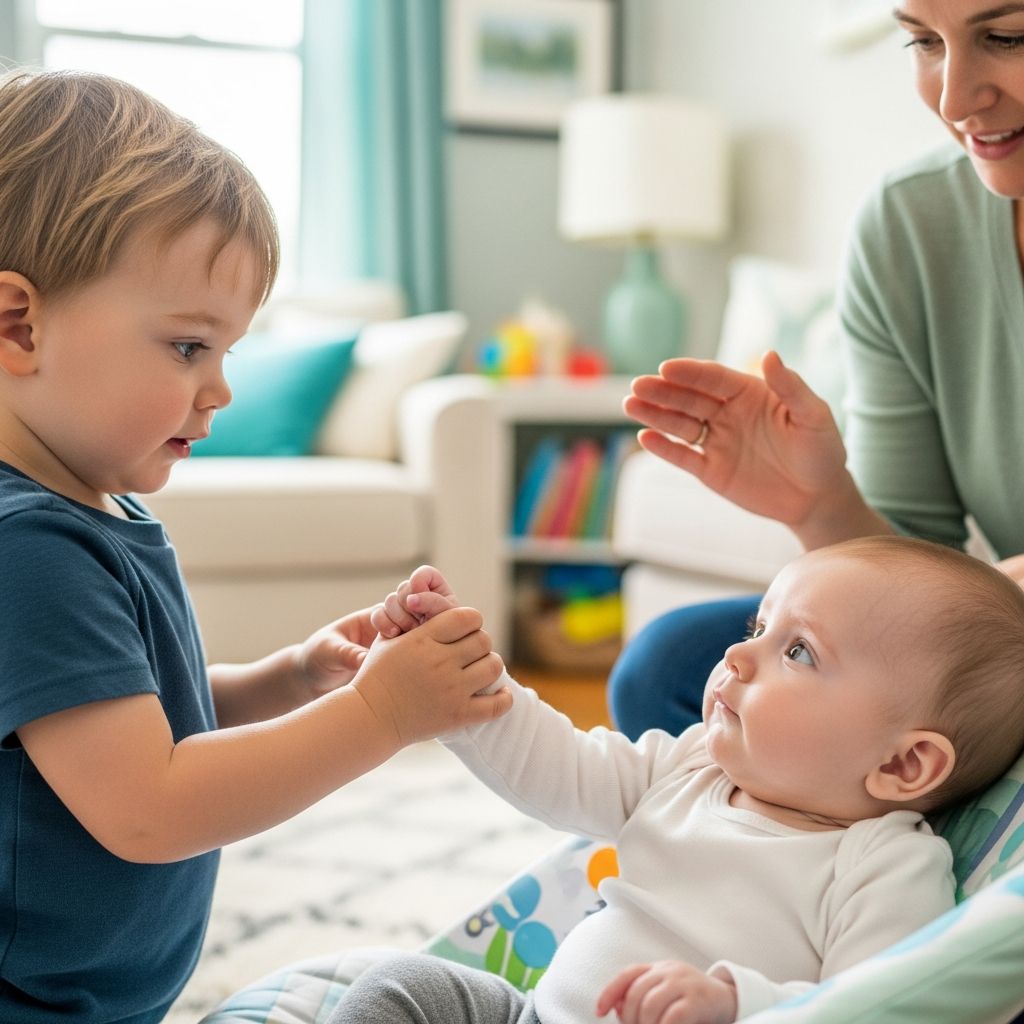
Watching a toddler suddenly grab a toy from a baby or clutch at the baby’s arm can be shocking, stressful, and guilt-inducing for parents. Yet this behavior is usually a sign of normal development, mixed with big emotions and a lack of self-control, not evidence that your toddler is mean or broken. The goal is to protect the baby while helping your toddler learn better ways to express needs, wants, and feelings.
This article offers a structured, practical approach: why toddlers grab from babies, what to do in the moment, how to prevent recurring conflicts, and ways to strengthen both children’s sense of safety and connection. The focus is on calm, respectful parenting that teaches limits without shaming your toddler.
Why Toddlers Grab from Babies
Toddlers are not born with impulse control or sophisticated empathy. They are still learning that other people, including the baby, have their own feelings and rights. Grabbing often reflects developmental immaturity more than intentional cruelty.
- Impulses before self-control: Toddlers see something they want and act first, think later. Their brain systems for impulse control are still under construction.
- Limited language: If they lack words to say “My turn?” or “I want that,” their hands speak for them by grabbing.
- Curiosity and experimentation: They are scientists in motion, testing “What happens if I take this?” or “What happens if I touch the baby?”
- Big feelings about the baby: A new sibling can trigger jealousy, fear of losing your love, and a powerful need for reassurance, which can show up as roughness or possessiveness.
When you view grabbing as a communication of needs and feelings, rather than deliberate misbehavior, it becomes easier to respond calmly and constructively.
Safety First: Protecting the Baby Calmly
Your first responsibility is to keep both children safe. That does not require harshness; it requires clarity and consistency. Think of yourself as a calm, firm protector rather than a punisher.
- Move your body close: If your toddler tends to grab, stay near when they are around the baby, ready to block or redirect.
- Use gentle physical blocking: Place your hand between your toddler and the baby or lightly hold your toddler’s hand to prevent grabbing, saying something simple like, “I won’t let you grab the baby.”
- Relocate if needed: If you cannot safely supervise both, use safe spaces—play yards, gated areas, or baby in a bouncer out of reach—to reduce risky contact.
Protective action should be swift and calm. The less emotional intensity you bring, the easier it is for your toddler to stay regulated and actually learn from the moment.
In-the-Moment Script: What to Do When Grabbing Happens
When your toddler grabs from the baby, you can follow a simple, repeatable process. Over time, consistency teaches your toddler what to expect and how to behave instead.
- Step 1 – Stop the action.
Move in, gently but firmly remove your toddler’s hand or the toy from the conflict, and ensure the baby is safe. - Step 2 – State the limit briefly.
Use one short sentence: “I won’t let you grab from the baby.” Avoid lectures and accusations. - Step 3 – Acknowledge the feeling or need.
Reflect what might be happening inside your toddler: “You really wanted that toy,” or “You’re upset the baby had it.” - Step 4 – Offer or model an alternative.
Suggest or demonstrate a better option: “You can ask me for help,” “You can take a different toy,” or “You can wait until the baby is done.” - Step 5 – Follow through calmly.
If your toddler protests or tries again, stay near and repeat the limit and support. Consistent repetition is how the new pattern sticks.
The goal is not to convince your toddler to approve of the rule, but to help them experience that the rule is steady, predictable, and paired with care and understanding.
Understanding Common Toddler Motives
Different grabbing situations often reflect different underlying motives. When you can guess the motive, you can respond more effectively and with more empathy.
| Possible Motive | What It Might Look Like | Helpful Parent Response |
|---|---|---|
| Jealousy or rivalry | Grabbing toys only when the baby has them, acting extra clingy with you | Reassure your love, offer special one-on-one time, still hold clear limits |
| Curiosity | Touching, poking, grabbing in a fascinated way, not obviously angry | Supervise closely, guide gentle touch, offer safe ways to explore the baby |
| Frustration | Grabbing and shouting when something is taken away or when tired | Label feelings, remove or reduce triggers, teach simple phrases or gestures |
| Attention-seeking | Grabbing more when parents react strongly, even if it causes trouble | Respond calmly, minimize drama, notice and praise gentle behavior |
This kind of mental checklist can guide your response away from shame and toward problem-solving tailored to the situation.
Teaching Gentle Hands and Respect for Baby
Toddlers learn through repetition and modeling. Instead of only saying what not to do, emphasize what to do with their hands when interacting with the baby.
- Demonstrate a gentle touch: Show how to softly touch the baby’s arm or foot, guiding your toddler’s hand and saying, “Like this, gentle.”
- Practice with toys: Let your toddler practice “gentle hands” on dolls, stuffed animals, or pillows so the skill isn’t only tested in high-stakes situations.
- Use simple, consistent phrases: Short statements like “Soft hands with baby” or “Toys stay with who has them” are easier for toddlers to remember.
- Notice gentle moments: When your toddler pats the baby softly or brings a blanket, comment warmly: “You are being so gentle with the baby.”
Over time, your toddler begins to associate being near the baby with a clear set of expectations—and with your approval when they meet them.
Sharing, Turn-Taking, and Fairness
Parents often feel pressure to teach sharing early, but toddlers are not wired for generous turn-taking on demand. Expecting instant sharing can set everyone up for frustration.
- Think “taking turns” rather than “share now.” It is reasonable for the child who has the toy—baby or toddler—to finish their turn before giving it up.
- Be the “turn-keeper.” Calmly state whose turn it is and who will have a turn next, so your toddler experiences fairness and predictability.
- Use visual or verbal cues: A simple phrase like “When the baby is finished, then you” helps toddlers connect cause and effect.
- Offer a similar alternative: Have extra toys or duplicates so your toddler can have something satisfying while waiting.
The more your toddler trusts that turns will come, the less desperate they may feel to grab right now.
Reducing Triggers and Setting Up the Environment
Some grabbing can be prevented by thoughtful setup of your home. Rather than constantly firefighting, adjust the environment so conflicts are less likely and easier to manage.
- Create separate spaces: Have spots where the baby can play safely out of the toddler’s immediate reach and areas where the toddler can play with more fragile or advanced toys away from the baby.
- Rotate enticing toys: Manage the most “grab-worthy” toys by bringing them out when you can supervise more closely.
- Plan for tricky times of day: Late afternoons, hunger, and fatigue often intensify grabbing. Add snacks, quiet time, or more parent presence then.
- Give your toddler a sense of ownership: Allow them to have a small set of special toys that are not for the baby, stored somewhere safe, while everyday toys are shared in common areas.
When toddlers feel they have some control and protected belongings, they may feel less need to battle the baby for every object.
Your Toddler’s Emotions About the Baby
Grabbing can be a physical expression of complicated feelings about the new family dynamic. Toddlers often love the baby and resent the baby at the same time, which can be confusing and overwhelming.
- Normalize mixed feelings: Let your toddler know it is okay to be mad, sad, or annoyed, even while you protect the baby and limit hurtful actions.
- Offer special one-on-one time: Even 10–15 minutes a day of dedicated “just us” time can dramatically reduce acting out.
- Use simple emotional language: Phrases like “You wish I could hold you and not feed the baby right now” show that you see your toddler’s inner world.
- Watch for signs of overwhelm: Increased tantrums, sleep issues, or clinging may mean your child needs extra reassurance and structure.
When your toddler feels seen and valued, the intensity of rivalry-driven grabbing often softens.
Staying Calm: Managing Your Own Reactions
One of the hardest parts of toddler–baby conflicts is the surge of anger, fear, or shame that parents feel. Keeping your cool is not always easy, but it is deeply influential: children learn regulation from the adults around them.
- Pause before reacting: Take one slow breath, then act. A one-second pause can shift you from yelling to guiding.
- Use a neutral tone: Firm, clear, and low volume often gets better results than loud, frustrated corrections.
- De-brief later, not in the heat of the moment: Explanations and teaching land better when everyone is calmer.
- Give yourself grace: You will not handle every episode perfectly. Repair—“I was too loud before; I’m here to help now”—is powerful.
A calm, predictable adult presence is the anchor that helps both children feel safe, even while you enforce non-negotiable limits around safety.
When Grabbing Becomes a Pattern
Occasional grabbing is normal. If it becomes frequent or intense, consider it a signal to look deeper and add more support—not a sign that your toddler is “bad.”
- Track patterns: Notice when grabbing happens most (time of day, specific toys, certain routines). Patterns point to solvable problems.
- Increase supervision during hot spots: For example, stay closer during pre-dinner chaos or toy transitions.
- Focus on sleep, food, and connection: More rest, regular snacks, and reliable one-on-one time often reduce aggressive behavior across the board.
- Seek guidance if needed: If you feel stuck or worried, talking with a pediatrician or child development specialist can provide tailored support.
Looking at grabbing as feedback about your child’s stress level and environment, rather than a moral failure, opens the door to practical adjustments that help everyone.
Frequently Asked Questions
Is my toddler a bully for grabbing from the baby?
No. Grabbing is usually a sign of normal toddler development combined with frustration, jealousy, or limited skills. Labeling a young child as a bully overlooks their immaturity and can make it harder to respond with the calm guidance they actually need. Focus on teaching and modeling instead of judging their character.
Should I force my toddler to share toys with the baby?
Forcing instant sharing can backfire by increasing anxiety and possessiveness. A more helpful approach is to respect turns: the person who has the toy keeps it until they are finished, while you reassure the waiting child that their turn will come. This teaches fairness, boundaries, and patience in a way toddlers can understand.
What if my toddler keeps grabbing even after I explain?
Understanding does not instantly produce self-control. Toddlers learn through many repetitions, with your steady blocking, simple limits, and acknowledgment of feelings each time. When grabbing persists, look at contributing factors like tiredness, hunger, lack of attention, or an overstimulating environment, and make adjustments where you can.
Is time-out a good response to grabbing?
Traditional time-outs often focus on isolation and punishment, which may increase shame and upset without teaching better skills. A more effective option is a brief, supported pause with you—sometimes called a time-in—where you keep the baby safe, stay close to your toddler, and calmly reinforce the limit while helping them regulate.
How can I encourage a positive relationship between my toddler and baby?
Invite your toddler into safe helper roles, like fetching diapers or choosing the baby’s outfit, but without pressure or over-praising. Highlight moments of kindness, protect both children’s boundaries, and make sure your toddler still receives plenty of affection and attention that is separate from the baby. Over time, shared routines, playful moments, and your steady presence create the foundation for a warm sibling bond.
With patience, consistency, and empathy, your toddler can move from grabbing and rivalry toward cooperation, gentler interactions, and a growing sense of pride in being the older sibling.