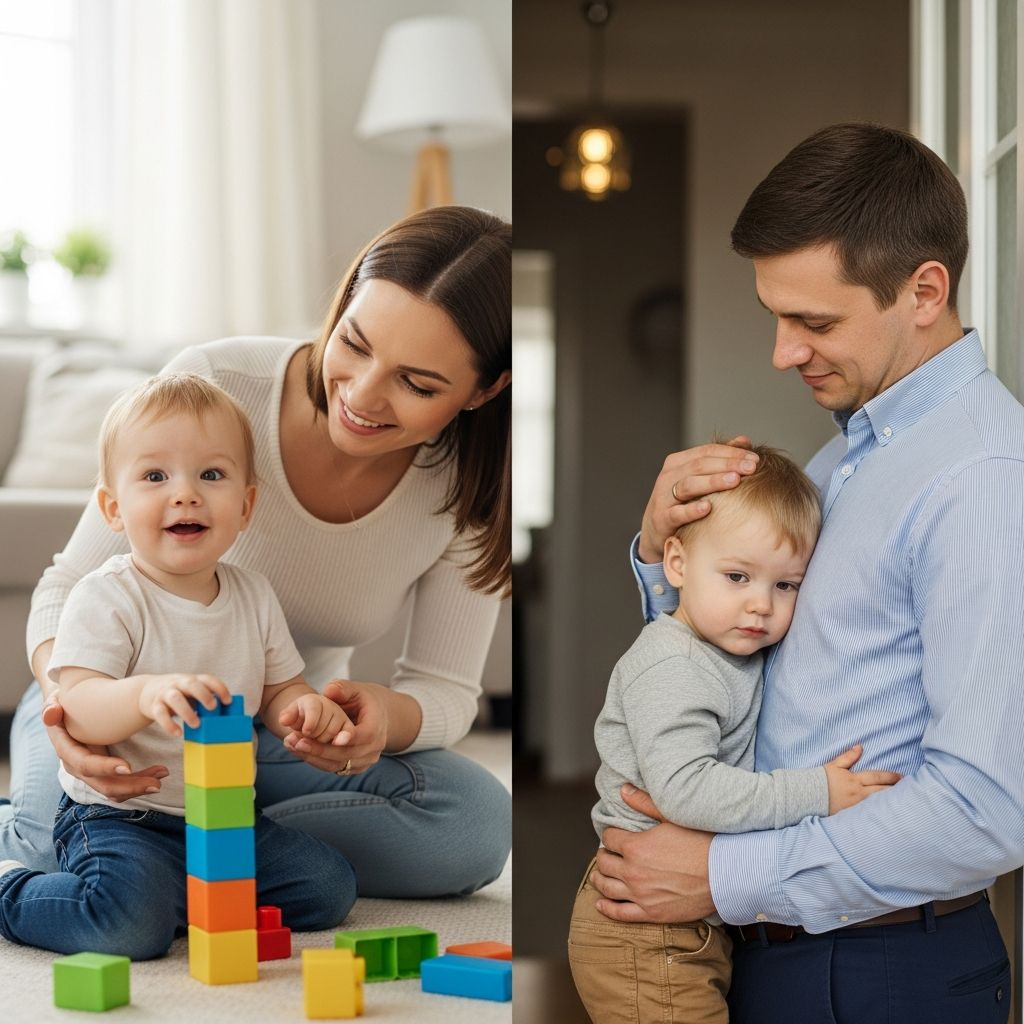
Toddlers frequently exhibit starkly different behaviors depending on which parent they interact with, a phenomenon rooted in their rapidly evolving emotional and cognitive capacities. This “parent-specific” conduct arises from secure attachment preferences, testing boundaries uniquely with each caregiver, and the distinct interaction styles parents unwittingly cultivate.
The Developmental Roots of Parent-Specific Behaviors
During the toddler years, roughly ages 1 to 3, children undergo profound brain development, particularly in the prefrontal cortex responsible for impulse control and emotional regulation. This stage coincides with heightened independence drives, where kids assert autonomy while craving security. According to research, disruptive behaviors intensify when toddlers sense varying parental responses, as inconsistent reactions reinforce negative patterns.
Attachment theory explains much of this disparity. Toddlers form primary attachments to one caregiver—often the mother due to early bonding—but use secondary attachments (like with fathers) for exploration and play. With the “safe” parent, they release pent-up emotions; with the “fun” parent, they push limits.
- Secure Base Phenomenon: One parent serves as the emotional anchor, allowing the child to vent frustrations safely.
- Exploratory Role: The other parent encourages risk-taking, leading to more energetic or defiant displays.
- Boundary Testing: Toddlers experiment with rules differently based on perceived enforcement styles.
Common Patterns in Toddler-Parent Dynamics
Observational studies reveal predictable patterns. Mothers often report toddlers as more clingy and tearful, reflecting separation anxiety and a need for reassurance. Fathers, conversely, encounter higher rates of defiance and physical outbursts, aligning with their typical role in active play.
| Behavior with Mom | Behavior with Dad | Underlying Cause |
|---|---|---|
| Clingy, whiny, emotional | Rowdy, defiant, aggressive | Safety vs. adventure seeking |
| Reluctant to explore | High energy, risk-taking | Attachment security levels |
| Frequent meltdowns | Boundary pushing | Emotional regulation practice |
These differences stem from toddlers’ limited emotional vocabulary; they communicate needs through actions tailored to each parent’s responses.
How Parental Styles Shape Toddler Reactions
Parental reactivity plays a pivotal role. In challenging scenarios, parents with lower self-efficacy experience heightened stress, leading to inconsistent discipline that perpetuates poor behaviors. For instance, a permissive parent might inadvertently encourage defiance, while a strict one provokes clinginess elsewhere.
Factors influencing styles include:
- Daily Routines: The primary caregiver handles soothing, becoming the ‘comfort zone.’
- Interaction History: Playful dads foster boisterous responses; nurturing moms elicit vulnerability.
- Stress Levels: Overwhelmed parents react punitively, amplifying disruptions.
Research shows that physiological arousal, like elevated skin conductance, correlates with harsher responses, especially in high-stress parents.
Navigating Clinginess and Separation Challenges
Clinginess peaks during transitions, driven by fear of abandonment and routine disruptions. Toddlers cling to one parent as a security signal, behaving better with the other to maintain favor.
Strategies for balance:
- Gradual separations with comfort objects to build independence.
- Consistent reassurances across parents: “Mommy/Daddy will be back soon.”
- Model calm transitions to reduce anxiety.
Managing Defiance and Aggression Across Caregivers
Defiance reflects a desire for control amid overwhelming sensations. Toddlers test limits more with the parent perceived as lenient, leading to split behaviors.
Unified approaches include:
- Offering limited choices to empower without chaos.
- Consistent consequences, discussed between parents.
- Praising cooperation to reinforce positives.
NIH studies confirm that negative reactivity exacerbates aggression, underscoring the need for synchronized parenting.
The Impact of Siblings and Family Changes
New siblings trigger jealousy, intensifying parent favoritism. Toddlers may idealize one parent while rebelling against the other to vie for attention.
Mitigation tactics:
- Equal quality time allocations.
- Involve toddlers in caregiving to foster inclusion.
- Address emotions openly to prevent escalation.
Building Emotional Intelligence in Toddlers
Fostering emotional regulation prevents entrenched splits. Teach naming feelings: “You seem frustrated—use words!” This reduces reliance on parent-specific outlets.
Long-term benefits include better peer interactions and resilience. Parents modeling self-regulation—deep breaths, timeouts—equip toddlers for independence.
Practical Tips for Parental Teamwork
Cohesion is key. Hold weekly check-ins to align on rules and share observations. Role reversal—dad soothing, mom playing—blurs distinctions.
- Establish house rules visible and co-enforced.
- Share workloads to equalize roles.
- Seek professional input if patterns persist beyond age 3.
Frequently Asked Questions (FAQs)
Why is my toddler an angel with Dad but a terror with me?
This stems from attachment dynamics: You may be the secure base for emotional release, while Dad represents fun and freedom. Align responses for balance.
Does this mean one parent is doing parenting wrong?
No—it’s normal development. Differences arise from roles, not flaws. Focus on teamwork to harmonize.
How long does parent-specific behavior last?
Typically fades by preschool (age 4-5) as emotional skills mature, with consistent parenting accelerating it.
What if behaviors include extreme aggression or withdrawal?
Consult pediatricians; rule out underlying issues like sensory sensitivities.
Can daycare influence home parent splits?
Yes, structure there contrasts home, prompting rebounds with preferred parents. Maintain routines.
Long-Term Outcomes of Balanced Parenting
Children from consistent homes show superior self-regulation and social skills. Early interventions prevent escalations into school-age issues.
Embrace this phase as growth opportunity. With patience, toddlers integrate behaviors, emerging secure and adaptable.
References
- 15 Common Toddler Behavioral Issues: Causes and Solutions — Children’s Corner Group. 2023. https://www.childrenscornergroup.com/toddler-behavioral-issues/
- Parental Reactivity to Disruptive Behavior in Toddlerhood — National Institutes of Health (PMC). 2019-04-26. https://pmc.ncbi.nlm.nih.gov/articles/PMC6469638/
- Common Behavioral Changes in Parents — Alex’s Lemonade Stand Foundation. 2023. https://www.alexslemonade.org/childhood-cancer/guides/childhood-cancer/chapter-21-communication-and-behavior/common-behavioral-0
- Toddlers and Challenging Behavior: Why They Do It and How to Respond — Zero to Three. 2023. https://www.zerotothree.org/resource/toddlers-and-challenging-behavior-why-they-do-it-and-how-to-respond/