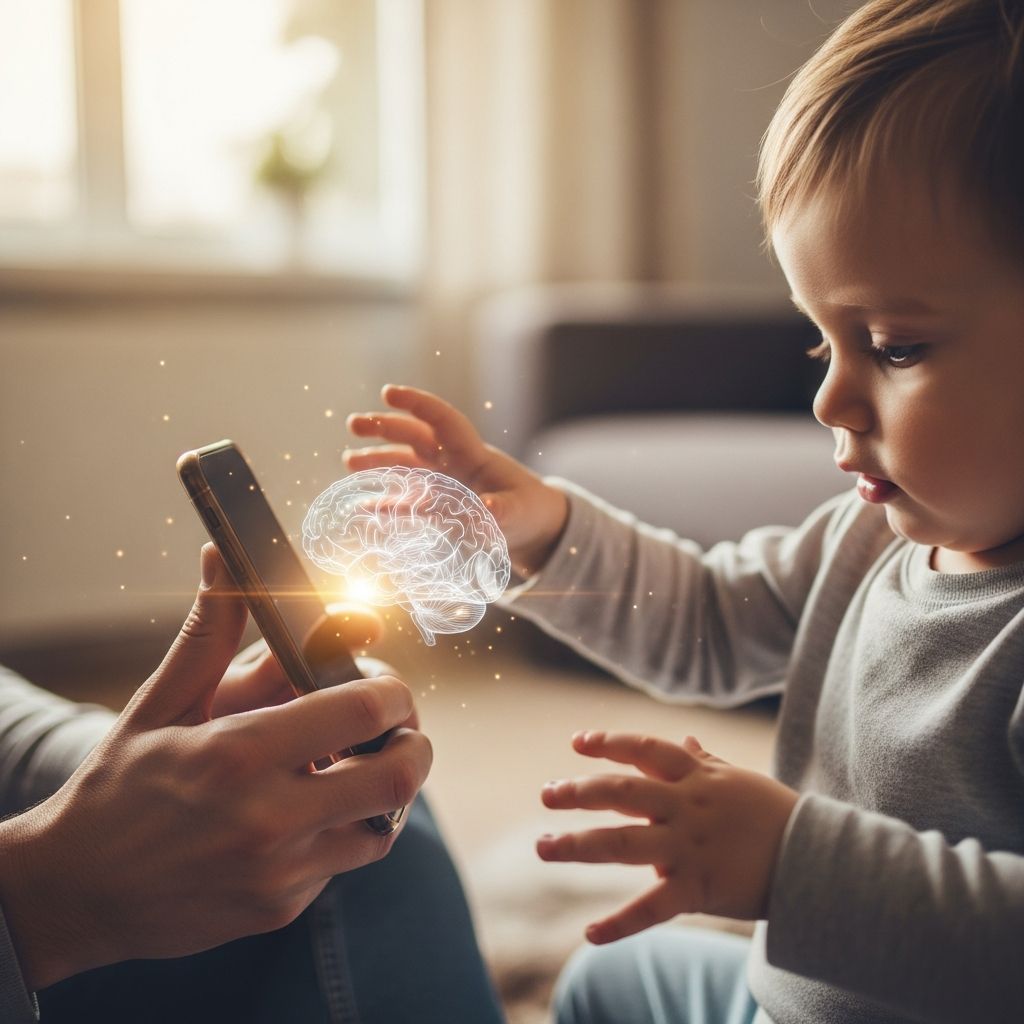
Toddlers’ intense fascination with smartphones is not mere naughtiness but a reflection of rapid brain changes around age two. This period marks a pivotal shift toward self-awareness and autonomy, making interactive devices irresistibly appealing.
The Developmental Spark: When Independence Awakens
Around 24 months, children’s brains undergo significant maturation, enabling them to recognize themselves as distinct individuals separate from caregivers. This newfound self-concept fuels a drive for control and decision-making, often expressed through everyday choices like selecting toys or clothing.
Smartphones perfectly align with this stage by offering toddlers agency: they can swipe, tap, and select content independently. This autonomy provides a sense of mastery in a world where much remains unpredictable.
- Self-Recognition Milestone: Mirror self-awareness emerges, boosting confidence in personal actions.
- Control Seeking: Devices allow child-led exploration without adult intervention.
- Emotional Security: Predictable interactions reduce anxiety in novel environments.
Attention Evolution: From Fleeting Focus to Sustained Engagement
Parallel to independence, toddlers’ attention spans lengthen to about 3-5 minutes per year of age. This capacity supports deeper immersion in activities, including digital ones, where vibrant visuals and sounds captivate prolonged focus.
Unlike static toys, apps deliver dynamic feedback, matching the brain’s reward systems and encouraging repeated plays. This synergy of timing explains why a simple game can hold a two-year-old’s gaze far longer than traditional playthings.
| Age | Average Attention Span | Common Activities |
|---|---|---|
| 1-2 years | 2-4 minutes | Simple stacking, peek-a-boo |
| 2-3 years | 4-6 minutes | Puzzles, short videos, app interactions |
| 3-4 years | 6-8 minutes | Storybooks, interactive games |
The Power of Repetition: Building Security Through Predictability
Toddlers thrive on routines, replaying videos or games obsessively to master content and predict outcomes. Repetition reinforces learning, consolidates neural pathways, and instills comfort in an ever-changing world.
Digital media excels here, offering endless loops without fatigue. A single episode or animation becomes a security blanket, helping process emotions and vocabulary through familiarity.
Intense Passions Amplified: From Dinosaurs to Digital Worlds
Young children naturally fixate on specific themes—animals, vehicles, or characters—pursuing them with fervor. Combine this with phone features, and obsessions intensify: a dinosaur app might be revisited dozens of times daily.
This pattern supports cognitive growth but risks over-dependence if unchecked. Parents often notice the shift from physical toys to screens mirroring these passions.
Screen Guidelines: What Experts Recommend
The American Academy of Pediatrics (AAP) advises no more than 1 hour daily of high-quality programming for ages 2-5, emphasizing educational, interactive content over passive viewing. Recent surveys, like the UK’s National Survey of Children’s Health, suggest moderate use doesn’t harm wellbeing metrics such as attachment or resilience.
However, emerging research highlights nuances: early exposure correlates with sleep disruptions and emotional shifts, urging tailored limits.
Risks of Early and Excessive Exposure
Studies from the Adolescent Brain Cognitive Development initiative reveal children with smartphones by age 12 show elevated depression, obesity, and sleep issues, with risks tracing back to age 4. Screens emit blue light disrupting melatonin, while dopamine surges from notifications foster craving cycles.
Parental device use, or ‘technoference,’ also impacts toddlers: interruptions elevate child anger and sadness, with physiological markers like heart rate variability signaling stress.
- Sleep Interference: Evening screens reduce sleep quality (meta-analysis of 50 studies).
- Brain Changes: Heavy use alters white matter, affecting language and self-regulation.
- Addiction Loops: Rewards trigger dopamine, making real-life stimuli seem dull.
Parental Phone Habits: The Hidden Influence
Children mirror adults; frequent parental scrolling during interactions leads to toddler frustration. Research shows technoference causes immediate emotional dips, underscoring the need for mindful presence.
Healthy Strategies: Fostering Balance and Real-World Play
Channel toddler urges constructively:
- Set Boundaries: Designate screen-free zones like meals and bedtime.
- Co-View Actively: Discuss content to build language and bonds.
- Offer Alternatives: Sensory bins, art supplies mimic digital interactivity.
- Model Behavior: Keep your phone out of reach during playtime.
- Encourage Movement: Outdoor exploration matches attention spans naturally.
Apps like PBS Kids or Duolingo ABC provide value if limited, but prioritize hands-on discovery for holistic development.
Long-Term Impacts: Building Resilient Minds
Moderate, guided screen time can enhance vocabulary and problem-solving, per observational data. Yet, over-reliance risks attention deficits and reduced peer skills. Balance evolves with age: by preschool, emphasize group play over solo device time.
Harvard experts note screens offer ‘impoverished’ stimulation versus real-world diversity, vital for sensory integration.
Frequently Asked Questions (FAQs)
Is it normal for my 2-year-old to demand my phone constantly?
Yes, it’s a sign of healthy brain growth toward independence and focus. Redirect with similar hands-on choices.
How much screen time is safe for toddlers?
AAP suggests 1 hour max of quality content daily for 2-5 year-olds; monitor for signs of over-dependence.
Does my phone use affect my child’s emotions?
Frequent distractions during interactions increase toddler anger and stress, per physiological studies.
Can screens help with learning?
Educational apps aid repetition and skills when limited, but real play trumps for brain development.
What if my toddler won’t play without a screen?
Gradually introduce engaging alternatives and consistent routines to rebuild interest in physical activities.
Conclusion: Empowering Growth Beyond the Screen
Understanding the science demystifies toddler phone obsessions, empowering parents to guide this phase positively. Prioritize connection and exploration for thriving development.
References
- It’s science: Why your toddler is obsessed with your phone — Motherly. 2023. https://www.mother.ly/life/its-science-why-your-toddler-is-obsessed-with-your-phone/
- When Childhood Meets the Glow of a Phone — Psychology Today. 2025-12. https://www.psychologytoday.com/us/blog/raising-resilient-children/202512/when-childhood-meets-the-glow-of-a-phone
- Effects of Parents’ Smartphone Use on Children’s Emotions — PMC (Peer-reviewed). 2024. https://pmc.ncbi.nlm.nih.gov/articles/PMC11764600/
- Screen Time and the Brain — Harvard Medical School. 2023. https://hms.harvard.edu/news-events/publications-archive/brain/screen-time-brain