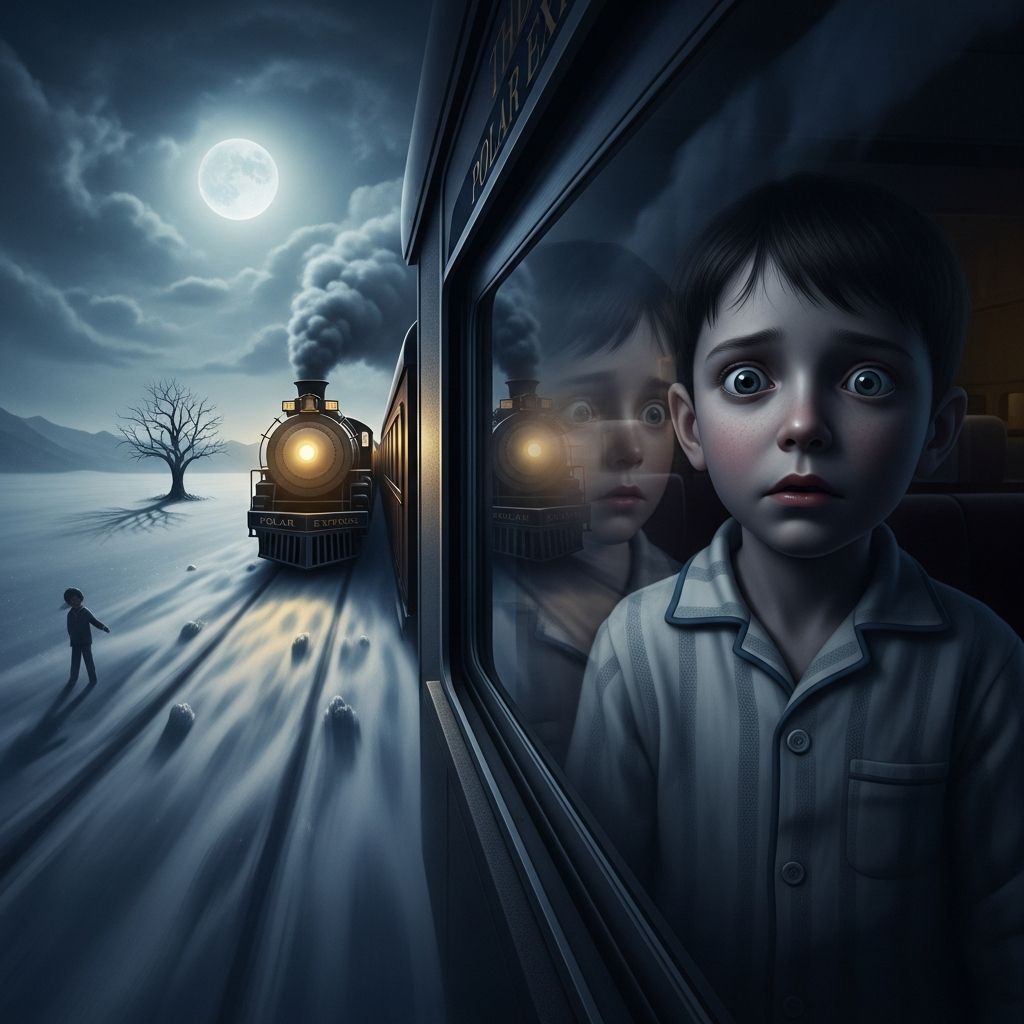
Every December, families press play on “The Polar Express” expecting a warm mug of cinematic hot chocolate and somehow end up with a full-body anxiety attack wrapped in jingle bells instead.[web:1][web:2] The film has become a holiday staple, yet its chilly tone, peril-heavy plot, and eerily animated faces raise a simple question: is this actually a kids27 movie, or an extremely elaborate seasonal fever dream?[web:1][web:2]
From Picture Book to High-Stakes Thrill Ride
Chris Van Allsburg92s original picture book is a gentle, dreamlike story about a boy who boards a magical train to the North Pole, with quiet imagery and a simple emotional arc centered on belief.[web:2] The film adaptation, however, turns that hushed bedtime feel into a near-constant roller coaster of danger, close calls, and vertigo-inducing set pieces that feel designed more for theme park ride blueprints than for children settling into pajamas.[web:1][web:2]
Instead of a reflective journey, the movie piles on spectacle: runaway train segments, collapsing ice, and high-speed chases across rooftops, all scored like an action thriller rather than a cozy holiday tale.[web:2] The core message about belief still exists, but it often feels buried under the noise of shrieking brakes and near-fatal mishaps.[web:1][web:2]
The Uncanny Valley in a Santa Hat
One of the most discussed aspects of “The Polar Express” is its pioneering use of performance capture animation, which aimed to bring a lifelike quality to the characters by mapping human performances onto digital models.[web:2] The result, however, drops the movie headfirst into the uncanny valley: faces are realistic enough to feel human, but just off enough to feel deeply wrong, especially when they smile or stare too long.[web:1][web:2]
Eyes look glassy, skin texture feels waxy, and expressions sometimes change a beat too slowly or too quickly, making even heartfelt scenes strangely unsettling.[web:2] For adults, this can be mildly distracting; for kids, it can tip sweet moments into something closer to a wide-eyed, doll-like horror show, particularly in dimly lit night scenes on the train.[web:1][web:2]
A Train Ride or a Child Safety Workshop?
On paper, a magical train that arrives at midnight to whisk children to the North Pole sounds whimsical, but the way “The Polar Express” stages that premise is surprisingly alarming when viewed through a parental lens.[web:1] A strange man appears outside in the middle of the night, invites an unsupervised child onto a vehicle going who-knows-where, and the kid simply climbs aboard in pajamas and slippers as if Stranger Danger posters never existed.[web:1][web:2]
Once the journey begins, the train becomes less a cozy mode of transport and more an obstacle course of near misses: characters almost fall off moving cars, nearly plunge through cracking ice, and repeatedly find themselves in situations that would trigger multiple safety investigations in real life.[web:1][web:2] The movie offers virtually no sense of adult oversight beyond a conductor who seems more concerned with punctuality than keeping passengers safely seated.
Peril, Peril Everywhere
Much of the film92s runtime is devoted to escalating peril, with set pieces that stretch a single risk into extended suspense sequences.[web:1][web:2] Children balance on narrow walkways, hurtle down chutes and tracks, and repeatedly skirt disaster in scenarios that would be considered extreme even for older audiences if translated into live action.[web:1]
Key examples of this amplified danger include:
- A runaway train slide across a frozen lake as the ice cracks and threatens to swallow the entire locomotive.
- Close shaves with tunnels and bridges where characters risk being crushed or thrown into the void below.
- An out-of-control journey through the North Pole on unattached cars that behave more like roller coaster carts than rail vehicles.[web:1][web:2]
These sequences are visually impressive but often overshadow the quieter emotional beats that theoretically define a holiday film about belief, generosity, and wonder.[web:2] The end result resembles a Christmas-themed action adventure more than a reflective fable.
Authority Figures With a Menacing Edge
Beyond physical danger, “The Polar Express” portrays authority figures in ways that can feel strangely threatening, especially to younger viewers.[web:1] The conductor, though played with a veneer of warmth, frequently delivers stern lectures, announces punishments, and reminds passengers of rules in a tone that leans closer to disciplinarian than kindly guide.[web:1][web:2]
In several scenes, children are told they could be expelled from the train or left behind for relatively minor missteps, raising the emotional stakes around every choice and mistake.[web:1] Even moments of attempted humor can come across as intimidation when framed through a child92s sense of vulnerability, particularly in an environment where grown-ups hold absolute power.
Belief, Surveillance, and the Santa Regime
The film92s vision of the North Pole combines classic Christmas imagery with a surprisingly rigid system of judgment and observation.[web:1][web:2] Kids are explicitly categorized as “naughty” or “nice,” and Santa92s operation relies on constant monitoring of behavior, implying that every action is watched, recorded, and tallied toward a moral scorecard.[web:1]
This surveillance theme becomes especially vivid in depictions of screens displaying sleeping children and detailed information about their choices throughout the year.[web:1] While likely intended as playful fantasy, the imagery can evoke a Big Brother-style omniscience that clashes with the comforting myth of a benevolent gift-giver and instead resembles a seasonal audit of childhood conduct.[web:1][web:2]
Elves, Crowds, and Unsettling Spectacle
When the train finally reaches the North Pole, the film trades the claustrophobic tension of the train for massive crowd scenes filled with near-identical elves chanting, cheering, and celebrating Santa92s arrival.[web:1][web:2] The sheer uniformity of these animated figures, all moving in coordinated fashion, gives the sequences a striking visual style that can also feel eerily like a rally rather than a cozy workshop.[web:1]
From overhead, the crowds form dense patterns around a towering tree and central platform, mirroring images of public spectacles more than intimate holiday gatherings.[web:2] The scale is technically impressive, but the emotional tone leans more toward awe mixed with fear than simple joy, especially as children are dwarfed by vast machinery, towering structures, and booming announcements.[web:1][web:2]
Table: Cozy Christmas or Cinematic Fever Dream?
| Element | Traditional Holiday Movie | “The Polar Express” |
|---|---|---|
| Visual style | Warm, soft, and inviting, with expressive faces. | Hyper-detailed yet uncanny motion capture that often feels eerie.[web:2] |
| Level of danger | Brief, low-stakes conflicts quickly resolved. | Multiple extended sequences of intense peril and near-death experiences.[web:1][web:2] |
| Authority figures | Kindly mentors and gentle guides. | Stern, rule-focused adults who threaten punishment and abandonment.[web:1] |
| Santa92s image | Jolly, intimate, and personal. | Distant, almost corporate leader at the center of a large-scale operation.[web:2] |
| Overall tone | Comforting, nostalgic, and reassuring. | Simultaneously magical and unsettling, with a persistent undercurrent of dread.[web:1][web:2] |
Kids, Class, and Who Deserves Magic
Beneath its snow-dusted surface, “The Polar Express” also presents an unspoken hierarchy among its child characters that raises questions about how worthiness and privilege intersect in the story.[web:1] The children differ in personality and background, yet some receive more attention, validation, or rewards than others, even when their behavior appears equally brave or generous.[web:1]
For example, characters who come from less comfortable circumstances are sometimes shown as outsiders on the train, seated apart or treated differently in ways that subtly underscore their social position.[web:1] While the narrative suggests that everyone can access Christmas magic, it often centers the experiences and growth of more privileged kids, leaving others as narrative foils rather than fully realized heroes.[web:1]
Is This Actually for Children?
Viewed through adult eyes, “The Polar Express” can feel like a film at war with itself: lavishly produced and technically ambitious, but tonally closer to a dreamlike ghost story than a soothing seasonal special.[web:1][web:2] Its most memorable sequences emphasize fear, risk, and control rather than the gentle warmth associated with many family holiday staples.[web:2]
For children, this mix can be intense, eliciting fascination and fright in unequal measure; many viewers report loving the film yet also remembering it as one of the first movies that genuinely scared them.[web:1] That tension between charm and terror may be precisely why the film endures, functioning as a kind of emotional rite of passage rather than a simple feel-good watch.
How Parents Can Frame the Experience
Despite its unsettling qualities, “The Polar Express” can still serve as a useful conversation starter for families if approached with intention rather than autopilot nostalgia.[web:1][web:2] Parents can use the film to explore topics such as safety, consent, fear, and what it means to trust adults and institutions while still listening to one92s own instincts.[web:1]
- Talk about risk: Discuss which situations in the movie felt dangerous and what safer choices might look like in real life.
- Question authority: Ask children how they felt about the conductor92s behavior and whether he always acted fairly.
- Explore belief: Use the movie92s emphasis on belief to talk about how people find meaning in traditions without needing to ignore their doubts.
By narrating the experience and encouraging critical questions, adults can transform a potentially overwhelming viewing into a thoughtful, even empowering, holiday ritual.[web:1][web:2]
FAQs About “The Polar Express” and Its Strange Appeal
Why do so many people find “The Polar Express” creepy?
Several factors contribute to the film92s unsettling reputation: the uncanny motion-capture faces, the near-constant sense of danger, and the stern authority figures who control every aspect of the children92s journey.[web:1][web:2] These elements combine to produce a mood that feels closer to a dreamlike thriller than a gentle Christmas story.
Is “The Polar Express” appropriate for young children?
Appropriateness depends heavily on a child92s sensitivity to intense imagery and suspense; the movie is rated for family viewing, but some kids may be disturbed by the peril sequences and eerie visuals.[web:1][web:2] Caregivers who know their children are easily frightened may want to preview the film or watch together with time for pauses and conversation.
Why does the animation in “The Polar Express” look so unusual?
The movie used early performance capture technology that attempted to blend live-action acting with digital characters, resulting in highly detailed but slightly unnatural movements and facial expressions.[web:2] At the time, this approach was groundbreaking, but it now stands as a textbook example of the uncanny valley effect.
Does the film still have value as a Christmas movie?
Yes, many viewers cherish it precisely because it feels different from more saccharine holiday fare, offering a darker, more ambiguous take on belief and wonder.[web:2][web:3] The film92s haunting quality, striking visuals, and memorable score create a unique seasonal atmosphere that, for better or worse, lingers long after the credits roll.
How can families make the experience less frightening?
Watching with lights on, pausing to talk through scary scenes, and framing intense moments as make-believe adventure can help dial down the fear.[web:1] Parents can also pair the film with lighter holiday activities afterward, such as reading a calmer seasonal book or doing a craft, to restore a sense of comfort.