The human penis has a distinctive silhouette: a thicker, rounded glans at the tip that often looks broader than the shaft, creating a “mushroom” or umbrella-like appearance. This shape is not random or purely aesthetic; it reflects a complex blend of anatomy, sexual function, and evolutionary pressures that have acted on human males for millions of years.
Understanding this shape can ease anxiety, bust myths, and encourage healthier conversations about sex, pleasure, and reproduction. This guide explains what the mushroom-like head actually does, how it works with the rest of the body, and why scientists think it evolved this way.
Key Takeaways at a Glance
- The “mushroom” appearance comes mainly from the glans (penis head) and the way it transitions from the shaft.
- This shape helps protect the urethra, enhance sensation, and support effective ejaculation.
- Some theories suggest the flared head may have evolved to improve reproductive success in ancestral mating environments.
- Normal penises vary widely in size, angle, and how pronounced the mushroom shape looks; variation is expected and healthy.
The Basic Anatomy Behind the Shape
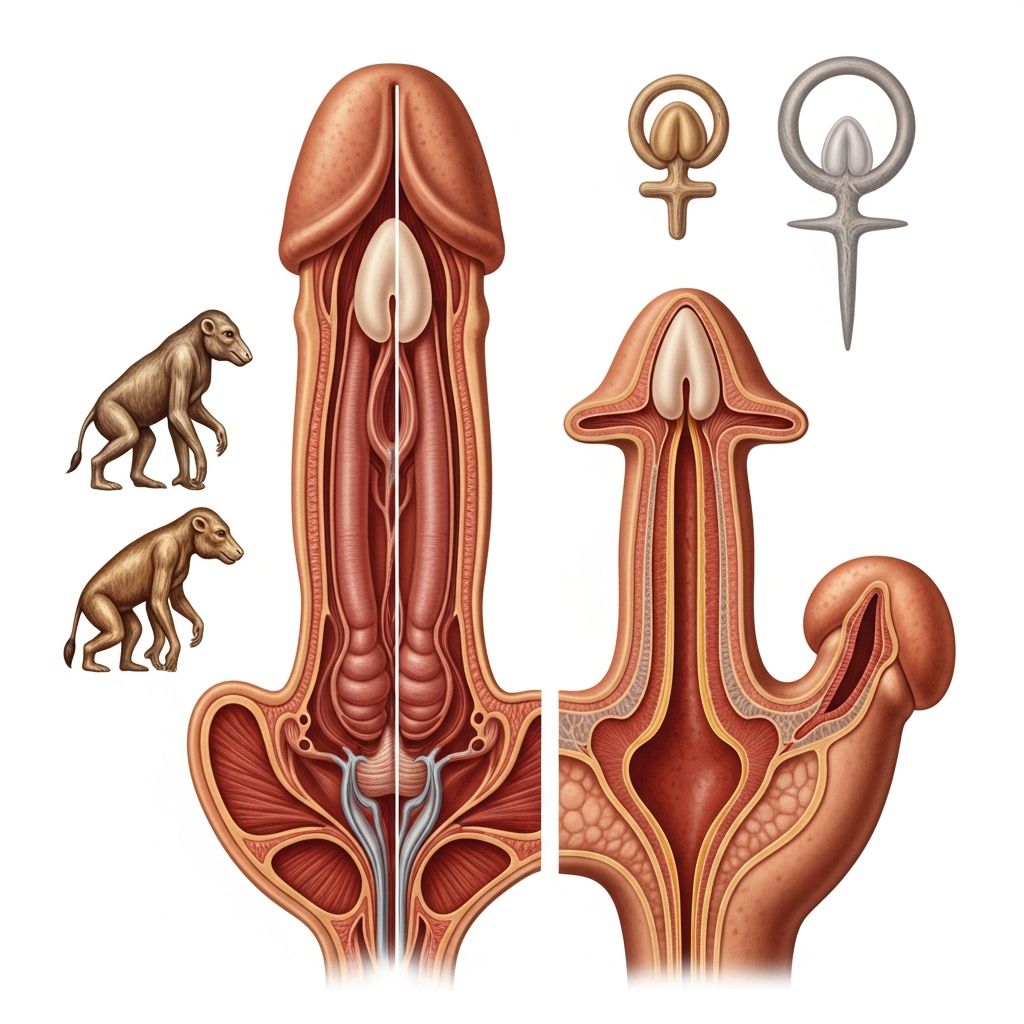
To understand the mushroom-like outline, it helps to look at how the penis is built. Structurally, it contains three main erectile cylinders: two corpora cavernosa on the top and one corpus spongiosum on the underside that surrounds the urethra. These cylinders are wrapped in specialized connective tissue that controls how blood fills and stiffens the organ during arousal.
At the tip, the corpus spongiosum expands into the glans penis, which creates the rounded, often wider head. The joining point between shaft and glans forms a noticeable ridge and slope, which many people visually interpret as the “cap” of a mushroom.
The Glans: More Than Just the “Head”
The glans is a highly sensitive, vascular structure rich in nerve endings. It plays a major role in sexual pleasure, contributing to arousal, orgasm, and ejaculation. Because the tissue here is softer and more spongy than the dense erectile columns in the shaft, it can swell and change shape more noticeably.
The glans also protects and houses the external opening of the urethra (the meatus), helping guide urine and semen out of the body. Its rounded form and central opening help maintain a clear path for ejaculation, which is important for fertility.
How Erection Mechanics Shape the Silhouette
During arousal, blood flows into the erectile tissue and becomes temporarily trapped by the surrounding tunica albuginea, a strong fibrous sheath. The corpora cavernosa create most of the rigidity, helping the shaft straighten and support penetration, while the corpus spongiosum and glans remain somewhat softer to protect the urethra and create a cushioned tip.
This difference in stiffness means the shaft often appears more cylindrical and firm, whereas the glans retains a rounded, swollen look. The contrast exaggerates the “cap” effect: a solid stem ending in a softer, enlarged dome.
Evolutionary Ideas: Why This Shape May Have Been Favored
Researchers in evolutionary biology have proposed several hypotheses for why the human penis developed its particular shape. Humans lack a penile bone (baculum), so erection depends entirely on blood flow and connective tissue rather than a rigid internal rod, leading to a flexible but still stable structure. Some scientists argue that certain aspects of the glans, including its flare, could reflect adaptations related to mating behaviors in ancestral populations.
Ideas range from enhanced stimulation to more efficient ejaculation and potential competitive advantages in multi-partner mating environments. None of these theories can be proven beyond doubt, but together they suggest that the mushroom-like form may have offered functional benefits rather than being a simple accident of anatomy.
Function Over Form: What the Shape Actually Does
When thinking about the mushroom appearance, it is useful to focus on function first. The penis needs to achieve several biological tasks during intercourse and ejaculation, and the shape supports these tasks.
- Comfort and safety during penetration: The softer, broader glans can help reduce tissue trauma during thrusting and acts as a kind of buffer.
- Focusing stimulation: The change in diameter where the shaft meets the glans concentrates nerve-rich tissue near the tip, which can intensify sensations.
- Efficient ejaculation: The arrangement of the urethra and surrounding tissues helps direct semen forward with force.
Normal Variation in Mushroom-Like Appearance
Not every penis looks equally “mushroomy.” Some glans are only slightly wider than the shaft; others flare much more noticeably. Differences in circumcision status, natural skin coverage, shaft thickness, and overall size all influence how pronounced the shape appears.
Key variations include:
- Glans width: Some men have glans that are significantly wider than the shaft, while others have almost straight-line transitions.
- Ridge definition: The coronal ridge (where the glans meets the shaft) can be sharp and prominent or subtle and gently sloping.
- Color and texture: The glans often has a different color and slightly different surface texture than the shaft, emphasizing the “cap” visually even when size differences are small.
Penis Shape, Foreskin, and Visual Perception
Circumcision can change how noticeable the mushroom-like outline appears. In uncircumcised men, the foreskin may partially or fully cover the glans when flaccid, producing a smoother columnar look. During erection, the foreskin usually retracts, revealing the glans and making the mushroom shape more obvious.
In circumcised men, the glans is typically visible all the time, so the flared shape stands out even when the penis is not erect. Over time, exposure to friction and air can slightly alter the surface of the glans, but the fundamental structure remains the same.
Penis Shape and Sexual Pleasure
The glans contains a high density of nerve endings that respond to touch, temperature, and pressure. Many men report that the area around the rim of the glans is especially sensitive, likely due to the abrupt change in tissue thickness and the clustering of sensory receptors.
Partners can also experience the shape during intercourse. The broader head and defined ridge may create distinct sensations along the vaginal or anal walls during thrusting, although sexual pleasure always depends on many factors beyond anatomy, including arousal, lubrication, communication, and emotional connection.
Theories About Reproductive Advantage
Some scientists argue that the flared glans could have helped ancestral males achieve higher chances of successful fertilization in environments where women might have had multiple partners in a relatively short time frame. One idea is that certain shapes may have helped more effectively deliver semen deeper into the reproductive tract.
Another debated hypothesis suggests that specific contours might influence how fluids are displaced within the vagina during intercourse. These ideas remain controversial and are difficult to test directly, but they highlight how researchers attempt to link modern anatomy to ancient reproductive challenges.
Table: Structural Features and Possible Functions
| Feature | Physical Description | Main Functional Roles |
|---|---|---|
| Glans (head) | Rounded, often wider than shaft; soft, spongy tissue rich in blood vessels | Enhances sensation, protects urethral opening, shapes the mushroom-like tip |
| Coronal ridge | Noticeable border where glans meets shaft; can be subtle or pronounced | Accentuates shape change, focuses tactile stimulation, influences friction patterns |
| Corpus spongiosum | Single erectile body along underside of shaft expanding into the glans | Protects urethra during erection, supports ejaculation, contributes to head shape |
| Corpora cavernosa | Two larger erectile columns on dorsal side of shaft | Provide most of the rigidity, forming the “stem” below the mushroom-like head |
| Foreskin (if present) | Fold of skin that may cover the glans when flaccid | Protects glans, affects lubrication and sensitivity, alters visual prominence of the mushroom shape |
Common Myths About Penis Shape
Popular culture and pornography have created unrealistic expectations about how a penis “should” look. In reality, there is no single correct amount of flare, angle, or size. Myths about shape often increase insecurity without any medical basis.
- Myth: A more dramatic mushroom shape is always better. In truth, pleasure and function depend on many factors; extreme differences in glans width do not automatically mean superior performance.
- Myth: A straight, unflared penis is abnormal. Many healthy men have relatively uniform shafts and glans, with only slight transitions in width.
- Myth: Shape alone determines fertility. Sperm quality, timing, overall health, and partner factors all matter more than minor cosmetic differences in outline.
When Shape Might Signal a Medical Issue
Although wide variation is normal, sudden changes in shape, color, or curvature can occasionally indicate a medical problem. Conditions such as Peyronie’s disease, infections, or trauma can alter the outline or make erections painful.
Men should consider seeking medical advice if they notice:
- New or rapidly increasing curvature during erection.
- Noticeable lumps or hard plaques under the skin.
- Significant pain during arousal, intercourse, or ejaculation.
- Persistent swelling, discoloration, or discharge.
Body Image, Porn, and Realistic Expectations
Because pornography tends to feature select performers with particular body types, many viewers internalize skewed ideas of what is “normal.” This can lead to anxiety about glans size, flare, or overall symmetry. In reality, studies and clinical observations show an enormous range of shapes and proportions among healthy men.
Focusing on function, comfort, and mutual pleasure rather than exact shape can make sexual experiences more satisfying. Open communication with partners typically matters more for intimacy than any particular anatomical detail.
Practical Sexual Health Tips
Understanding anatomy is only one piece of sexual well-being. Taking care of the penis, regardless of its shape, helps preserve sensitivity, comfort, and confidence.
- Use adequate lubrication during partnered sex and masturbation to reduce friction and irritation.
- Maintain regular hygiene, gently cleaning the glans and, if present, beneath the foreskin with water and mild soap.
- Practice safer sex (for example, with condoms) to reduce the risk of sexually transmitted infections.
- Discuss concerns about shape, function, or discomfort with a qualified healthcare provider rather than relying solely on online images or anecdotes.
Frequently Asked Questions (FAQ)
Is a strong mushroom shape more “evolved” or better?
No. Evolution does not aim for a single “best” version of the penis, and human variation is normal. A pronounced or subtle glans flare can both be healthy and functional, and neither automatically makes a man more virile or capable.
Does penis shape affect pregnancy chances?
Minor differences in glans width or silhouette have little impact on fertility in modern humans. Factors such as sperm count, overall health, timing of intercourse relative to ovulation, and partner reproductive health are much more important for conception.
Can I change the shape of my penis naturally?
There is no reliable, medically supported method to permanently change the natural shape of the glans or overall outline without surgery, and cosmetic procedures carry risks. Most medical organizations advise focusing on function, safety, and psychological well-being rather than chasing dramatic cosmetic changes.
Why does my penis look less mushroom-like when flaccid?
When not erect, blood volume in the glans and shaft is lower, so the contrast in width is often less striking. In uncircumcised men, the foreskin may also smooth out the visible transition between shaft and head when flaccid.
Should I worry if one side of the glans is slightly uneven?
Minor asymmetry is common in many body parts, including the penis. As long as there is no sudden change, pain, or difficulty with urination or sex, slight unevenness is usually just part of individual variation.
Embracing Natural Diversity
The mushroom-like appearance of the penis emerges from how the glans, shaft, and internal tissues work together to support arousal, pleasure, and reproduction. Far from being a simple visual quirk, this shape reflects millions of years of biological fine-tuning for tasks like safe penetration and effective ejaculation.
Recognizing that healthy penises come in many shapes and sizes—with more or less pronounced “mushroom” features—can reduce anxiety and encourage more open, informed conversations about sexual health. Understanding function, rather than chasing an imagined ideal, is the key to confidence and satisfaction.