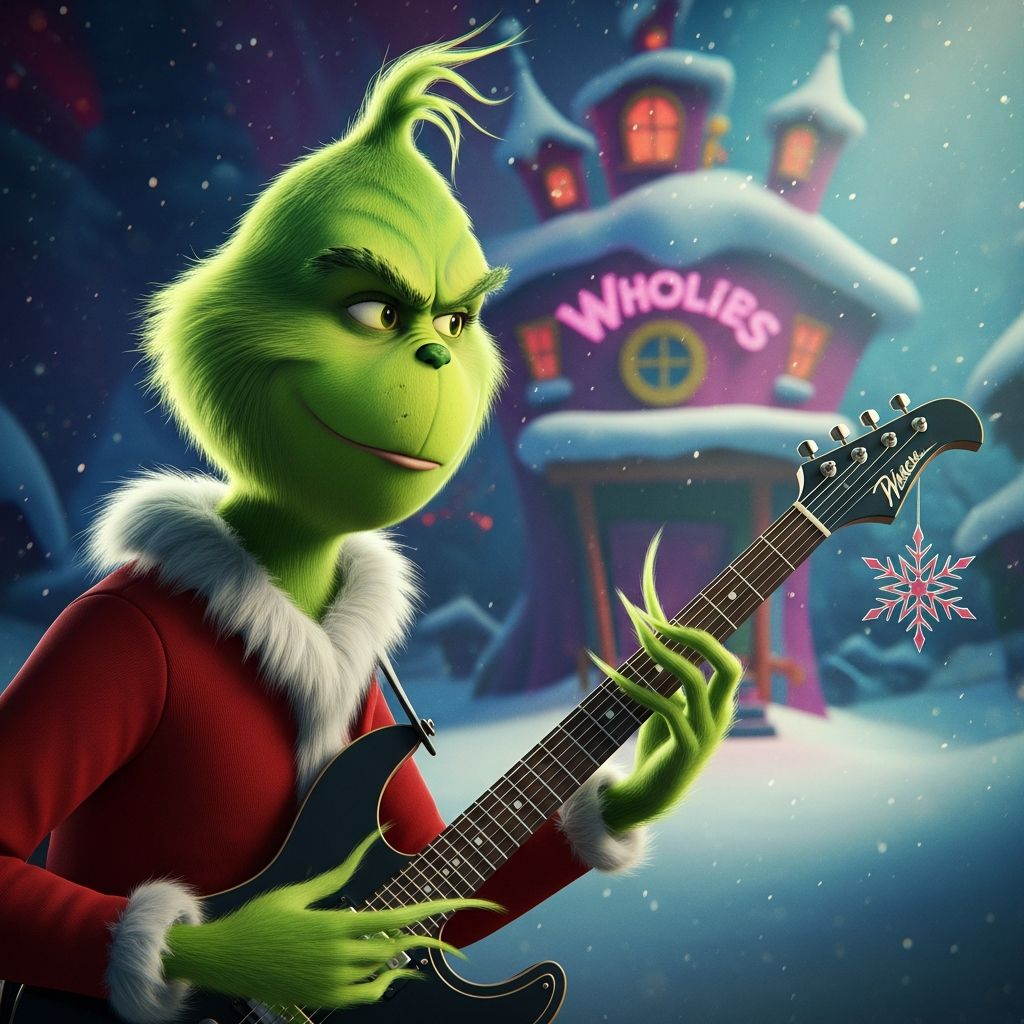
The Grinch has always been more than a green grouch; he is a yearly check-in on how families think about kindness, community, and what really matters at the holidays. A new, high-energy Grinch theme song flips the quiet, sneering villain into something bolder and more swaggering, and that shift is exactly why it resonates with today’s parents and kids.
Instead of gently tiptoeing around the character, the new song leans into a big, confident sound that feels closer to what kids actually hear on playlists and in games, while still keeping the Grinch weird, spiky, and a little bit dangerous in the best way.
From Creepy Crooner to Holiday Antihero
The original Grinch song is a slow-burning roast set to a sneaky, theatrical melody. It paints the Grinch as a shadowy, almost mythical creature—more monster than neighbor. That tone made sense when kids’ holiday TV specials felt like event programming and villains needed to be obviously bad from the first note.
The new theme, by contrast, treats the Grinch less like a fairy-tale monster and more like a recognizable, over-the-top grump—a character your kids might joke about, imitate, or even root for before his inevitable change of heart. The sound is punchy, modern, and deliberately cool, designed to sit alongside the pop, hip-hop, and genre-blended tracks that families already stream all season.
Why a Modern Grinch Song Matters for Parents
Parents today are balancing a strange mix: nostalgia for the specials they grew up with, plus a never-ending flow of new content pushed at their kids. Holiday music is no exception. A modern Grinch track that actually works becomes a rare win: something adults can recognize as part of a beloved story while kids hear it as fresh, current, and replayable.
- It gives parents a shared cultural touchpoint with kids instead of relying on dusty reruns.
- It offers a way to talk about character, growth, and empathy using sounds that feel contemporary rather than old-fashioned or preachy.
- It helps the Grinch remain a living character instead of a museum piece trotted out once a year.
How the New Song Reimagines the Grinch
Musically, the newer approach tends to swap slinky orchestration for heavier beats, sharper rhythms, and more attitude in the vocal delivery. The lyrics still drag the Grinch’s worst qualities into the spotlight, but they do it with a wink rather than a whisper, more rap battle than bedtime story.
This reimagining does not soften the Grinch; it reframes him. Instead of a distant villain in a cave, he becomes a hyper-stylized outsider whose bad mood is loud enough to fill the room. That change matters for kids used to seeing antiheroes in movies, games, and superhero franchises. The Grinch feels like he belongs in their media universe, not just in their grandparents’ VHS collections.
Classic vs. Contemporary Grinch: Key Differences
To understand why the new theme song strikes a chord, it helps to compare the emotional and sonic roles of the old and new versions side by side.
| Element | Classic Grinch Song | Modern Grinch Theme |
|---|---|---|
| Overall vibe | Theatrical, sneaky, and slow; feels like a musical villain’s monologue. | Bold, rhythmic, and confident; feels like a character anthem with swagger. |
| How kids experience it | Spooky and funny, but a bit old-school in tone and instrumentation. | Energetic and playlist-friendly; sits comfortably between modern pop and hip-hop. |
| Role in the story | Defines the Grinch as an almost untouchable monster from the outside. | Highlights the Grinch as a flawed main character whose bad attitude is part of his persona, not his entire identity. |
| Appeal to parents | Triggers nostalgia and love for classic holiday specials. | Offers something that does not feel dated on repeat while still living inside the same story world. |
| Rewatch/replay factor | Fun to revisit occasionally as a seasonal ritual. | Designed for high replay value, especially on streaming platforms and playlists. |
What Kids Hear That Adults Might Miss
Adults often focus on whether a new version is “as good as” the original, but kids listen for different things. For them, a great holiday track is one they can move to, mimic, and mash up with whatever else they are into at the moment. A driving beat, clear hooks, and dynamic vocal delivery matter more than perfect fidelity to the past.
That is where the updated Grinch song shines. Its pacing and energy invite kids to stomp, dance, and quote their favorite lines, turning a passive viewing experience into an active one. When kids chant Grinch lines around the house, they are playing with the story, not just consuming it, and that playful engagement helps keep the moral of the tale close by.
Is the New Grinch Too Cool for Its Own Good?
Some parents worry that making the Grinch sound cool might glamorize his bad behavior. That is a fair concern, especially in a media landscape where antiheroes often overshadow the lessons they are supposed to learn. The key distinction with a well-crafted Grinch song is that the cool factor is attached to the storytelling, not the cruelty.
The lyrics and visuals still underline that the Grinch’s isolation and bitterness hurt him as much as they hurt anyone else. The modern track amplifies his larger-than-life personality, but the story does not reward his worst instincts. The arc—from cold-hearted thief to humbled guest at the Whos’ table—remains intact, framing his transformation as the real payoff.
How to Share the New Song with Your Kids
Instead of treating the new theme as a replacement for the original, treat it as another entry in a long, evolving musical conversation about the same character. Framing it that way helps kids see that stories can grow with each generation.
- Play the new song during everyday activities: in the car, while decorating, or while baking, so it becomes part of your family’s holiday soundscape.
- Pair it with a viewing of the associated movie or special so kids can connect the sound to the story’s emotional beats.
- Afterward, ask your kids what version of the Grinch they like better and why; you might be surprised by how clearly they articulate what the music makes them feel.
Talking About Villains, Feelings, and Change
The Grinch is a perfect on-ramp for conversations about big feelings: anger, loneliness, jealousy, and the fear of not belonging. A modern, high-impact song can open that door more easily than a quiet, vintage track because it already has your child’s attention.
Use the song as a prompt. Ask questions like, “Why do you think he acts like this?” or “What would you say to someone who felt this grumpy at the holidays?” These conversations help kids see villains as characters shaped by experiences, not just as people who are “bad for no reason.” That nuance underpins empathy, one of the core themes of the Grinch story.
Balancing Nostalgia with New Traditions
For many parents, the hardest part of embracing a new Grinch song is the quiet sense of loss that comes with realizing their childhood soundtrack is no longer the default. That feeling is valid, and it is also a sign that the story’s power runs deep. The trick is to make space for both versions rather than pitting them against each other.
- Design a “Grinch night” where you watch an older special and a newer adaptation back-to-back.
- Create a playful “Grinch playlist” that mixes the classic song, the modern theme, and even a few remixes or covers.
- Tell your kids what the older version meant to you growing up, then ask what the new one means to them now.
Why Reinventing Holiday Music Keeps Stories Alive
Holiday stories survive not because they stay identical, but because every so often, someone takes a risk and updates how they look and sound. A new Grinch theme song that leans into contemporary production and performance is part of that cycle. It ensures that a character created decades ago does not get trapped in a single era’s aesthetic.
For families, that reinvention is practical as well as artistic. It prevents the holiday playlist from becoming something kids tolerate rather than love. When the soundtrack evolves, the story feels like it belongs to them too, not just to the adults in the room.
Simple Ways to Make the Most of the New Grinch Anthem
If you want to fold the new theme into your seasonal routines in ways that feel intentional rather than random, a few small rituals can help. Think of the song as a recurring signal that holiday time has officially begun.
- Use it as your family’s “tree decorating kickoff” track: once the Grinch anthem plays, ornaments come out.
- Turn it into a silly, yearly dance break where everyone, including the resident grump, has to move for the full length of the song.
- Pair it with a reading of the original book later in the season, highlighting how the same character can be experienced through very different tones.
Frequently Asked Questions About the New Grinch Theme Song
Does a modern Grinch song change the message of the story?
No. A more energetic sound changes how the character feels moment to moment, but the core arc remains the same: a bitter outsider learns that community and care matter more than gifts and noise. The style may be updated, but the moral still points toward empathy, generosity, and the idea that people can choose to grow.
Is the new song appropriate for young kids?
For most families, yes. The attitude is bigger and the sound is more intense, but the content still focuses on the Grinch’s grumpiness rather than anything truly frightening or inappropriate. If your child is sensitive to loud or aggressive music, consider introducing it at a low volume while they watch the associated scenes so they can connect it with a familiar story context.
Will my kids forget the classic version if we lean into the new one?
Not if you treat both as part of the same holiday universe. Kids are used to franchises with multiple timelines, styles, and spinoffs, so they can easily understand that the Grinch they hear in one song is the same character they encounter in another. By weaving both versions into your traditions, you give them a richer, more flexible sense of holiday storytelling.
How can I talk to my kids about the Grinch’s behavior without sounding like I am scolding them?
Start from curiosity rather than correction. Ask what they notice about how the Grinch feels and acts, then reflect their own observations back to them with gentle follow-up questions. Framing it as a shared investigation—“What do you think made him so mad?”—helps kids practice empathy without turning the conversation into a lecture.
What if I just do not like the new version?
That is completely fine. You do not have to force yourself to love it to acknowledge why it lands for your kids. Consider letting them have “their” Grinch song while you keep the classic as your personal favorite. Sharing a character across generations, even through different sounds, can be part of what makes the story feel bigger than any single adaptation.
Letting the Grinch Grow with Your Family
Every time a new Grinch theme song drops, it offers a small snapshot of where pop culture—and parenting—is right now. The latest incarnation is loud, playful, and surprisingly self-aware, which mirrors the way many families navigate holidays filled with both joy and stress. Instead of seeing this update as a threat to the original, it can be embraced as proof that a well-told story can outlive any one version of itself.
When a modern Grinch track actually works, it turns an old-school villain into a flexible tool for talking about mood, change, and community. That is the real magic: not just a song that bangs, but a soundtrack that keeps giving families new reasons to gather, listen, and grow together.