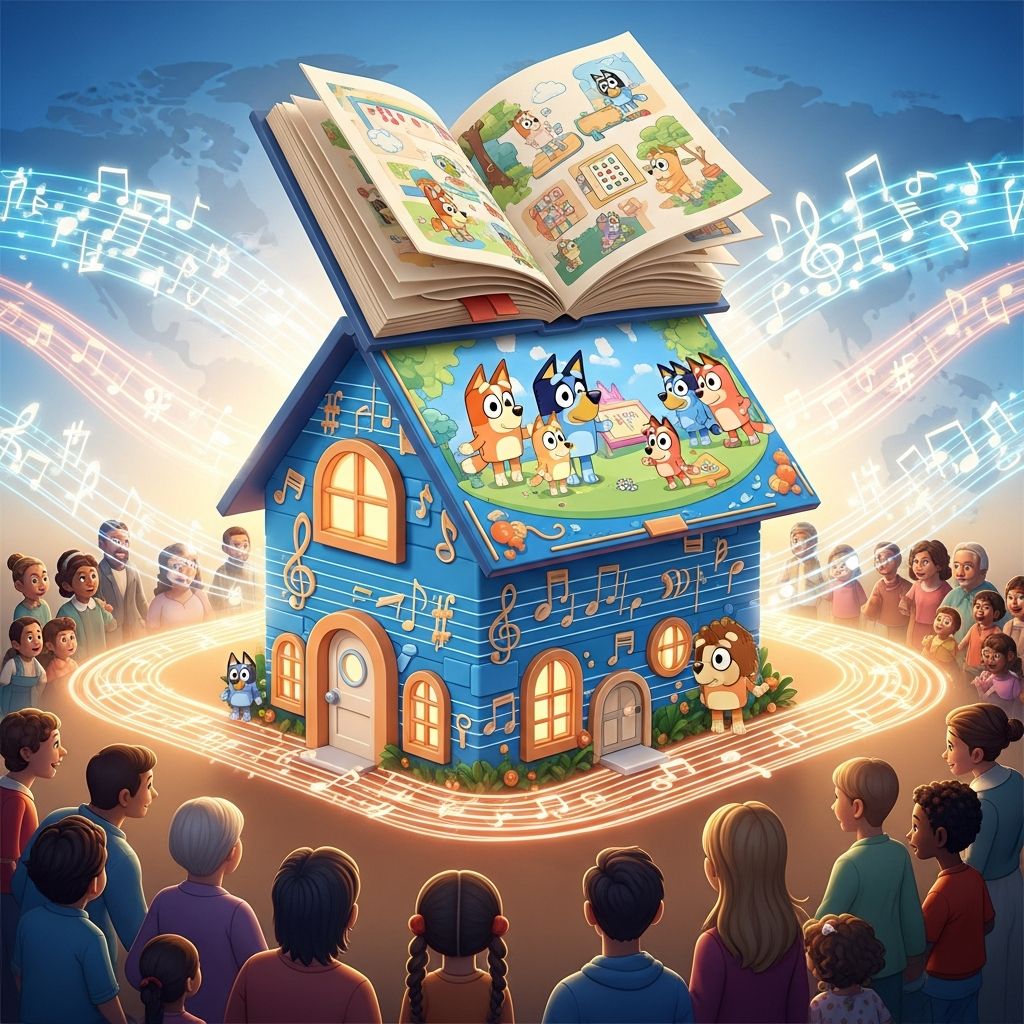
In just over twenty seconds, the Bluey theme song introduces a family, sets a mood, and quietly explains what the show is really about: play, connection, and everyday magic. For many homes, those few bars of music have become a daily ritual, signaling not just a TV show, but shared time together.
This article unpacks how the theme was crafted, why it works so well for young children and adults, and what its tiny musical details reveal about the values at the core of Bluey’s storytelling.
The Show Behind the Song: Bluey’s World in Brief
Before zooming into the theme itself, it helps to understand the series it represents. Bluey is an Australian animated series about a dog family – parents Bandit and Chilli and their daughters Bluey and Bingo – navigating ordinary days full of imaginative play and emotional growth.
- Format: Short, self-contained seven-minute episodes centered on pretend games and everyday situations.
- Focus: The joys and challenges of parenting, sibling relationships, and friendships, all shown with warmth and realism.
- Audience: Preschoolers are the primary viewers, but storylines and humor are deliberately designed to engage parents too.
Researchers who analyzed episodes of Bluey found that nearly half contained a clear resilience message, often guided by caring adults, highlighting themes like emotional regulation, problem-solving, and empathy. That emotional sophistication needed a theme song that felt playful and simple on the surface, but could carry deeper weight underneath.
First Impressions: What Viewers Hear in the Opening Seconds
The Bluey theme does a remarkable amount of narrative work almost instantly. Even without seeing the visuals, listeners can grasp three core ideas:
- This is about a family: Each character’s name is sung or spoken in turn, underscoring that the show is about relationships, not just a single hero.
- This is about play: The bouncy rhythm and call-and-response feel echo children’s playground chants and circle games.
- This is about inclusion: The way the voices overlap, giggle, and interact invites the viewer to feel like part of the game.
Music psychologists note that short, repetitive motifs with clear rhythms help young children recognize and anticipate patterns, making them ideal for early childhood television. The Bluey theme leans into that principle while still feeling fresh and characterful.
How the Theme Song Mirrors Everyday Family Life
The opening sequence doesn’t just list the characters; it stages a tiny family game. This structure reflects the show’s deeper interest in how play supports child development and family connection.
| Element in the Theme | What Happens | What It Signals About the Show |
|---|---|---|
| Characters being called out | Each family member is named in turn over the music. | Highlights the importance of each person in the family system. |
| Playful musical stops and starts | Instruments drop out or build up to match on-screen movement. | Shows that play itself drives the action and pacing. |
| Group shout of “Bluey!” | The family unites in one joyful call. | Suggests that the show’s center is shared joy, not solo heroics. |
Developmental researchers emphasize that parent–child play is a powerful way to build language, self-regulation, and social skills. By literally turning the family roll call into a musical game, the theme tells parents, “Play with your kids; this is where the magic happens.”
Crafting the Sound: Simplicity That’s Secretly Sophisticated
Behind the apparent simplicity of the theme is careful composition work. While details of the specific production belong to the show’s creative team, certain choices are clear from listening:
- Major key, bright tempo: These choices communicate safety, optimism, and fun – a musical space where kids can relax and explore.
- Repetitive motifs: Short, looping phrases help preschoolers anticipate what comes next, giving them a sense of mastery and participation.
- Acoustic and playful textures: The sound palette feels organic and friendly rather than cold or mechanical, matching the show’s grounded, domestic setting.
- Dynamic shifts: Subtle changes in volume and instrumentation match on-screen action, reinforcing the idea that music and play are tightly woven.
From an educational standpoint, repeated exposure to predictable musical patterns can support early listening skills and attention. By tying these patterns to character names and visual cues, the theme unobtrusively strengthens recognition and memory each time children hear it.
Personality in Sound: How Each Character Is Framed
Bluey’s theme song does more than introduce names; it hints at personality types and family roles in seconds. This mirrors how the series itself uses everyday episodes to explore temperament, parenting approaches, and sibling dynamics.
- Bluey: Typically framed with peak energy, reflecting her curiosity, leadership in games, and emotional intensity.
- Bingo: Often associated with slightly softer delivery, which resonates with her more sensitive, sometimes anxious nature.
- Bandit and Chilli: Presented as part of the same playful chorus, underscoring that they are with the kids in the game rather than distant authority figures.
Scholars who have examined the series note that Bluey portrays parents as active participants in play, modeling resilience and emotional communication rather than simply correcting behavior. The theme’s unified family vocal moment subtly underlines that approach from the first frame.
Why Kids Can’t Skip It: Ritual, Repetition, and Comfort
Many young viewers insist on watching the Bluey intro every time, even when streaming platforms allow them to skip. That insistence is not just habit; it reflects how children use ritual to create a sense of stability.
Child development research shows that predictable routines and repeated experiences help children feel secure and can even reduce anxiety during transitions. The theme song functions as a micro-routine:
- Beginning cue: It sets the expectation that a fun, emotionally safe story is starting.
- Shared participation: Kids often sing along, call the names, or shout “Bluey!” at the end, transforming passive viewing into active engagement.
- Family bonding: Parents who join in turn the intro into a tiny but meaningful family tradition.
Over time, this repetition can link the sound of the theme to feelings of warmth and togetherness, reinforcing the show’s core message that ordinary moments – including some silly singing on the couch – matter deeply.
A Theme That Teaches Without Preaching
Because Bluey often weaves in lessons about resilience, empathy, and coping, it is easy to overlook how the theme song itself quietly teaches skills without a single explicit line of dialogue. Researchers who have analyzed episodes highlight recurring elements like emotional communication and problem-solving as key parts of the show’s impact.
The theme contributes by:
- Modeling turn-taking: Each character gets a clear moment, echoing how children learn to share conversational space.
- Reinforcing naming and identity: Repeated character names support language development and help very young viewers keep track of who is who.
- Showing cooperative joy: The final group shout demonstrates collective enthusiasm rather than spotlighting one character as the sole star.
This aligns with broader findings that play-based media can promote social skills and self-regulation when adults are portrayed as responsive, emotionally attuned partners in children’s worlds.
Why the Theme Resonates With Adults Too
Bluey has become known as a rare children’s show that many parents actively enjoy. While much of that comes from the nuanced writing and emotional depth of the episodes, the theme song plays its part in drawing adults in.
For caregivers, the intro can evoke:
- Nostalgia: The structure feels like classic kids’ TV, but with modern humor and emotional honesty.
- Relatability: The sound of a cheerful roll call of family members mirrors real-life moments of gathering everyone and calling names.
- Reassurance: Parents know that after this familiar musical cue, they will see parenting struggles and joys reflected back with empathy rather than judgment.
Family researchers have noted that Bluey often portrays parents’ imperfections with kindness, emphasizing connection and repair rather than perfectionism. The upbeat, non-judgmental feel of the theme sets that tone right from the start.
Bluey’s Theme in the Bigger Landscape of Kids’ TV Music
Children’s shows have long used catchy intros to hook young viewers, but Bluey’s approach stands out for how closely its music is tied to developmental and relational ideas. Compared with more frenetic, heavily synthesized themes, Bluey’s intro offers:
- Moderate pacing: Fast enough to energize, but not so rapid that it overwhelms attention.
- Emotional subtlety: Rather than loud sound effects or aggressive hooks, it leans on warmth and humor.
- Family-centered focus: The spotlight stays on shared play, not on flashy powers or external stakes.
This matches the show’s broader philosophy: instead of extraordinary adventures, Bluey finds depth in “for real life” moments – bedtime routines, grocery shopping, road trips – and shows how those can be transformed through imagination. The theme song is the sonic version of that philosophy: small, familiar, and quietly profound.
Practical Takeaways for Parents From a 20-Second Song
Parents who want to bring some of the Bluey ethos into their own homes can look to the theme song for simple, actionable ideas. It demonstrates that you do not need elaborate setups to make everyday life feel playful and connected.
Inspired by what the intro models, caregivers can try:
- Create your own family roll call: Sing or chant each person’s name at the start of a game, car ride, or meal. Let kids take turns leading.
- Use music as a transition tool: A short song or chant can ease shifts between activities, much like the Bluey theme eases kids into story time.
- Invite participation: Pause to let children shout a final word, add a clap, or invent a new ending.
- Keep it light: The point is not musical perfection but shared laughter and presence.
Developmental experts stress that such small, repeated moments of shared play help build secure relationships and support resilience in children. In that sense, the theme song is not just marketing for a show – it is a tiny, recurring demonstration of what responsive, playful parenting can look and sound like.
Frequently Asked Questions About the Bluey Theme Song
Why do preschoolers love the Bluey theme so much?
Young children are drawn to the theme because it is short, predictable, and strongly rhythmic. The repeated names and clear structure let them anticipate what comes next and participate by singing along, which supports their sense of competence and belonging.
Does the theme song really have educational value?
Indirectly, yes. While it is not a teaching song in the traditional sense, it reinforces language (names, turn-taking), listening skills, and social cues about cooperation and family roles. This complements the show’s evidence-based emphasis on resilience, emotional communication, and problem-solving.
How does the theme reflect Bluey’s approach to parenting?
The intro presents parents and kids as part of the same playful team, which mirrors how episodes portray adults: fully engaged in imaginative play, modeling coping skills, and treating children’s emotions with seriousness and respect instead of dismissing them.
Why doesn’t Bluey use a louder, more action-packed theme like some other kids’ shows?
The show is built around everyday family life and the quiet power of imagination, not high-stakes danger or spectacle. A warmer, more measured theme song supports that identity and helps create a calm yet joyful viewing environment for young audiences.
What can parents learn from the theme for their own routines?
Parents can borrow the idea of a short, repeatable musical ritual to mark daily transitions – for example, a custom family chant before bedtime or leaving the house. Consistent, playful cues like these can make routines smoother and more connected.
References
- What Is the Story of Bluey? A Look at the Meaning Behind the Series — Merchandise4All Blog. 2023-08-15. https://www.merchandise4all.com/en/blogs/leeshiermeeroverjefavorietehelden/what-is-the-story-of-bluey-a-look-at-the-meaning-b/
- Researchers watched 150 episodes of Bluey. Here’s what they found — The Independent. 2024-01-10. https://www.the-independent.com/arts-entertainment/tv/news/bluey-bingo-episode-characters-lessons-b2843637.html
- From “For Real Life?” to Real Life: An Analysis of “Bluey” — The Science Survey, Bronx Science. 2024-01-24. https://thesciencesurvey.com/arts-entertainment/2024/01/24/from-for-real-life-to-real-life-an-analysis-of-bluey-the-australian-animated-series/
- Bluey Teaches Children and Parents Alike About How Play Supports Creativity — The 74 Million. 2022-03-24. https://www.the74million.org/article/bluey-teaches-children-and-parents-alike-about-how-play-supports-creativity/
- 20 Best Bluey Episodes And The Lessons They Teach Children — The Parenting Patch. 2023-06-05. https://parentingpatch.com/20-best-bluey-episode-and-lessons-they-teach-children/