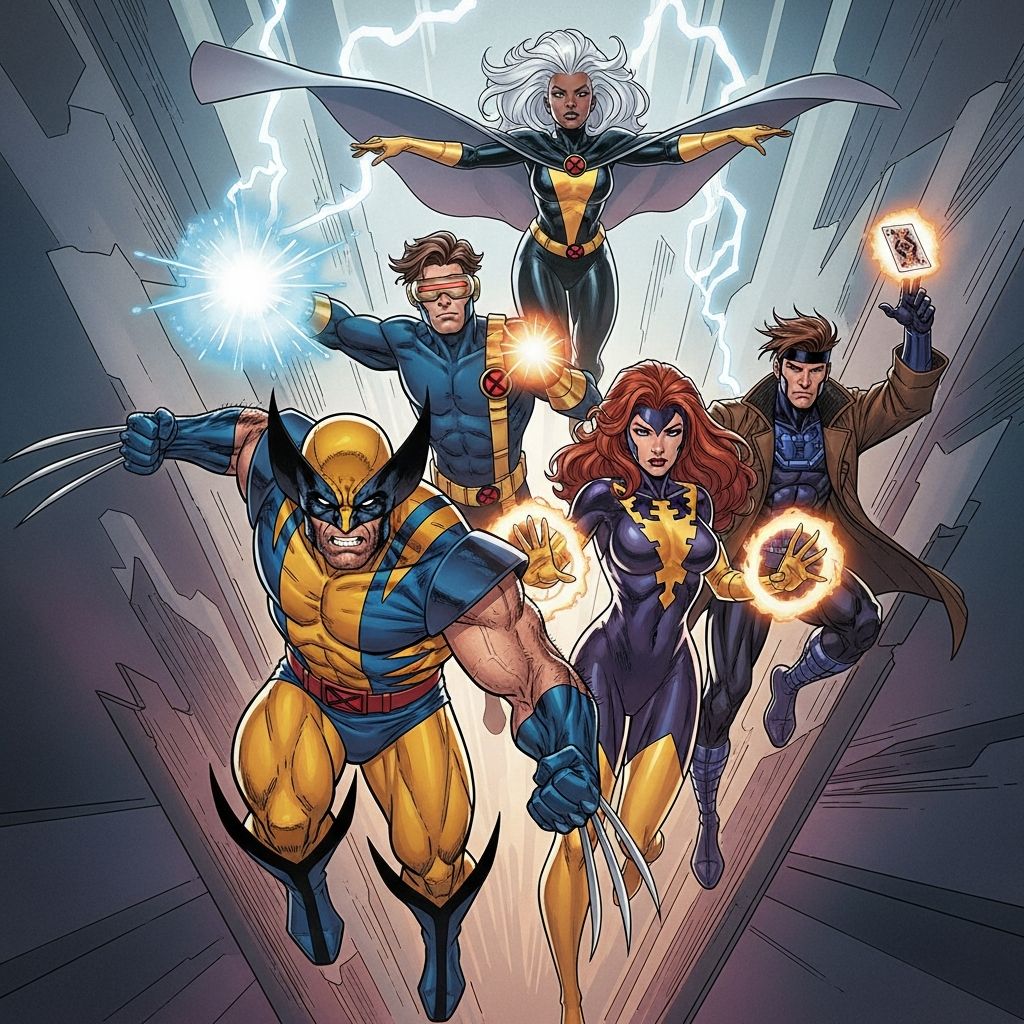
The 1990s were loud, messy, and wildly ambitious, and nowhere is that more obvious than in the X-Men franchise. For a full decade, Marvel’s mutants dominated comics, stormed Saturday-morning television, and filled toy aisles, turning a once-niche superhero team into a multi-platform juggernaut that still shapes how audiences think about heroes, outsiders, and found families.
Today, when modern movies, streaming shows, and new comics revisit the X-Men, they often draw from the spirit and style of that era: big emotions, bigger stakes, and a willingness to tackle themes of prejudice and identity under layers of sci-fi spectacle. The 1990s may feel far away, but the DNA of that decade is still pulsing through every modern mutant story.
The Mutants Step Into the Mainstream
By the early 1990s, the X-Men had quietly grown from a cult favorite to Marvel’s flagship brand. Years of character-driven storytelling set the stage for an explosion of popularity as the decade opened, with comics, spin-offs, and crossovers turning mutant stories into must-read events.
Several key factors pushed the X-Men into the mainstream spotlight:
- Highly stylized art that made the characters instantly recognizable and merchandisable.
- Ongoing soap-opera plots that rewarded loyal readers and encouraged long-term engagement.
- A wider cultural appetite for edgy, morally complex heroes reflected in films, TV, and video games of the era.
Why the 90s X-Men Felt Different
Superhero teams were nothing new, but the 1990s X-Men carried a different emotional weight. They were not just saving the world from supervillains; they were fighting for the simple right to exist, love, and live openly in a world that feared them. That allegory for marginalized groups resonated strongly with audiences living through debates over civil rights, identity, and social change.
At the same time, the franchise embraced the extremes of the decade: leather jackets, oversized weaponry, impossible muscles, and moodily lit covers. This high-drama aesthetic made the X-Men ideal symbols for a generation caught between cynicism and idealism.
Team Dynamics: A Superhero Soap Opera
The 1990s cemented the X-Men as the most melodramatic family in comics, leaning into tangled romances, broken friendships, and ideological rifts. The result was a superhero universe that felt less like a series of isolated adventures and more like an ongoing ensemble drama.
- Romantic tension: Long-simmering relationships and love triangles created emotional stakes that rivaled the battles.
- Clashing philosophies: Characters like Cyclops, Wolverine, and others embodied different visions of leadership, loyalty, and justice.
- Legacy and trauma: Generational conflict between older mutants and younger recruits reflected anxieties about inheritance, responsibility, and the future.
Icons Born in the 90s
Many of the characters that define the X-Men today either exploded in popularity or were reimagined during the 1990s. Fans who discovered the team through comics or animation in that decade often still view these versions as the “default” takes.
| Character | Why They Mattered | Lasting Impact |
|---|---|---|
| Gambit | A charming, morally gray rogue who brought a romantic, mysterious edge to the team. | Helped popularize antiheroes within superhero teams and remains a fan-favorite wildcard. |
| Rogue (90s depiction) | Reimagined as a tough, emotionally guarded powerhouse with a tragic backstory. | Became a central emotional anchor for stories about identity and physical boundaries. |
| Jubilee | A rebellious teen viewpoint character who saw the X-Men through young eyes. | Defined the “rookie member” archetype who invites new fans into the team’s world. |
| Cable | A grizzled soldier from a dystopian future carrying secrets tied to core X-Men. | Embodied the 90s love of time travel, weapons, and destiny-heavy storylines. |
Crossovers and Events: Bigger, Louder, Riskier
In the 1990s, the X-Men line perfected the concept of the crossover event: sprawling storylines that stretched across multiple titles, pulled in numerous teams, and promised world-shaking consequences. These events could be confusing for newcomers, but they gave devoted readers the sense that they were witnessing history in real time.
Common traits of 90s X-events included:
- Reality-bending stakes that allowed for dramatic “what if” scenarios and alternate timelines.
- Large ensemble casts where even obscure characters could have defining moments.
- Lasting continuity changes that reshaped relationships, powers, and allegiances.
The Animated Series That Changed Everything
While comics built the foundation, the 1990s X-Men animated series blasted the mutants into living rooms around the world. Airing on weekend mornings, it delivered serialized storytelling, recurring villains, and surprisingly mature themes to an audience that was still trading trading cards at recess.
What made the show revolutionary was its commitment to long-form narrative. Rather than resetting at the end of each episode, the series carried emotional consequences forward, introducing younger viewers to a style of continuity-driven storytelling that felt more like a comic book come to life than a typical cartoon.
How the Cartoon Captured the Core Themes
The animated series distilled decades of complex X-Men lore into concise arcs, all while preserving the emotional and social themes at the heart of the franchise. Through accessible plots and vibrant visuals, it introduced children to ideas about segregation, bigotry, state power, and resistance.
- Mutant prejudice: Episodes presented discrimination in forms that mirrored real-world racism, homophobia, and xenophobia, but filtered through science fiction.
- Government control: Storylines involving registration acts and mutant-hunting robots drew attention to questions of surveillance and civil liberties.
- Found family: The X-Mansion functioned as a sanctuary for characters who had been rejected or feared by their families and communities.
Toys, Trading Cards, and the Rise of Mutant Merch
The 1990s X-Men phenomenon extended far beyond printed pages and animation cells. Action figures, playsets, holographic trading cards, video games, and fast-food tie-ins turned the team into a lifestyle brand for kids and collectors alike. For many fans, owning a Wolverine figure or a glinting trading card was the first tangible link to the world of Marvel.
This wave of merchandise did more than promote the comics and show. It cemented visual shorthand—Wolverine’s yellow-and-blue costume, Cyclops’s visor, Rogue’s bomber jacket—as universal symbols, recognizable even to people who had never cracked open a comic.
Representation, Allegory, and the Power of Metaphor
At the heart of the X-Men lies a powerful metaphor: mutants as stand-ins for any group marginalized because of who they are. In the 1990s, that metaphor intersected with growing public conversations about LGBTQ+ rights, racial injustice, and disability, giving the stories a topical sting.
Fans from very different backgrounds reported seeing themselves in these characters—whether as people of color, queer youth, immigrants, or anyone who had ever been told they did not belong. The X-Men rarely mapped to any single real-world group, but their plight echoed many, making their symbol of a stylized “X” feel like a rallying banner for anyone living on society’s edges.
Flaws That Defined the Era
The 1990s X-Men were not perfect. The line became notorious for convoluted continuity, overlapping time travel plots, and a dizzying roster of teams and titles. For new readers, trying to jump in midstream sometimes felt like walking into the middle of a decades-long family argument.
Yet even the flaws spoke to an era of creative excess. The willingness to take big swings—whether in radical redesigns, shocking character deaths, or universe-shattering twists—created a sense that anything could happen. That unpredictability made the X-Men feel alive in a way more static franchises could not match.
From Page and Screen to the Modern Blockbuster
Many of the elements that modern audiences now consider standard in superhero blockbusters were stress-tested in the 1990s X-Men ecosystem. Interconnected narratives, ensemble casts, serialized arcs across multiple platforms, and emphasis on character drama alongside spectacles all took root there.
When mutant stories began leaping into live-action film at the turn of the millennium, they pulled heavily from 90s touchstones: iconic costumes, core character lineups, and story beats that fans already knew and loved. Even newer animated revivals often echo the look, sound, and emotional register of that foundational decade.
What Modern Creators Still Learn from 90s Mutants
For creators working on present-day X-Men projects—or on superhero stories more broadly—the 1990s era functions as both an inspiration and a cautionary tale. Its high points show how to blend social commentary with pop spectacle, while its excesses warn against overcomplicated continuity and event fatigue.
- Do: Build strong, distinct character voices and relationships that audiences can latch onto.
- Do: Use science-fiction metaphors to explore contemporary issues in a way that invites discussion without preaching.
- Be careful: With constant reboots, spin-offs, and crossovers that can make it hard for new fans to find a starting point.
How to Introduce New Fans to 90s X-Men
For parents, older siblings, or seasoned fans hoping to share the magic of 1990s X-Men with a new generation, the key is curation. The decade is rich but dense, so choosing a few welcoming entry points can make the difference between delight and overwhelm.
- Start with accessible animated episodes that introduce the main cast and core themes in self-contained arcs.
- Pick a limited number of comic storylines that balance action with character moments, rather than diving straight into the most complex crossovers.
- Use toys, art books, or clip compilations as visual aids to spark interest and questions.
Frequently Asked Questions About the 1990s X-Men
Why do so many fans consider the 1990s the “definitive” X-Men era?
For many people, the 1990s were when the X-Men leapt from niche comic shelves into mainstream consciousness via animation, merchandise, and expanded publishing. The combination of bold visuals, serialized storytelling, and resonant themes created a version of the team that felt both emotionally grounded and larger than life, leaving a deep nostalgic imprint on those who grew up with it.
Are 1990s X-Men comics a good starting point for new readers?
Yes, but with some guidance. The era offers rich character work and iconic moments, but it can also be dense and continuity-heavy. New readers often have the best experience when they begin with recommended arcs, curated collections, or companion guides that explain who the characters are and what major events shaped their world.
How does the 90s animated series compare to modern superhero shows?
Modern shows often feature slicker animation and more nuanced pacing, but the 1990s X-Men cartoon remains notable for its serialized format and willingness to tackle serious themes. Its episodes introduced kids to complex ideas about prejudice and political power years before such topics became common in mainstream genre television, giving it a lasting historical and emotional significance.
Did the 90s X-Men influence today’s superhero movies?
Absolutely. The idea of interlocking story arcs, ensemble casts with distinct visual and emotional identities, and a balance between character drama and spectacle all owe a debt to the way the X-Men franchise operated in the 1990s. Many of the character lineups, costumes, and story beats adapted for film and streaming trace their roots to that period.
Is the 1990s X-Men era only appealing through nostalgia?
Nostalgia is a powerful part of the appeal, but it is not the whole story. The underlying themes—outsiderness, chosen family, persecution, and hope—remain intensely relevant, and the bold stylistic choices of the era still feel unique compared to more polished modern media. Revisiting these stories can reveal layers that young viewers and readers may have missed the first time around.
Why the 90s X-Men Still Matter
The 1990s X-Men era represents a rare moment when artistic experimentation, social commentary, and commercial ambition collided. The result was a sprawling, imperfect, and passionately loved body of work that still shapes how creators and fans imagine what superhero stories can be.
Whether through comics, animation, or cherished toys gathering dust on a shelf, the mutants of that decade continue to remind audiences that power and difference can be both a burden and a gift—and that there is strength to be found in standing together, even when the world refuses to understand.