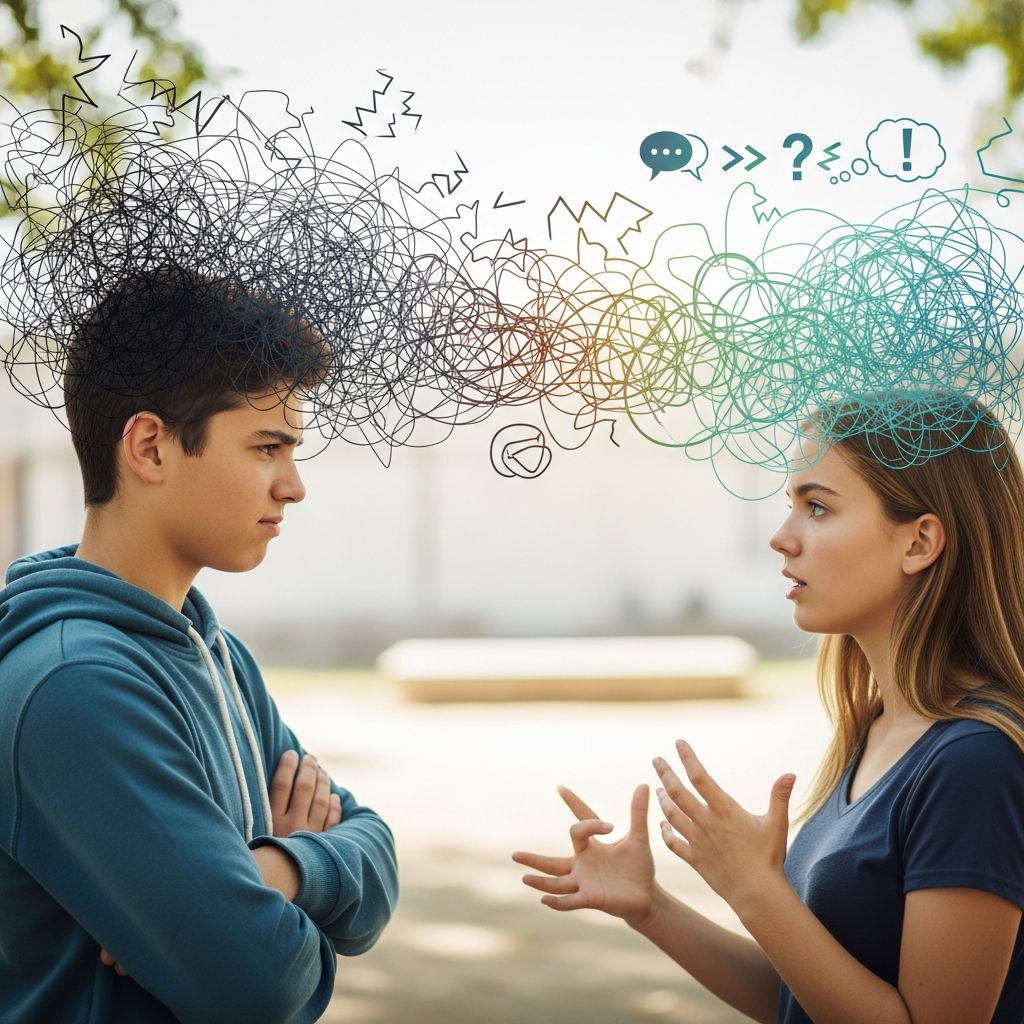
Teenagers frequently display an unshakable belief in their own knowledge and abilities, often dismissing parental advice with a sense of superiority. This phenomenon, rooted in cognitive biases and developmental stages, can strain family dynamics but is addressable through informed parenting approaches.
The Psychology Behind Teens’ ‘Know-It-All’ Attitude
Overconfidence in adolescents stems from the **overconfidence effect**, a well-documented cognitive bias where individuals’ subjective certainty in their judgments exceeds their actual accuracy. This bias manifests in three primary forms: overestimation of personal performance, overplacement relative to peers, and overprecision in beliefs. During teenage years, brain development amplifies these tendencies, as the prefrontal cortex, responsible for impulse control and realistic assessment, matures more slowly than emotional centers.
Research indicates that overestimation is particularly pronounced on challenging tasks where success is unlikely, leading teens to inflate their control or chances of success. For instance, a teen might insist they can ace a test without studying, ignoring evident gaps in preparation. Overplacement, or believing oneself superior to others, thrives on simpler tasks, fostering a ‘better-than-average’ mindset common among youth seeking independence.
Developmental Stages Fueling Excessive Self-Assurance
Adolescence marks a period of rapid identity formation, where teens experiment with autonomy, often interpreting partial knowledge as mastery. Studies reveal a ‘beginner’s bubble’ pattern: novices start cautious, surge into overconfidence after initial exposure, then experience a correction as realities set in. For teens encountering new domains like driving, relationships, or academics, this bubble inflates quickly, driven by error-prone early theorizing.
Intermediate knowledge exacerbates this; partial familiarity breeds unwarranted certainty without deep competence. A University of Chicago study demonstrated how mere observation—watching skill videos—creates false proficiency illusions, as viewers gain steps’ familiarity sans kinesthetic experience. Teens, bombarded by social media highlights, mimic this, rating dart-throwing or juggling prowess high post-viewing, despite unchanged performance.
Impacts on Learning and Family Relationships
| Aspect | Effects of Overconfidence | Long-Term Consequences |
|---|---|---|
| Academic Performance | Tuning out lessons, poor focus | Lower retention, test failures |
| Family Dynamics | Defiance, arguments | Strained trust, isolation |
| Risk-Taking | Misperceived abilities | Increased accidents, poor decisions |
| Social Interactions | Overplacement vs. peers | Conflicts, damaged friendships |
Overconfident students absorb less from classes, as self-perceived expertise reduces engagement. A study of 91 learners showed overconfident ones gained fewer insights than realistic peers. In families, this translates to power struggles, with teens assuming parental views align with theirs, mirroring high-power individuals’ projections.
Risk Perception and Behavioral Outcomes
Teens’ overconfidence distorts risk assessment, blending illusory knowledge with factual misreads, prompting bolder actions. The Dunning-Kruger effect compounds this: low performers vastly overestimate abilities, unaware of deficits, while experts calibrate accurately. Bottom-quartile exam-takers claimed top-40% performance; debate losers ranked themselves winners.
Power dynamics intensify this; teens feeling ‘in charge’ at home project emotions onto others, erring in social cues. Positive illusions aid coping but risk delusion if unchecked.
Parental Strategies to Counter Overconfidence
- Promote Self-Reflection: Encourage journaling actual vs. predicted outcomes, like post-test reviews, to reveal discrepancies.
- Model Humility: Share personal learning failures transparently, normalizing growth mindsets.
- Set Structured Challenges: Assign tasks requiring practice, tracking progress to burst the beginner’s bubble.
- Foster Feedback Loops: Use objective metrics—grades, peer reviews—to ground perceptions.
- Address Root Causes: Probe approval-seeking or attention needs driving bravado.
Hands-on trials dispel illusions; post-activity, video-watchers recalibrated downward. Praise effort over innate talent to build resilience.
Building Realistic Self-Esteem in Adolescents
Core self-evaluations—self-esteem, efficacy—spike confidence, but extremes tip into excess. Balance via goal-setting: break tasks into achievable steps, celebrating milestones. Research links calibrated optimism to better outcomes, sans overreach.
Encourage diverse experiences; varied challenges prevent domain-specific bubbles. Parental involvement—supervised practice—bridges familiarity to skill, reducing overprecision.
Long-Term Benefits of Balanced Confidence
Guiding teens past overconfidence yields adaptive adults: accurate self-assessors thrive academically, socially. Studies affirm realistic calibrators outperform peers long-term. Families investing here cultivate mutual respect, open dialogue.
Frequently Asked Questions (FAQs)
Q: Why do teens suddenly act like they know everything?
A: This arises from the overconfidence effect and a ‘beginner’s bubble,’ where initial exposure inflates self-perceived expertise before experience corrects it.
Q: How can parents handle argumentative teens convinced they’re right?
A: Use calm, evidence-based discussions; share verifiable outcomes and model humble admissions of error to encourage reflection.
Q: Does overconfidence harm academic success?
A: Yes, overconfident students engage less, retaining less information and scoring lower than realistic peers.
Q: Can social media worsen teen overconfidence?
A: Absolutely; passive viewing mimics skill videos, fostering familiarity-based illusions without practice.
Q: At what age does overconfidence peak in teens?
A: It surges mid-adolescence during identity quests, easing as prefrontal maturity improves calibration, typically late teens.
Navigating Modern Challenges with Tech Influence
Digital eras amplify overconfidence; endless TikTok tutorials simulate mastery. Counter by mandating active trials—’try it yourself’—to gain ‘doing’ sensations absent in observation. Curate feeds emphasizing process over perfection.
Group dynamics matter: peers reinforce bubbles via shared bravado. Structured teams with role rotations teach interdependence, curbing overplacement.
References
- Overconfidence effect — Wikipedia. 2023-10-01. https://en.wikipedia.org/wiki/Overconfidence_effect
- Studies in Swollen Heads: What Causes Overconfidence? — Association for Psychological Science. 2015-12-15. https://www.psychologicalscience.org/publications/observer/obsonline/studies-in-swollen-heads-what-causes-overconfidence.html
- How to Caution an Overconfident Student That They Still Have a Lot to Learn — Study.com. 2023-01-20. https://study.com/blog/how-to-caution-an-overconfident-student-that-they-still-have-a-lot-to-learn.html
- Overconfidence Among Beginners: Is a Little Learning a Dangerous Thing? — Hakan R. 2017-01-01. https://people.uncw.edu/hakanr/documents/overconfidence2017.pdf
- Perceptions of Risk and Social Judgments: Biases and Motivational Factors — National Center for Biotechnology Information. 2008-01-01. https://www.ncbi.nlm.nih.gov/books/NBK37614/