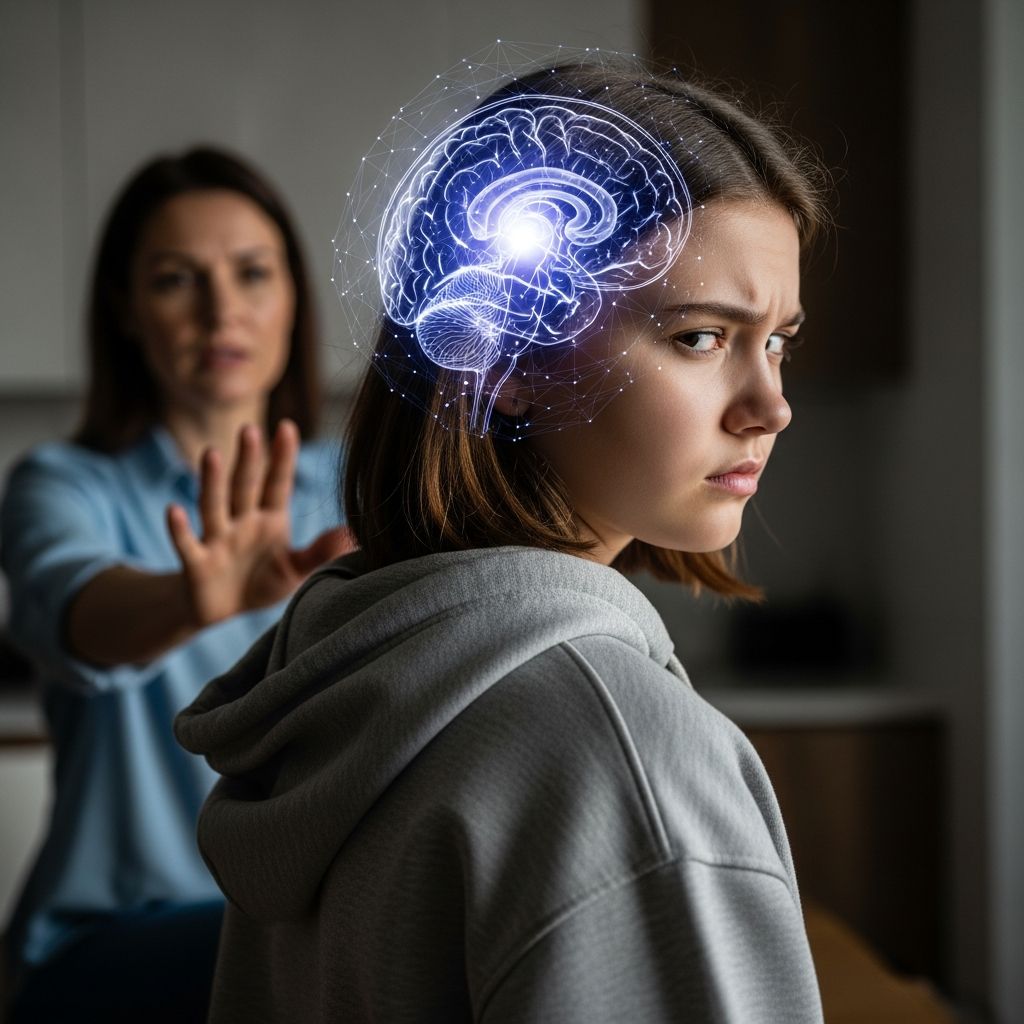
Adolescence marks a profound transformation in how young people process social cues, particularly their parents’ voices. Around age 13, teenagers’ brains begin to respond less strongly to their mother’s voice, favoring unfamiliar ones instead. This shift, rooted in neurodevelopmental changes, supports the pursuit of independence.
The Evolutionary Role of Maternal Voice in Early Development
From fetal stages, a mother’s voice serves as a primary social and linguistic anchor. Fetuses recognize it in utero, associating it with safety and learning. In children under 12, hearing mom activates broad brain networks: auditory regions, reward centers like the nucleus accumbens (NAc), emotion processors, visual areas, and salience networks that flag important stimuli.
This unique response pattern underscores the mother’s voice as a biologically salient signal. It drives language acquisition and emotional bonding. Younger kids show heightened NAc and ventromedial prefrontal cortex (vmPFC) activity—key for reward and social valuation—specifically to mom’s voice over strangers’.
Adolescent Brain Rewiring: From Familiar to Novel Voices
Puberty triggers a reversal. Teens’ brains, scanned via functional MRI, display increased overall voice sensitivity. The superior temporal sulcus (voice processing), salience areas, and posterior cingulate cortex (social memory) activate more strongly across all voices, scaling with age—enabling precise age prediction from scans.
Crucially, reward regions flip preferences. Unfamiliar female voices now elicit stronger NAc and vmPFC responses than mom’s, with the switch pinpointed between ages 13 and 14. No sex differences appear; it’s a universal maturation marker.
| Age Group | Reward Response to Mom’s Voice | Reward Response to Unfamiliar Voices | Key Brain Regions |
|---|---|---|---|
| Children <13 | Stronger activation | Weaker activation | NAc, vmPFC |
| Teens 13+ | Weaker activation | Stronger activation | NAc, vmPFC |
This table summarizes the neural preference shift, based on fMRI data from Stanford studies.
Why This Shift Happens: Preparing for Independence
The change reflects healthy adaptation. Teens’ growing social worlds demand attunement to peers and novel influences, mirroring infant tuning to mom but inverted for exploration. Lead researcher Daniel Abrams notes: “Just as an infant knows to tune into her mother’s voice, an adolescent knows to tune into novel voices.”
Overall voice receptivity rises, aligning with heightened social interest. Yet, prioritization of new voices in reward circuits facilitates separation from family, fostering autonomy essential for adulthood.
Practical Impacts on Parent-Teen Dynamics
- Selective Listening: Teens may appear defiant, but their brains literally reward peers’ input more, reducing mom’s salience.
- Increased Social Drive: Explains obsession with friends, social media, and new relationships.
- Communication Challenges: Routine reminders (e.g., homework) trigger less engagement as familiar voices lose novelty.
- Positive Flip Side: Broader social sensitivity aids relationship-building outside home.
Parents often feel rejected, but understanding this biology reframes it as growth, not personal slight.
Evidence from Key Studies
Stanford’s 2022 research in Journal of Neuroscience involved 52 teens (ages 13-16) and 48 children (7-12). Mothers and unfamiliar women uttered nonsense syllables; fMRI captured responses. Results confirmed the NAc/vmPFC inversion, with regression models dating the transition.
Prior 2016 work established kids’ mom-voice bias. Combined, they map voice processing evolution.
Parenting Strategies to Bridge the Gap
While biology drives the shift, strategies can enhance connection:
- Embrace Novelty: Introduce fresh conversation topics or activities to mimic unfamiliar voice appeal.
- Listen Actively First: Prioritize their input to build reciprocity; teens crave peer-like dialogue.
- Use Non-Verbal Cues: Gestures, notes, or tech (texts) bypass voice fatigue.
- Schedule Quality Time: Structured, low-pressure interactions prevent overload.
- Model Healthy Separation: Encourage peer bonds while maintaining boundaries.
These foster trust amid brain changes.
Broader Implications for Adolescent Mental Health
This rewiring influences vulnerability periods. Heightened novel-voice reward may heighten peer pressure risks, but also resilience through diverse networks. Future research could link it to anxiety, as disrupted social tuning correlates with disorders.
Clinically, it informs therapies: voice-based interventions might adapt for teen preferences.
Frequently Asked Questions (FAQs)
At what exact age does the brain shift occur?
Regression analysis pinpoints 13-14 years in NAc and vmPFC; it’s gradual but peaks then.
Is this change permanent?
No, it’s developmental. Adult brains balance familiar and novel social cues differently.
Does it affect dads or other family voices too?
Study focused on moms, but similar shifts likely occur for primary caregivers.
Can parents influence this brain change?
Biology leads, but nurturing environments modulate social development outcomes.
What if my teen seems extremely unresponsive?
Monitor for mental health signs; consult professionals if beyond typical tuning out.
Long-Term Perspective: From Dependence to Autonomy
This voice-shift exemplifies adolescence’s core: pruning childhood dependencies for adult interconnections. Parents witnessing it contribute to resilient futures by adapting supportively. Science demystifies the ‘ignore phase,’ empowering informed guidance.
References
- The teen brain tunes in less to Mom’s voice, more to unfamiliar voices — Stanford Medicine. 2022-04-11. https://med.stanford.edu/news/all-news/2022/04/teenager-brain-mother-voice.html
- A Neurodevelopmental Shift in Reward Circuitry from Mother’s to Non-Maternal Voices in Adolescents — Journal of Neuroscience (PMC). 2022-05-04. https://pmc.ncbi.nlm.nih.gov/articles/PMC9121826/
- Teen brains tune out mom’s voice more starting at 13 — Futurity.org. 2022-05-09. https://www.futurity.org/teenagers-brains-mothers-voices-2733002-2/
- The Neurobiology Behind Young People’s Shift in Interest From Mother’s Voice to Those of Non-Family Members — Brain & Behavior Research Foundation. 2022. https://bbrfoundation.org/content/neurobiology-behind-young-peoples-shift-interest-mothers-voice-those-non-family-members
- Teen Brains Wired To Tune Out Mother’s Voice More Than Younger Children — CBS News Boston. 2022. https://www.cbsnews.com/boston/news/teenager-brain-mother-voice-dr-mallika-marshall-wbz/