Why Summer Camp Matters: A Comprehensive Look at Transformation for Your Whole Family
Summer camp represents far more than a seasonal activity or a way to occupy children during school breaks. It serves as a catalyst for meaningful development across multiple dimensions of a child’s life while simultaneously offering parents an often-overlooked opportunity for personal renewal and perspective. The camp experience creates a unique environment where children thrive independently, develop crucial life competencies, and form lasting connections—all while their parents gain the space and confidence to recharge their own batteries.
The Independence Revolution: How Children Flourish Away From Home
One of the most significant transformations that occurs at summer camp is the development of genuine independence in young people. When children are placed in a structured camp environment without their parents’ immediate support system, they face a series of real-world challenges that demand personal problem-solving and decision-making. This separation, though sometimes initially difficult, creates the ideal conditions for growth that cannot be replicated in the family home.
Children at camp learn to manage their daily routines, organize their belongings, and navigate social interactions without parental intervention. They discover that they can handle conflicts with peers, adjust to new situations, and overcome homesickness through their own resilience. These experiences build genuine confidence—not the reassurance offered by well-meaning parents, but authentic self-assurance earned through facing and surmounting real obstacles. Researchers have found that campers return home with noticeably enhanced self-reliance and the ability to tackle challenges with greater assurance.
Building the Social Foundation: Friendship and Communication Skills
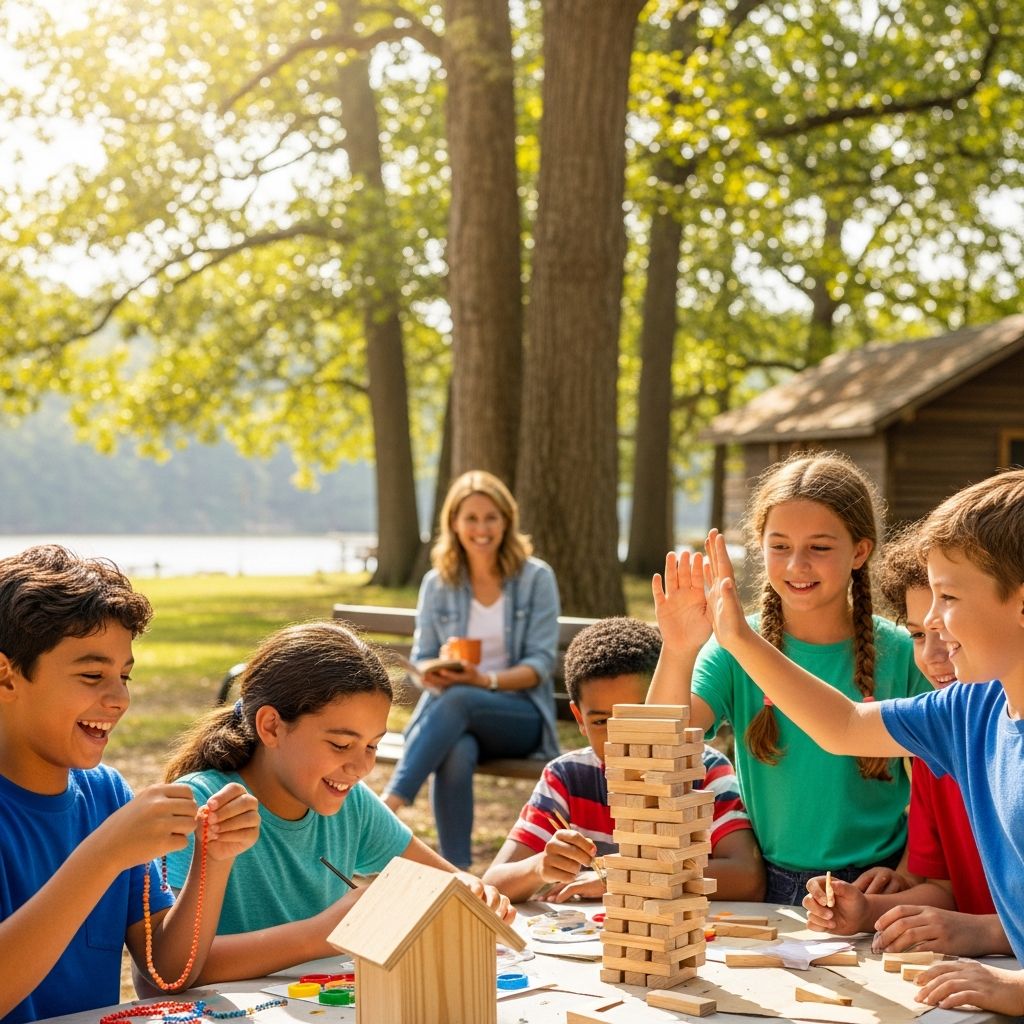
The social dimension of camp experiences shapes how children interact with peers throughout their lives. Unlike school environments where friendships often form around established friend groups and familiar classmates, camp brings together children from diverse backgrounds who share no prior connections. This setup forces children to actively initiate friendships, negotiate differences, and establish meaningful connections from scratch.
In this intensive social environment, young people develop critical interpersonal competencies including:
- Effective communication through active listening and thoughtful questioning
- Empathy and perspective-taking when interacting with peers from different backgrounds
- Boundary-setting and conflict resolution skills applied in real situations
- Collaborative abilities through team-based activities and shared goals
- Cultural awareness by engaging with children who hold different values and traditions
Camp counselors facilitate these social interactions by modeling positive communication and creating structured opportunities for connection. The result is that children return home with enhanced people skills and greater comfort in social situations—abilities that serve them well throughout adolescence and into adulthood.
Character Development Through Authentic Challenges
Summer camp functions as an intensive character-building experience where children encounter genuine challenges that demand personal growth. Unlike artificial scenarios, camp obstacles are real: managing homesickness, adapting to unfamiliar situations, persisting through difficult physical activities, and succeeding at new skills without guaranteed success.
These experiences cultivate essential character traits that research identifies as predictive of long-term success. When children struggle with a climbing wall, face a moment of social anxiety, or push through physical exhaustion, they develop grit—the combination of perseverance and passion that enables achievement despite setbacks. Studies demonstrate that 70% of parents report their children gain measurable self-confidence at camp, a confidence rooted in actual accomplishment rather than empty praise.
The camp environment’s structured support—professional supervision, positive role models, and carefully designed activities—ensures that challenges remain achievable rather than overwhelming. This balance between challenge and support creates optimal conditions for genuine growth.
Health, Wellness, and the Technology Reset
Modern childhood often involves excessive screen time and disconnection from physical activity. Summer camp interrupts these patterns by creating an environment where healthy behaviors become the default. Camps typically emphasize physical activity through sports, outdoor pursuits, and recreational games, while providing nutritious meals that support growing bodies.
Perhaps equally important is the technology detox that camp provides. Disconnected from smartphones, social media, and digital distractions, children rediscover the capacity for deeper focus, more meaningful face-to-face interactions, and genuine enjoyment of present-moment experiences. Many parents report that their children return home with renewed appreciation for outdoor activities and a healthier relationship with technology.
The Parental Perspective: Why Taking a Break Strengthens Family Bonds
While children develop at camp, their parents benefit from a crucial period of respite and reconnection. Parenting demands relentless attention, decision-making, and emotional energy. The knowledge that one’s children are safe, supervised, and thriving in a professional camp environment allows parents to step back from the constant vigilance that modern parenting often demands.
This break serves multiple functions for parental well-being:
- Opportunities to reconnect with partners or friends without the demands of childcare
- Time for personal pursuits, relaxation, and activities delayed during the school year
- Psychological renewal that reduces parental burnout and stress
- Perspective on their parenting approach and family dynamics
- Modeling of self-care importance to their children
Importantly, parents need not feel guilt about this separation—quite the opposite. By allowing children space to develop independence, parents actively support their children’s growth while maintaining their own psychological health. The research supports what experienced parents intuitively understand: when parents are well-rested and recharged, they return to family life with greater patience and presence.
Discovering New Passions and Skills
Summer camps typically offer diverse programming that exposes children to activities they might never encounter otherwise. Whether specializing in arts, athletics, environmental studies, or performing arts, camps provide intensive instruction in focused areas. A child uncertain about their interests might discover a passion for rock climbing, theatrical performance, competitive sailing, or environmental conservation through camp experiences.
This skill-building operates differently than school instruction. Camp activities emphasize enjoyment and exploration rather than grades and achievement standards. This low-pressure context often allows children to try new pursuits without the anxiety of formal evaluation, creating space for genuine interest and enthusiasm to develop.
Parents often find themselves delighted by the unexpected talents and interests their children discover at camp—a son who never played sports suddenly passionate about soccer, a daughter who discovered an artistic gift previously hidden by shyness. These discoveries contribute to children’s sense of identity and self-knowledge.
Learning from Positive Role Models
Camp counselors represent a unique category of adult role model—typically young adults (college-aged or early twenties) who are energetic, approachable, and perceived as “cool” in ways that parents inevitably are not. These counselors demonstrate character, integrity, and competence in their interactions with campers. For adolescents especially, observing how slightly-older peers navigate challenges, treat others with respect, and pursue their interests provides powerful modeling of healthy adult development.
This exposure to diverse positive role models expands children’s sense of possibility regarding who they might become. A counselor’s enthusiasm for environmental science, commitment to inclusive leadership, or integrity in handling conflict becomes an example that young people internally reference as they develop their own values and identities.
The Reunion Effect: Strengthened Family Relationships
The time apart that enables children’s independence simultaneously transforms the parent-child relationship through absence and reunion. Children returning from camp often demonstrate palpable appreciation for their families, home routines, and familiar comforts. The experience of independence generates gratitude for the security and love that family provides, while parents witness tangible evidence of their children’s growth and capability.
This reunion creates what researchers might call a “recalibration moment”—a pause that interrupts the sometimes-tense daily rhythms of family life and allows both parents and children to see each other with fresh perspective. Parents recognize capabilities they might not have previously acknowledged, while children appreciate parental support with new understanding.
Navigating Camp Selection: Alignment With Family Goals
The benefits of camp experience vary depending on camp type, duration, and programming focus. Parents considering camp options should reflect on their primary objectives. Those prioritizing independence development might select residential overnight camps, while parents focused on skill-building might choose specialized programs in specific disciplines. The alignment between family goals and camp offerings maximizes the probability of meaningful benefit for the child.
Considerations for camp selection include:
- Duration (day camp versus overnight, length of session)
- Programming focus and activity offerings
- Camp philosophy and approach to child development
- Staff qualifications and supervision practices
- Compatibility with the child’s temperament and interests
- Diversity and inclusivity of the camp community
Addressing Parental Concerns: Safety and Professional Supervision
Parents’ peace of mind during camp depends fundamentally on confidence in the camp’s safety practices and staff qualifications. Established summer camps employ trained counselors and maintain professional supervision standards designed to ensure both physical safety and emotional well-being. Understanding these protections allows parents to relax into the benefits of separation rather than worrying throughout their child’s attendance.
Quality camps provide transparent communication about daily activities, supervision ratios, emergency procedures, and staff training. Parents should feel empowered to ask detailed questions about these systems before enrollment.
The Ripple Effect: Long-Term Outcomes of Camp Attendance
Research conducted by institutions including Harvard Graduate School of Education documents measurable increases in self-esteem, independence, leadership capabilities, friendship skills, and social comfort among children who attend camp. These outcomes extend beyond the summer, influencing academic performance, peer relationships, and resilience throughout the subsequent school year and beyond.
The camp experience appears to generate a positive momentum—success in the camp environment builds confidence that transfers to school and family contexts. Children who’ve navigated the challenges and triumphs of camp demonstrate greater willingness to tackle academic challenges, persist through difficulties, and take interpersonal risks in their home communities.
Creating the Conditions for Growth: Why Camp Works
The effectiveness of summer camp stems from its unique structural features: a safe community with clear expectations, diverse peer groups, trained adult facilitators, physical activity, reduced technology, shared purposeful activities, and separation from family systems. This combination creates conditions rarely present in modern childhood that allow genuine development across multiple domains simultaneously.
Unlike school, where academic achievement dominates, or home, where family dynamics shape interactions, camp functions as a “growth laboratory” where children can experiment with identity, test capabilities, develop relationships, and discover interests in a contained, supportive environment.
Frequently Asked Questions About Summer Camp Benefits
At what age should children first attend sleep-away camp?
While day camps serve younger children effectively, research suggests that children aged 8-10 and older typically benefit most from overnight camp experiences that build independence. Readiness depends on the individual child’s maturity and comfort level rather than age alone.
How long does a camp session need to be to provide benefits?
Even brief camp experiences contribute to child development, though longer sessions (two weeks or more) typically allow greater opportunity for homesickness to resolve, deeper friendships to form, and visible confidence growth to emerge.
Will my child be homesick, and is that normal?
Homesickness is extremely common and represents part of the growth process. Professional camp staff are trained to support children through homesickness in ways that allow it to become a manageable challenge rather than a crisis.
How can parents support camp benefits after the session ends?
Parents can maintain camp benefits by encouraging continued practice of skills learned, supporting new interests discovered at camp, and allowing the independence gained to transfer to home responsibilities.
Is specialized camp (sports, arts, academics) better than general camp?
Both specialized and general camps offer distinct benefits. Specialized camps provide intensive skill development and passion discovery, while general camps offer broader social and independence benefits.
References
- Sleepaway Summer Camp Can Benefit Parents Too — Catalina Island Camps. Accessed January 2026. https://catalinaislandcamps.com/sleepaway-summer-camp-can-benefit-parents-too/
- Summer Camp: It’s for Parents, Too — Wazi. Accessed January 2026. https://wazi.com/camp-its-for-parents-too/
- Summer Camp Expectations For Parents: What Your Child Will Gain — Camp Keystone. Accessed January 2026. https://campkeystone.com/summer-camp-expectations-for-parents/
- 10 Reasons Great Parents Choose Summer Camp for Their Kids — Sunshine Parenting. Accessed January 2026. https://sunshine-parenting.com/10-reasons-great-parents-choose-summer-camp-kids/
- Top Benefits of Summer Camp For Children — All For Kids. Accessed January 2026. https://www.allforkids.org/news/blog/top-benefits-of-summer-camp-for-children/
- The Hidden Benefits of Summer Camp No One Talks About — Riverway Ranch Camp. Accessed January 2026. https://www.riverwayranchcamp.com/the-hidden-benefits-of-summer-camp-no-one-talks-about/
- Lessons from Camp — Harvard Graduate School of Education. 2016. https://www.gse.harvard.edu/ideas/usable-knowledge/16/07/lessons-camp
- How Do Summer Programs Influence Outcomes for Children and Youth — National Center for Biotechnology Information. Accessed January 2026. https://www.ncbi.nlm.nih.gov/books/NBK552656/