Many loving parents resort to spanking when they feel exhausted, scared, or out of options. Yet a large and growing body of research shows that hitting children is not only ineffective in the long run, it can also harm their emotional, cognitive, and even brain development. This article explains why, and offers practical, respectful alternatives.
Why Parents Still Consider Spanking
Spanking persists in many cultures even as professional organizations and researchers strongly advise against it.
- Tradition and upbringing: Many adults were spanked as children and feel that they “turned out fine,” so they view it as normal or necessary.
- Immediate obedience: Spanking can stop behavior in the moment, creating the illusion that it “works.”
- Overwhelm and stress: When parents are tired, anxious, or unsupported, they are more likely to react impulsively and use physical force.
- Beliefs about morality: Some parents worry that if they do not harshly punish, their children will be spoiled or will not learn right from wrong.
The problem is that what seems to work in the short term often backfires over time, undermining the very goals parents care about most: self-control, empathy, responsibility, and a close relationship.
What Research Shows About Spanking
Decades of studies and several large reviews have reached remarkably consistent conclusions: physical punishment does not improve children’s behavior long term and is linked to a wide range of negative outcomes.
| Outcome | What Research Finds |
|---|---|
| Long-term behavior | Spanking is associated with more behavior problems and aggression over time, not less. |
| Mental health | Children who are frequently hit have higher risks of anxiety, depression, and later substance use issues. |
| Cognitive and academic outcomes | Physical punishment is linked with slower cognitive growth and lower academic achievement. |
| Parent–child relationship | Spanking predicts more conflict and less warmth, leading to emotional distance and secrecy. |
Crucially, these associations hold even when researchers account for other factors like family income, parental education, and early child behavior.
How Spanking Affects a Child’s Brain and Emotions
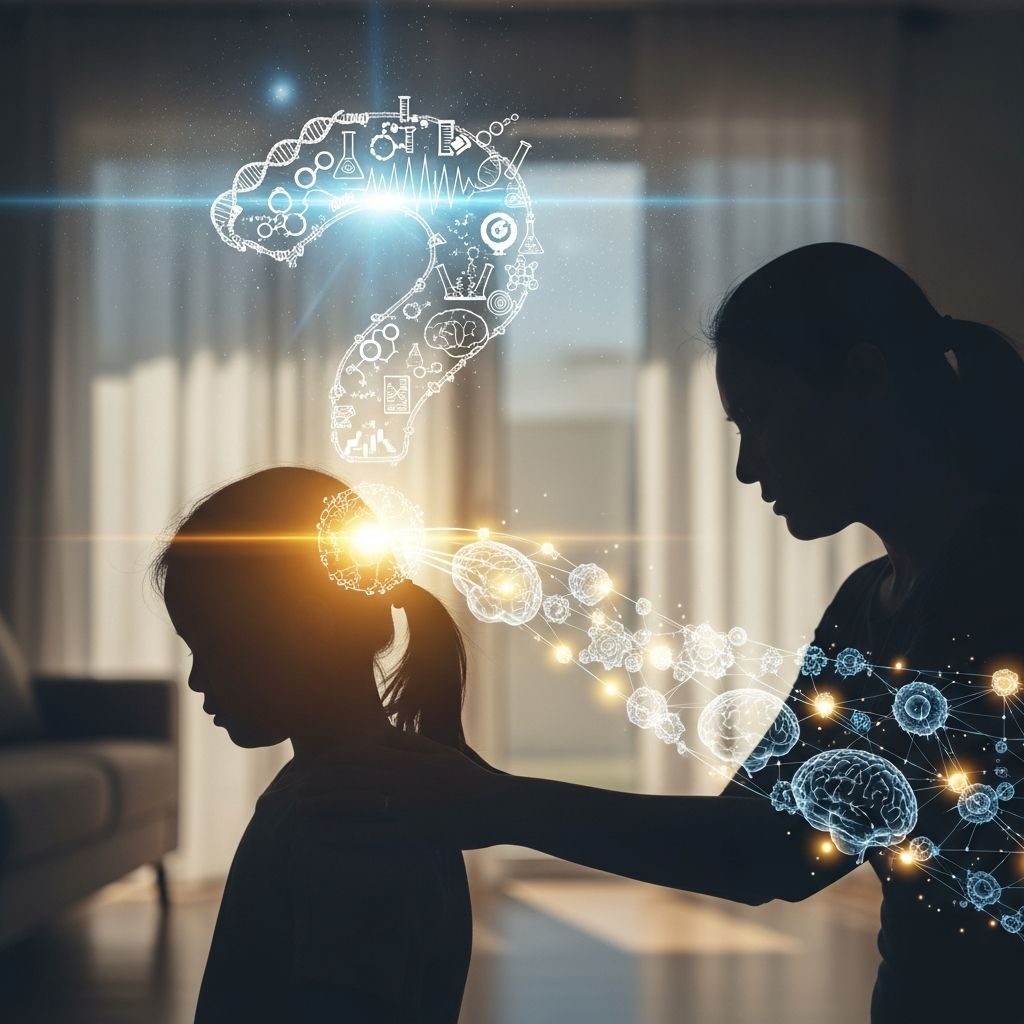
Newer neuroscience research helps explain why spanking has such powerful effects. A Harvard-led study using brain imaging found that children who had been spanked showed stronger activation in areas of the prefrontal cortex that respond to threat, similar to patterns seen in children exposed to more severe violence.
- Spanked children’s brains reacted more intensely to fearful faces, suggesting heightened sensitivity to perceived threats.
- Research suggests physical punishment may be associated with changes in brain structures involved in reasoning and self-control, as well as systems linked to vulnerability to substance use.
Emotionally, children who are hit often report feeling fear, anger, shame, and confusion. These strong feelings make it harder to absorb lessons about behavior and increase the risk of hostility and withdrawal.
Why Spanking Fails as Discipline
Parents usually spank because they want to teach children how to behave. But for learning and character development, physical punishment works against the brain’s natural learning systems.
1. It Teaches Compliance Only Under Threat
Spanking may stop misbehavior in the moment, but it does not teach why a behavior is wrong or what to do instead. Children learn to avoid being caught, not to internalize values. Once the threat disappears, the motivation to behave often disappears as well.
2. It Models Aggression as a Problem-Solving Tool
When adults hit, children learn that more powerful people can use physical force to get what they want. Studies show that children who are spanked are more likely to behave aggressively toward peers and siblings over time, even after controlling for their initial aggression.
3. It Damages Trust and Connection
Feeling safe with caregivers is the foundation for healthy development. When a parent inflicts pain, children may feel betrayed or emotionally abandoned, even if the parent is loving in other moments. Over time this can lead to:
- Less openness and honesty with parents
- More secrecy and lying to avoid punishment
- Increased resentment and distance in the relationship
4. It Increases Risk of Escalation
Many cases of physical abuse begin as attempts at punishment that spiral when adults lose control. Because parents often spank when angry or stressed, there is a real risk of hitting harder than intended or more frequently over time.
Common Myths About Spanking
Parents often struggle because what they have heard about discipline conflicts with what science now shows. Here are three widespread myths and what research finds instead.
| Myth | What Evidence Shows |
|---|---|
| “Spanking is necessary to teach respect.” | Respect based on fear tends to disappear when the authority figure is absent. Lasting respect grows from consistent limits, empathy, and modeled self-control. |
| “I was spanked and I’m fine.” | Individual experiences vary, but population-level data show clear increased risks. Saying “I’m fine” does not erase those documented patterns. |
| “A light smack isn’t harmful.” | There is no clear evidence that any level of hitting improves outcomes. Studies do not find benefits even for mild, occasional spanking; they only find risk. |
Principles of Respectful, Effective Discipline
Discipline means “to teach,” not “to punish.” Effective discipline focuses on helping children develop the skills they lack—such as emotional regulation, problem solving, and impulse control.
Key Principles
- Connection first: Children learn best when they feel safe and seen. A calm, warm tone increases cooperation.
- Firm, clear limits: Respectful parenting is not permissive. Limits are consistent and predictable, but not humiliating or violent.
- Teach skills, don’t just stop behavior: Show and practice what to do instead of only saying what not to do.
- Focus on long-term goals: Ask, “What lesson do I want my child to carry into adulthood?” and choose strategies that support that goal.
Practical Alternatives to Spanking
Moving away from physical punishment does not mean letting children do whatever they want. It means using tools that guide behavior while protecting dignity and safety.
1. Calm Down Before You Discipline
Most regretted spankings happen when parents feel flooded with anger or fear. When you notice your body tensing or your voice rising, pause if everyone is safe.
- Take a few slow breaths and lower your shoulders.
- Step into another room briefly if needed.
- Use a phrase to buy time: “I need a minute to think about how to handle this.”
Regaining your own self-control makes it much more likely that you will respond in a way you feel proud of later.
2. Use Clear, Calm Limits
Children respond better when instructions are simple and specific:
- Say what to do: “Walk inside, please,” instead of “Stop running!”
- Get close, make eye contact, and use a steady, warm voice.
- Have a small set of non-negotiable family rules (for example, “We don’t hit,” “We keep each other safe”).
3. Natural and Logical Consequences
When possible, allow children to experience the natural result of their choices (as long as safety is not at risk), or create a related, respectful consequence.
- Natural: If a toy is left in the rain, it may be ruined. No extra punishment is needed.
- Logical: If your child throws blocks, blocks are put away for a period of time because they are being used unsafely.
Explain briefly and calmly, then follow through without lectures or shame.
4. Problem-Solving and Coaching
Many misbehaviors are signals that a child lacks a skill: waiting, sharing, using words when upset, or managing frustration. Once everyone is calmer, walk through what happened and brainstorm better options for next time.
- “What were you feeling right before you hit?”
- “What could you do next time when you feel that mad?”
- Practice new responses together through role-play.
5. Preventive Strategies
Prevention is often the most powerful discipline tool:
- Protect your child’s sleep and nutrition; tired and hungry kids melt down more easily。
- Keep routines predictable so children know what to expect。
- Give advance warnings before transitions (for example, “Five more minutes, then we leave the park”)。
- Offer choices when appropriate to build autonomy and reduce power struggles。
When You’ve Spanked and Regret It
Parents who want to stop spanking often carry guilt about past moments. Change is still valuable and possible at any age. Repairing after a hurtful incident can actually strengthen the relationship。
Steps for repair:
- Acknowledge what happened:“I hit you earlier. That was not okay.”
- Take responsibility:Avoid blaming the child’s behavior。Focus on your choice:“I was angry and I chose to hit。I’m working hard to handle my anger differently。”
- Invite feelings:“How did you feel when that happened?”Listen without defending。
- Share your plan:Let your child know what you will do next time to stay calm。
This kind of repair models accountability and shows children that mistakes can be faced and healed, not hidden。
Taking Care of Yourself as a Parent
Parenting without physical punishment is much easier when adults have support and tools for managing their own emotions。
- Seek practical help when possible—trading childcare, asking family, or using community resources。
- Build calming habits:brief movement, deep breathing, or a few minutes of quiet can reduce reactivity。
- Consider parenting groups, counseling, or classes that align with non-violent discipline values。
- Notice and celebrate tiny changes in your responses;progress is usually gradual。
Choosing not to hit does not mean you will never lose your patience again。It means you are committed to learning new ways and returning to connection after inevitable missteps。
FAQs About Spanking and Peaceful Discipline
Is all physical punishment harmful, even if it doesn’t leave marks?
Research has not found benefits for any level of corporal punishment。Even “mild” hitting is linked to increased behavior problems, mental health risks, and strained relationships over time, without improving long-term compliance。
If I stop spanking, won’t my child walk all over me?
Respectful discipline combines warmth with clear, firm boundaries。When limits are consistent and enforced with calm follow-through and logical consequences, children are more likely to cooperate than when they fear unpredictable punishment。
What about cultural or religious traditions that approve spanking?
Many traditions developed before modern research on child development and brain science。Today, major health and psychological organizations advise against physical punishment and encourage non-violent methods that still honor values like respect, responsibility, and self-discipline。
Doesn’t the child’s behavior cause the spanking?
Studies that track families over time find that while difficult child behavior can lead parents to spank more, spanking itself predicts increases in later aggression and behavior problems, even after accounting for the child’s initial behavior。
How can I start changing if spanking has been my main tool?
Begin by committing to pause before reacting, learning two or three alternative strategies (like clear limits and logical consequences), and seeking support. Expect setbacks, and focus on gradual improvement rather than perfection. Repair with your child when you slip, and keep moving toward the kind of relationship you want to build。
References
- Spanking children may impair their brain development — Harvard Gazette / McLaughlin KA et al. 2021-04-12. https://news.harvard.edu/gazette/story/2021/04/spanking-children-may-impair-their-brain-development/
- Spanking and Child Development: We Know Enough Now To Stop Hitting Our Children — Gershoff ET, Grogan-Kaylor A. 2013-09-01. https://www.ncbi.nlm.nih.gov/pmc/articles/PMC3768154/
- Hitting kids: American parenting and physical punishment — Brookings Institution / Gershoff ET & Font SA. 2016-11-17. https://www.brookings.edu/articles/hitting-kids-american-parenting-and-physical-punishment/
- Physical punishment of children: lessons from 20 years of research — Durrant JE, Ensom R. Canadian Medical Association Journal. 2012-09-04. https://www.ncbi.nlm.nih.gov/pmc/articles/PMC3447048/
- The Effect of Spanking on the Brain — Harvard Graduate School of Education, Usable Knowledge. 2021-04-21. https://www.gse.harvard.edu/ideas/usable-knowledge/21/04/effect-spanking-brain
- The case against spanking — American Psychological Association, Monitor on Psychology. 2012-04-01. https://www.apa.org/monitor/2012/04/spanking
- Spanking and Child Development Across the First Decade of Life — MacKenzie MJ et al., Child Development. 2013-09-01. https://ffcws.princeton.edu/publications/spanking-and-child-development-across-first-decade-life