Terms for fathers vary widely across languages and cultures, reflecting deep historical, social, and emotional layers. While ‘dad’ evokes casual warmth in English, ‘father’ carries formality and authority, with preferences often tied to personal identity and family dynamics.
Linguistic Roots of Paternal Names in English
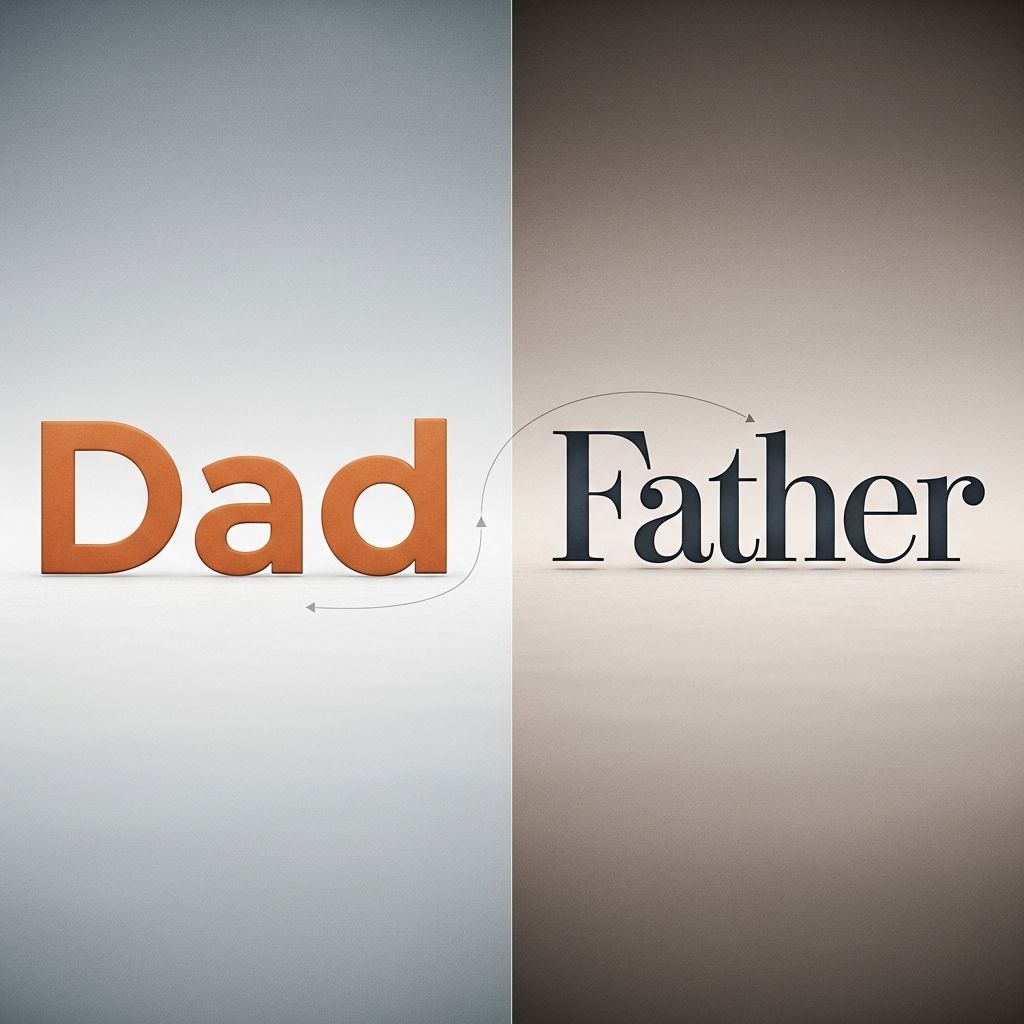
The English language distinguishes between informal and formal paternal terms through etymology shaped by centuries of linguistic evolution. ‘Dad’ emerged as a childish reduplication, a simple, repetitive sound like ‘mama’ or ‘papa,’ common in many tongues for its ease of pronunciation by infants. This term gained popularity in the 16th century, spreading through everyday speech to signify closeness and playfulness.
In contrast, ‘father’ derives from Old English ‘fæder,’ tracing back to Proto-Indo-European *ph₂tḗr, emphasizing lineage, provision, and authority. This formal word aligns with legal, religious, and official contexts, underscoring a provider role rather than everyday affection. The duality allows English speakers to switch based on context, mood, or relationship stage.
Global Variations: How Cultures Name Their Fathers
Worldwide, father terms blend affection, respect, and cultural values. In Romance languages, formal options coexist with endearing nicknames. French uses ‘père’ for official respect and ‘papa’ for intimacy, mirroring English patterns. Spanish offers ‘papá’ as standard, ‘pá’ colloquially, and ‘papi’ tenderly, while Italian favors ‘padre’ formally but defaults to regional affectionate forms in daily life.
German maintains ‘Vater’ for authority in documents and ‘Papa’ for family warmth. Turkish ‘baba’ uniquely serves both roles, embodying familial centrality. Arabic includes ‘baba’ affectionately and ‘aby’ as ‘my father,’ highlighting possession and bond.
| Language/Region | Formal Term | Informal Term | Cultural Note |
|---|---|---|---|
| French | Père | Papa | Respect in official use |
| Spanish | Padre | Papá/Papi | Affectionate in families |
| German | Vater | Papa | Authority vs warmth |
| Turkish | Baba | Baba | Unified term |
| Arabic | Ab | Baba/Aby | Possessive intimacy |
North American English variants include ‘dad,’ ‘daddy,’ ‘papa,’ ‘pop,’ and ‘father,’ influenced by heritage. US usage leans casual with ‘pop’ in Midwest/South, while Canadian French areas favor ‘papa’. These reflect multicultural blends.
Anthropological Perspectives on Kinship and Paternity
Anthropology reveals fatherhood as socially constructed, not just biological. The ‘pater’ (social father) may differ from ‘genitor’ (genetic father), with terms reinforcing cultural roles. Among Round Lake Ojibwa, biological terms are strict; substitutes are ‘like a father,’ preserving specificity.
Exchange systems like bridewealth define paternity, akin to modern provider expectations. In Nahua culture, mothers uphold father’s authority, positioning him as disciplinarian while collaborating. Kinship systems vary: some use broad terms like Hawaiian, calling all male elders ‘father’.
These systems classify relatives, influencing emotional bonds and responsibilities. Collectivist societies emphasize protection and resources, while individualist ones promote involvement.
Cultural Shifts in Fatherhood Roles
Fathering adapts across contexts. Diverse mating systems separate parenting from partnerships, involving extended kin. Fathers provide protection, resources, and care, shaped by economics, upbringing, and masculinity norms.
In Latino, Chinese, and Indonesian cultures, fathers transition from breadwinners/disciplinarians to active caregivers, influenced by migration and policies. Mexican-American fathers using Spanish show higher involvement via supervision. English-primary speakers engage less positively, per studies.
Individualist nations like Norway/Finland support paternal leave, boosting participation. Globally, fathers encourage exploration, risk-taking, and regulation, complementing mothers.
Why Men Choose ‘Father’ Over ‘Dad’
Preference for ‘father’ stems from identity. Some men link it to maturity, authority, and legacy, avoiding ‘dad’s’ childish connotation. Religious contexts favor ‘father’ for reverence. Others embrace ‘dad’ for equality and involvement, rejecting patriarchal distance.
Personal stories highlight: professionals use ‘father’ professionally; hands-on dads prefer ‘dad.’ Age matters—older men may insist on ‘father’ for respect. Cultural background influences: formal-term cultures carry preferences abroad.
Modern Implications for Family Dynamics
Term choice impacts bonds. Casual ‘dad’ fosters openness; ‘father’ sets boundaries. In blended families, terms clarify roles. Linguists note baby talk origins promote attachment universally.
Evolving roles demand flexible terms. Involved fathers blend authority with play, mirroring term duality. Understanding origins aids appreciation of diverse expressions.
Frequently Asked Questions
What is the oldest root for ‘father’?
The term traces to Proto-Indo-European *ph₂tḗr, shared across Indo-European languages, denoting lineage and provision.
Why do many languages use ‘papa’ or ‘baba’?
These reduplicative sounds are easy for infants, evolving into affectionate terms globally.
Do all cultures distinguish formal/informal father terms?
No, like Turkish ‘baba,’ some unify them, while others like English have clear divides.
How does culture affect father involvement?
Collectivist cultures stress provision; individualist ones emphasize engagement, with shifts toward involvement everywhere.
Can kinship terms change social roles?
Yes, broad terms like Hawaiian ‘father’ for elders expand responsibilities.
References
- “Father” Across Cultures: How to Say Dad in Different Languages — Laoret. 2023. https://laoret.com/blog/dad-in-different-languages/
- An Anthropology of Dads: Exploring fatherhood in eHRAF — Human Relations Area Files, Yale University. 2023. https://hraf.yale.edu/an-anthropology-of-dads-exploring-fatherhood-in-ehraf/
- Fathering in Diverse Cultural Contexts: An Emerging Picture — Child Encyclopedia. 2023. https://www.child-encyclopedia.com/father-paternity/according-experts/fathering-diverse-cultural-contexts-emerging-picture-overall
- Parenting in Cultural Perspective: A Systematic Review of Paternal… — European Journal of Educational & Social Sciences. 2023. https://www.ejecs.org/index.php/JECS/article/download/1287/483/5426
- Cultural Influences on Positive Father Involvement in Two-Parent… — PMC (National Library of Medicine). 2012-03-15. https://pmc.ncbi.nlm.nih.gov/articles/PMC3278273/
- Kinship terminology | Anthropology | Research Starters — EBSCO. 2023. https://www.ebsco.com/research-starters/anthropology/kinship-terminology