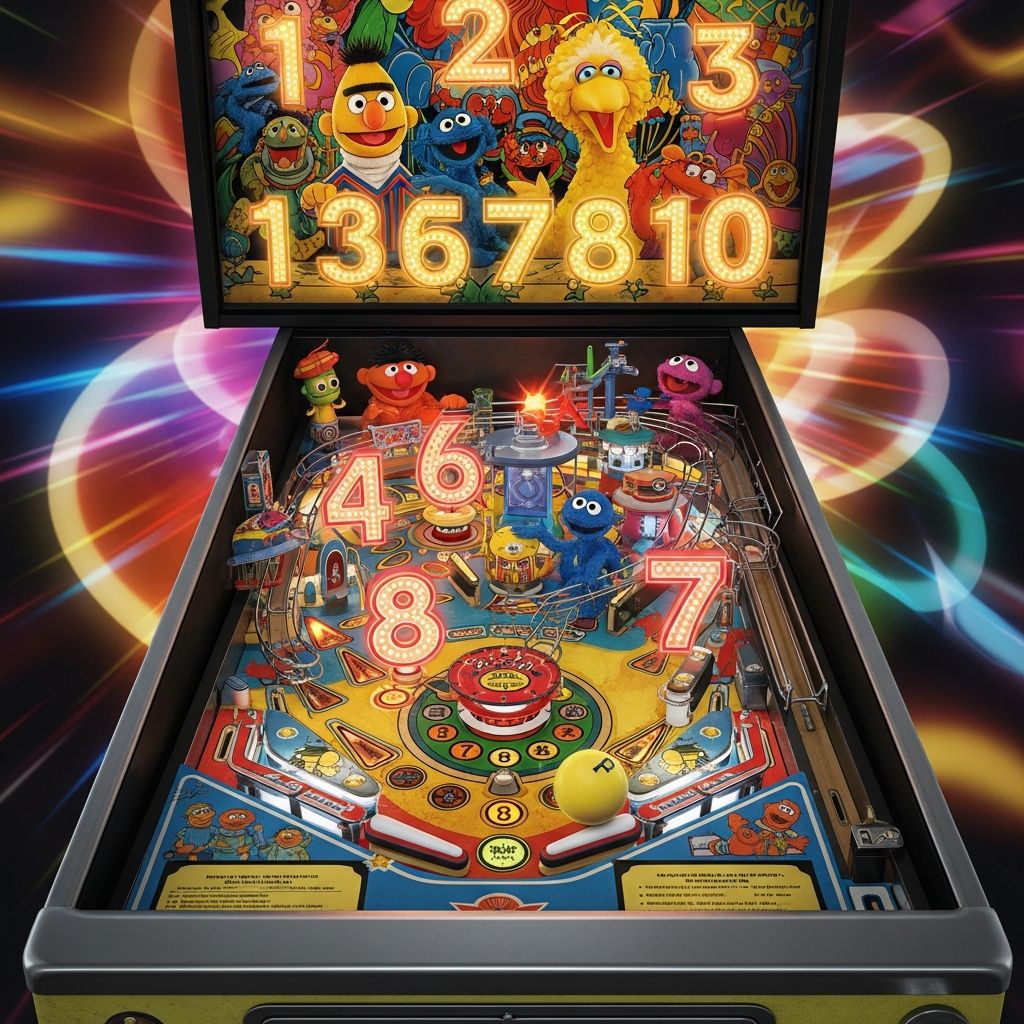
Long before streaming playlists and algorithm-generated nursery rhymes, a one-minute animated music segment on Sesame Street quietly became one of the most beloved math lessons on television. With a psychedelic pinball machine, a driving funk groove, and the unmistakable voices of the Pointer Sisters, “Pinball Number Count” turned counting from 1 to 12 into an event kids looked forward to, not a chore they had to endure.
This article explores why that short clip hit so hard, how a sophisticated musical arrangement slipped into children’s TV, and what parents and educators today can learn from its mix of style, rhythm, and pure joyful weirdness.
The Sesame Street Experiment: Learning Disguised as Fun
From the beginning, Sesame Street experimented with the idea that learning sticks better when kids are genuinely entertained. Instead of drills and repetition, it leaned on sketches, puppets, and music videos that felt closer to variety shows than classrooms. The pinball segments fit perfectly into this philosophy.
Rather than staring at static flashcards, kids watched a silver ball ricochet through colorful worlds—carnivals, farms, cityscapes, fantasy lands—while the music wrapped the numbers in rhythm and melody. The point wasn’t just that children heard the numbers; they felt them on the beat.
- Numbers were introduced in motion, not isolation, making counting feel like a story unfolding.
- Each appearance of the segment reinforced the same core idea—counting to 12—without ever feeling like a lecture.
Inside the Pinball Machine: Visuals That Glued Eyes to the Screen
The animation in the pinball segments looked nothing like the rest of children’s TV at the time. Instead of simple cartoon animals or smiling numbers, kids got a surreal marble-run journey through a hyper-stylized pinball machine, full of ramps, spinners, tunnels, and themed mini-worlds for each number.
Every trip through the machine had the same basic structure—a ball is launched, bounces through obstacles, hits targets, and ultimately lands in a final “hole”—but the details changed, giving each number its own tiny universe.
Visual tricks that made numbers stick
- Repetition with variation: The ball’s journey was familiar in rhythm but surprising in detail, helping kids anticipate the count while still feeling delighted.
- Number saturation: Each number wasn’t just spoken or sung; it appeared visually throughout the set pieces, printed on signs, buildings, and moving objects.
- Environmental themes: Farms, carnivals, medieval castles, space-like ramps—these themes linked each number to a mini-story, giving young brains more hooks to hang the memory on.
Children weren’t just memorizing digits; they were associating each number with motion, sound, color, and place—exactly the kind of multi-sensory coding that helps information last.
The Pointer Sisters Bring Funk to Counting
The secret weapon behind the pinball clips wasn’t only the animation; it was the music. The Pointer Sisters—already respected vocal powerhouses—delivered stacked harmonies, call-and-response phrases, and syncopated riffs that sounded closer to a funk club than a preschool classroom.
Instead of singing in a slow, overly clear style often used in children’s music, the group trusted that kids could handle complex rhythm and phrasing. The result was a track that parents could enjoy as much as their children, and that kids would happily dance to while accidentally learning their numbers.
Why the groove mattered so much
- Rhythm anchors memory: When numbers lock onto a beat, children develop a sense of sequence and pattern that supports both math and language skills.
- Call-and-response hooks: The way the vocals moved between solo lines, group shouts, and echoes created moments where kids could “join in,” even if they didn’t know all the words yet.
- Emotional energy: The excitement in the performance telegraphed that counting wasn’t just important—it was fun, almost like a game show victory every time the sequence finished.
Why 12, Not Just 10?
Most early math content for young kids stops at 10, but the pinball sequence famously goes all the way to 12. That choice matters. The world is full of twelves: hours on a clock, months in a year, spaces on some game boards, and units in measurement traditions.
By pushing kids just beyond the more typical 1–10 range, the segment quietly normalized a slightly more advanced counting goal. The music also made that stretch feel effortless; the vocal line doesn’t slow down when it hits 11 and 12—it surges through them as part of the natural flow.
| Number range | Common use | What kids learn |
|---|---|---|
| 1–5 | Sharing snacks, counting fingers on one hand | Basic quantity and one-to-one correspondence |
| 1–10 | Simple games, beginner math worksheets | Early number lines, simple addition and subtraction |
| 1–12 | Clocks, calendars, some measurement systems | Pattern recognition beyond 10, readiness for more complex concepts |
For kids who already felt anxious around numbers, hitting 12 smoothly each time—without pause or fanfare—helped normalize larger numbers as just “more of the same pattern,” not something intimidating.
The Segment as a Tiny Music Video
Decades before music TV channels exploded, the pinball number segments functioned like miniature music videos. A song, a visual world, a hook, and a clear repeat value—all built into a one-minute package. That format made it endlessly rewatchable.
Parents might remember waiting for it like a favorite commercial: if you happened to walk into the room during that opening pinball launch sound, you knew you had to stay until the ball dropped into the final slot and the last note hit.
Elements borrowed from pop culture
- Cold open: The ball launches almost immediately, with no introduction, mirroring how many music videos jump straight into mood.
- Consistent hook: The melodic and rhythmic “count up” is always the star, making the numbers themselves the chorus your brain waits for.
- Replay power: Because the visuals changed with each number segment, the core song felt familiar while the experience stayed fresh.
Why So Many Adults Still Remember It Perfectly
Ask people who grew up in the era of the pinball cartoons, and many can still hum the melody or mimic the rhythm of the count. That’s not nostalgia alone; it’s a lesson in how the brain works. Repeated exposure, strong emotional association, and multi-sensory input together carve deep grooves in memory.
For some children, especially those unsure about math, this segment may have been the rare moment when numbers felt welcoming instead of confusing. The warmth of the Pointer Sisters’ harmonies and the kinetic excitement of the visuals reframed counting as play.
- Kids saw numbers in a context that felt “grown-up,” not babyish, which can be especially powerful for early elementary ages.
- Because the song didn’t talk down to its audience, many children internalized it as part of their identity, not just a school exercise.
What Parents Today Can Learn From the Pinball Segments
Even if screens look very different now, the design lessons behind the pinball sequence are still relevant for helping kids build a healthy relationship with numbers. The goal isn’t to hunt down old footage and press play on a loop; it’s to recreate the same conditions that made the original work so well.
At its core, the pinball experience proved that kids will tackle challenging material willingly if it comes wrapped in rhythm, story, and genuine artistic care.
Ideas to borrow for modern learning
- Use real music, not watered-down jingles: Put on songs with strong grooves and let kids clap or step out numbers along with the beat.
- Turn counting into movement: Create simple obstacle courses or toy “runs” where objects pass through 12 stations, each labeled or decorated.
- Let repetition feel like a game: Instead of new content every time, re-visit favorite counting songs and visual setups so kids can anticipate patterns.
Recreating the Magic at Home
Parents don’t need studio-grade animation or a legendary vocal group to tap into the same spirit. The real genius of the pinball approach was how it disguised practice as play. With a bit of creativity, everyday objects can become part of a homemade counting “machine.”
Think in terms of journeys and destinations: something starts somewhere, moves through a sequence of events, and ends with a satisfying finish—just like the ball dropping into the final pocket.
Simple activities inspired by the pinball journey
- Number run with toys: Line up 12 blocks, cars, or action figures. Have your child move a “pinball” (a marble, ball, or even a sticker) from one to the next while saying each number out loud.
- Kitchen counter course: Arrange spoons, cups, and napkins in a numbered path. Each stop involves a tiny task—tap, spin, stack—before moving on.
- Drawing a number maze: On paper, sketch a wiggly path that passes through boxes labeled 1 to 12. Kids trace the route with a finger or pen, counting as they go.
These activities mimic the sense of progression that made the TV segments so compelling without needing any screens at all.
Music, Representation, and Cultural Cool
Another powerful, if sometimes overlooked, aspect of the pinball segments was who was doing the singing. Having a Black women’s vocal group known for mainstream success provide the soundtrack sent a quiet signal: children’s learning deserves top-tier talent, and educational content can participate in the same musical universe as adult culture.
For many kids, this may have been one of the first times they heard funk and jazz-influenced arrangements presented as something to sing along to while learning. It subtly broadened their idea of what “learning music” could sound like and who could be centered in it.
- Children of color saw artists who looked like them connected to intelligence, skill, and authority in a learning context.
- All children were introduced to richer musical traditions than the simple, stripped-down tunes often reserved for kids’ albums.
From Retro Clip to Multigenerational Tradition
Today, the pinball cartoons occupy a sweet spot in culture: they are old enough to feel retro, but vibrant enough to still engage children encountering them for the first time. Many parents now share the clip with their own kids, not just for the math content, but as a piece of their childhood they’re proud to pass on.
That multigenerational sharing turns the segment into more than a teaching tool. It becomes a family artifact—proof that numbers, rhythm, and a little bit of delightful weirdness can outlast changing technology and trends.
Frequently Asked Questions
Is the Sesame Street pinball song still useful for kids today?
Yes. The combination of rhythm, repetition, and colorful visuals still resonates with young children, even in an era of high-definition animation and constant content. The segment’s strength lies in its clear focus—counting to 12—delivered in a memorable, emotionally engaging package.
Why does the song focus on counting to 12 instead of just 10?
Stopping at 10 would have aligned with many early learning standards, but pushing to 12 gently expands a child’s comfort zone. It introduces numbers that show up frequently in real-world contexts, like clocks and calendars, without feeling like a separate, harder task.
Do kids actually learn math from music and animation like this?
They do—especially when the content is focused and repeated. Music supports pattern recognition, timing, and memory, while animation gives numbers a physical “place” to live in the child’s imagination. Together, they create an experience that’s far more sticky than numbers presented in isolation.
Can parents recreate this kind of learning without screens?
Absolutely. The key is to keep counting linked to movement, rhythm, and stories. Simple games with toys, household scavenger hunts, or clapping and stepping out numbers to music can echo the same principles at home.
What made the Pointer Sisters’ performance stand out?
Their vocals treated the material with the same respect and energy they brought to mainstream songs. Tight harmonies, playful phrasing, and a strong groove signaled that children’s content didn’t need to be watered down to be effective—it could be artistically rich and still perfectly suited for young listeners.