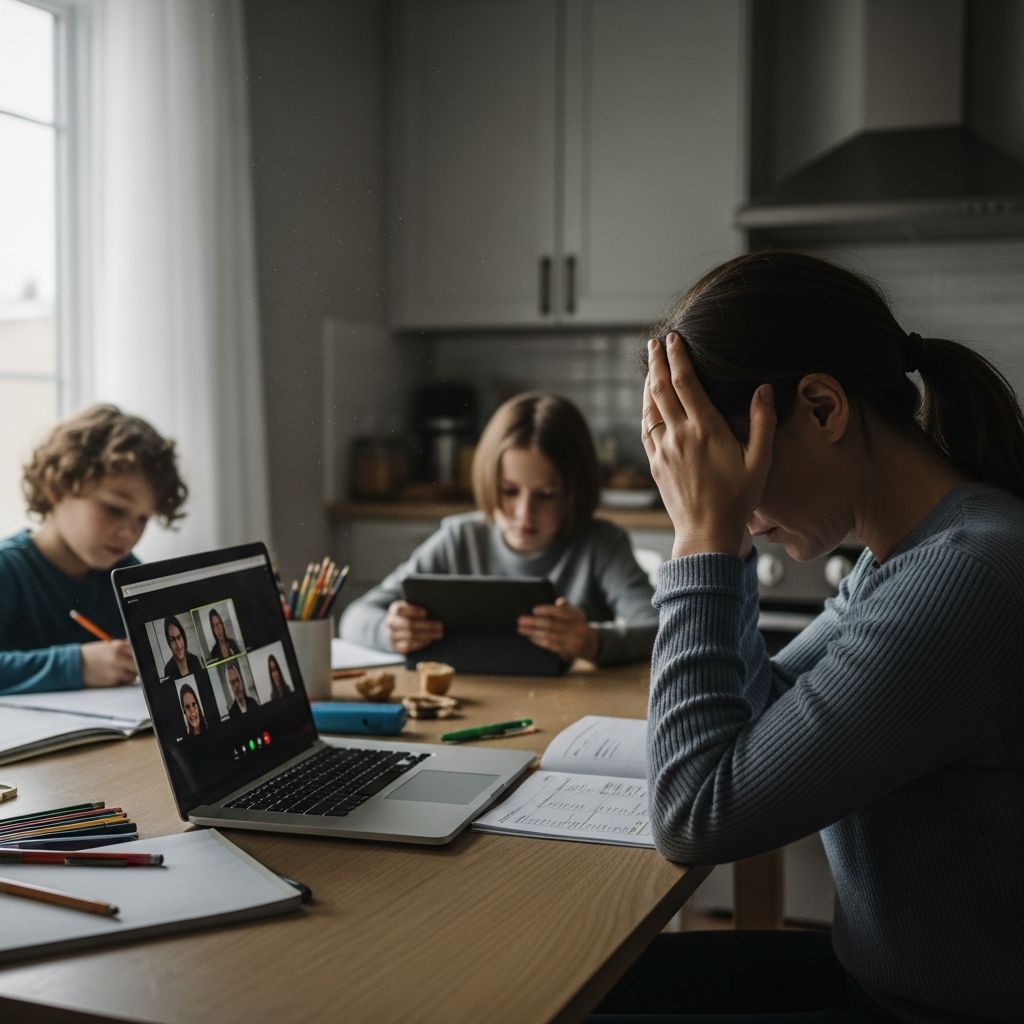
During the height of the COVID-19 pandemic, remote learning became a reality for millions of families, transforming homes into makeshift classrooms overnight. One mother’s candid Facebook post about her breaking point captured the collective exhaustion felt by parents everywhere, sparking widespread empathy and discussion.
The Hidden Toll of Virtual Classrooms on Families
Virtual education introduced unprecedented pressures on households. Parents juggled full-time jobs, household duties, and the role of impromptu teachers, often without adequate training or resources. Children, accustomed to structured school environments, faced screens for hours, leading to frustration, isolation, and emotional distress. This shift highlighted deep inequalities in access to technology and quiet learning spaces, exacerbating stress levels across demographics.
Many families reported children breaking down in tears over confusing assignments or technical glitches. The absence of peer interaction compounded the issue, as kids missed playground chats and group activities essential for social development. Parents watched helplessly as their little ones struggled, mirroring scenes shared across social media platforms.
Real Stories from the Frontlines of Home Schooling
Heart-wrenching images and videos flooded Facebook and Twitter. In one notable case, a Missouri mother posted a video of her 10-year-old fifth-grader sobbing alone in his bedroom, overwhelmed by online lessons. Similarly, a Georgia parent shared a photo of her five-year-old kindergarten son slumped with his head in his hands, defeated by the virtual curriculum.
These posts weren’t isolated. Thousands of parents related, commenting with their own tales of daily battles. One mother described her child’s meltdown after repeated failed logins, while another recounted endless Zoom fatigue. Such shares created a virtual support network, validating the shared chaos.
Why Remote Learning Proved So Challenging
- Technical Barriers: Unreliable internet, outdated devices, and software crashes disrupted lessons, leaving both kids and parents in distress.
- Lack of Personalization: Teachers struggled to provide individualized attention through screens, making it hard for students to grasp concepts.
- Social Isolation: Without face-to-face peers, children experienced loneliness, impacting mental health and motivation.
- Parental Overload: Working parents faced impossible choices between career demands and educational support.
Research from the period underscored these issues, noting that students in virtual settings learned significantly less than in traditional classrooms, with long-term academic gaps emerging.
Parental Choices: Opting Out of the Virtual Grind
As exhaustion mounted, some parents made bold decisions to disengage from formal distance learning. A viral tweet from a mother explained her “dropping out” rationale: prioritizing work and family sanity over rigid online schedules. She taught core concepts on her terms, ditching what she called unnecessary screen time for young kids.
Others, like a parent of three children with special needs, halted participation after just days, choosing emotional well-being over forced compliance. With essential worker spouses and no specialist support, the load was unbearable. These stories highlighted a growing “learning pod” or unschooling trend, where families customized education to fit real life.
| Challenge | Impact on Families | Common Responses |
|---|---|---|
| Screen Fatigue | Tears, headaches, disengagement | Scheduled breaks, outdoor activities |
| Job Conflicts | Income loss risk, stress | Opting out, flexible teaching |
| Special Needs | No therapist access, heightened demands | Home-based interventions |
| Social Gaps | Loneliness, behavioral issues | Playdates, community groups |
Positive Perspectives Amid the Chaos
Not all narratives were despairing. One uplifting post from a mother encouraged her son by framing their experience as historic: “You and your friends are making history.” This mindset shift resonated, reminding families that resilience was being forged in adversity. Such positivity offered a counterbalance, fostering pride in adaptation.
Some parents discovered unexpected benefits, like stronger family bonds through shared learning. Graduate student mothers in one study reported “accidental flexibility,” allowing better work-life integration despite initial hurdles.
Long-Term Academic and Emotional Impacts
Experts warned of lasting consequences. Reduced socialization stunted emotional growth, while diluted instruction led to knowledge gaps. Data indicated virtual learners fell behind peers by months in key subjects, with disadvantaged groups hit hardest.
Mental health suffered too, with increased anxiety and depression among youth. Parents grappled with guilt, feeling inadequate in their dual roles. Yet, these trials built adaptability, preparing a generation for uncertain futures.
Strategies That Helped Families Survive Remote Learning
- Set Boundaries: Designate specific times for schoolwork to protect family routines.
- Leverage Community: Form local learning groups for peer interaction and shared support.
- Customize Learning: Use hands-on activities over screens when possible.
- Prioritize Mental Health: Incorporate play, exercise, and open talks about feelings.
- Seek Resources: Tap free online tools from educational nonprofits.
These approaches turned survival into manageable routines for many, proving proactive steps could mitigate burnout.
Frequently Asked Questions (FAQs)
Q: Why did so many children cry during remote learning?
A: Overwhelm from technical issues, lack of teacher support, and missing friends caused frustration and emotional outbursts, as seen in viral social media posts.
Q: Is it okay for parents to skip distance learning?
A: Some parents chose alternatives for mental health and practicality, focusing on essential skills without formal programs, especially for young or special needs kids.
Q: What were the biggest remote learning barriers?
A: Internet access, device shortages, and balancing work with teaching topped the list, widening educational inequities.
Q: Did remote learning have any silver linings?
A: Yes, it fostered family closeness, flexibility for some, and historic resilience in children navigating a global crisis.
Q: How can parents prepare for future virtual schooling?
A: Build tech skills, create dedicated spaces, and emphasize social outlets to ease transitions.
Educational Inequality Exposed by the Pandemic
Remote learning laid bare systemic divides. Low-income families lacked broadband, while rural areas faced connectivity deserts. Students with disabilities missed vital therapies, and English learners struggled without in-person aid. Policymakers noted these gaps demanded urgent reforms, like expanded digital infrastructure.
Post-pandemic analyses confirmed learning losses equivalent to half a year in math and reading, urging investments in hybrid models.
Moving Forward: Lessons from a Viral Moment
The mother’s post, declaring “I’m done,” became an anthem for weary parents, amassing likes and shares. It sparked conversations on sustainable education, valuing family over flawed systems. Today, these experiences inform hybrid approaches blending virtual and in-person strengths.
Ultimately, the pandemic tested families’ limits but revealed profound strength. By sharing struggles openly, parents not only coped but catalyzed change, ensuring future crises find us better prepared.
References
- Facebook Posts Show Children Crying Over Remote Learning — Business Insider. 2020-08-20. https://www.businessinsider.com/children-crying-over-remote-learning-struggles-social-media-2020-8
- Viral Tweet Explains Why Some Parents Are ‘Dropping Out’ Of Distance-Learning — Scary Mommy. 2020. https://www.scarymommy.com/parents-refusing-participate-distance-learning
- ‘You and your friends are making history’: Mom’s post on virtual learning goes viral — Good Morning America. 2020. https://www.goodmorningamerica.com/family/story/friends-making-history-moms-post-virtual-learning-viral-75972239
- ‘I’m done’: Mom’s viral post nails the struggle of every remote learning family — Mother.ly. 2020. https://www.mother.ly/life/moms-viral-post-remote-learning/
- Parents, students react to virtual learning after first day of school — WFMY News 2 (YouTube). 2020. https://www.youtube.com/watch?v=5_3RIYLND7U
- Remote Learning Will Prove An Extra Challenge When Both Mom And Kids Are Students — CBS News. 2020. https://www.cbsnews.com/chicago/news/remote-learning-will-prove-an-extra-challenge-when-both-mom-and-kids-are-students/
- Accidental Flexibility: The Effects of COVID‐19‐Induced Remote Learning — PMC (NCBI). 2023. https://pmc.ncbi.nlm.nih.gov/articles/PMC12366538/