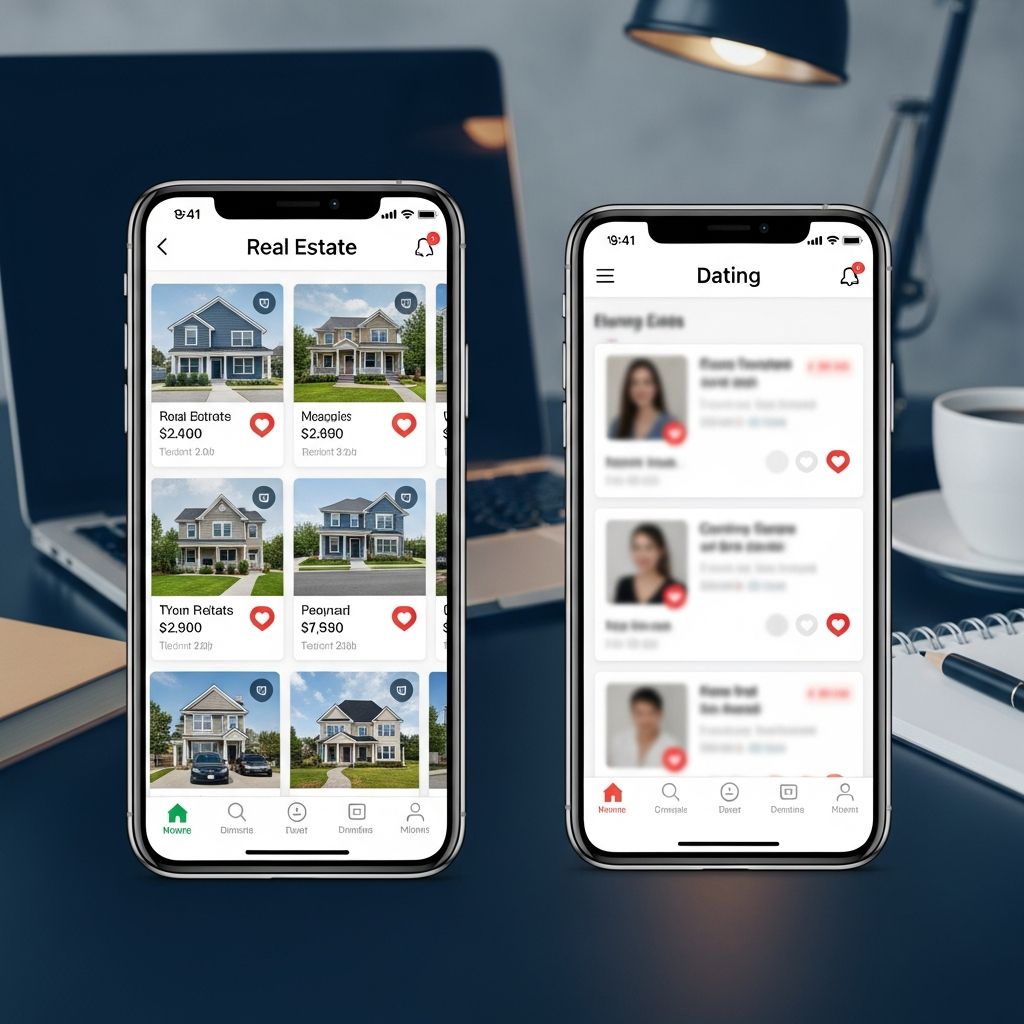
There is something both embarrassing and irresistible about opening a real estate app late at night, not because you are moving, not because you can actually afford that waterfront loft, but because you want to feel the spark of possibility. The scroll, the swiping, the hopeful favorites list—it can all feel suspiciously like flirting with a life you do not yet have, and maybe never will.
Real estate browsing has quietly become a recreational activity, a cross between daydreaming and online dating. Instead of checking who liked your profile, you check whether that three-bedroom with the soaking tub is still on the market. Instead of crushes, you have crush houses. And just like romantic fantasies, these home fantasies reveal deep truths about how people see adulthood, security, status, and themselves.
The Rise of Recreational House Hunting
For many people, opening a real estate app is no longer a practical step toward moving; it is a form of entertainment. You browse properties in cities you will probably never live in, bookmark cabins in states you barely know, and then close the app feeling strangely satisfied, even if nothing in your actual life has changed.
This shift has turned serious financial tools into emotional playgrounds. What once required Sunday open houses and awkward chats with agents can now be done in bed, in sweatpants, with no intention of contacting a lender. People are not only searching for homes; they are searching for feelings: comfort, escape, control, and the fantasy of finally having everything figured out.
Why It Feels So Good
- Instant escape: Three taps and you are living in a sunlit craftsman instead of your cramped apartment.
- Low-stakes control: You can filter, sort, and reject homes at will, a sense of power often missing from real life.
- Permission to dream: Browsing a million-dollar listing feels like trying on a different version of yourself, no commitment required.
Real Estate Apps and Dating Apps: An Uncomfortable Similarity
Real estate platforms and dating platforms have more in common than they first appear. Both offer an endless stream of profiles, each wrapped in carefully chosen photos and strategic descriptions. Both encourage snap judgments. Both keep you convinced that the perfect match might be just one more swipe away.
And in both cases, algorithms learn what you linger on, what you reject, and what keeps you hooked. Over time, the feed begins to mirror not only your stated preferences but also your unspoken desires: the houses you have no business affording, the locations you would never move to, the architectural styles you did not know you loved until you caught yourself staring.
Side-by-Side: Houses vs. Dates
| Aspect | Real Estate Apps | Dating Apps |
|---|---|---|
| How you browse | Endless scrolling and tapping through listings, filtering by price, location, and features. | Endless swiping and tapping through profiles, filtering by age, distance, and interests. |
| First impression | Lead photo, curb appeal, staging, and a catchy description. | Profile pictures, bio, and a handful of prompts or tags. |
| Emotional hook | “I could see my whole life in this kitchen.” | “I could see my whole life with this person.” |
| Hidden realities | Foundation issues, noisy neighbors, confusing HOA rules. | Emotional baggage, communication issues, incompatible values. |
| The fantasy | Finding the perfect home that makes everything feel stable. | Finding the perfect partner who makes everything feel easy. |
What Our House Fantasies Say About Us
The homes people fantasize about tend to be less about location and square footage and more about identity. A minimalist loft signals a belief in reinvention and independence. A farmhouse with land hints at a desire for self-sufficiency, a slower pace, and maybe a rejection of urban chaos. A townhouse near good schools expresses long-term thinking and family aspirations, even if there are no children yet.
In this sense, a saved-listings folder is like a private vision board disguised as a set of practical choices. It contains alternate lives carefully curated into one place: the seaside life, the mountain life, the downtown-life-with-rooftop-garden. Every favorite is a different answer to the question, “Who do I want to be a few years from now?”
Common Fantasy Home Archetypes
- The Reinvention Loft: High ceilings, industrial windows, and the sense that a bold new career or creative life is just waiting for you to move in.
- The Cozy Nest: Smaller, warmer spaces with bookshelves and a big couch, signaling a craving for intimacy, routine, and quiet.
- The Achievement House: Large, polished, and clearly expensive, meant less for comfort and more as proof that you “made it.”
- The Escape Cabin: Wood, water, trees, and distance—a fantasy of disappearing from obligations and group chats.
The Millennial and Gen Z Twist
For younger adults, the playful relationship with real estate apps exists alongside a more sobering reality: homeownership can feel distant or uncertain. Rising costs, student debt, unstable job markets, and life plans that start later than previous generations all collide with the traditional script of “settle down, buy a house, stay put.”
As a result, browsing becomes both a soothing ritual and a quiet confrontation with the math of adulthood. The app offers optimistic images of sunlight hitting hardwood floors, while the budget tab silently reminds you what your savings and income can realistically handle. Those two experiences rarely line up perfectly, and that tension is exactly why it feels so loaded.
Why This Generation Scrolls So Much
- Mortgage timelines are uncertain: Many people are not sure when or where they will be able to buy, but still want to feel like they are moving toward something.
- Flexibility is the norm: Careers, relationships, and cities are more fluid, so people are less attached to a single place and more open to browsing “what if” scenarios.
- Online life blurs fantasy and planning: The same screen used for impulse shopping and doomscrolling is also used for investigating life’s biggest purchases.
When Harmless Fantasy Becomes Emotional Whiplash
Spending a few minutes wandering through dream kitchens and perfect yards can be harmless fun. But it can also trigger uncomfortable feelings: envy of people who seem further ahead, frustration about your income, or restlessness with your current life. The problem is not the app itself, but the subtle mental math that starts running in the background.
People may alternate between two extremes: feeling briefly euphoric imagining a new life, and then abruptly deflated when reality re-enters the room. That swing in mood can be addictive in the same way some social media feeds are. The next listing is always the one that will finally make it all make sense, until it doesn’t.
Signs Your Browsing Is Stressing You Out
- You close the app feeling more anxious or inadequate than when you opened it.
- You compare your real home or apartment to fantasy listings and find everything lacking.
- You repeatedly calculate unrealistic scenarios just to justify looking at certain properties.
- You use the app as a way to avoid dealing with real financial or career questions.
Turning Fantasy Browsing into Something Useful
Used intentionally, real estate browsing can function as more than procrastination. It can become a loose, flexible way of exploring your values and your priorities. Instead of just asking, “Could I ever afford this?” you can ask, “What exactly do I like about this?”
By paying attention to patterns in what attracts you, you begin to separate the essential from the decorative. Do you always save places with natural light? Then maybe sunlight is a non-negotiable. Are you consistently drawn to walkable neighborhoods, regardless of city? That might say more about your lifestyle preferences than any personality quiz.
How to Browse with Intention
- Write down your recurring must-haves: Note features that show up in many of your saved listings, such as outdoor space, number of rooms, or proximity to parks.
- Distinguish fantasy from preference: A rooftop pool might be fun to imagine, but if it only appears in a handful of listings, it probably is not central to your real needs.
- Check in with your emotions: Ask, “Do I feel inspired, hopeful, or crushed right now?” and adjust your browsing habit accordingly.
Building a Reality-Ready Wish List
One way to bridge the gap between fantasy and practicality is to translate your whimsical browsing into a grounded, flexible wish list. This is not a rigid checklist designed to be met perfectly, but a snapshot of what matters most.
By organizing your desires into tiers, you avoid two traps: settling for something that will make you miserable, or holding out indefinitely for a unicorn property. A realistic wish list accepts trade-offs without abandoning the core of what you want your home to feel like.
Sample Tiered Wish List
| Priority Level | Home Features | Guiding Question |
|---|---|---|
| Non-negotiables | Price within budget, safe neighborhood, enough rooms for current household size. | “If this is missing, would I regret the decision every day?” |
| Strong preferences | Natural light, laundry in-unit, short commute, access to green space. | “Would this significantly improve my daily quality of life?” |
| Nice-to-haves | Updated kitchen, extra office nook, guest room, balcony or patio. | “Would I still be happy with the home if this were missing?” |
| Pure fantasies | Pool, sweeping views, home theater, wine cellar, massive walk-in closet. | “Is this more about daydreaming than daily use?” |
Bringing the Fantasy Home—Literally
One of the most overlooked uses of real estate browsing is as inspiration for the space you already have. Instead of treating those dream listings as proof of what you lack, you can think of them as mood boards. Pay attention to the colors, layouts, and textures that repeat across the homes you love.
You might not get the entire hillside property, but you can borrow the warm lamp placement, the greenery, or the way they use shelving to divide a room. Sometimes the feeling you chase in a listing is achievable on a smaller scale with some rearranging, decluttering, or low-cost upgrades.
Small Ways to Capture Big-Dream Energy
- Recreate a favorite listing’s color palette with paint, textiles, or artwork.
- Steal layout ideas such as reading corners, dining nooks, or entryway storage solutions.
- Bring in plants, light fixtures, or mirrors to mimic the airy, bright feeling of larger spaces.
- Use inexpensive furniture swaps to emphasize how you actually live, not how listings are staged.
Couples, Conflict, and Joint Scrolling
For couples, shared browsing sessions can become a revealing relationship exercise. That charming fixer-upper one person adores might look like a pile of weekend arguments to the other. One partner may gravitate toward quiet suburbs, while the other only bookmarks lively, walkable neighborhoods.
These differences are not just aesthetic; they point to contrasting visions of the future. How close to family do you want to live? How important is space for guests? Does one person crave a yard while the other dreads yard work? Joint scrolling can surface these tensions long before an offer is on the table, which is actually a gift if handled thoughtfully.
Healthy Ways to Browse Together
- Set a playful tone by labeling some listings “dream only” and others “maybe, someday,” so no one feels secretly judged for unrealistic picks.
- Take turns explaining what you love about a listing before critiquing it, so the conversation stays empathetic.
- Notice common ground—like a shared love of natural light or dislike of long commutes—and treat it as the foundation of your future choices.
Knowing When to Step Away
Like any digital habit, recreational house hunting works best with boundaries. It should add curiosity, creativity, or clarity—not chronic dissatisfaction. If the app has started to feel like a measure of failure instead of a source of inspiration, that is a cue to step back.
Creating small limits helps: only browsing at certain times, avoiding checking in the middle of stressful days, or periodically clearing your saved folder to let your imagination reset. At its best, the ritual of scrolling through homes can be a light, almost playful way of imagining the future, not a daily reminder of everything that is not yet possible.
FAQs About Recreational Real Estate Browsing
Is it normal to browse homes I definitely cannot afford?
Yes. Many people treat these apps like a modern version of looking at dream cars or vacation brochures. The key is recognizing the activity as fantasy and not letting it dictate your sense of self-worth or financial expectations.
Can browsing listings actually help with future planning?
It can, if approached deliberately. Over time, your preferences become clearer, and you can translate them into a realistic plan: saving targets, location priorities, and a rough sense of what trade-offs you are willing to accept when the time comes to move.
How do I stop comparing my current place to the homes I see online?
One approach is to use each listing as a source of small, concrete ideas instead of an overall standard. Ask what one detail you could borrow—lighting, organization, or décor—so that your existing space evolves instead of simply coming up short.
Should I feel guilty if I browse real estate apps for fun?
Not necessarily. Like any leisure activity, the impact matters more than the habit itself. If it relaxes you, inspires you, or sparks useful conversations, it can be a perfectly fine way to unwind. If it starts to feed resentment or anxiety, that is a sign to reset your relationship with it.
What if my partner and I have totally different dream homes?
Differing visions are common and do not mean you are incompatible. Use those differences as a starting point for discussing underlying values—like community, privacy, career goals, or family life—and look for overlapping priorities you can build around.
A New Way to Look at the Late-Night Scroll
In the end, that quiet nightly ritual of opening a real estate app is rarely just about property. It is about possibility, identity, and the desire to feel that some future version of your life is out there waiting. Treating the scroll with a bit of self-awareness can turn it from an anxious loop into a creative exercise.
Real estate apps are powerful because they give shape and imagery to abstract hopes. Used wisely, they can help clarify those hopes instead of distorting them. The goal is not to stop dreaming, but to make peace with the gap between the tiled bathroom of your imagination and the floor under your feet right now—while still leaving room for the day those two might finally meet.