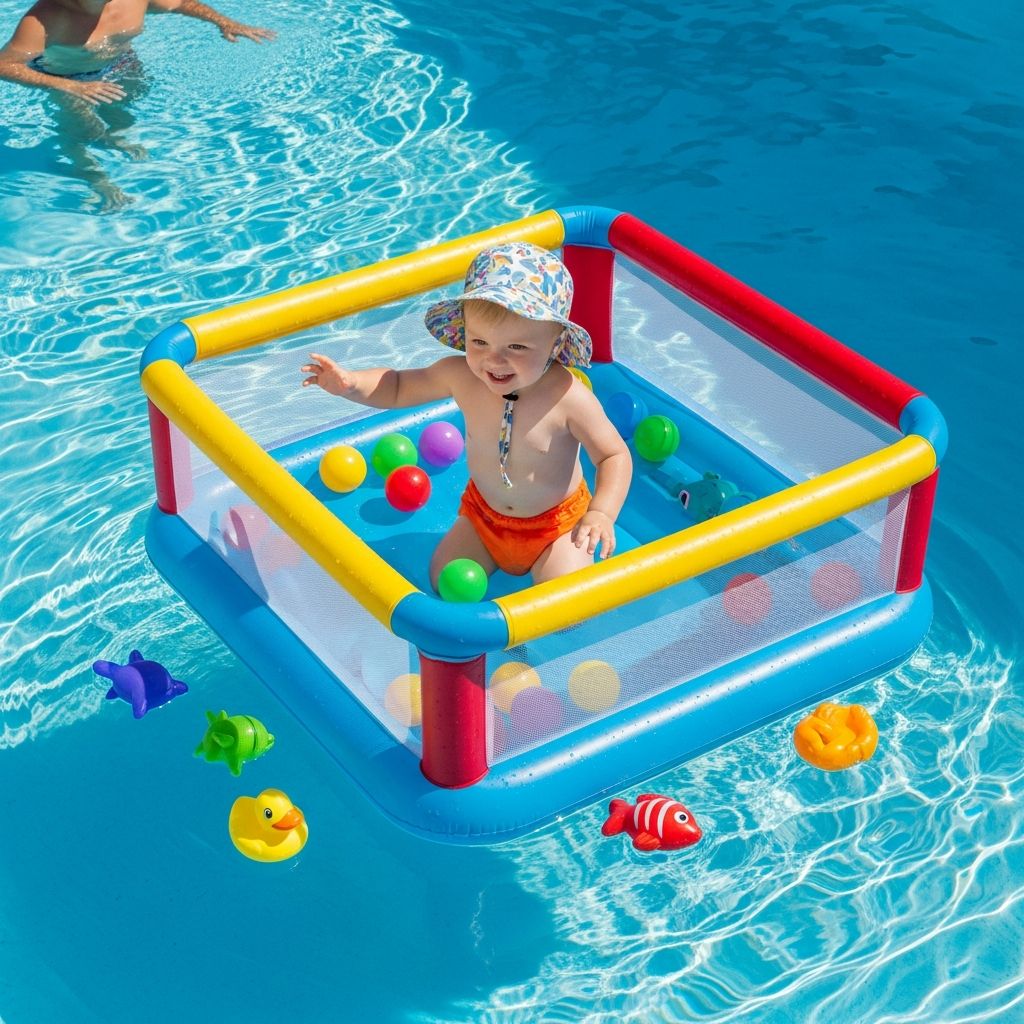
Parents seeking creative backyard solutions for summer fun have popularized a concerning DIY method: converting standard playpens into makeshift pool enclosures. While intended to contain toddlers during water play, this approach violates established safety protocols designed to prevent drownings, the leading cause of death for young children around water. Experts from child health organizations emphasize that such improvisations create false security, potentially leading to unsupervised access and entrapment hazards.
Understanding the Allure and Hidden Dangers of DIY Pool Containment
The appeal lies in affordability and convenience—repurposing a playpen seems like an easy way to create a bounded splash zone without investing in specialized equipment. Social media amplifies these ideas, showcasing happy babies in colorful setups that appear secure at a glance. However, playpens lack the structural integrity, drainage capabilities, and barrier standards required for water environments. Water accumulation turns mesh sides into climbable surfaces, and the lightweight frames can tip or collapse under wet conditions.
Drowning risks escalate because these setups often sit on uneven ground, where even shallow water—mere inches deep—poses lethal threats to non-swimmers under age five. Official data highlights that portable above-ground pools contribute significantly to pediatric submersion incidents, with inadequate barriers being a primary factor. Unlike certified pool fences, playpens offer no resistance to determined toddlers or gaps that allow passage.
Core Principles of Child Water Safety: What Guidelines Demand
Preventing water-related tragedies starts with unwavering adherence to evidence-based rules from pediatric and safety authorities. Supervision remains paramount: children must never be left unattended near any water source, including kiddie pools or buckets. Designated ‘water watchers’—adults focused solely on monitoring—eliminate distractions like phones or conversations.
Physical barriers form the next defense layer. Isolation fencing around pools should stand at least four feet tall, be non-climbable, and feature self-closing, self-latching gates opening away from the water. Gaps under or between fence elements must not exceed four inches. For portable setups, emptying water immediately after use is non-negotiable to avoid standing hazards.
Key Barrier Requirements Comparison
| Feature | Recommended Pool Fence | Playpen (Unsuitable) |
|---|---|---|
| Height | Minimum 4 feet, non-climbable | Typically 2-3 feet, mesh climbable when wet |
| Gate Mechanism | Self-closing, self-latching | No gate; zippers or flaps fail under pressure |
| Water Compatibility | Durable, drainable design | Retains water, prone to mold and tipping |
| Gap Tolerance | ≤4 inches max | Mesh holes >4 inches, easy access |
This table underscores why playpens fall short as water barriers, prioritizing certified equipment instead.
Building a Secure Backyard Water Play Zone
Opt for purpose-built kiddie pools on level surfaces, never exceeding 24 inches in depth for young children. Position them within isolated, fenced yard sections away from the house to block unsupervised entry. Remove ladders or steps when not in use, storing them securely.
- Install pool alarms that detect surface disturbances or door breaches for added alerts.
- Use sturdy covers over unused pools to prevent falls.
- Keep rescue tools poolside: shepherd’s hooks, life jackets (not inflatables for safety), and a phone with emergency contacts.
Material safety matters too—select non-toxic, BPA-free items free of sharp edges or small parts. Regularly inspect for wear, as compromised gear heightens risks.
Supervision Strategies That Save Lives
Arm’s-reach rule applies universally: infants and toddlers under five must stay within immediate grasp during water activities. This ‘touch supervision’ enables instant response to slips or distress, critical since drownings occur silently in seconds.
Family gatherings demand a structured watcher rotation, with hand signals confirming vigilance. Avoid arm floaties or rings as substitutes—they fail catastrophically without oversight. Swimming lessons build skills but never replace adult presence.
Emergency Readiness: Every Parent’s Toolkit
Preparation turns potential disasters into survivable events. All caregivers should complete pediatric CPR certification, refreshing annually. Stock first-aid kits with wound care and maintain emergency number lists visibly.
Practice drills: simulate rescues using poolside poles or preservers, ensuring everyone knows locations and usage. For portable pools, swift drainage protocols prevent mosquito breeding and standing water lures.
Why Viral Hacks Spread Despite Warnings
Social platforms thrive on quick, visually appealing content, often sidelining nuance. A playpen pool video garners likes for cuteness, not safety scrutiny. Yet, health bodies like the CPSC stress toys and enclosures must withstand abuse testing without hazards—criteria unmet by wet playpen adaptations.
Parents, influenced by peers, underestimate shallow-water perils. Statistics from 2001-2009 reveal hundreds of portable pool submersion cases, many preventable with proper barriers. Counter this by consulting official resources before trends.
Age-Appropriate Water Introduction Techniques
Begin with gradual exposure: splash babies on dry skin before immersion, holding securely to foster comfort. For wading pools, limit time and depth, always draining post-use. Older toddlers benefit from structured swim programs emphasizing drain avoidance and safety rules.
- Infants (0-1): Bathtub touch supervision only; no pools.
- Toddlers (1-3): Arm’s reach in ≤12-inch water.
- Preschoolers (3-5): Lessons plus constant watch.
Frequently Asked Questions
Can playpens ever be used near pools safely?
No, they do not meet barrier standards and should stay for dry play only. Use certified fences instead.
How shallow is too shallow for drowning risk?
Even 1-2 inches can drown infants; always empty containers immediately.
Are pool alarms enough without watching kids?
No, they supplement but never replace active supervision.
What if my yard lacks space for full fencing?
Prioritize isolation barriers or avoid standing water; consult local codes.
Do swim floats make supervision less critical?
Absolutely not—inflatables are for fun, not safety.
Promoting a Culture of Water Safety
Empower communities by sharing verified tips, not untested hacks. Normalize CPR classes and watcher protocols at playdates. Retailers must highlight misuse warnings on playpens, reserved for indoor/outdoor dry use.
Legislative pushes for pool safety education amplify impact. Parents: verify setups against guidelines before use. Proactive measures ensure joyful splashes without tragedy.
References
- Portable Pool Safety — Nationwide Children’s Hospital. 2023. https://www.nationwidechildrens.org/research/areas-of-research/center-for-injury-research-and-policy/injury-topics/home-safety/portable-pool-safety
- Essential Safety Tips for Baby Swimming and Water Play — FairyBaby. 2024. https://fairybaby.com/blogs/babysafe/essential-safety-tips-for-baby-swimming-and-water-play-to-ensure-fun-and-protection
- Pool Safely — Pool Safely (CPSC). 2025. https://www.poolsafely.gov
- Toy Safety Business Guidance — U.S. Consumer Product Safety Commission (CPSC). 2024. https://www.cpsc.gov/Business–Manufacturing/Business-Education/Toy-Safety
- Chapter 2: SAFETY (Family Child Care Home Handbook) — NC Division of Child Development. 2023. https://ncchildcare.ncdhhs.gov/Portals/0/documents/pdf/F/fcch_chp2.pdf
- How to Choose a Safe Playpen — The California Beach Co. 2024. https://thecaliforniabeachco.com/blogs/news/how-to-choose-a-safe-playpen-what-every-parent-should-look-for
- Child Care Facility Handbook — Florida Department of Children and Families. 2021-10-01. https://www.myflfamilies.com/document/12116